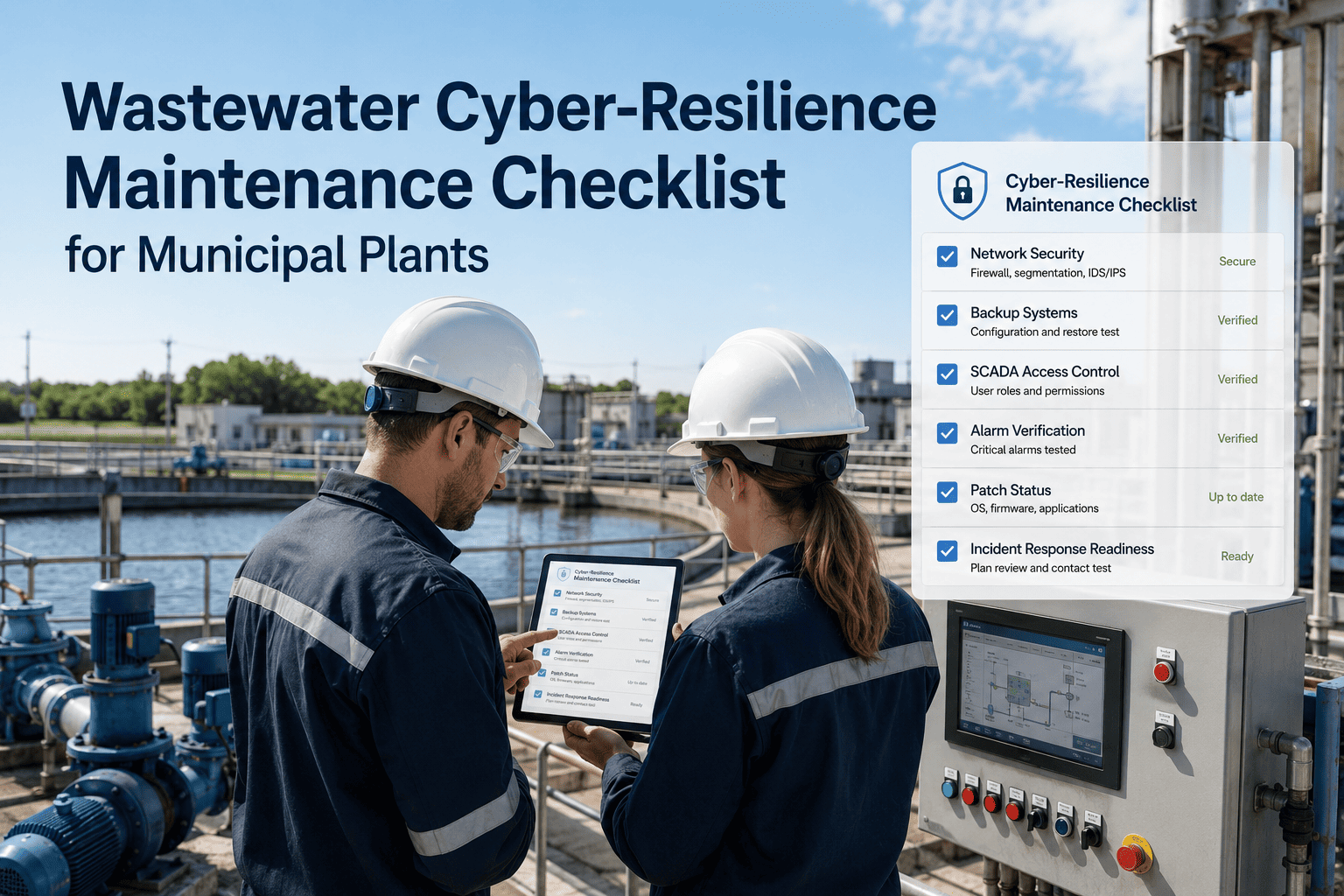
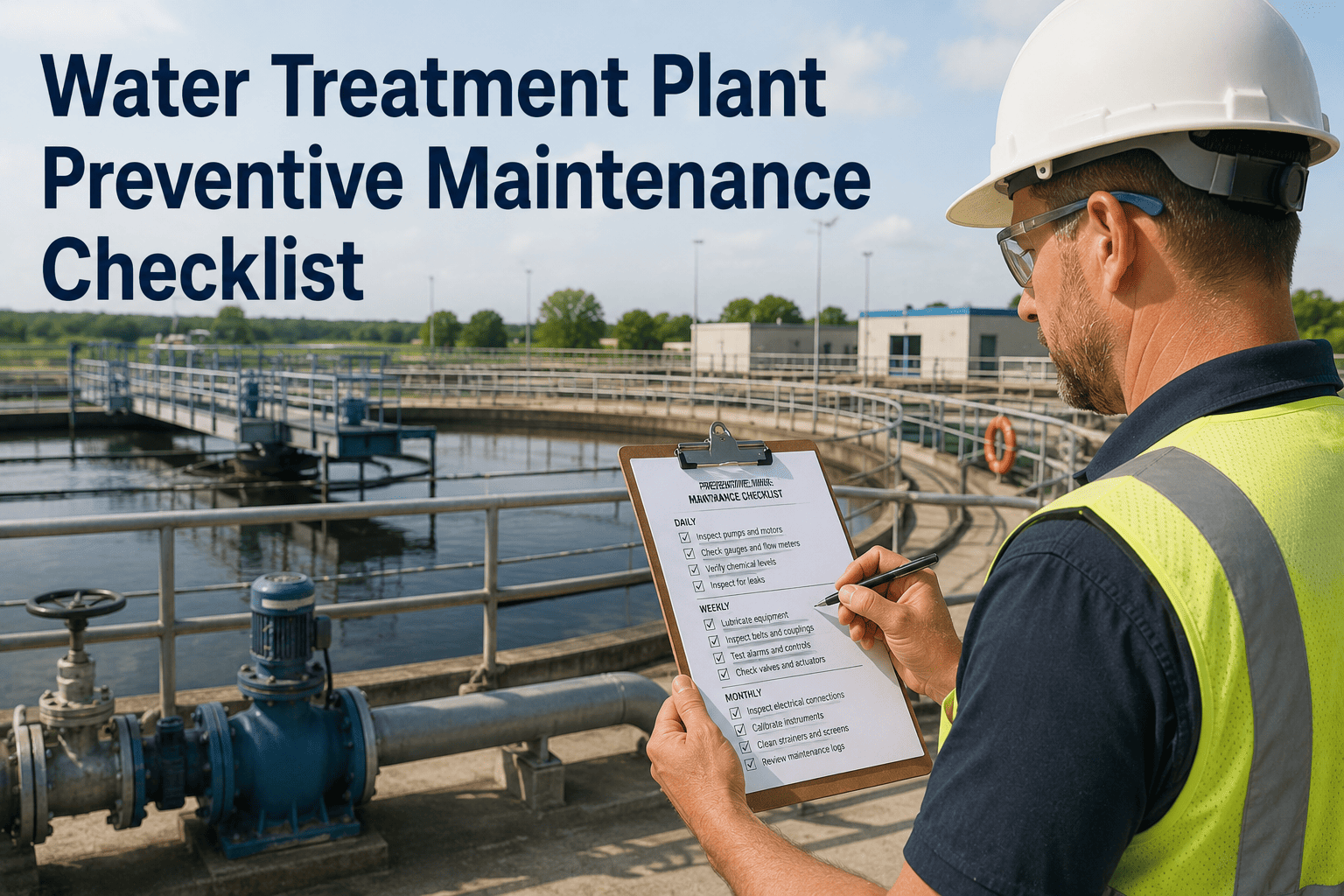
The alarm triggered at 3:17 AM on a Wednesday—aeration blower #2 had seized. By 4:00 AM, dissolved oxygen levels in the secondary treatment basin dropped below 1.0 mg/L, and the biological process that removes 95% of organic pollutants began dying. By 8:00 AM, the plant superintendent was filing an emergency notification with the state environmental agency because effluent BOD exceeded the NPDES discharge permit limit. The emergency blower replacement cost $87,000 in equipment, $34,000 in overtime labor, and $15,000 in regulatory penalties—plus six months of increased monitoring requirements. A vibration analysis performed three months earlier had flagged bearing degradation on that exact blower, but the work order sat in a paper backlog because nobody tracked preventive maintenance completion rates.
This scenario repeats at wastewater treatment facilities nationwide. The EPA estimates that 15,000 of America's 16,000 publicly owned treatment works require significant maintenance investment, yet most still rely on reactive maintenance cultures that guarantee permit violations, emergency spending, and accelerated equipment failure. Forward-thinking utilities are deploying CMMS-driven preventive and predictive maintenance programs that cut emergency repairs 40-60%, extend equipment life 25-40%, and maintain continuous permit compliance. Facilities ready to transform their maintenance operations can start with a platform built for treatment plant complexity.
This guide provides plant superintendents, maintenance supervisors, and utility directors with actionable best practices for maintaining the critical process equipment that keeps communities safe and waterways clean—from headworks screening through biosolids handling. Every recommendation connects directly to permit compliance, cost reduction, and operational reliability metrics that justify investment to utility boards and ratepayers.
✓Process-Specific PM Templates: Pre-built maintenance schedules for pumps, blowers, clarifiers, UV systems, and biosolids equipment
✓NPDES Compliance Tracking: Automated permit parameter monitoring with threshold alerts before violations occur
✓Vibration & Oil Analysis Integration: Sensor data feeds triggering predictive work orders on rotating equipment
✓Confined Space Workflow: Digital permits, atmospheric monitoring logs, and rescue plan verification built into work orders
✓Chemical Inventory Management: Track chlorine, polymer, caustic, and nutrient chemical usage with auto-reorder alerts
✓Regulatory Audit Trail: EPA, state DEQ, and OSHA documentation generated automatically from daily operations data
Start your free trial today — No credit card required, full platform access, treatment plant templates included
What if every piece of process equipment in your plant had a maintenance schedule that actually prevented failures?
Treatment plants running reactive maintenance spend 3-5x more per repair, suffer permit violations, and replace equipment years before necessary. CMMS-driven PM programs eliminate all three problems.
Why Treatment Plant Maintenance Programs Fail
Wastewater treatment plants operate 24/7/365 with zero tolerance for process interruption. Yet most facilities manage maintenance through paper logbooks, whiteboard schedules, and institutional memory that retires with experienced operators. Understanding the three systemic failures plaguing treatment plant maintenance reveals the path to reliable, permit-compliant operations.
The Three Process-Critical Failures
01
Biological Process Disruption
The Problem: Aeration system failures kill biological treatment in hours. A single blower failure drops DO below levels sustaining nitrification, causing ammonia permit exceedances within 12-24 hours that trigger regulatory action and increased monitoring.
The Solution: Vibration monitoring on all rotating aeration equipment with predictive alerts at 60-day, 30-day, and critical thresholds. Redundancy testing on backup systems monthly—not annually.
02
Pump Station Cascade Failures
The Problem: Influent pump failures cause sanitary sewer overflows (SSOs)—EPA's highest enforcement priority. A single SSO triggers mandatory reporting, potential consent decrees, and fines up to $25,000 per day per violation.
The Solution: PM schedules driven by actual run-hours not calendar dates. Seal replacement, impeller inspection, and motor testing based on manufacturer-specified intervals tracked automatically via CMMS.
03
Chemical Feed System Failures
The Problem: Chlorination/dechlorination system malfunctions cause immediate permit violations for residual chlorine or pathogen limits. Polymer feed failures collapse clarifier performance within hours, passing solids to effluent.
The Solution: Daily chemical system verification checklists with dosing rate confirmation, inventory tracking with auto-reorder at minimum stock levels, and backup system testing weekly.
Critical Reality: EPA enforcement data shows that 65% of NPDES permit violations are directly attributable to equipment failures that preventive maintenance would have prevented. Facilities with documented PM programs achieving 90%+ compliance rates experience 70% fewer enforcement actions than reactive-maintenance facilities.
Start Free Trial
Equipment-Specific Maintenance Best Practices
Wastewater treatment relies on interdependent process trains where each equipment failure cascades through downstream treatment. Effective maintenance programs prioritize equipment by consequence of failure—not replacement cost—focusing PM resources on the assets whose failure causes permit violations, SSOs, or environmental damage.
Critical Process Equipment Maintenance Schedules
Influent Pumps & Lift Stations
Check seal water systems daily. Perform vibration analysis monthly on motors and pumps. Replace mechanical seals at manufacturer-specified intervals (typically 18,000-24,000 run-hours). Inspect impellers quarterly for wear and rag accumulation. Test backup power transfer switches monthly under load—not just no-load transfer. Track actual run-hours in CMMS to trigger PM by usage, not calendar.
Aeration Systems (Blowers & Diffusers)
Monitor blower vibration continuously with automated alerts at trending thresholds. Inspect inlet filters weekly during high-pollen seasons, monthly otherwise. Perform oil analysis on blower lubricants quarterly—iron and silicon content predict bearing and impeller wear 60-90 days before failure. Clean or replace fine-bubble diffusers based on pressure differential, not age—membrane fouling varies dramatically by influent characteristics.
Clarifiers & Settling Systems
Inspect clarifier drive units monthly for torque alarm trends indicating sludge blanket buildup or mechanism drag. Lubricate peripheral drive wheels quarterly. Check weir levelness annually—uneven weirs create short-circuiting that passes solids. Inspect flight chains and squeegees on rectangular clarifiers every 6 months. Track sludge blanket depth daily and correlate with RAS pumping rates to optimize solids removal.
Disinfection & Chemical Feed
Calibrate chlorine analyzers weekly against bench-top DPD tests. Inspect UV lamp intensity monthly and replace at 65% output threshold—not at failure. Verify chemical feed pump calibration monthly using volumetric testing. Inspect chemical containment systems and safety showers quarterly. Maintain 14-day chemical inventory buffer tracked via CMMS auto-reorder to prevent dosing interruptions.
Equipment Lifecycle Impact: Treatment plants implementing equipment-specific PM schedules through CMMS extend average equipment life by 25-40%—a $180,000 blower lasting 18 years instead of 12, a $45,000 pump running 8 years instead of 5. Across a mid-size plant with $4M in rotating equipment, that represents $1.2M-$1.8M in deferred capital replacement.
Schedule a demo to see treatment plant PM templates in action.
Permit Compliance Through Maintenance
NPDES discharge permits define the legal boundaries of plant operation. Every permit parameter—BOD, TSS, ammonia, phosphorus, E. coli, pH, residual chlorine—depends on specific equipment operating within design parameters. When maintenance fails, permit compliance fails. A CMMS links equipment PM schedules directly to the permit parameters they protect, creating accountability chains that prevent violations before they occur.
BOD/TSS
Secondary Treatment Compliance: Aeration blower reliability, clarifier mechanism integrity, and RAS pump performance directly control BOD and TSS removal. PM on these systems prevents the 30-day average exceedances that trigger enforcement.
NH3-N
Ammonia/Nutrient Limits: Nitrification requires sustained DO above 2.0 mg/L and adequate SRT. Blower failures, diffuser fouling, and aeration control valve malfunctions destroy nitrification within hours—predictive maintenance prevents biological upset.
E. coli
Disinfection Compliance: UV lamp degradation, chlorine feed pump failure, or contact chamber short-circuiting cause pathogen exceedances. Daily verification checklists and intensity monitoring prevent violations carrying the highest public health consequences.
The 90-Day WWTP Maintenance Transformation Playbook
Transitioning from reactive to preventive maintenance in a treatment plant requires a phased approach that maintains process stability while building systematic PM capability. This playbook sequences implementation to deliver immediate permit protection benefits while progressively building the predictive analytics foundation that prevents future failures.
90-Day Treatment Plant Maintenance Transformation
Build permit-protecting PM capability while maintaining continuous operations
✓
Inventory all permit-critical equipment—aeration blowers, influent pumps, chemical feed systems, UV/chlorine disinfection—and establish PM schedules based on manufacturer specifications and run-hour triggers.
✓
Deploy vibration monitoring on all rotating equipment above 25 HP. Establish baseline signatures and configure trending alerts at warning and critical thresholds for predictive intervention.
✓
Digitize confined space permits converting paper entry logs to mobile workflows with atmospheric monitoring verification, rescue plan acknowledgment, and real-time entrant tracking.
✓
Establish chemical inventory tracking with minimum stock alerts for chlorine, polymer, caustic, nutrient chemicals, and UV lamps—preventing dosing interruptions that cause immediate permit exceedances.
✓
Create daily operator rounds checklists digitally capturing process data (DO, pH, turbidity, flow) alongside equipment condition observations—building the data foundation for predictive analytics.
✓
Expand PM schedules to secondary systems—clarifier drives, scum removal, sludge processing, odor control, and HVAC for enclosed process areas. Assign frequencies based on criticality analysis.
✓
Integrate SCADA alarm history with maintenance records—every equipment alarm should reference the associated PM schedule, creating accountability links between process upsets and maintenance gaps.
✓
Implement oil analysis program for all gearboxes, blowers, and hydraulic systems. Quarterly sampling with trend analysis predicts bearing wear, contamination, and lubricant degradation 60-90 days before failure.
✓
Establish spare parts criticality matrix identifying components with 4+ week lead times (blower rotors, clarifier drive gears, specialty seals) and maintaining minimum inventory levels in CMMS.
✓
Deploy biosolids equipment PM—belt press tensioning, centrifuge bowl inspection, digester mixing systems, and dewatering polymer optimization. Biosolids handling failures create immediate disposal cost spikes.
✓
Activate predictive algorithms using 60+ days of vibration, oil analysis, and process data to generate failure probability scores for each critical asset—moving from time-based to condition-based PM.
✓
Correlate process performance with equipment condition—link effluent quality trends to specific equipment health metrics, proving that PM investments directly protect permit compliance.
✓
Calculate verified ROI comparing emergency repair costs, overtime spending, and permit compliance before and after CMMS implementation. Present results to utility board demonstrating taxpayer value.
✓
Build capital replacement forecasts using equipment condition data and lifecycle cost analysis to justify CIP budget requests with evidence-based remaining useful life projections.
✓
Establish continuous improvement cycles with monthly maintenance team reviews analyzing PM effectiveness, adjusting frequencies based on actual failure data, and optimizing resource allocation.
Playbook Results: Treatment plants following this 90-day sequence achieve 90-95% PM compliance within the first quarter, reducing emergency repairs 40-60% and maintaining continuous NPDES permit compliance. Facilities skipping structured implementation average 45-55% PM compliance—insufficient to prevent the equipment failures that cause permit violations and regulatory enforcement.
Overcoming Treatment Plant Maintenance Challenges
Treatment plant maintenance faces unique challenges that industrial and commercial facilities don't encounter—continuous biological processes that can't be shut down, confined space hazards in every major process, corrosive atmospheres destroying equipment faster than manufacturer projections, and regulatory consequences for any maintenance failure affecting effluent quality.
Challenge 1: "We can't take equipment offline for PM without risking process upset"
Best Practice Response
"Schedule PM during low-flow periods (typically 1-5 AM) when process redundancy provides coverage. Use CMMS to coordinate PM windows with operations—aeration blower maintenance when backup blower is verified operational, clarifier inspections during low-flow periods. 15-minute pre-PM verification checklists confirm backup systems are functional before taking primary equipment offline."
Challenge 2: "Our equipment is so old that PM doesn't help—it's going to fail regardless"
Best Practice Response
"Aging equipment needs MORE maintenance, not less. Vibration trending on old blowers detects bearing degradation 60-90 days before failure—enough time for planned replacement at 1/3 the emergency cost. Oil analysis catches contamination early. The CMMS data also builds the capital replacement justification: 'This blower has required $47,000 in repairs over 3 years—replacement cost is $180,000 with 15-year life versus continued reactive spending of $15K+/year.'"
Challenge 3: "We don't have enough staff for a PM program—we're barely keeping up with emergencies"
Best Practice Response
"You're in a reactive maintenance trap: emergencies consume all resources, preventing the PM that would reduce emergencies. Break the cycle by starting PM on just the top 10 critical assets—the ones causing the most emergency callouts. Within 60 days, emergency work on those assets drops 40%, freeing hours for expanding PM to the next tier. CMMS data proves staffing needs with actual workload metrics for budget requests."
Challenge 4: "Operators aren't mechanics—they can't do equipment maintenance"
Best Practice Response
"Operators are your first line of defense. Daily rounds with digital checklists turn operators into condition monitors—they notice unusual vibrations, leaks, odors, and sounds before catastrophic failure. Mobile CMMS with photo capability lets operators document and escalate concerns in 30 seconds. Maintenance staff handle repairs; operators provide the early detection that prevents emergencies."
Challenge 5: "We can't justify CMMS costs to the utility board"
Best Practice Response
"Present three numbers: (1) Total emergency repair and overtime costs last year—typically $200K-$500K for mid-size plants. (2) Permit violation penalties paid or risked—$10K-$25K per occurrence. (3) Equipment replaced prematurely due to lack of PM data—often $100K+ per asset. Annual CMMS cost of $15K-$50K against $300K+ in documented preventable costs delivers 6-10x ROI that boards approve unanimously."
Staffing Reality: Treatment plants implementing CMMS-driven PM programs report that emergency work orders drop from 60-70% of total maintenance to 20-30% within 12 months. This single shift frees 30-40% of maintenance labor hours previously consumed by unplanned work—equivalent to adding 1-2 FTEs without increasing headcount. The maintenance team isn't doing more work; they're doing the right work at the right time.
Measuring Treatment Plant Maintenance Excellence
Track these KPIs monthly to demonstrate maintenance program effectiveness to utility boards, regulators, and ratepayers. The metrics connect maintenance activity directly to permit compliance, cost control, and equipment reliability—proving that every PM dollar invested protects public health and reduces long-term costs.
95%+
PM Compliance Rate
Percentage of scheduled preventive maintenance completed on time. Below 85% correlates directly with increased equipment failures and permit exceedances. Target 95%+ for reliable operations.
70:30
Planned vs. Reactive
Ratio of planned maintenance to emergency work orders. Pre-CMMS plants average 30:70; best-practice facilities achieve 80:20. This single metric predicts permit compliance and cost control.
100%
Permit Compliance
Zero NPDES exceedances attributable to equipment failure. Track equipment-related violations separately from process upsets to prove maintenance program effectiveness to regulators.
Ready to protect your discharge permit and cut maintenance costs simultaneously?
Treatment plants using Oxmaint achieve 95%+ PM compliance, continuous permit compliance, and 40-60% reductions in emergency repairs. See the treatment plant templates built for your process equipment.
Conclusion: Maintenance Is Permit Compliance
Wastewater treatment plant maintenance isn't a facilities function—it's the operational foundation of environmental protection and public health. Every blower bearing, pump seal, clarifier drive, and UV lamp operates as a link in the chain between raw sewage and clean water discharged to receiving streams. When any link fails, the biological processes that took decades to optimize can collapse in hours, triggering permit violations, regulatory enforcement, and environmental damage that takes months to remediate.
The treatment plants achieving maintenance excellence share common characteristics: equipment-specific PM schedules driven by run-hours and condition data through a CMMS, predictive analytics that detect failures 60-90 days before emergency, digital documentation creating audit trails that satisfy regulators instantly, and leadership that frames maintenance investment as permit protection rather than overhead cost.
Your biological process doesn't care about budget cycles. Your permit limits don't adjust for staffing shortages. But the tools to maintain reliable, compliant operations exist today—and the ROI of preventing a single major equipment failure typically exceeds the entire annual CMMS investment. The question isn't whether your plant can afford systematic maintenance management; it's how many more emergency repairs and permit violations you'll accept before implementing what the data already proves works.
Frequently Asked Questions
Q: What are the most critical PM tasks for preventing NPDES permit violations?
A: Three PM categories prevent the majority of equipment-caused permit violations: (1) Aeration system maintenance—blower vibration monitoring, inlet filter inspection, diffuser cleaning, and DO control valve calibration protect BOD, TSS, and ammonia limits. (2) Disinfection system verification—UV lamp intensity testing, chlorine analyzer calibration, and chemical feed pump accuracy checks prevent pathogen limit exceedances. (3) Clarifier mechanism maintenance—drive unit torque monitoring, flight chain inspection, and weir leveling ensure solids removal efficiency. A CMMS schedules all three categories automatically based on equipment-specific intervals.
Q: How does vibration analysis prevent blower and pump failures?
A: Vibration analysis detects bearing wear, imbalance, misalignment, and looseness 60-90 days before catastrophic failure. Monthly or continuous vibration monitoring on blowers and pumps above 25 HP establishes baseline signatures. When trending analysis shows amplitude increasing toward alert thresholds, the CMMS automatically generates a predictive work order for planned bearing replacement or realignment—at 1/3 the cost and zero process disruption compared to emergency failure. Oil analysis complements vibration data by detecting metal particles and contamination confirming the degradation mechanism.
Q: How should treatment plants manage biosolids equipment maintenance?
A: Biosolids equipment operates under extreme conditions—abrasive solids, corrosive gases, high torque loads—requiring aggressive PM schedules. Belt filter presses need daily belt tracking adjustment, weekly tension checks, and monthly roller inspection. Centrifuges require quarterly bowl inspection, bearing vibration monitoring, and scroll wear measurement. Anaerobic digester mixing systems need monthly gas system checks and semi-annual mixer inspection. A CMMS tracks these schedules and alerts when maintenance windows approach, preventing the solids handling failures that shut down dewatering and create emergency hauling costs of $200-$500/load.
Q: Can small treatment plants (<1 MGD) benefit from CMMS?
A: Absolutely. Small plants face the same permit requirements with fewer staff and less redundancy—making equipment reliability even more critical. A single operator managing a 0.5 MGD plant benefits enormously from automated PM reminders ensuring nothing is missed during busy shifts, chemical inventory tracking preventing dosing interruptions, and digital documentation satisfying DEQ inspectors without manual report compilation. Cloud-based CMMS platforms cost $3,000-$10,000 annually for small plants—preventing one emergency blower replacement or one permit violation penalty recovers 2-5 years of CMMS investment.
Q: How do we transition from paper maintenance logs to digital without disrupting operations?
A: Start with daily operator rounds—the highest-frequency, lowest-complexity task. Convert paper round sheets to mobile checklists capturing the same data points operators already record (DO, pH, flow, equipment observations) but with digital timestamps and photo capability. Operators see immediate value: faster rounds, no duplicate data entry, and automatic shift reports. Once rounds are digital (typically 2-3 weeks), expand to work order management, then PM scheduling, then inventory tracking. This phased approach maintains operational continuity while building the digital data foundation. Never cut off paper access until 80%+ of staff are comfortable with digital workflows.
Q: What ROI should we present to justify CMMS investment to the utility board?
A: Present documented costs from the past 24 months: emergency repair invoices, overtime payroll for after-hours callouts, permit violation penalties, equipment replaced before expected life end, and audit preparation labor hours. For a mid-size plant (5-15 MGD), these typically total $300,000-$800,000 annually. Apply conservative CMMS recovery estimates: 35% emergency reduction Year 1, 25% fleet life extension value, 80% audit prep time savings. Annual CMMS cost of $15,000-$50,000 against $150,000-$400,000 in projected savings delivers 4-8x ROI. Frame the investment as "permit protection insurance"—boards respond to compliance risk language more than efficiency language.