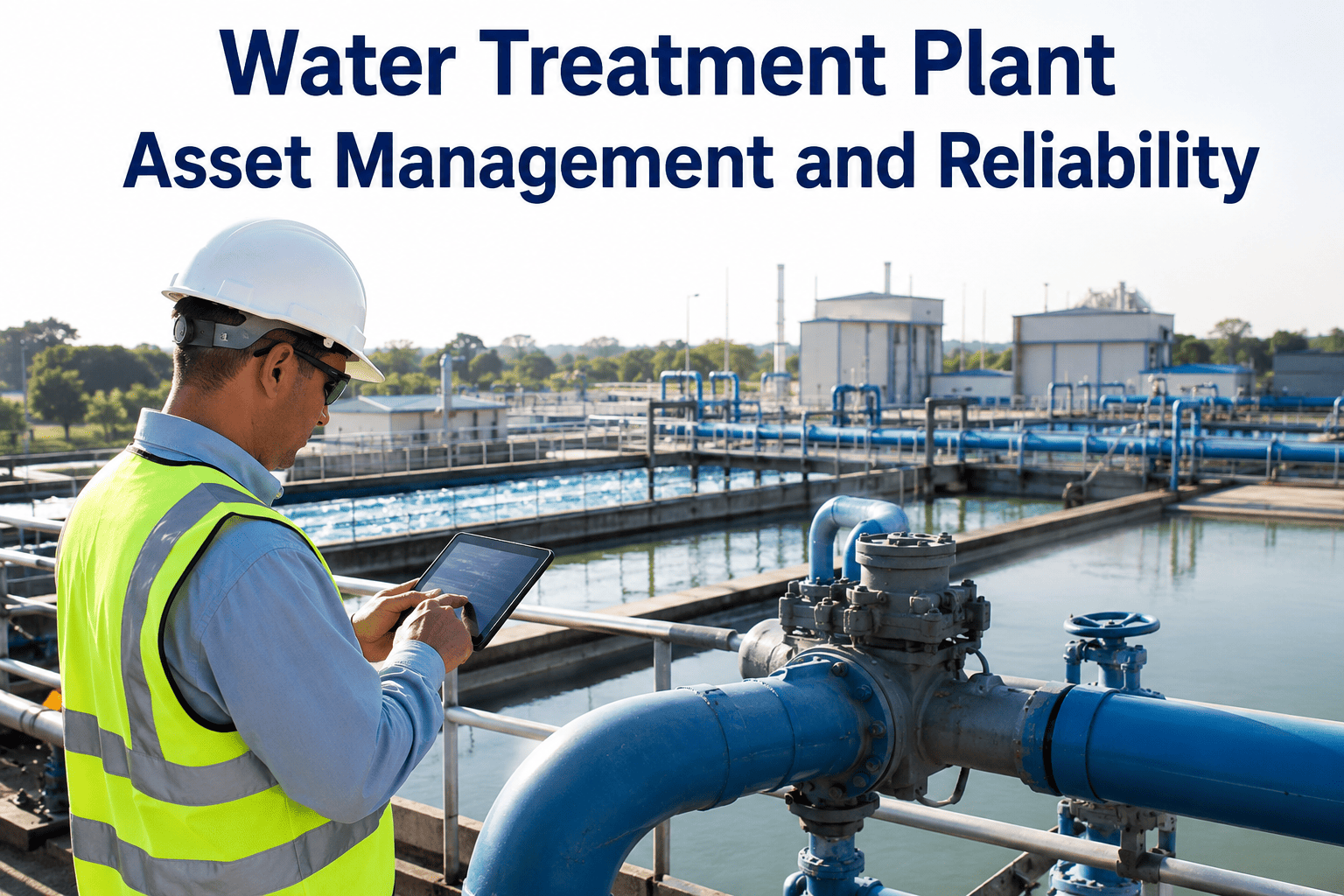
A treatment plant does not get a second chance when a raw water pump fails at 2 a.m. or a chlorine analyzer drifts out of calibration during peak demand. Every asset in the plant, from intake screens to residual disinfection systems, carries a compliance consequence the moment it goes down, not just a repair bill. More than 148,000 public water systems across the U.S. run on pumps, filters, and chemical feed equipment that were never built with today's regulatory margins in mind, and the EPA now projects over $625 billion in drinking water infrastructure needs over the next 20 years. Reliability here is not an efficiency metric, it is a public health commitment, and it starts with knowing which asset is closest to failing before a customer ever notices. See where your plant's risk actually sits with a free trial or a quick demo.
What Happens When Treatment Plant Assets Go Unmanaged
Every number below is a plant somewhere running past the point it should have been serviced. Reliability and public health compliance rise and fall on the same maintenance decisions.
Stop Finding Out About Failures From The Customers
A missed calibration or a slow bearing failure should show up on a work order, not in a boil-water notice. Oxmaint tracks every treatment asset's condition, schedules the work before it becomes an incident, and keeps the compliance paperwork ready for the next inspection.
The Six Systems That Decide Whether Your Plant Stays In Compliance
Treatment plants fail in predictable places. These are the asset groups that generate the most permit violations, emergency callouts, and boil-water advisories when maintenance slips.
Bearing wear and impeller clearance loss cut intake capacity long before a full failure, forcing flow reductions and low-pressure events downstream.
Media fouling and worn scraper mechanisms let turbidity creep upward for weeks before an alarm fires, risking a filtration performance violation.
Dosing pump slippage drives under or over treatment, pushing disinfection byproducts out of range without a single visible symptom on site.
A drifting chlorine analyzer can report a safe residual while the actual level falls, the exact failure mode behind most boil-water advisories.
Valves that miss their exercise cycle seize when they are needed most, turning a routine isolation into an extended main break repair.
Uncalibrated sensors feed bad data into every other decision on this list, so operators end up managing the plant on numbers they cannot trust.
The Early Signal Behind Every Late-Night Emergency Call
Almost every unplanned outage was visible in the data first. The gap between a routine reading and an emergency callout is usually just a missed signal.
| Asset Class | Signal Operators Often Miss | Cost If It Reaches Failure |
|---|---|---|
| Raw water pumps | Rising vibration and bearing temperature | Reduced intake capacity, low-pressure events |
| Filters & clarifiers | Slow, steady rise in effluent turbidity | Turbidity breakthrough, permit violation |
| Chemical feed pumps | Dosing pump slippage over several weeks | Under or over treatment, DBP violation |
| Disinfection system | Chlorine analyzer drifting from calibration | Residual failure, boil-water advisory |
| Distribution valves | Exercise cycles delayed past schedule | Seized valves, extended main break repair |
| SCADA sensors | Calibration drift with no alarm set | Bad data driving every downstream decision |
Reactive, Preventive, Or Predictive: What Each Approach Actually Costs You
Most plants run a mix of all three without meaning to. Knowing which strategy covers which asset is what separates a plant that plans its downtime from one that survives it.
| Approach | How It Works | Risk To Compliance |
|---|---|---|
| Reactive | Assets run until they fail, then get repaired | Highest, failures cascade into violations |
| Preventive | Service happens on a fixed calendar or run-hour schedule | Moderate, catches most wear before failure |
| Condition-based | Live asset data triggers work orders automatically | Lowest, issues resolved before output is affected |
Build A Maintenance Program Regulators Trust
Oxmaint schedules preventive work by run hours or calendar, flags condition changes before they become violations, and keeps every inspection, work order, and compliance record in one place your team can hand to an auditor without a scramble.
How Oxmaint Keeps Treatment Assets Reliable
One system covers the pump, the paperwork, and the technician on the floor, so nothing about plant reliability depends on memory or a spreadsheet nobody updates.
PM tasks trigger automatically by calendar or run hours for every pump, filter, and feed system in the plant.
Every inspection, calibration, and repair logs automatically, ready to hand a regulator without a paperwork scramble.
Operators close work orders, log readings, and flag issues from the plant floor, no walking back to a desktop required.
A single dashboard ranks which assets are trending toward failure, so the next work order is never a guess.
Frequently Asked Questions
Why does treatment plant maintenance need to be different from general facility maintenance?
Can Oxmaint track pumps, filters, and chemical feed systems in one place?
Does moving to condition-based maintenance actually reduce failures?
How does this help during a regulatory inspection?
How quickly can a plant get started?
Give Your Plant The Reliability Program It Deserves
Pumps, filters, and chemical feed systems will keep aging whether or not there is a plan behind them. Put a maintenance program in place that catches wear before it becomes a violation, and see the difference in your first 30 days.