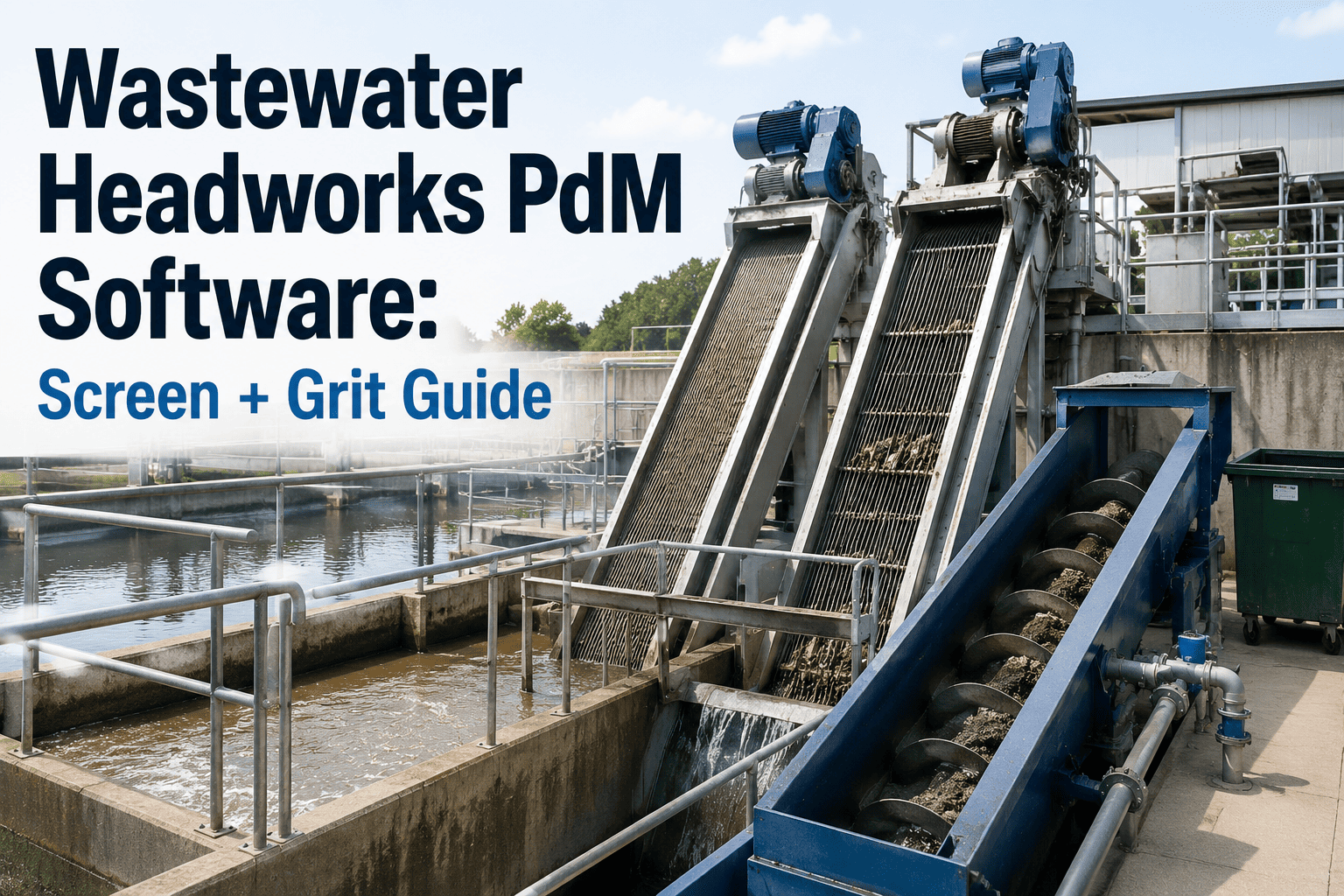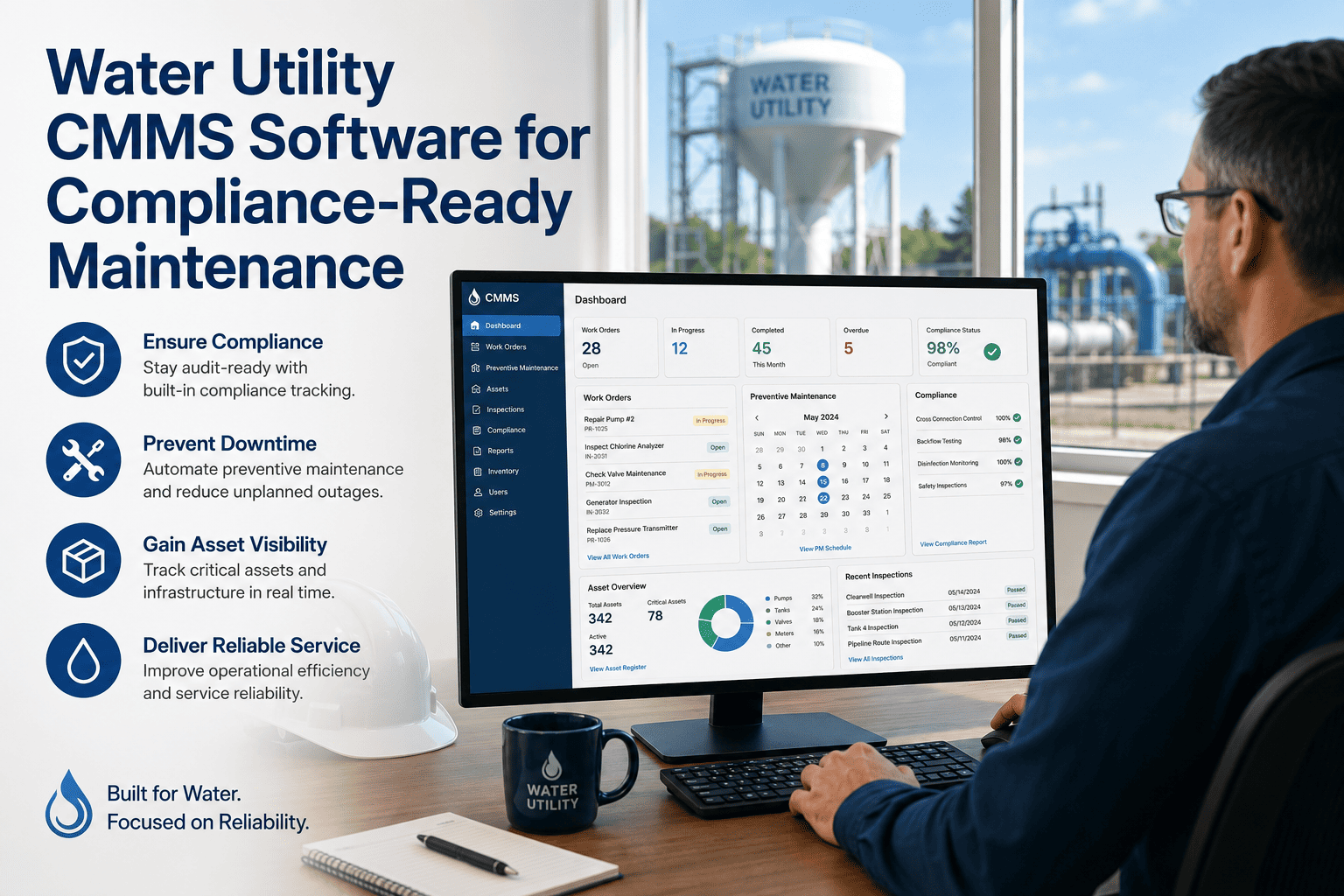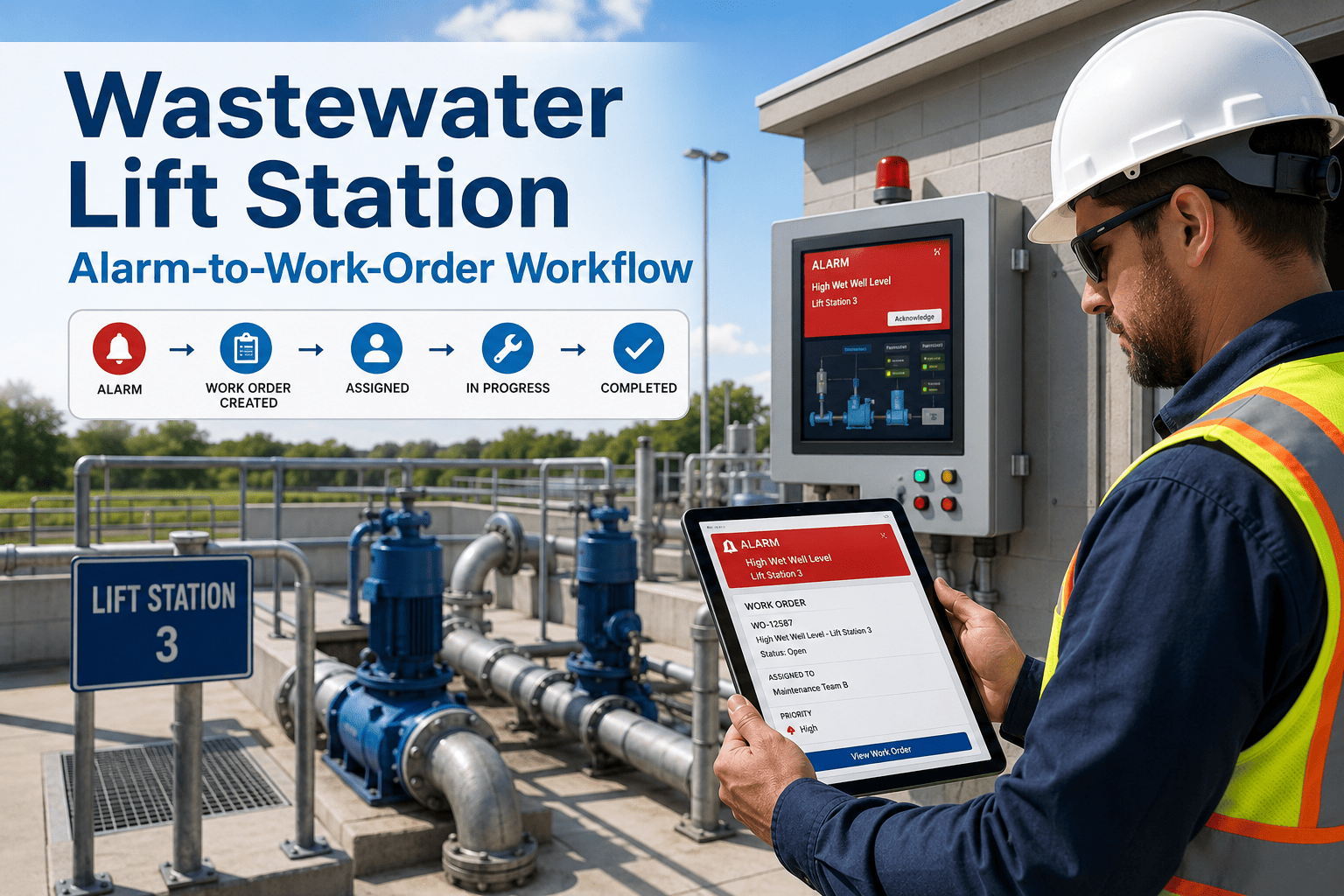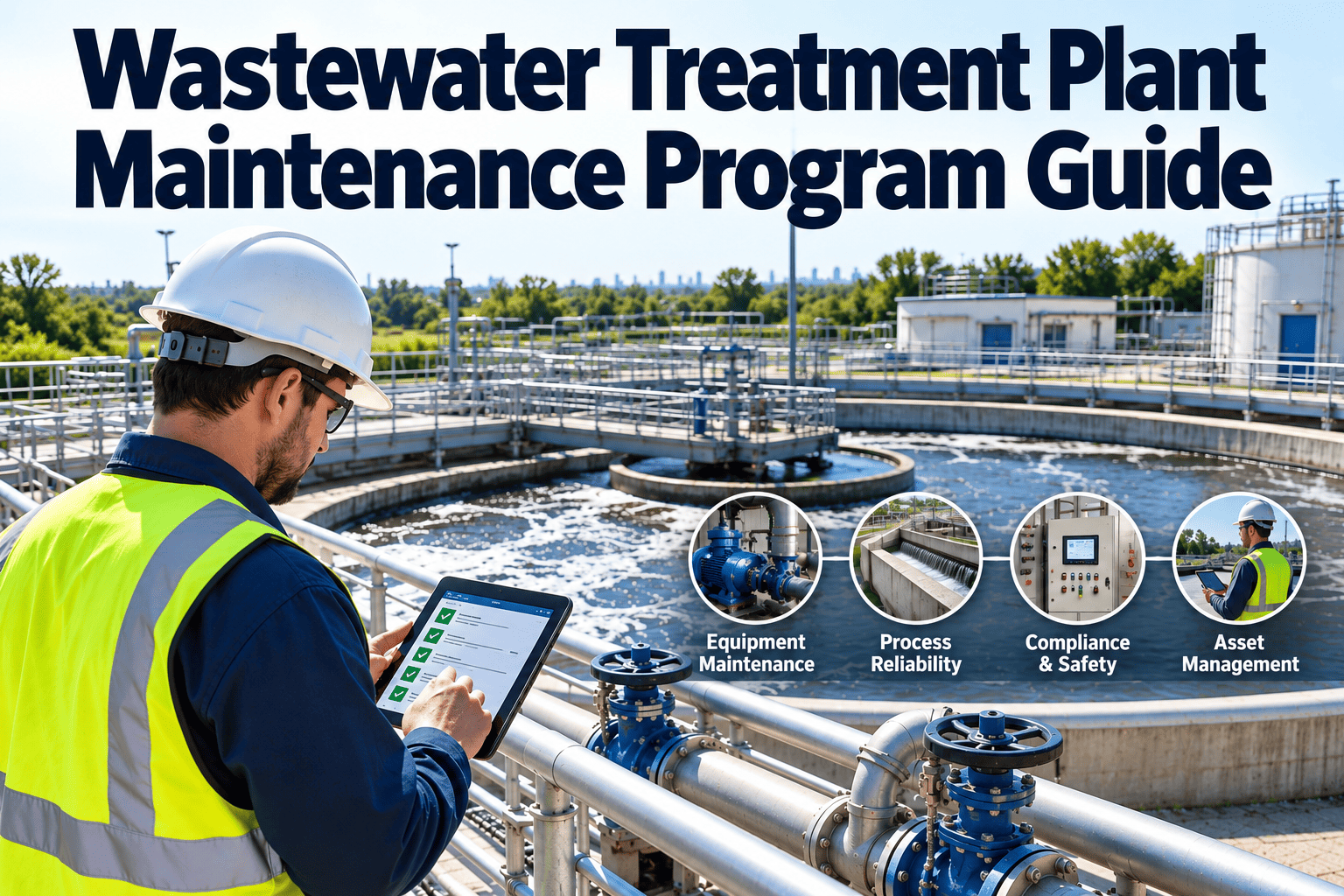
A wastewater treatment plant never gets a quiet night. Blowers, pumps, clarifier drives, and instruments run around the clock in wet, corrosive, and sometimes hazardous conditions, and a failure can mean a permit excursion rather than just downtime. A structured maintenance program keeps each process stage dependable and leaves a record that regulators and auditors can follow. This guide builds that program stage by stage, covering blowers, clarifiers, pumps, and instruments, with inspection tasks, service histories, and KPIs. It also shows how Oxmaint CMMS software supports the day-to-day work.
Wastewater Treatment Plant Maintenance Program Guide
Build a maintenance program around the way wastewater actually moves through your plant, from headworks to final effluent.
What makes wastewater plant maintenance different
Four conditions shape every decision in a treatment plant program.
Continuous duty
Most equipment cannot simply be shut down. Work needs standby units, bypass plans, and careful sequencing.Harsh environment
Moisture, hydrogen sulfide, grit, and chemicals speed up corrosion and wear.Permit consequences
Equipment failures can cause effluent quality problems that must be reported.Worker safety
Confined spaces, hazardous energy, and biological and gas hazards demand strict procedure.Equipment by process stage and typical failure modes
Use this table to seed your asset register and your first failure-mode list. Adjust it to your plant design.
| Stage | Key equipment | Typical problems | Impact if it fails |
|---|---|---|---|
| Headworks | Bar screens, grit systems, influent pumps | Blinding, rags, jammed rakes, grit wear | Downstream pump fouling and flow disruption |
| Primary | Clarifier drives, scrapers, sludge pumps | Drive overload, broken flights, plugged lines | Solids carryover to biological stage |
| Aeration | Blowers, diffusers, mixers, valves | Bearing wear, filter clogging, fouled diffusers | Low dissolved oxygen and poor treatment |
| Secondary | Clarifier drives, return pumps, weirs | Drive failure, sludge blanket issues, worn seals | Solids loss to effluent |
| Disinfection | UV banks or chemical feed, analyzers | Lamp aging, fouling, pump or feed faults | Possible effluent bacteria exceedance |
| Solids | Thickeners, digesters, mixers, dewatering units | Polymer feed trouble, belt or screw wear | Odor, storage issues, hauling delays |
Why equipment service histories are the foundation
Plants often rely on a few experienced operators who remember what happened to each pump. A written service history replaces memory with evidence.
Record on every asset
- Nameplate data, installation date, and manuals
- Preventive tasks and completion dates
- Repairs, parts used, and failure cause
- Condition readings such as vibration and temperature
- Runtime hours and operating conditions
What the history lets you do
- Spot repeat failures on the same pump or drive
- Adjust PM intervals using real wear patterns
- Justify rebuild versus replace decisions
- Show regulators a documented maintenance trail
- Hand over knowledge when staff retire
Give every pump, blower, and drive a service history
Record inspections, repairs, and readings against each asset, so the next shift starts from the facts instead of guesses.
Four equipment groups that decide plant reliability
Use these as starting points. Always follow manufacturer instructions and site procedures.
Aeration blowers
Aeration is often one of the largest electricity uses in an activated sludge plant, and blower trouble quickly affects treatment.- Inspect inlet filters and differential pressure
- Check oil level, condition, and leaks
- Trend vibration and bearing temperature
- Inspect couplings, belts, and guards
- Rising discharge temperature
- Unusual noise or vibration
- Falling airflow at the same power
- Frequent surge or trip events
Clarifiers
Clarifier mechanisms turn slowly, so failures are easy to miss until torque alarms or solids carryover appear.- Check drive gearbox oil and seals
- Inspect scrapers, flights, and skimmers
- Verify torque limit settings and alarms
- Inspect weirs, baffles, and launders
- Rising drive torque or motor current
- Uneven weir flow
- Floating solids or sludge blanket changes
- Chain or flight damage
Pumps
Influent, return sludge, and waste sludge pumps handle solids and grit that shorten seal and impeller life.- Check seals, packing, and leakage
- Trend vibration, amperage, and runtime
- Inspect impellers for wear and clogging
- Exercise standby units on a schedule
- Rising amperage with falling flow
- Seal leakage or heat
- Cavitation noise
- Repeated clogging events
Instruments and analyzers
Control and compliance depend on trustworthy readings, so drift is a maintenance issue, not only an operations issue.- Clean and verify dissolved oxygen probes
- Calibrate pH, turbidity, and residual analyzers
- Verify flow meters used for reporting
- Test alarms and interlocks
- Readings that disagree with lab results
- Slow response or noisy signals
- Frequent recalibration needs
- Unexplained control swings
A starting inspection and calibration cadence
Treat these as a draft. Final intervals come from manufacturer guidance, permit conditions, and your own failure history.
Compliance and safety records to keep
Requirements vary by country and permit. The examples below reflect common US practice, so confirm what applies to your plant.
Find single points of failure before they find you
Redundancy only helps if the standby unit works. Test it, record it, and know which assets have no backup at all.
From reactive repairs to condition-based work
Rotating equipment gives early signals. Capture them and act before failure.
- MeasureVibration, temperature, amperage, pressure, and runtime hours
- RecordLog readings against the asset with date and operator
- CompareCheck trends against baselines and limits
- TriggerRaise a work order when a threshold is crossed
- LearnFeed repair findings back into intervals and limits
Critical spares for a wastewater plant
Stock what is expensive to wait for. Base the list on criticality and lead time.
- Mechanical seals and packing for key pumps
- Spare impellers or rebuild kits for sludge pumps
- Blower filters, belts, and bearings
- Clarifier drive gearbox components and shear pins
- Spare DO probes, pH sensors, and calibration standards
- UV lamps or chemical feed pump parts
- Motor spares or spare starters for critical loads
- Screen rake parts and wear shoes
Building the program in six steps
Work through the plant one process stage at a time. You do not need every asset loaded before you begin scheduling.
Load the asset register by process stage
Start with pumps, blowers, drives, and instruments, then add valves and electrical gear.Rank criticality
Score consequence and likelihood, and note which assets have no standby.Write PM and inspection tasks
Use manufacturer manuals and operator experience, with clear pass or fail limits.Move operator rounds to mobile
Capture readings and observations in the field instead of on paper logs.Stage parts and procedures
Attach lockout, confined space, and repair instructions to work orders.Review KPIs and adjust
Use history and failure trends to tune intervals every quarter.How Oxmaint supports wastewater maintenance
Oxmaint is maintenance management software. It does not replace SCADA or process control, but it keeps the maintenance side organized.
Common starting point
- Operator logbooks and spreadsheets
- PM tracked on a whiteboard
- Repair history held by a few people
- Calibration dates found during audits
- Parts discovered missing mid-repair
With Oxmaint
- Asset records with service history and documents
- Preventive schedules by time or runtime
- Mobile inspections with readings and photos
- Calibration and compliance records on file
- Inventory tracking for critical spares
KPIs for a wastewater maintenance program
Pair reliability measures with compliance measures.
PM compliance
PM done in window ÷ PM dueCalibration compliance
Instrument calibrations on time ÷ calibrations dueCritical asset availability
(Scheduled time − downtime) ÷ scheduled timeRepeat failure rate
Assets with repeat repairs ÷ assets with repairsStandby test completion
Standby tests done ÷ tests scheduledEmergency work share
Reactive hours ÷ total maintenance hoursWastewater treatment plant maintenance FAQs
Which wastewater equipment should we prioritize first?
Start with assets that lack a standby and drive permit performance, usually blowers, key pumps, and analyzers.
How often should DO probes and analyzers be calibrated?
Follow manufacturer guidance and permit needs, then adjust using your drift history.
Can operators and maintenance share one system?
Yes. Shared records link operator observations to repairs. Try Oxmaint free to see how.
Does a CMMS replace SCADA?
No. SCADA controls the process, while a CMMS manages maintenance work, assets, and records.
What is a realistic first step?
Load one process stage and schedule its PM. Book a demo to plan it.
Build safety steps into every work order
Wastewater plants combine hazards that other facilities rarely face together. Attach the safety checks to the work, not to memory.
- Lockout and tagout steps with verification of zero energy
- Confined space entry permit where required
- Atmospheric testing for oxygen, hydrogen sulfide, and combustibles
- Ventilation plan and monitoring during entry
- Rescue plan and trained standby person
- Isolation of chemical lines and pressure release
- Required protective equipment for the task
- Communication plan with the control room
- Handling of biological hazards and washdown
- Restoration checks before returning equipment to service
Seasonal and storm preparation
Plant loads change through the year. Schedule readiness work ahead of the stress, not during it.
Wet weather
Check influent pumps, screens, bypass equipment, and backup power before the rainy season, since flows peak when conditions are worst.Cold weather
Inspect heat tracing, exposed instrument lines, and chemical systems that can freeze, and confirm heaters work.Hot weather
Review blower cooling, motor temperatures, and odor control, since warm wastewater changes oxygen demand and biological activity.Pre-storm checks
Test standby generators under load, confirm fuel levels, and verify alarm and call-out paths to the on-call team.Operators and maintenance: clear shared responsibilities
Many plant problems sit between the operations and maintenance teams. Define who does what.
Operators typically own
- Daily rounds and visual checks
- Basic readings and logs
- Reporting abnormal sounds, leaks, and alarms
- Starting and rotating standby units
- Routine cleaning of probes and screens
Maintenance typically owns
- Preventive and predictive tasks
- Repairs, rebuilds, and overhauls
- Calibration and verification of instruments
- Spare parts and stores
- Root cause review of repeat failures
Common mistakes in wastewater maintenance programs
Avoid these and the program will pay back faster.
Vendors, warranties, and repair decisions
Treatment plants depend on specialized suppliers. Manage those relationships as part of the maintenance program.
Capturing knowledge before experienced staff retire
Many plants rely on a few veterans who know every quirk. Convert that knowledge into records the next team can use.
Interview and record
Ask experienced operators and technicians how each critical machine fails, what they listen for, and what they check first.Turn tips into tasks
Convert informal habits into checklist items with clear limits so new staff can follow them.Attach photos and procedures
Store pictures, drawings, and step-by-step instructions on the asset record for quick reference in the field.Pair new staff with veterans
Have new hires complete work orders alongside experienced technicians, and record what they learn.What to document for operations and maintenance manuals
Permits and regulators often expect written operating and maintenance procedures. Keep them current and linked to the equipment.
- Process description and equipment list by stage
- Routine inspection and maintenance procedures
- Calibration procedures and acceptance limits
- Emergency response and failure procedures
- Lockout, confined space, and chemical handling steps
- Spare parts list with sources and lead times
- Revision history and the date of last review
- Contact list for vendors and on-call staff
Keep every process stage running and documented
Organize assets, inspections, calibrations, and repairs for your plant in one maintenance system built for daily use.