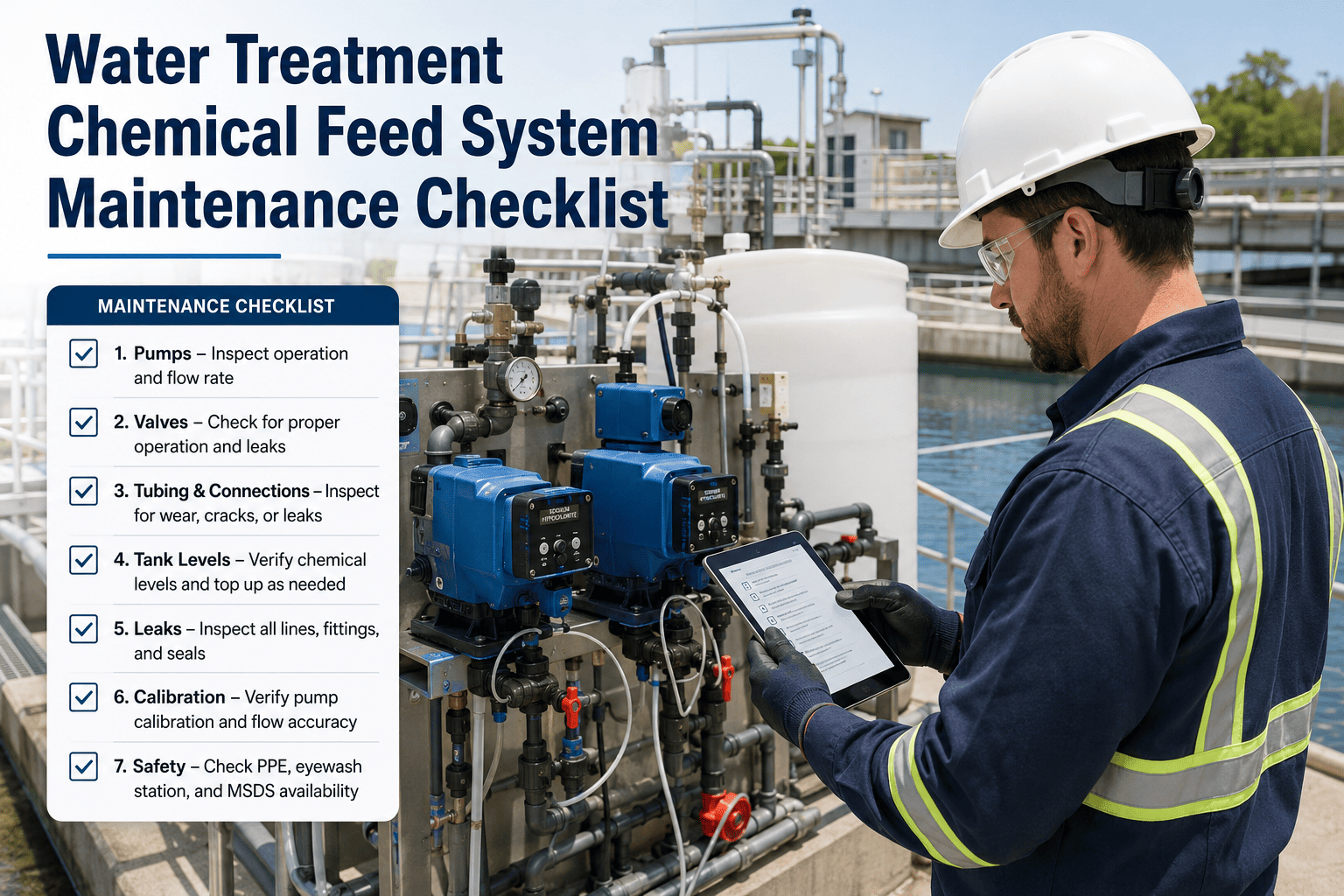
A chemical feed system does its job in silence, and that silence is exactly what makes it dangerous. Sodium hypochlorite loses strength every day it sits in a day tank, chlorine injectors foul without any warning light, and a coagulant pump calibrated correctly in March can be feeding five percent off target by August without a single alarm going off. Most treatment plants only discover a dosing problem when a compliance sample comes back wrong or a filter run turns cloudy, and by then the corrective action report is already due. Water treatment chemical feed software gives operators daily visibility into calibration status, chemical concentration, and pump condition across chlorination, coagulation, pH adjustment, and fluoridation trains, before drift turns into a violation. OxMaint's water plant chemical feed CMMS turns that visibility into a scheduled discipline instead of a guessing game.
See Every Feed Pump's Calibration Status Before A Sample Fails
OxMaint schedules calibration checks, logs concentration verification, and flags feed pumps drifting off setpoint across every chemical train in your plant. Free to start.
The Five Chemical Trains Running Through Every Plant
A water treatment plant rarely has a single chemical feed problem to manage — it has five running in parallel, each with its own dosing tolerance, its own failure mode, and its own consequence if it drifts. Treating them as one generic maintenance task is how a plant ends up documenting calibration on the system that matters least while the system carrying the actual health risk goes unchecked for a full quarter.
Watch The Dose Drift Before Anyone Notices
Sodium hypochlorite is the clearest example of why a feed pump can be running perfectly and still deliver the wrong dose. The pump strokes exactly as calibrated. The setpoint on the controller never changes. What changes is the chemical itself — trade-strength hypochlorite starts degrading the moment it is mixed, and heat accelerates the curve sharply. A pump that was calibrated against 12.5 percent strength in week one can be feeding closer to 8 percent by week four, and nothing on the panel will tell the operator that has happened.
Approximate hypochlorite strength decline in warm storage. A pump still feeding at its original calibration rate can be delivering nearly a third less effective chlorine by the end of the month.
What Actually Pushes A Dose Off Target
Dosing problems rarely start with a broken pump. In most root-cause reviews, the pump was mechanically sound the entire time — the dose drifted because something upstream or downstream of it changed and nobody re-verified the calibration against that change. Four causes account for the large majority of dosing incidents across municipal plants.
Turn Weekly Drawdown Checks Into A Scheduled, Documented Workflow
OxMaint assigns calibration and concentration-verification tasks automatically, logs every result against the chemical train, and flags any pump that hasn't been verified inside its required interval.
Dosing Deviation Benchmark Scale
A deviation above 3 percent from setpoint is the threshold most treatment technique requirements treat as reportable, which means the watch band is the window where a coaching or recalibration conversation still prevents a violation.
Sample Feed Train Dosing Audit
Auditing every chemical train against its target dose, rather than assuming the whole plant is running fine because one system looks stable, is what actually surfaces the pump that needs attention this week instead of next quarter.
| Feed Train | Target Dose | Verified Actual | Deviation | Status |
|---|---|---|---|---|
| Chlorination | 2.0 mg/L | 1.94 mg/L | 3.0% | Watch |
| Coagulation | 18 mg/L | 18.1 mg/L | 0.6% | Good |
| pH Adjustment | 7.2 target | 7.05 actual | 2.1% | Watch |
| Fluoridation | 0.7 mg/L | 0.61 mg/L | 12.9% | Poor |
| Corrosion Inhibitor | 1.0 mg/L | 0.99 mg/L | 1.0% | Good |
A Calibration Verification Workflow, Not A Once-A-Year Event
Calibration verification only works as a compliance defense if it happens on a predictable cadence and leaves a documented trail every single time, not just when a sanitary survey is coming up. A workflow with a clear sequence turns calibration from a task someone remembers into a task the system assigns.
We used to find out about a dosing problem when the lab called about a sample result. Now every pump has a calibration interval attached to it, and the system tells us before the deviation gets anywhere close to reportable. Our sanitary survey prep went from three stressful days to pulling one report.
Frequently Asked Questions
Manage Every Chemical Feed Pump From One Reliability Platform
OxMaint tracks calibration, concentration, and wear across chlorination, coagulation, pH adjustment, fluoridation, and corrosion inhibitor trains, so dosing stays inside target instead of drifting until a sample catches it.