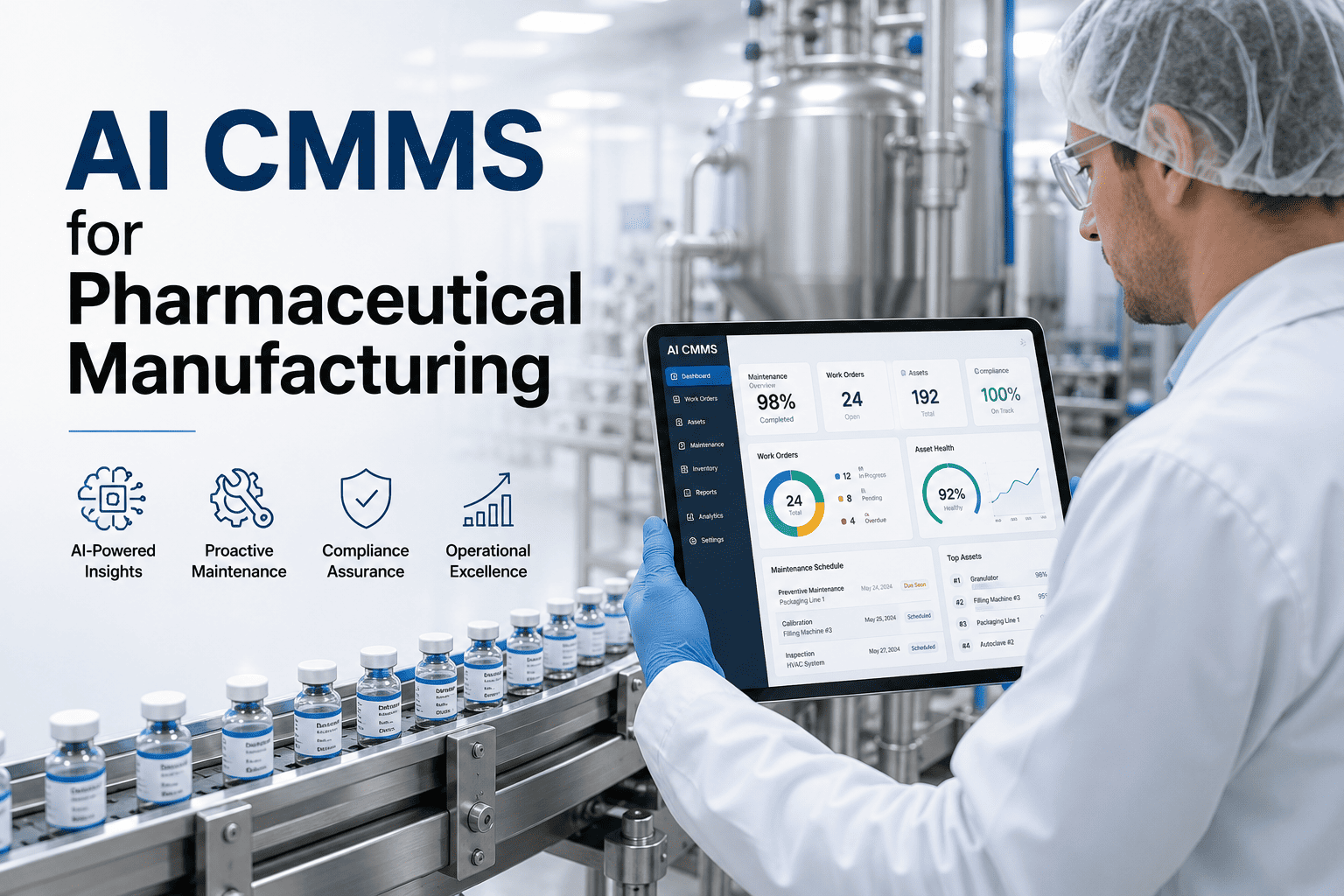
A mid-size pharmaceutical manufacturer operating three production lines and 480 GMP-certified personnel reduced equipment-related deviations by 60 percent within twelve months of deploying Oxmaint — eliminating an average of 2.3 batch losses per quarter and cutting CAPA closure time from 41 days to 9 days. The deviations did not disappear because the equipment changed. They disappeared because the maintenance documentation finally connected field execution to auditable, inspection-ready records — automatically. Book a demo to see how Oxmaint closes the compliance documentation gap at your pharmaceutical plant.
A pharmaceutical plant with three GMP production lines replaced its paper-based maintenance and deviation management system with Oxmaint. Within 12 months: equipment-related deviations fell 60%, batch loss frequency dropped by 2.3 per quarter, CAPA closure accelerated from 41 to 9 days, and FDA inspection preparation time dropped from 3 weeks to under 2 hours. The root cause was not equipment failure — it was documentation failure. Oxmaint eliminated the gap between field execution and auditable record.
The Problem: Documentation Gaps Driving Deviations and Batch Losses
Before Oxmaint, this facility operated across three disconnected documentation systems — a legacy CMMS for work orders, paper-based PM logs, and a separate CAPA spreadsheet maintained by the quality team. None were connected. Book a demo to see how Oxmaint unifies maintenance and quality documentation for pharmaceutical operations.
Preventive maintenance intervals for filling lines, autoclaves, and clean-in-place systems were tracked in paper logs. Missed intervals were identified only during quarterly internal audits — by which time equipment drift had already generated documentation gaps flagged as deviations during batch record review.
CAPAs raised by quality were documented in spreadsheets. Maintenance work orders addressing the same equipment failure existed in a separate system. FDA inspectors identified the disconnect during a 2023 inspection — requesting evidence of corrective maintenance closure that could not be produced from either system independently.
Instrument calibration records for critical process parameters — pH meters, pressure transducers, and temperature sensors — were maintained in binders by department. Three batch releases in the prior year were delayed by an average of 11 days due to missing or incomplete calibration certificates identified during batch record review.
The quality team maintained 47 open CAPAs at the time of deployment — 29 of which were past their target closure date. The average time-to-close was 41 days. Root cause: maintenance actions required to close CAPAs were not visible to quality managers in real time, and escalation had to be managed manually via email.
Documentation Failure Drives Deviations. Oxmaint Closes the Gap.
Oxmaint connects PM execution, calibration records, and CAPA closure into a single auditable system — eliminating the documentation gaps that generate GMP deviations before they reach batch record review. Book a demo configured for your GMP production lines.
Implementation: From Paper to Audit-Ready in 6 Weeks
The facility completed Oxmaint deployment across all three production lines, the quality CAPA module, and the calibration management system in six weeks — without IT project support or system integration consulting.
All GMP-critical equipment — filling lines, autoclaves, lyophilizers, CIP systems, HVAC, and clean utilities — registered in Oxmaint's asset hierarchy with equipment category, PM interval, and calibration schedule. Paper PM logs converted to digital PM work orders with GMP-compliant completion fields and technician sign-off requirements.
Oxmaint's CAPA module configured with the facility's existing deviation classification schema. All 47 open CAPAs migrated into Oxmaint with linked maintenance work orders — giving quality managers real-time visibility into maintenance action status for the first time. Automated escalation set at 20-day threshold with manager notification. Book a demo to see CAPA-to-maintenance linking for your quality system.
Instrument calibration schedules — 312 calibrated instruments across three lines — activated in Oxmaint with automated alerts at 14-day and 3-day intervals before calibration due dates. Batch record calibration certificate retrieval configured for under 5-minute export. FDA 21 CFR Part 11 audit trail activated for all GMP-critical work orders and CAPA records.
Measured Outcomes — 12-Month Post-Deployment Results
From Two FDA 483 Observations to Zero — in One Inspection Cycle
Pharmaceutical plants that close the maintenance-to-quality documentation gap with Oxmaint eliminate the root cause of equipment-related deviations before the next audit — not after. Book a demo to see the compliance gap identified in your first deployment session.
Key Capabilities That Drove the Results
PM work orders completed on mobile with technician sign-off, timestamp, and GMP-required data fields — automatically archived against the equipment record for batch record and audit retrieval.
Deviations linked directly to maintenance work orders — quality managers see maintenance action status in real time. Automated escalation at configurable thresholds prevents CAPA backlogs from accumulating before audits.
All calibrated instruments managed in Oxmaint with due-date alerts, calibration record archiving, and batch record certificate export — eliminating manual binder searches and delayed batch releases.
Every work order completion, CAPA update, and calibration record carries a tamper-evident audit trail with user identity, timestamp, and change log — meeting 21 CFR Part 11 requirements without additional software.
Complete FDA, EMA, and ISO 9001 audit documentation packages assembled from Oxmaint in under 2 hours — PM records, calibration certificates, CAPA closure evidence, and corrective maintenance history in inspector-ready format.
Oxmaint's AI layer identifies PM interval drift patterns and equipment failure precursors before they generate deviations — moving the facility from reactive deviation management to predictive compliance protection.
Frequently Asked Questions
Reduce Deviations. Protect Batches. Pass the Next FDA Inspection.
Oxmaint connects GMP maintenance execution to quality documentation — eliminating the record gaps that generate deviations, delay batch releases, and drive 483 observations. Deployment in 4 to 6 weeks, no IT project required. Book a demo with your plant quality or operations team and see the compliance gap identified in your first session.