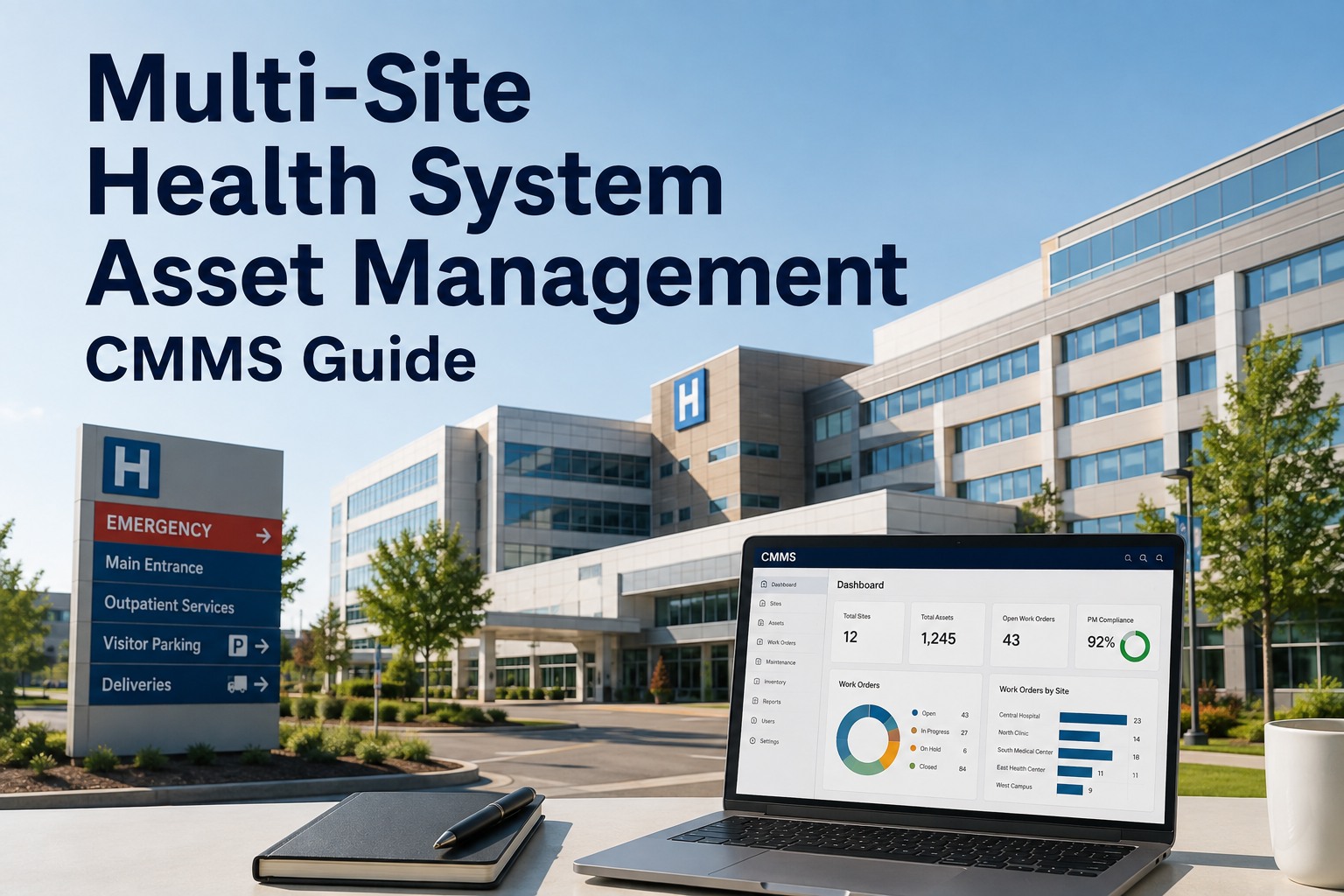
Standardizing CMMS across eight pharmaceutical manufacturing plants without a validated, documented rollout strategy costs more than the implementation itself — through audit findings, duplicate deviations, and unharmonized KPI data that auditors cannot reconcile across sites. The average FDA 483 observation related to inadequate computerized system validation documentation costs a mid-size pharma manufacturer $2.1M in remediation, production delays, and consultant fees. The plants that avoid this outcome share one common factor: a single CMMS platform, a documented validation approach, and harmonized maintenance KPIs enforced globally from day one. That is exactly what Oxmaint delivers. Book a demo to see how Oxmaint structures multi-site pharmaceutical CMMS standardization across your global plant network.
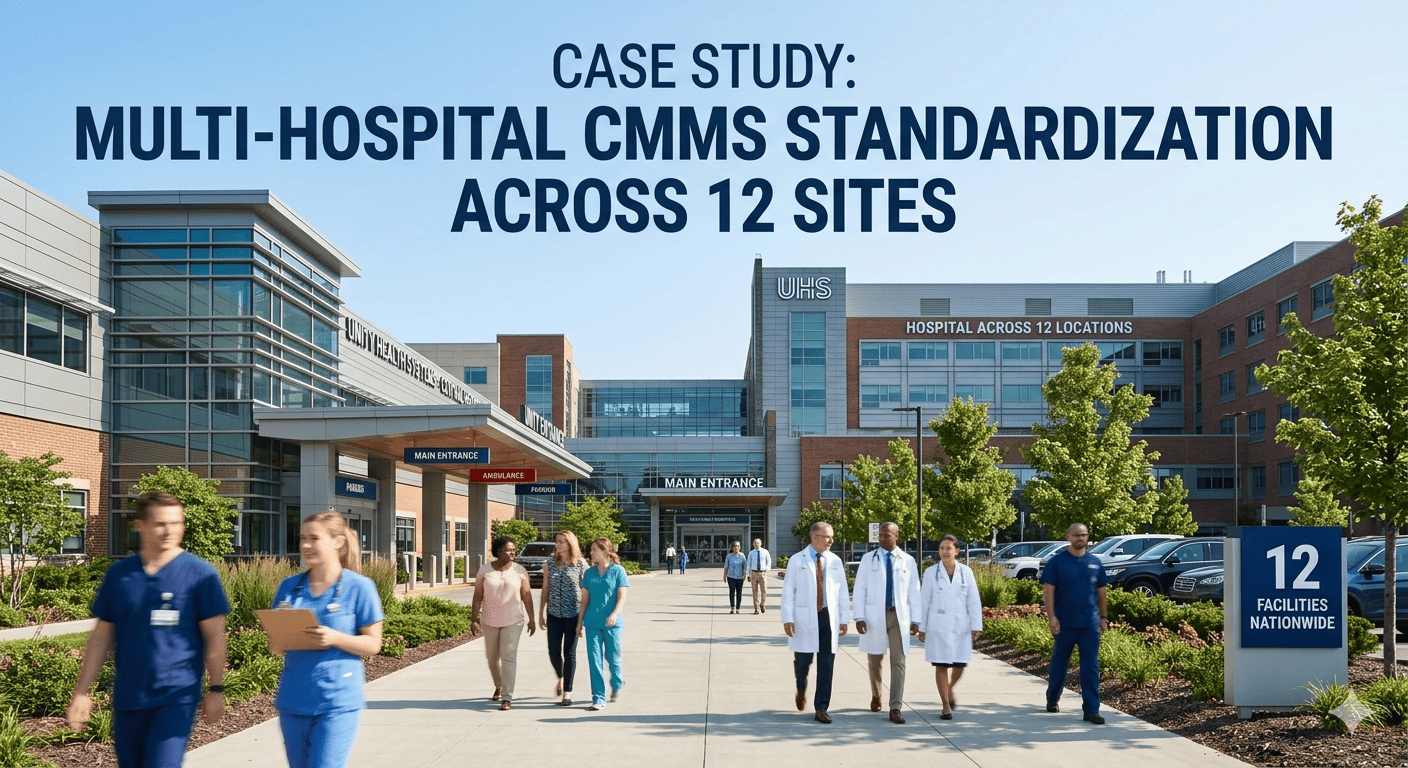
A global pharmaceutical manufacturer operating across eight plants in the US, Germany, India, and Singapore replaced four disconnected CMMS platforms with Oxmaint — deploying a validated, site-harmonized maintenance system with standardized PM schedules, unified KPIs, and audit-ready documentation across all sites. The outcome: 41% reduction in cross-site deviations, 98% PM compliance globally, and a single audit export package covering all eight plants within two hours.
The Business Problem: Four Systems, Eight Plants, Zero Consistency
Before standardization, each plant operated its own CMMS with different PM frequencies, different equipment hierarchies, and different KPI definitions — making global benchmarking impossible and multi-site audits a liability. Book a demo to see how Oxmaint structures multi-site pharmaceutical CMMS standardization.
Each plant maintained separate PM schedules with no master template library — resulting in PM completion rates that ranged from 61% to 89% across sites, none of which met the 95%+ threshold required for FDA equipment maintenance compliance under 21 CFR Part 211.68.
Eight plants used eight different naming conventions for critical equipment — filling lines, autoclaves, HVAC, and cleanroom systems — making cross-site reliability benchmarking and corporate KPI reporting impossible without manual reconciliation every quarter.
Three of the four legacy CMMS platforms lacked current IQ/OQ/PQ validation documentation — creating a regulatory exposure each time an FDA or EMA inspector requested computerized system validation evidence during a plant inspection.
Without a global CMMS rollout framework, previous system deployments stalled at individual plants due to resistance from site maintenance managers who controlled local data structures. Two of eight plants were still running paper-based maintenance logs as of Q1 2024.
Eight Plants. One CMMS. Full Regulatory Alignment.
Oxmaint's pharmaceutical CMMS deploys with pre-built validation packages, harmonized PM templates, and multi-site KPI dashboards — structured for FDA, EMA, and WHO GMP compliance from day one. Book a demo to see the multi-site deployment framework for your plant network.
Deployment Roadmap: 8-Plant Standardization in 14 Months
Oxmaint's multi-site pharmaceutical rollout follows a phased model that validates the platform once, deploys configuration globally, and activates each plant on a structured 6-week site schedule — no repeated validation cycles, no site-by-site consultant engagements.
Corporate equipment hierarchy defined in Oxmaint — covering filling lines, autoclaves, cleanroom HVAC, WFI systems, and utility equipment — with standardized asset naming enforced across all eight plants. Master PM template library built for critical GMP equipment categories with frequency, task content, and regulatory citation mapped per template.
Oxmaint's pre-built pharmaceutical validation package — including Installation Qualification, Operational Qualification, and Performance Qualification protocols — executed once at the corporate level and replicated across all eight site instances. Site-specific configuration deviations documented and justified in the validation summary report per Annex 11 requirements. Book a demo to review the Oxmaint validation package structure for your QA team.
Each plant activated on a structured 6-week schedule — site maintenance data migrated from legacy systems, local PM schedules aligned to master templates, and site maintenance managers trained on global KPI definitions. Oxmaint's change management module tracks training completion, sign-off status, and procedure acknowledgment per site and per role — creating the documented change control trail required under 21 CFR Part 11.
Corporate maintenance dashboard activated showing PM compliance, MTBF, corrective-to-preventive ratio, and deviation rate — benchmarked across all eight plants in a single view. Underperforming sites identified automatically; corrective action plans triggered from the corporate dashboard without requiring manual site-level reporting cycles.
Measured Results: 12 Months Post-Deployment
These outcomes are measured across all eight plants 12 months after full Oxmaint activation — compared against the baseline year when sites operated on legacy, disconnected CMMS platforms.
Regulatory Compliance Coverage
Pharmaceutical manufacturers operating across multiple jurisdictions face overlapping regulatory obligations for CMMS validation and maintenance documentation. Oxmaint's multi-site platform is pre-configured for all primary frameworks.
| Jurisdiction | Regulatory Framework | CMMS-Specific Requirements | Oxmaint Coverage |
|---|---|---|---|
| USA (FDA) | 21 CFR Part 211.68, Part 11 electronic records, cGMP equipment maintenance requirements | Equipment maintenance records, PM documentation, computerized system validation (IQ/OQ/PQ), audit trail, electronic signature | Pre-built 21 CFR Part 11 validation package, audit trail per record, electronic signature workflows, PM compliance reporting |
| EU / EMA | EU GMP Annex 11 (Computerised Systems), Annex 15 (Qualification and Validation), EudraLex Volume 4 | Computerised system lifecycle documentation, change management records, data integrity controls, periodic review evidence | Annex 11-aligned validation documentation, change control audit trail, data integrity controls, periodic review scheduling |
| India (CDSCO) | Schedule M GMP, CDSCO computerized system guidelines, WHO TRS 986 Annex 5 | Equipment qualification records, maintenance log documentation, computerized system validation evidence per WHO guidance | Schedule M-aligned PM documentation, WHO-compatible validation package, maintenance record archiving with access controls |
| Singapore (HSA) | HSA GMP Guidelines, PIC/S PE 009 GMP Guide, ICH Q10 Pharmaceutical Quality System | Equipment maintenance program documentation, CMMS validation evidence, corrective and preventive action records | PIC/S-aligned maintenance documentation, ICH Q10 CAPA management, cross-site KPI reporting for regional regulatory submissions |
Oxmaint vs Competing CMMS — Multi-Site Pharma Deployment
| Capability | Oxmaint | MaintainX | UpKeep | Fiix | Limble | IBM Maximo | Infor EAM |
|---|---|---|---|---|---|---|---|
| Pre-built pharma IQ/OQ/PQ validation package | Yes | No | No | No | No | Custom | Custom |
| 21 CFR Part 11 / Annex 11 audit trail | Yes | Partial | No | Partial | No | Yes | Yes |
| Multi-site harmonized PM template library | Yes | Generic | Generic | Partial | Generic | Yes | Yes |
| Cross-site global KPI dashboard | Yes | Partial | No | Partial | Partial | Yes | Yes |
| Change control audit trail for GMP compliance | Yes | No | No | Partial | No | Yes | Partial |
| Deployment without IT/consultant in under 6 weeks per site | Yes | Yes | Yes | Varies | Yes | No | No |
| Multi-jurisdiction regulatory template library | Yes | No | No | No | No | Custom | Custom |
Frequently Asked Questions
From Four Disconnected Systems to One Validated Global Platform
Multi-site pharmaceutical CMMS standardization, IQ/OQ/PQ validation packages, and cross-site KPI benchmarking — deployed across your full plant network within 14 months, without IT projects or external validation consultants. Book a demo with your VP of Operations and Global Quality Director to review the deployment roadmap for your plant network.