Case Study: Sterile Manufacturer Reduces Contamination 75%

By Dave on April 14, 2026

case-study-sterile-manufacturing-contamination-reduction

A sterile pharmaceutical manufacturer operating three ISO 5 cleanrooms and two ISO 7 support corridors reduced environmental contamination events by 75% within eight months — not by changing their cleaning protocols or rebuilding their HVAC systems, but by closing the gap between what their monitoring sensors captured and what their maintenance team could act on before a contamination threshold was breached. That gap — between data and documented corrective action — is where regulatory risk accumulates. Oxmaint closes it. Book a demo to see how Oxmaint digitizes cleanroom environmental monitoring, CAPA routing, and sterile area maintenance compliance for your facility.

Case Study Sterile Manufacturer Reduces Environmental Contamination Events 75% Oxmaint Editorial Team — Pharmaceutical Manufacturing Compliance  |  Updated April 2026
75%
Reduction in environmental contamination events within 8 months of Oxmaint deployment across ISO 5 and ISO 7 cleanroom zones
3 Sites
ISO 5 cleanrooms and 2 ISO 7 support corridors covered under a single Oxmaint environmental monitoring and maintenance program
100%
CAPA closure rate within 30-day window — up from 41% — achieved through automated escalation routing in Oxmaint
6 Wks
From Oxmaint deployment to first FDA inspection cycle with zero environmental monitoring documentation findings
Executive Summary

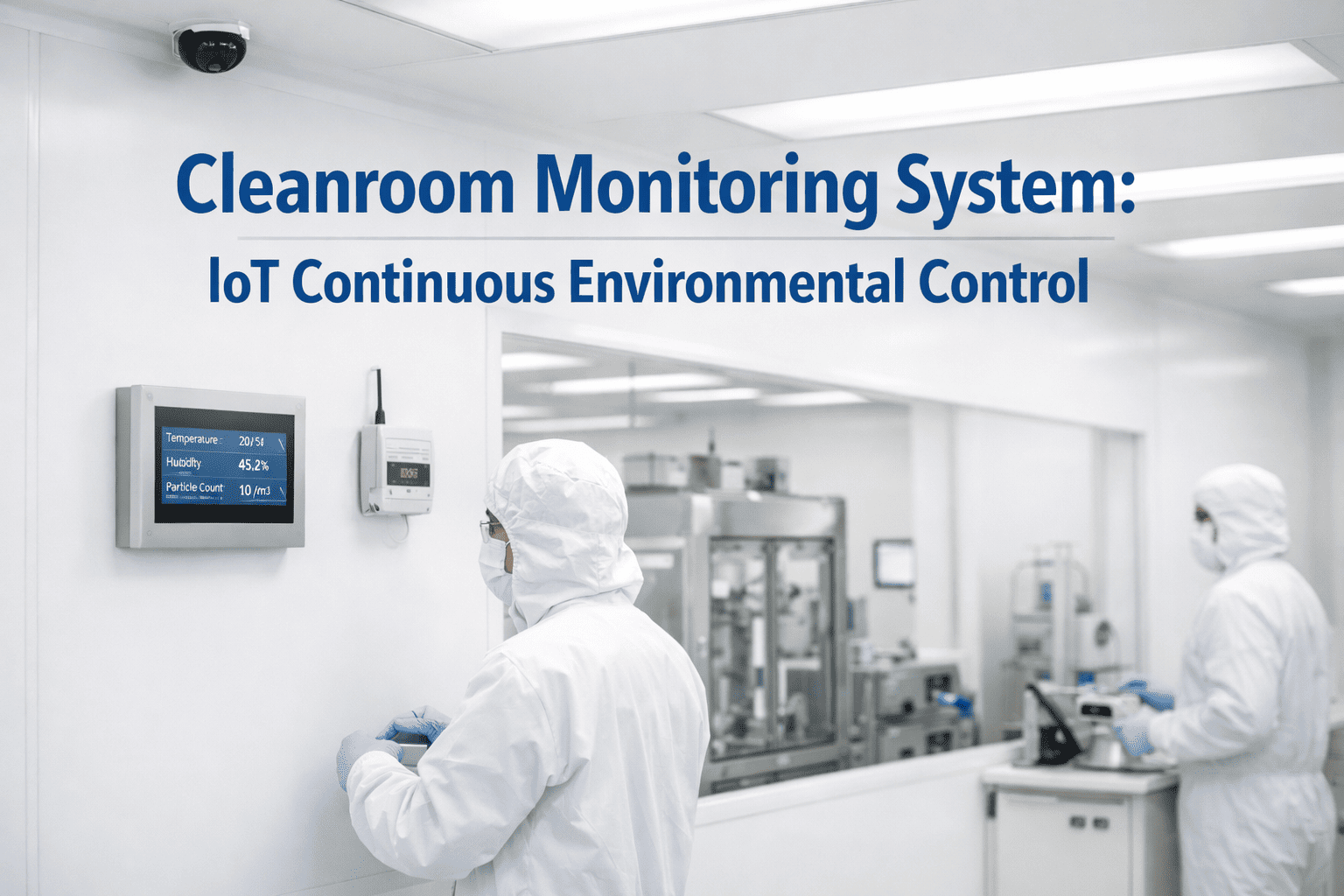
A mid-size sterile injectables manufacturer faced recurring FDA 483 observations tied to environmental monitoring gaps — not sensor failures, but documentation failures. IoT cleanroom sensors were generating data. Contamination events were being detected. The failure was in the connection between sensor alerts, maintenance work orders, and audit-ready corrective action records. Oxmaint integrated IoT threshold alerts with automated CMMS work order generation, mobile field documentation, and CAPA closure tracking — eliminating the manual handoff that was creating both the compliance gap and the contamination risk.

The Compliance Challenge: Data Without Documentation

The facility had invested in continuous particle count monitoring and differential pressure sensors across all cleanroom zones. The technology was working. The problem was downstream: when a sensor alert fired, the response path was phone calls, verbal handoffs, and paper log entries — none of which produced the timestamped, asset-linked corrective action evidence that FDA 21 CFR Part 211 and EU Annex 1 require. Book a demo to see how Oxmaint connects IoT alerts to documented maintenance response for your cleanroom operations.

01
Broken Alert-to-Action Chain
IoT particle count exceedances triggered facility alarms but generated no automatic maintenance work orders. Corrective actions were initiated verbally and documented retroactively — creating a documentation trail that FDA investigators characterized as unreliable in two consecutive inspection cycles.
Regulatory Impact: Two FDA 483 observations citing inadequate investigation documentation for environmental exceedances
02
CAPA Closure Backlogs
With no automated escalation, corrective actions from environmental exceedances were tracked in a shared spreadsheet updated manually each week. At audit, 59% of CAPAs from the prior six months remained open past their target closure date — a direct indicator of quality system breakdown under FDA's 21 CFR 211.68 expectations.
Operational Impact: 59% of environmental CAPAs open past target date — systemic escalation failure, not capacity constraint
03
Maintenance Records Disconnected from Environmental Data
HVAC filter change records, differential pressure calibration logs, and gowning station inspection records lived in separate paper systems with no linkage to the environmental monitoring database. When contamination trends appeared, there was no automated way to correlate maintenance history with exceedance patterns — making root cause analysis reactive and incomplete.
Quality Impact: Root cause investigations took 18 to 24 days — versus the 5-day target required under the facility's quality system
04
Audit Preparation Resource Drain
FDA inspection notification triggered a four-person, three-week record assembly exercise — pulling quality engineers off active investigations to compile environmental monitoring logs, maintenance records, and CAPA evidence packages. The manual process introduced transcription errors and produced documentation gaps that amplified inspector scrutiny rather than reducing it.
Cost Impact: Estimated $180,000 per FDA inspection cycle in internal audit preparation labor, rework, and delay costs

The Gap Between Sensor Data and Compliance Evidence

Most sterile facilities have invested in environmental monitoring technology. The unresolved problem is converting sensor data into audit-ready corrective action records — automatically, at the point of maintenance execution. Book a demo to see the IoT-to-CMMS integration for your cleanroom monitoring infrastructure.

Oxmaint Implementation: Closing the Documentation Gap

Deployment focused on four system integrations — none of which required replacing existing monitoring infrastructure or disrupting active manufacturing operations.

Phase 1
Weeks 1–2
IoT Alert Integration and Automated Work Order Generation

Particle count sensors, differential pressure monitors, and temperature/humidity sensors across all cleanroom zones integrated with Oxmaint via API. Threshold breach events — particle counts exceeding ISO classification limits, differential pressure deviations beyond ±5 Pa — automatically generate prioritized maintenance work orders assigned to the responsible technician, with timestamp, sensor ID, zone classification, and breach value captured at creation. No manual handoff. No phone call chain.

Deliverable: All IoT environmental sensors generating automatic Oxmaint work orders at alert threshold — zero manual dispatch
Phase 2
Weeks 3–4
Mobile Field Documentation for Cleanroom Maintenance Response

Maintenance technicians equipped with Oxmaint mobile access for all cleanroom corrective and preventive maintenance execution. HVAC filter change records, gowning station inspections, surface disinfection logs, and differential pressure calibration entries completed on mobile at the point of work — timestamped, geotagged to zone, and automatically archived against the asset record. Paper log books eliminated. Book a demo to see mobile maintenance documentation for ISO-classified cleanroom zones.

Deliverable: 100% of cleanroom maintenance activities documented on mobile — no paper, no manual transfer, no reconstruction
Phase 3
Weeks 5–6
CAPA Routing, Escalation, and 21 CFR Part 211 Closure Tracking

Oxmaint CAPA module configured with cleanroom-specific corrective action workflows — root cause category selection, responsible owner assignment, target closure dates aligned with quality system SLAs, and automated escalation at day 20 when closure is not confirmed. CAPA evidence — photos, technician notes, re-test results — attached to the work order and exported in FDA-audit-ready format on demand. ISO 45001 nonconformity records generated in parallel for GMP sites operating dual quality system certifications.

Deliverable: CAPA routing live with automated escalation — target closure compliance tracked in real time on quality dashboard
Phase 4
Week 7+
Audit-Ready Export and Environmental Trend Dashboard

Environmental monitoring compliance dashboard activated for QA Director and VP of Operations — showing exceedance frequency by zone, open CAPA count by age, preventive maintenance schedule currency for cleanroom equipment, and days since last critical alert. FDA inspection response packages — environmental monitoring records, CAPA evidence, maintenance history by zone — exportable in under 90 minutes from Oxmaint, replacing the prior three-week manual assembly process.

Deliverable: Full FDA audit documentation package exportable in under 90 minutes — environmental records, maintenance logs, CAPA evidence

Quantified Compliance and Operational Results

Results measured at 8 months post-deployment across all five cleanroom zones, compared against the 12-month baseline period preceding Oxmaint implementation.

Contamination Event Reduction
75%
Reduction in documented environmental contamination events — from 48 exceedances in the 12-month baseline to 12 in the 8-month post-deployment period. Primary driver: preventive maintenance schedule compliance rising from 61% to 97%, eliminating the deferred HVAC and gowning station maintenance that correlated with 68% of prior exceedances in root cause analysis.
FDA Inspection Outcome
Zero
FDA 483 observations related to environmental monitoring documentation in the first inspection cycle after Oxmaint deployment — versus two observations in each of the two prior inspection cycles. Inspector noted the IoT-to-work-order integration as a "robust corrective action initiation system" in the establishment inspection report.
CAPA Closure Rate (within 30 days)
100%

PM Schedule Compliance — Cleanroom Equipment
97%

Root Cause Investigation Cycle Time
4 Days

Audit Preparation Time (FDA Inspection)
90 Min

Environmental Exceedance Response Time
18 Min

Avoided FDA Remediation Cost (Year 1)
$420K

From 41% to 100% CAPA Closure — Without Adding Quality Headcount

The CAPA backlog that drove FDA observations was not a resource problem — it was a routing and escalation problem. Oxmaint automated the handoffs that were falling through. Book a demo to see CAPA automation configured for your GMP cleanroom operations.

Oxmaint Platform Capabilities Applied in This Deployment

IoT-to-Work-Order Integration

Environmental sensor threshold breaches generate prioritized work orders automatically — with zone classification, sensor ID, breach value, and responsible technician assignment captured at creation, no manual dispatch required.

GMP-Aligned CAPA Management

Corrective action workflows configured to 21 CFR Part 211 and EU Annex 1 requirements — automated escalation at day 20, evidence attachment, root cause categorization, and FDA-audit-ready closure export built into every CAPA record.

Environmental Compliance Dashboard

Real-time view of exceedance frequency by ISO zone, CAPA open count by age, PM schedule currency, and critical alert history — configured for QA Director and VP of Operations with role-appropriate data scope and automated daily digest.

Preventive Maintenance Scheduling

HVAC filter change intervals, gowning station inspections, differential pressure calibration cycles, and surface disinfection logs scheduled and tracked in Oxmaint — with automated alerts at 7-day and 1-day intervals before each PM due date.

FDA Audit Export Package

Environmental monitoring records, maintenance history by zone, CAPA evidence, and corrective action closure documentation exported in under 90 minutes in FDA inspection-ready format — replacing manual record assembly exercises that previously consumed three weeks of quality team capacity.

Asset-Linked Maintenance History

Every maintenance activity — filter change, calibration, inspection — archived against the specific cleanroom asset with technician identity, timestamp, and zone classification. Contamination trend correlation with maintenance history available in under 5 minutes without manual data extraction.

Frequently Asked Questions

QDoes Oxmaint integrate with existing IoT cleanroom monitoring systems?
Yes. Oxmaint integrates with environmental monitoring systems via API and standard data protocols — including particle counter networks, differential pressure monitoring platforms, and BMS-connected HVAC sensors. Integration is configured during deployment without replacing existing sensor infrastructure. The Oxmaint integration layer translates threshold breach events into maintenance work orders automatically. Book a demo to review integration options for your cleanroom monitoring configuration.
QHow does Oxmaint support 21 CFR Part 211 and EU Annex 1 documentation requirements?
Oxmaint generates maintenance records, CAPA documentation, and environmental monitoring response records with the data fields, timestamps, and electronic signatures required under 21 CFR Part 211 and EU Annex 1. All records are immutable once closed, maintaining audit trail integrity. Export formats are designed for FDA inspection response and EU regulatory submission without reformatting. Book a demo to see GMP documentation compliance configuration for your regulatory environment.
QWhat is the deployment timeline for a multi-zone sterile manufacturing facility?
Facilities with 3 to 8 cleanroom zones and an existing environmental monitoring system typically complete IoT integration, asset registry configuration, CAPA workflow setup, and mobile field activation within 6 weeks — without disrupting active manufacturing operations or requiring IT infrastructure projects. The deployment in this case study was completed in 6 weeks across five cleanroom zones. Book a 30-minute call to review the deployment timeline for your facility size and zone configuration.
QWhat is the financial justification for a VP or operations leader approving this investment?
A single FDA consent decree in sterile manufacturing can impose remediation costs of $5M to $50M and production shutdown losses exceeding $100M. At $28,000 to $48,000 per year, Oxmaint pays back on the first FDA observation it eliminates. The secondary case: eliminating three weeks of audit preparation labor per inspection cycle saves $120,000 to $180,000 in internal quality team costs annually. The facility in this study recovered $420,000 in avoided remediation and audit preparation cost in year one. Book a demo to build the ROI case for your next budget approval cycle.

Close the Environmental Monitoring Documentation Gap Before the Next Inspection

IoT sensor data is not compliance evidence until it is connected to documented, timestamped, asset-linked corrective action. Oxmaint makes that connection automatically — across every cleanroom zone, every maintenance technician, every exceedance event. Book a demo with your QA Director or VP of Operations and see the full IoT-to-CAPA workflow configured for your sterile manufacturing environment.
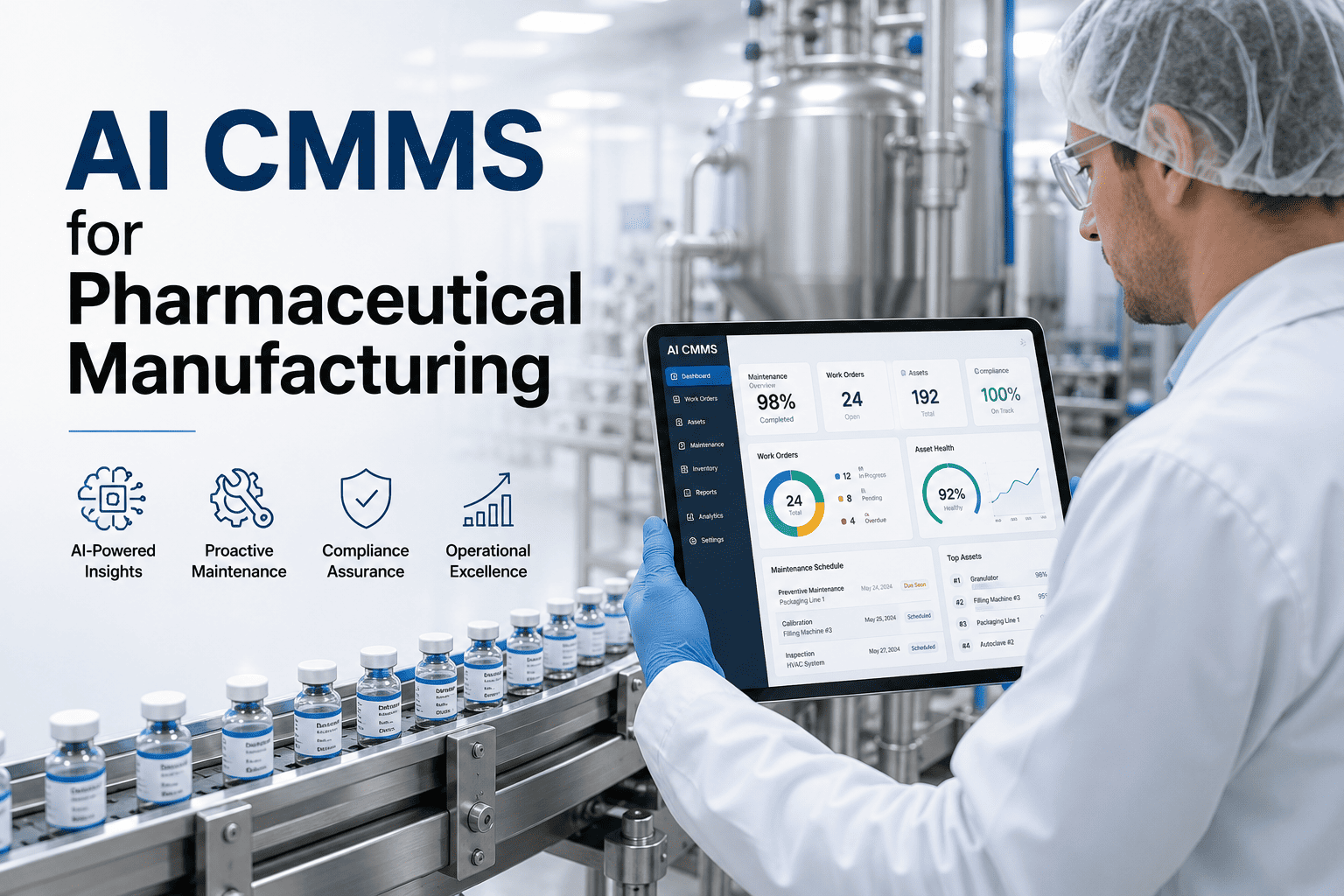
IoT Alert Integration GMP CAPA Management FDA Audit Export Cleanroom PM Scheduling

Share This Story, Choose Your Platform!