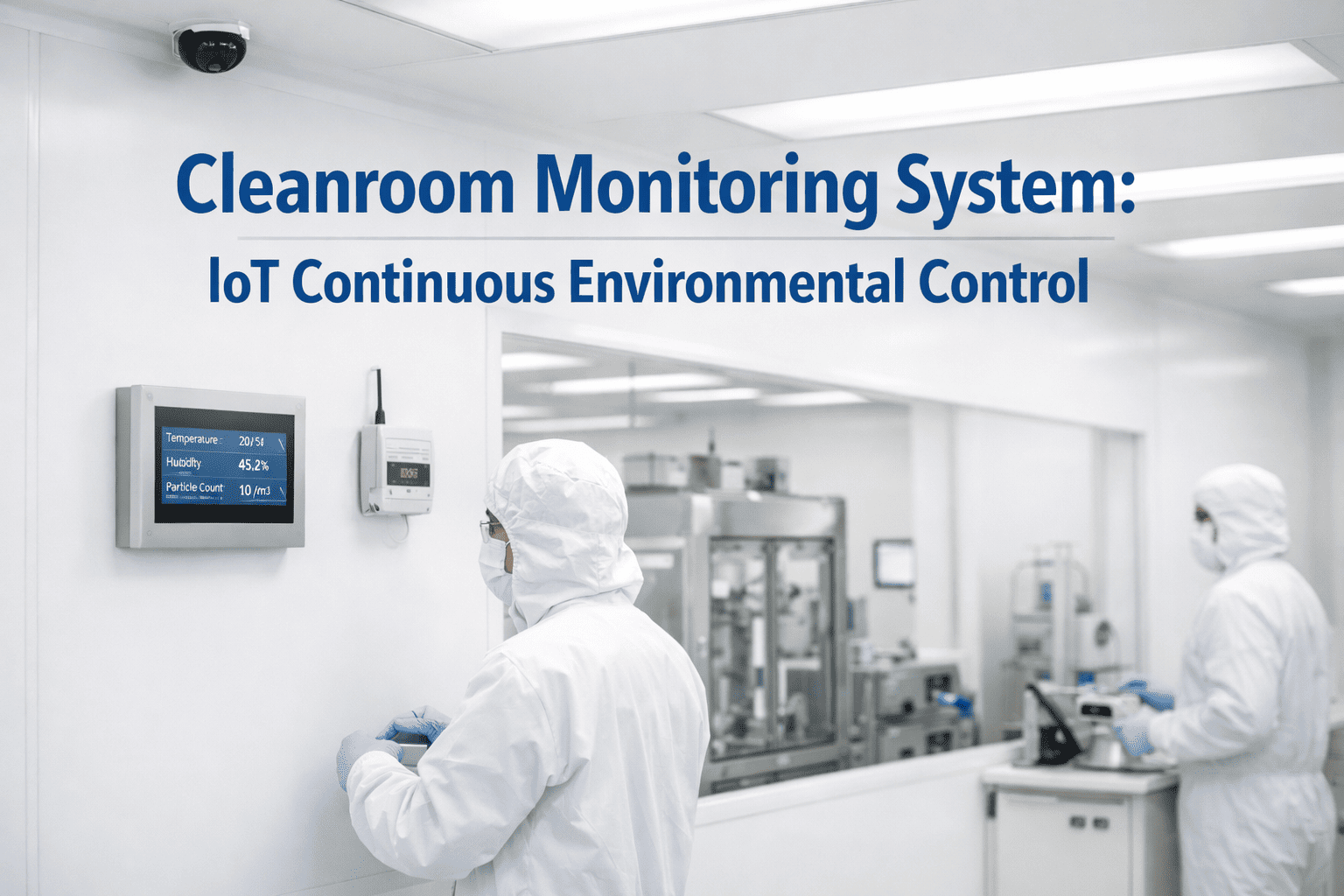
Cleanroom pressure differential is one of the most critical environmental parameters in sterile pharmaceutical manufacturing — and one of the most vulnerable to drift. When the pressure gradient between classified zones narrows or reverses, contamination control is compromised immediately, even if the alarm does not sound for minutes or hours. By the time a technician responds to a pressure alarm, the event may have already affected product exposure, environmental monitoring results, and batch release decisions. OxMaint provides a structured maintenance workflow for cleanroom pressure drift: capturing differential readings as they occur, triggering corrective work orders with room-level and device-level specificity, and documenting closure evidence that satisfies both GMP requirements and batch release documentation needs. Book a demo to see the pressure drift workflow configured for sterile pharma operations.
Cleanroom Pressure Drift Maintenance Workflow
From differential reading to corrective action to batch-ready documentation — a closed-loop workflow that protects contamination control and release decisions.
Why Pressure Drift Is a Batch Release Risk, Not Just an Alarm
Pressure Differential Parameters That Trigger the Workflow
| Zone Pair | Required Differential | Warning Threshold | Alarm / Workflow Trigger | OxMaint Action |
|---|---|---|---|---|
| Grade A / Grade B | 10–15 Pa | Below 10 Pa | Below 8 Pa | Immediate corrective WO + QA notification |
| Grade B / Grade C | 10 Pa minimum | Below 10 Pa | Below 8 Pa | Corrective WO + EM data review flag |
| Grade C / Grade D | 10 Pa minimum | Below 10 Pa | Below 8 Pa | Scheduled corrective WO + trend analysis |
| Grade D / Unclassified | 10 Pa minimum | Below 10 Pa | Below 8 Pa | Corrective WO + area status assessment |
| Coral / Airlock (material) | 15 Pa minimum | Below 15 Pa | Below 12 Pa | Corrective WO + material flow hold review |
How OxMaint Handles Pressure Drift From Detection to Closure
What OxMaint Captures for Every Pressure Drift Event
What Sterile Pharma Teams Report After Implementing This Workflow
Before OxMaint, pressure drift events lived in three separate systems — BMS alarms, maintenance work orders, and quality investigations. Nobody had a single record that connected the reading to the repair to the batch impact. Now every drift event is one continuous record from detection to closure. Our batch release team went from spending hours reconstructing drift timelines to pulling a single OxMaint report. That alone justified the implementation.
The biggest value for my team is the threshold-to-work-order automation. Previously, a BMS alarm would page our on-call technician, but the work order creation, room assignment, and parts lookup were all manual steps that added 20 to 40 minutes before anyone was actually diagnosing the problem. Now the work order is already assigned and populated when the technician arrives at the panel. Our mean time to corrective action dropped from 47 minutes to 14 minutes.
Frequently Asked Questions
How does OxMaint receive cleanroom pressure differential readings?
OxMaint integrates with building management systems via API to pull real-time differential pressure data for configured room pairs. Manual readings from portable monitors can also be logged directly into the workflow. Book a demo to review your BMS integration path.
Can the workflow link pressure drift events to specific batch numbers?
Yes — OxMaint associates drift events with the room and time window, then cross-references against batch production records logged in the system. Quality teams can pull all drift events that occurred during a specific batch run in one report. Start free to configure your batch-room linkage.
Does this workflow support EU GMP Annex 1 requirements for pressure differential documentation?
The workflow captures all Annex 1 documentation requirements including continuous monitoring records, threshold breach evidence, corrective action details, and post-repair verification — all stored against the cleanroom asset record and exportable for regulatory review. Book a demo to see the Annex 1 documentation export.
What happens if a pressure drift event occurs during environmental monitoring sampling?
OxMaint flags the time overlap between the drift event and any EM sampling recorded in the system, alerting quality that those results may need exclusion from trend analysis or additional assessment during batch release. Start free to set up your EM overlap detection rules.
Pressure Drift Will Happen. Undocumented Pressure Drift Should Not.
OxMaint gives your sterile operations a closed-loop workflow that turns every drift event into a documented, traceable, batch-ready maintenance record.