At 3:47 AM on a Tuesday, the oxygen pressure in Wing B of Riverside Community Clinic dropped below critical threshold. The wall-mounted alarm panel flashed amber, then red—but with only a single night-shift technician covering four buildings, fifteen minutes passed before anyone noticed. By then, three post-surgical patients on supplemental oxygen had experienced saturation drops, triggering bedside monitor alarms that finally brought clinical staff running. The source: a failed pressure regulator in the manifold room that a properly scheduled inspection would have caught two weeks earlier. This near-miss scenario—documented in incident reports across healthcare facilities nationwide—illustrates why medical gas monitoring has evolved from periodic manual checks to continuous IoT-enabled surveillance that transforms data into immediate, actionable alerts.
Medical gas systems form the invisible infrastructure of patient care, delivering oxygen, medical air, nitrous oxide, nitrogen, and vacuum to every clinical space where life-sustaining interventions occur. NFPA 99 mandates continuous monitoring with alarm systems that detect pressure fluctuations and leaks, but the standard leaves implementation details to facilities. The gap between basic compliance and operational excellence is where workflow automation creates measurable impact—converting sensor readings into prioritized work orders, routing alerts to qualified personnel, and building the documentation trail that surveyors expect. Research indicates that oxygen system failures have contributed to more than forty fatalities over three decades, with human error in maintenance procedures identified as a primary contributing factor. The question isn't whether to monitor medical gas systems digitally—it's how quickly your facility can implement systems that prevent the next preventable incident.
Strengthen healthcare uptime with connected sensors
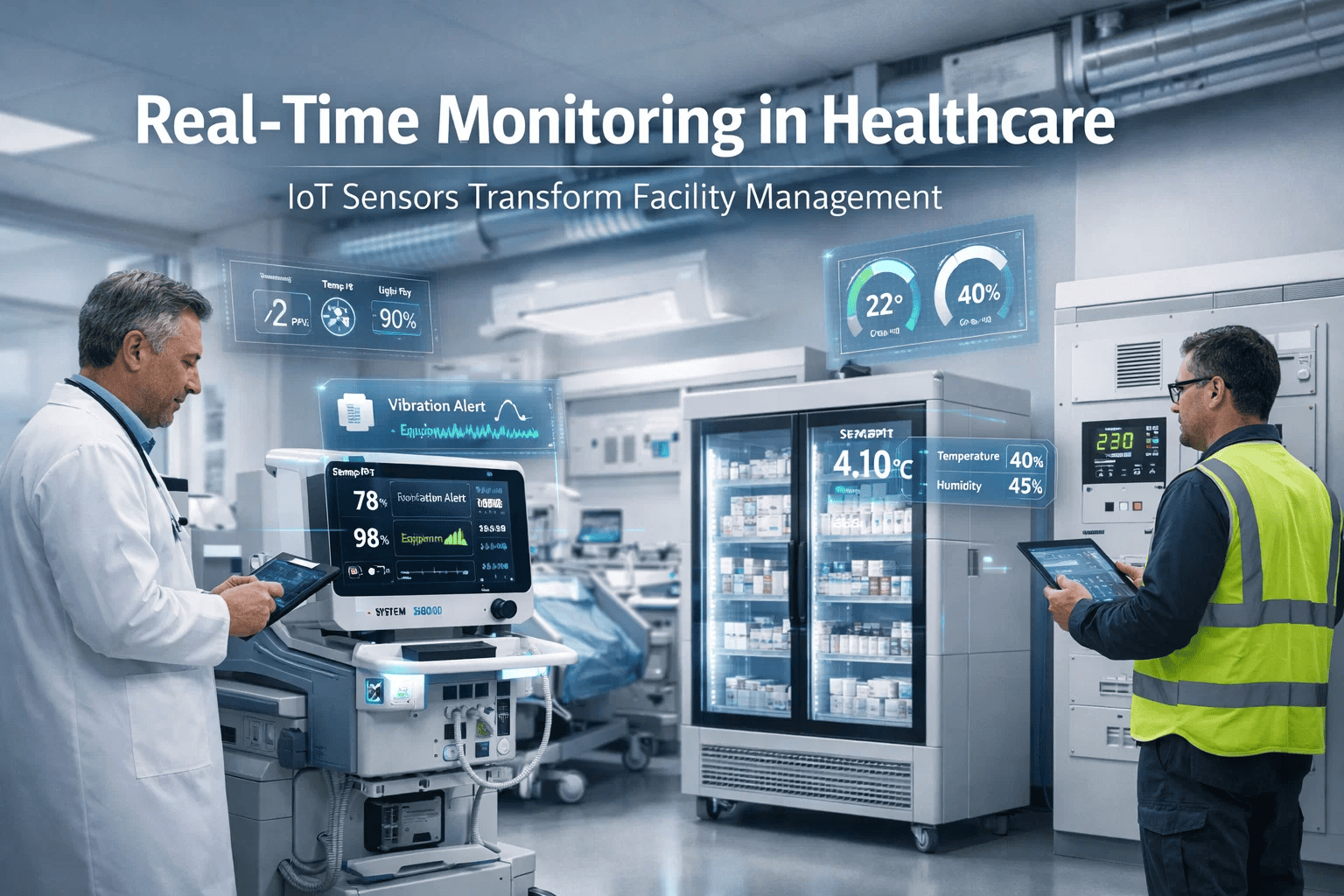
The transformation from periodic manual readings to continuous IoT-enabled monitoring represents more than technological upgrade—it fundamentally changes how facilities detect, respond to, and prevent medical gas system failures. Traditional approaches rely on daily or weekly gauge readings recorded on paper logs, creating documentation gaps of hours or days between observations. Connected sensors eliminate these gaps entirely, capturing pressure, flow, and temperature data every few seconds and transmitting it through secure protocols to centralized monitoring platforms. When a compressor begins cycling abnormally or a pressure reducing valve starts drifting outside parameters, the system detects the trend immediately rather than waiting for the next scheduled inspection.
IoT integration delivers three capabilities that manual monitoring cannot match: real-time anomaly detection through continuous data analysis, predictive alerting based on trend analysis that identifies degradation before failure occurs, and comprehensive historical data that reveals patterns invisible in spot-check observations. A slight but progressive drop in manifold pressure might indicate a slow leak that manual checks would miss until it becomes critical—connected sensors flag the trend within hours, not weeks. Facilities implementing sensor-based monitoring can contact our healthcare technology team for integration guidance to create unified visibility across all medical gas infrastructure.
Making audits painless — a healthcare operating model with digital logs
Joint Commission surveyors and CMS inspectors don't simply verify that medical gas systems function—they examine the documented evidence that facilities maintain these systems according to NFPA 99 requirements. Annual inspections of bulk oxygen capacity, quarterly verification of alarm functionality, monthly checks of emergency shutoff procedures, and daily observation of system status all require documented proof. Paper logs create three audit vulnerabilities: records can be lost or damaged, handwritten entries become illegible, and gaps in documentation are difficult to explain months after they occur. Digital logs eliminate all three risks while adding capabilities paper cannot provide: automatic timestamps, GPS verification of inspector location, photo documentation, and instant retrieval during surveys.
The operating model shift extends beyond documentation to workflow management. When a sensor detects an anomaly or a scheduled inspection comes due, the CMMS platform automatically generates work orders routed to qualified personnel based on shift schedules and certifications. Completion requires digital sign-off with mandatory fields that prevent submission of incomplete records. Supervisors gain real-time visibility into compliance status across all systems without physically reviewing logbooks. For facilities managing multiple locations, centralized dashboards show aggregate compliance metrics with drill-down capability to any individual asset. Organizations building or optimizing their digital compliance infrastructure should schedule consultations with healthcare CMMS specialists who understand regulatory requirements.
Alert Escalation: From Sensor Reading to Resolved Work Order
The value of continuous monitoring depends entirely on what happens when sensors detect anomalies. Traditional alarm panels provide visual and audible alerts at the panel location—effective if someone is present to notice, ineffective during off-hours or when staff are occupied with patient care. Workflow automation transforms passive alarms into active response chains: sensor thresholds trigger instant notifications to designated personnel via mobile app, SMS, and email simultaneously. If the primary responder doesn't acknowledge within defined timeframes, alerts automatically escalate to supervisors, then to on-call managers, ensuring no critical condition goes unaddressed regardless of time or staffing levels.
The escalation model adapts to alert severity. Advisory conditions—parameters trending toward limits but not yet critical—generate work orders for next-business-day response. Warning conditions requiring prompt attention trigger immediate notifications with 30-minute acknowledgment windows. Critical alarms indicating patient safety risk activate emergency protocols with 5-minute escalation to leadership if unacknowledged. Each step creates documented evidence of notification, response time, and resolution actions. Facilities can get help configuring escalation rules to align alert routing with their organizational structure and response capabilities.
Expert Review: Healthcare Facility Leaders on Connected Monitoring
Medical gas systems operate in the background until something goes wrong—and when something goes wrong, patient safety is immediately at risk. Connected monitoring doesn't eliminate the need for skilled technicians; it multiplies their effectiveness by ensuring they're working on the right problems at the right time, with complete information about system history and current conditions.
Conclusion: From Reactive Alarms to Proactive Operations
Medical gas system monitoring has evolved from wall-mounted alarm panels and paper logbooks to connected sensor networks delivering continuous intelligence about system health. The transformation isn't merely technological—it represents a fundamental shift from reactive response to proactive management, from hoping problems are caught during inspections to knowing conditions in real time. Facilities that embrace workflow automation gain more than compliance documentation; they gain operational visibility that prevents the cascade failures where a single undetected anomaly becomes a patient safety incident and a regulatory citation.
The implementation path is clearer than many facility managers assume. Modern CMMS platforms designed for healthcare integrate with existing alarm infrastructure, adding IoT sensor capabilities without replacing functional equipment. Configuration emphasizes clinical workflows rather than generic industrial monitoring, with alert thresholds, escalation rules, and documentation templates aligned with NFPA 99 and Joint Commission requirements. The investment payback arrives through multiple channels: reduced emergency repair costs, extended equipment life through optimized preventive maintenance, eliminated audit preparation time, and—most importantly—the confidence that medical gas systems will perform reliably when patients depend on them. For facilities ready to explore connected monitoring capabilities, technical demonstrations can illustrate how sensor integration works with specific medical gas infrastructure.