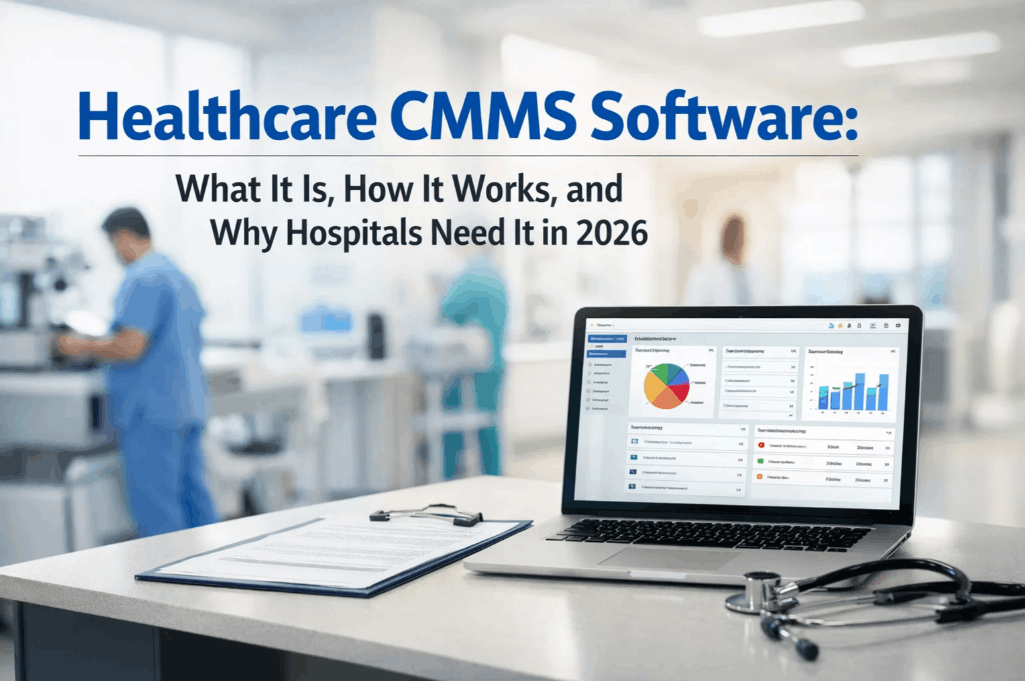
Hospital maintenance teams operate in one of the most demanding environments on earth. Equipment downtime is not just a budget line — it is a patient safety event. Yet the majority of hospital technicians still carry paper work orders, return to the office to log job notes, and hunt for service histories buried in shared drives. The result is preventable delays, compliance gaps, and emergency repairs costing 4.8x more than planned maintenance. A purpose-built CMMS mobile app eliminates every one of those friction points — putting live work orders, full equipment records, barcode scanning, and photo documentation directly in every technician's hand, wherever they are in the building. Start a free 30-day trial with Oxmaint and see the difference on your first shift, or book a live demo to walk through the full mobile workflow with our team.
Give Every Technician a Command Center in Their Pocket
Oxmaint CMMS delivers real-time work orders, full asset histories, barcode scanning, offline capability, and audit-ready documentation — all from one mobile app built for the pace and pressure of hospital operations.
What Is a CMMS Mobile App for Hospital Maintenance?
A CMMS (Computerized Maintenance Management System) mobile app is the frontline interface connecting technicians in the field to your central maintenance platform. It replaces paper work orders, clipboard checklists, and radio calls with a single, always-available application running on any smartphone or tablet.
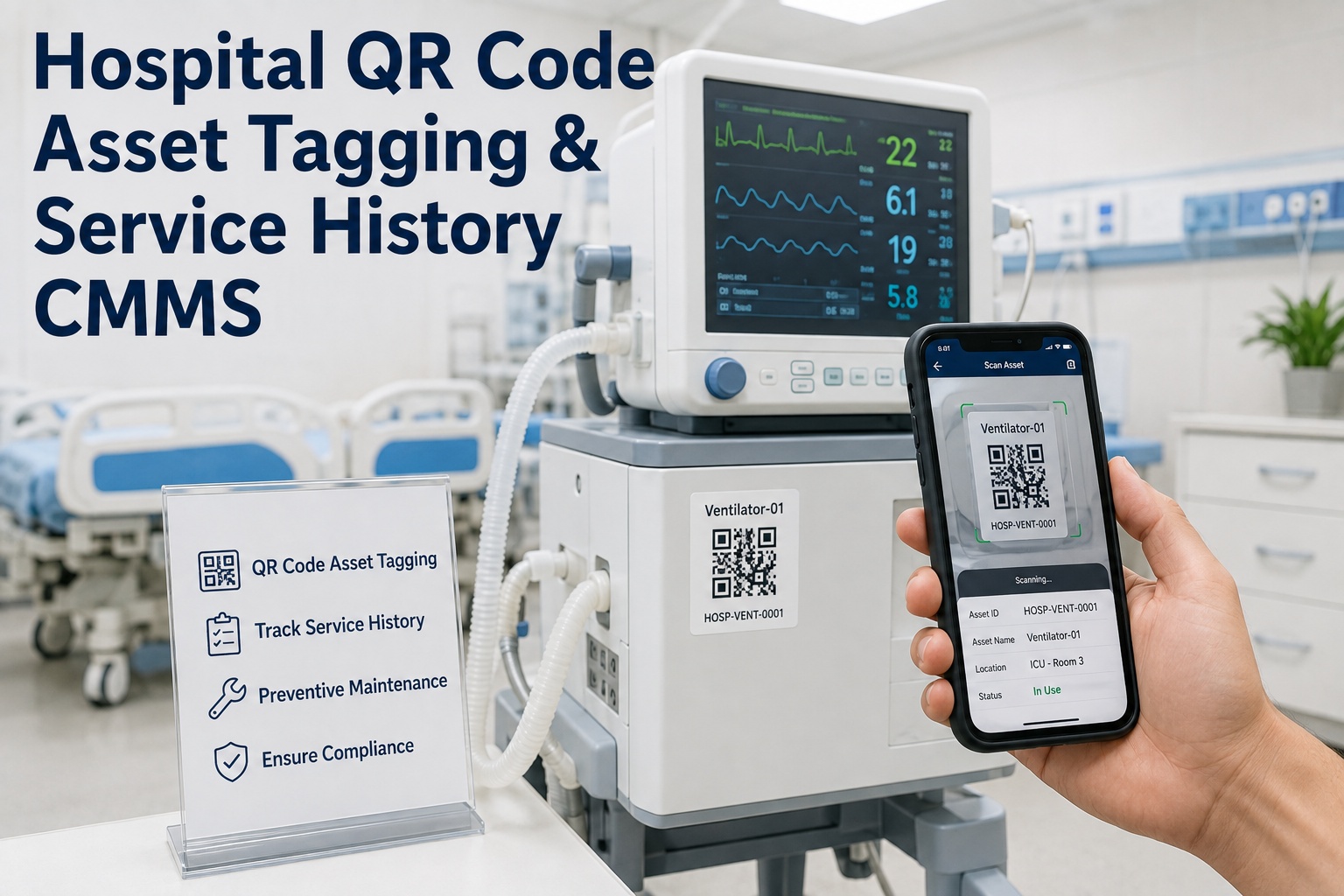
In practice: a biomedical engineer responding to a ventilator alert pulls up the full service history in 4 seconds, scans the equipment tag, logs the repair with timestamped photos, checks parts stock, and digitally signs the closed work order — all from the equipment bay corridor. No paper. No manual data entry. No compliance gaps. The future of hospital maintenance is already running in the buildings that have made this shift. Book a demo to see it in a live hospital environment, or start a free trial and run it on your first shift this week.
8 Mobile Features That Transform Frontline Hospital Maintenance
Each capability below directly eliminates a specific operational bottleneck found in traditional hospital maintenance environments.
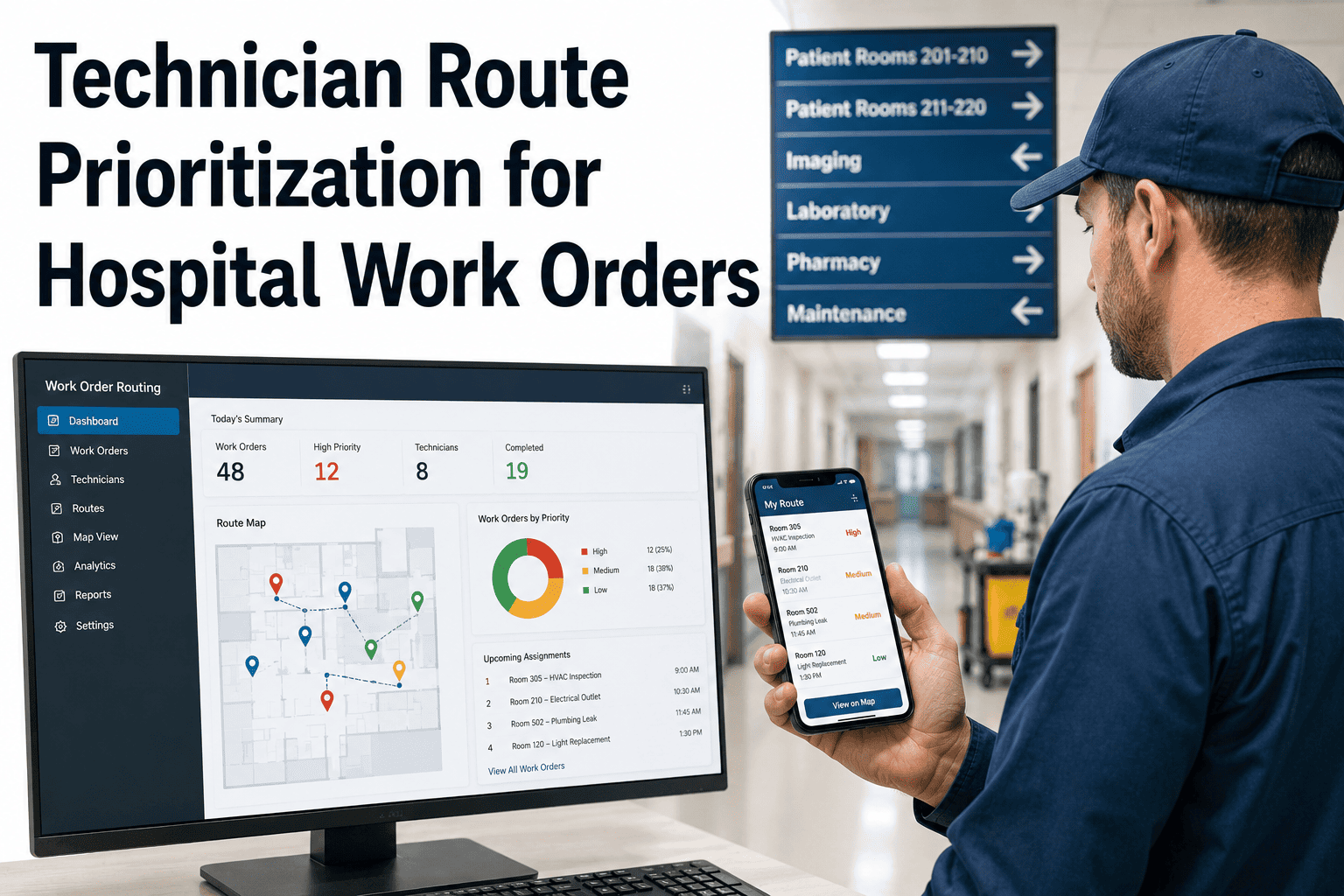
Supervisors assign jobs instantly from the dashboard. Technicians receive a push notification with asset ID, floor location, priority level, and full task detail. Average assignment-to-acknowledgment time: under 90 seconds.
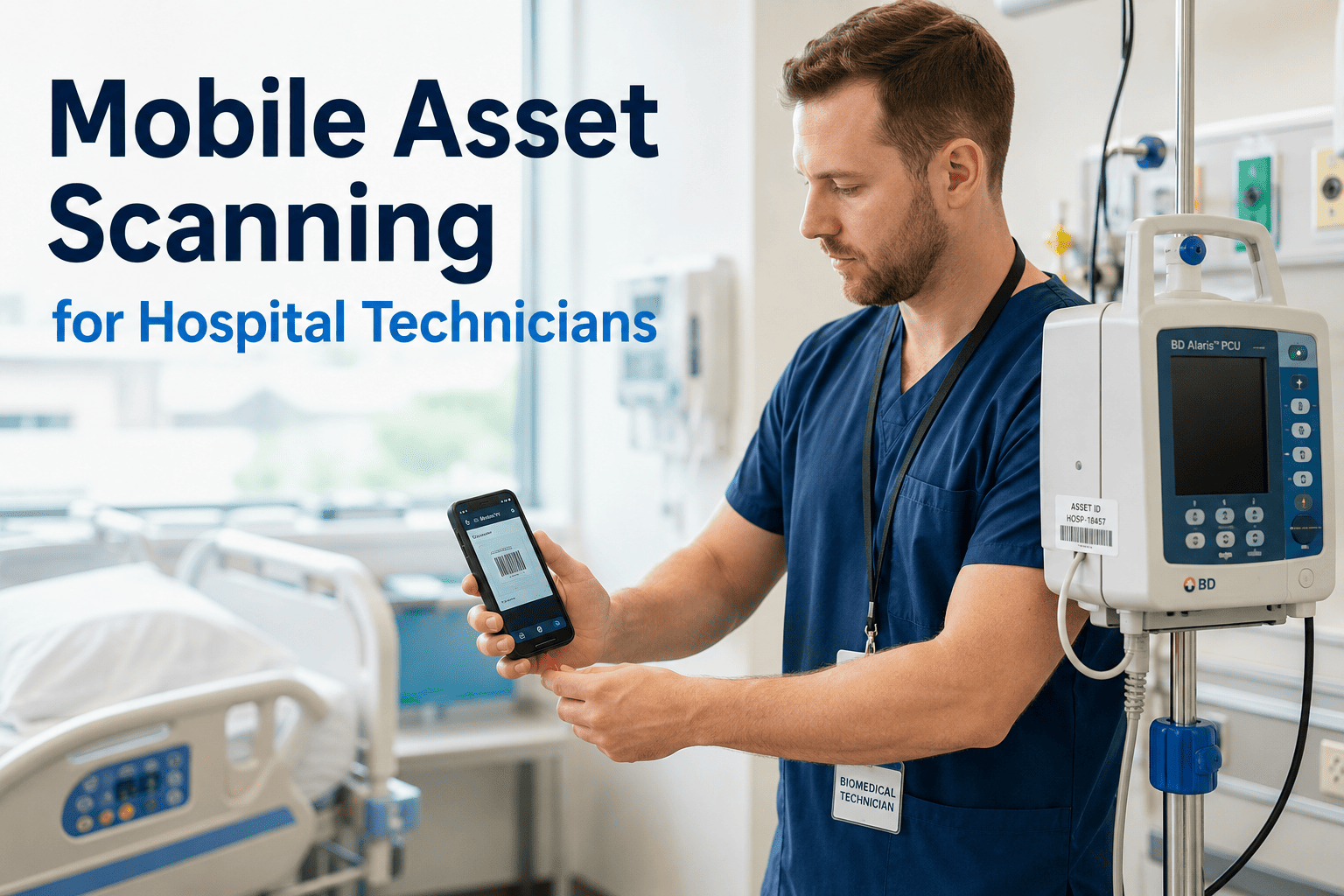
Scan any equipment label to instantly surface the full asset record — serial number, OEM service intervals, warranty status, complete maintenance history, and any concurrent open work orders on the same unit.
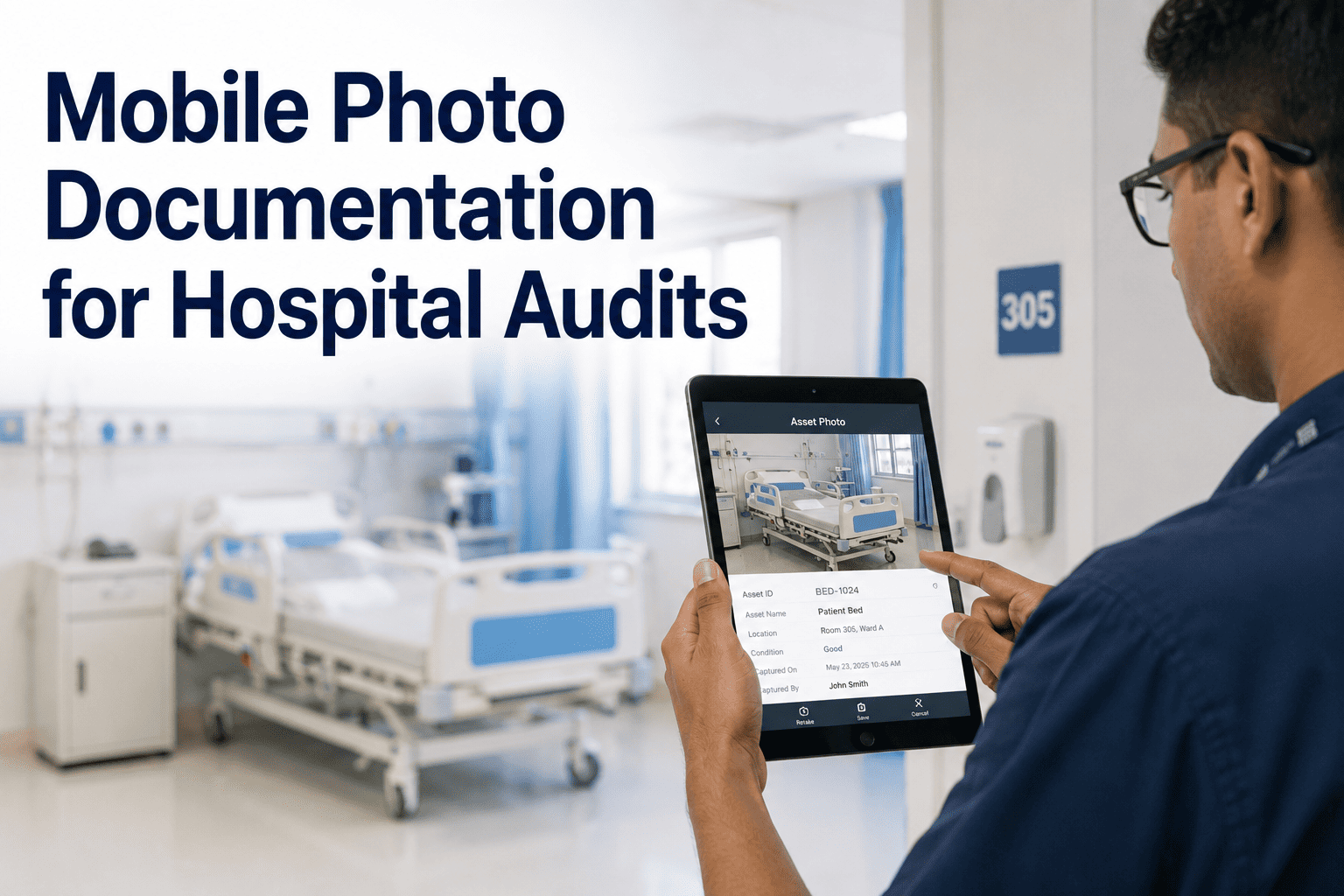
Capture fault conditions, in-progress repairs, and post-repair confirmations directly within the work order. Every image is automatically linked to the asset record with GPS tag and timestamp embedded — no manual attachment required.
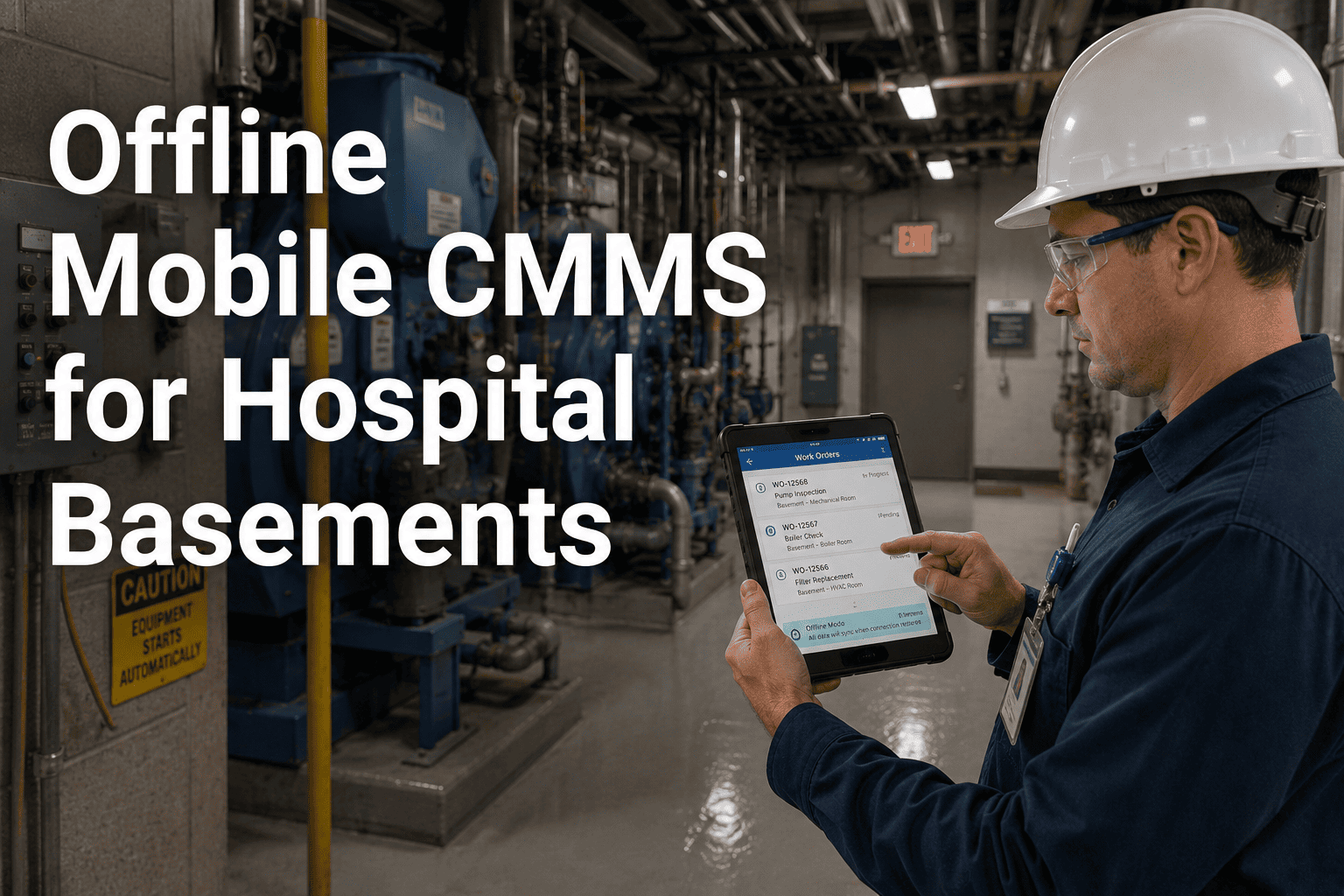
Basement plant rooms, lead-lined imaging suites, and server infrastructure corridors routinely block mobile signals. Oxmaint operates with complete functionality offline and auto-syncs all completed data the moment the device reconnects.
Inspection checklists with required-field enforcement prevent incomplete submissions. Digital signatures, auto-timestamps, and technician identity records create TJC, NHS, CMS, and OSHA-ready documentation on every closed work order.
Check live parts inventory from any device, log components used against the work order, and raise procurement requests without leaving the job site. Stock levels update immediately across all sites — no return trips for information.
IoT and SCADA-connected equipment triggers automated work orders when operating parameters fall outside thresholds. Technicians receive mobile alerts before a failure becomes visible — turning reactive emergency repairs into planned interventions.
Supervisors and directors see live work order status, PM compliance, equipment condition scores, and upcoming CapEx triggers across every hospital site simultaneously — from one screen, on any device, without phone calls or site visits.
4 Critical Pain Points Paper-Based Hospital Maintenance Creates
Each of these failures has a measurable impact on patient safety, regulatory compliance, and operational expenditure. They are also entirely preventable.
Without mobile work order assignment, a fault reported at a nursing station travels through radio calls, a shared desk phone, and a paper queue before any technician is dispatched. In hospitals using Oxmaint mobile, the same alert reaches the closest available technician in under 3 minutes.
Paper work orders get filled partially in the field, misplaced in transit, or left in jacket pockets until after shift end. During TJC surveys and CMS inspections, incomplete maintenance documentation is cited in over 40% of hospital Environment of Care reviews.
Most regulatory frameworks require 85% or higher PM compliance. The gap between 62% and 85% represents not only inspection risk but premature equipment failure — pushing CapEx replacement cycles 3 to 5 years earlier than the equipment's actual useful life.
Night shift technicians duplicate work completed by the day team because there is no live status feed. Equipment shared across radiology, ICU, and wards accumulates conflicting service histories. Multi-campus hospital networks manage asset health through phone calls and site visits rather than data.
A Platform Built for the Complexity of Healthcare Facility Operations
Not a generic work order tool. A maintenance intelligence platform specifically engineered for the documentation, compliance, and multi-site demands of hospital operations.
Every asset tracked with model, serial number, OEM service intervals, warranty status, and live condition score. Full lifecycle visibility from procurement to end-of-life — structured across Portfolio, Property, System, Asset, and Component hierarchy. No lost records. No manual lookups.
Set preventive maintenance intervals against real usage — operating hours, scan counts, procedure cycles, or calendar intervals. Oxmaint auto-generates work orders and pushes them to assigned technicians before the deadline, eliminating the human dependency on PM compliance entirely.
Accept, execute, document, and close work orders entirely from a smartphone. Every job is recorded with parts used, time on task, technician identity, and digital signature — generating the complete, timestamped audit trail required for OSHA, TJC, NHS, and TGA compliance automatically.
Condition scores and usage data generate rolling capital expenditure forecasting models. Hospital boards and portfolio managers receive investor-grade equipment replacement plans that convert CapEx decisions from budget guesswork into data-driven facility strategy.
Reactive Management vs Oxmaint Mobile CMMS
The operational and financial difference between traditional hospital maintenance and mobile-first CMMS is measurable across every metric that matters to facility leadership and hospital boards.
| Operational Metric | Without Mobile CMMS | With Oxmaint Mobile |
|---|---|---|
| Work Order Response Time | 30 to 60 minutes average | Under 5 minutes |
| PM Compliance Rate | 58 to 64% average | 92%+ automated |
| Documentation Completeness | 60 to 70% complete records | 100% mandatory fields enforced |
| Annual Equipment Downtime | 14 to 21 days per critical asset | Under 4 days |
| Audit Readiness | Manual assembly, days of preparation | Digital, on-demand, under 2 hours |
| Emergency vs Planned Repair Cost | 4.8x higher per incident | Planned and fully budgeted |
| Technician Jobs Per Shift | 4 to 6 jobs completed | 8 to 12 jobs completed |
| Multi-Site Visibility | Phone calls and physical site visits | Single real-time dashboard |
The productivity gap alone justifies the investment. When a technician can accept, action, and close a work order in 8 minutes instead of 40, the same team headcount delivers more than double the throughput per shift — without overtime, without additional hiring, and without compliance risk. Want to quantify this for your hospital? Book a demo and we will map the ROI against your current workflow in one session. Prefer to test it yourself? Start a free trial and put it to work with your actual team this week.
From Alert to Closed Work Order in Under 10 Minutes
This is the complete technician workflow on Oxmaint mobile. Six steps that replace 45 minutes of fragmented paper processes — while generating better documentation than any paper system ever could.
A fault is reported via nurse station portal or IoT sensor threshold breach. Supervisor reviews, assigns, and the technician receives a full push notification with asset ID, floor location, priority level, and any prior open faults on the same unit. No radio calls. No paper queue.
Arriving at the equipment, the technician scans the barcode or QR tag. Full asset history opens in 4 seconds — service logs, OEM manual, warranty status, last PM date, condition score, and all prior interventions. No manual lookup. No radio back to the office.
The technician works through the mandatory inspection checklist. Each required field must be completed before the work order can progress. Photos of the fault condition, the repair in progress, and the post-repair state are captured directly in the work order — timestamped and auto-linked to the asset record.
Components used are logged directly from the mobile parts inventory interface. Stock levels update instantly across all sites. If a part requires ordering, a procurement request is raised from the same screen — no application switching, no return trips to the storeroom for availability information.
Job complete. The technician adds final notes, applies digital signature, and closes the work order. Asset condition score updates automatically. Next PM trigger resets. The supervisor sees closure in real time on the dashboard. No paper collection. No manual data entry at end of shift.
Every closed work order becomes an audit-ready compliance document — technician identity, precise timestamp, checklist responses, photo evidence, parts consumed, labour time, and digital sign-off. Exportable immediately for TJC surveys, NHS audits, CMS reviews, or investor-grade portfolio reporting.
Results Documented Within 12 Months of Oxmaint Deployment
These figures are not projections. They represent outcomes achieved across healthcare facilities that transitioned from reactive paper-based operations to Oxmaint mobile-first CMMS.
Driven by fewer emergency callouts, reduced parts waste from premature failures, and optimised scheduling against condition-based triggers rather than arbitrary fixed intervals.
Automated scheduling and mobile workflows lift compliance from the 58% industry average to over 90%, directly eliminating both inspection citations and premature equipment failure events.
Across a portfolio of 40 to 50 medical devices, this differential compounds into millions of dollars annually in entirely preventable maintenance expenditure that planned PM eliminates.
Condition-tracked and consistently maintained equipment outlasts reactively managed assets by 20 to 25%, deferring multi-million-dollar replacement decisions and delivering measurable capital efficiency gains.
Oxmaint Supports Compliance Across Every Major Healthcare Market
Hospital maintenance compliance requirements are not identical across jurisdictions. Oxmaint is purpose-built to meet the documentation and audit standards of each major regulatory framework.
Joint Commission Environment of Care standards require documented PM programs with traceable work order histories. CMS Conditions of Participation mandate records available for immediate survey review. Oxmaint generates TJC-aligned audit packages automatically with every work order closure.
NHS Health Technical Memoranda set specific PM intervals for medical devices and building plant. NHS Estates requires digital maintenance logs with technician qualification records. Oxmaint supports HTM-aligned schedules and compliant documentation trails across NHS Trusts and private hospital networks.
TGA classifies imaging equipment as medical devices requiring documented maintenance programs. ACHS accreditation demands consistent PM compliance evidence. Australia's high labor costs amplify the ROI of mobile efficiency significantly — every minute saved per technician per shift multiplies across the entire workforce cost base.
The Dubai Health Authority and UAE Health Data Law govern clinical deployments under Vision 2030 smart hospital initiatives. Facilities pursuing smart hospital certification require demonstrable equipment uptime management and digital maintenance documentation aligned with DHA requirements for accreditation.
Questions Hospital Teams Ask Before Deploying Oxmaint
Can technicians use Oxmaint mobile in areas with no internet, such as basement plant rooms or lead-lined imaging suites?
Yes — and this was a design requirement, not an afterthought. Oxmaint operates with complete offline functionality. Technicians can accept work orders, complete mandatory checklists, capture timestamped photos, log parts used, and close jobs with zero connectivity. All data is stored locally on the device and synchronises automatically with the central platform the moment signal is restored. Hospitals using Oxmaint report zero data loss in offline environments, including basement mechanical rooms and heavily shielded radiology suites.
How does Oxmaint mobile help hospitals pass TJC Environment of Care surveys and CMS inspections?
Oxmaint generates a complete, structured, digital audit trail for every work order at the moment of closure — no manual assembly required. Each record contains technician identity, precise timestamp, mandatory checklist responses, photo evidence, parts consumed, labour duration, and digital sign-off. This documentation is immediately exportable in formats suited for Joint Commission Environment of Care surveys and CMS Conditions of Participation reviews. Facilities using Oxmaint consistently report audit preparation time dropping from 2 to 3 days down to under 2 hours, because every record is already structured and searchable on demand.
How long does it take to get hospital maintenance teams fully operational on Oxmaint mobile?
Most hospital maintenance teams are fully operational within 2 to 4 weeks of starting implementation. There are no heavy consulting fees, no multi-month onboarding programs, and no IT department involvement required to deploy the mobile application. Technicians typically require less than two hours of guided training to independently manage work orders, scan asset barcodes, complete inspection checklists, and close jobs on the mobile interface. The platform is designed to feel intuitive from the first shift — which is why most teams are running at full productivity within the first week of going live.
Can Oxmaint mobile manage multi-campus hospital systems where technicians work across different buildings and sites?
Oxmaint is purpose-built for multi-site and portfolio operations. The platform uses a five-level asset hierarchy — Portfolio, Property, System, Asset, and Component — meaning an entire hospital network is managed from one dashboard. Operations directors see real-time work order status, PM compliance rates, equipment condition scores, and CapEx forecasts across every campus simultaneously. Technicians see only their assigned sites and active jobs. Supervisors retain full cross-site visibility without additional logins, phone calls, or physical site visits — giving large health systems the same management control as a single-site facility.
Your Maintenance Team Deserves Better Tools Than a Paper Clipboard
Every day without a mobile CMMS is another shift of missed PMs, paper trail gaps, delayed responses, and inspection risk. Oxmaint puts real-time work orders, complete asset histories, barcode scanning, photo documentation, and audit-ready compliance records directly into every technician's hand. No heavy implementation. No long onboarding. No expensive consulting fees. Just better maintenance, starting on day one.

.png)