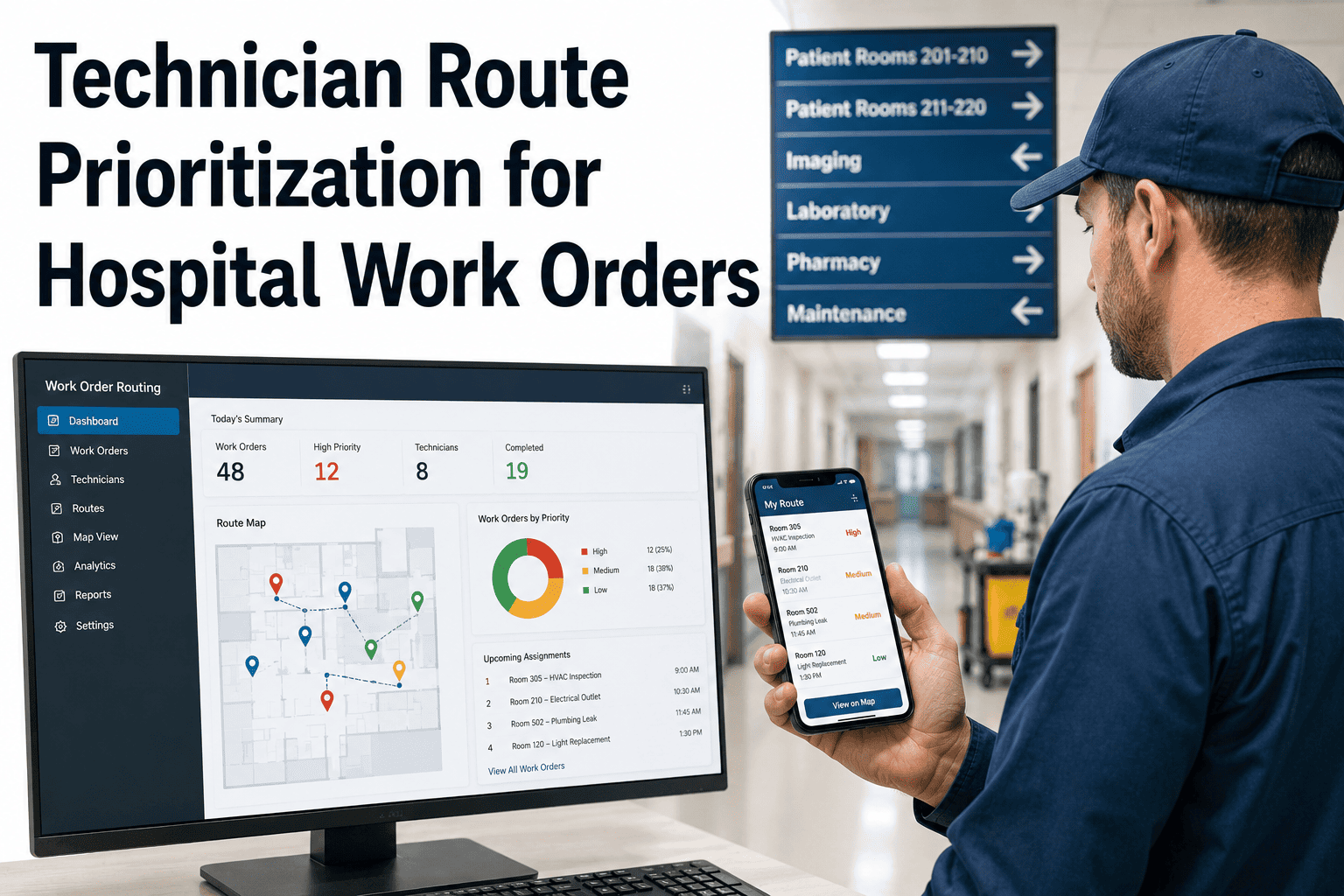
A technician finishing a routine filter change gets pulled to a low-priority light fixture two floors away, while a ventilator alarm work order sits unacknowledged in the queue because nobody flagged it as urgent. This isn't a staffing problem — it's a sequencing problem. Without a structured way to rank what gets worked on first, even a fully staffed maintenance team ends up responding to whichever request is loudest or most recent, not whichever one carries the most risk. Technician route prioritization fixes the sequencing, not the headcount. Sign up for Oxmaint to put automatic priority routing in front of your team today, or book a demo to see priority tiers configured for your hospital's asset types.
Why "First In, First Out" Is the Wrong Way to Run a Hospital Maintenance Queue
A work order queue sorted by submission time treats a flickering hallway light the same as a failed nurse call system. Oxmaint sorts by risk instead, so technicians always know which request to take next without needing a supervisor to decide for them.
The Four-Tier Priority Ladder That Drives Routing
Every work order is classified into one of four tiers the moment it's created, not hours later when a supervisor reviews the queue. The tier determines response time expectations and who gets notified if that time is exceeded.
Stop Letting Supervisors Triage the Queue by Hand
Oxmaint assigns priority at the moment a request is submitted and routes it to the right technician by skill, shift, and proximity automatically — no manual sorting required.
What Happens When a Critical Work Order Starts Running Late
Supervisor Triage Compared to Automatic Priority Routing
| Factor | Manual Supervisor Triage | Oxmaint Automatic Routing |
|---|---|---|
| Time to classify a new request | Hours, depends on supervisor availability | Instant, at submission |
| Consistency across shifts | Varies by who is on duty | Same rules applied every time |
| Biomedical vs facilities split | Manually sorted by supervisor | Automatically separated by asset type |
| Overdue request visibility | Only noticed when checked manually | Escalates automatically at set thresholds |
Reviewed by Oxmaint's healthcare facilities engineering team, who design priority classification and SLA escalation frameworks alongside hospital facilities directors managing high-volume work order queues.
Technician Route Prioritization — Frequently Asked Questions
Classification rules are configured in advance based on equipment type, location, and reported symptom, so the system assigns a tier automatically at submission rather than waiting for a supervisor to judge each request individually. Book a demo to see classification rules built around your asset list.
Yes. Oxmaint automatically separates biomedical work streams from general facilities work streams, so a ventilator alarm routes to a biomedical technician while an HVAC fault routes to the facilities team without manual sorting. Sign up to configure this split for your departments.
The supervisor is notified at the halfway point of the SLA window, giving time to reassign or escalate before the deadline passes, and the facility manager is alerted automatically if the work order remains open at full SLA elapsed time. Book a demo to see escalation paths configured for your shift structure.
Yes. Routing considers the technician's skill set, certification, shift availability, and proximity together, so a request lands with someone actually qualified and available to act on it immediately. Sign up to set up skill-based routing for your team.
Let Risk Decide the Order, Not Whoever Submitted Last
Oxmaint classifies, routes, and tracks every hospital work order against a four-tier priority structure with automatic SLA escalation built in.


.png)
.jpg)