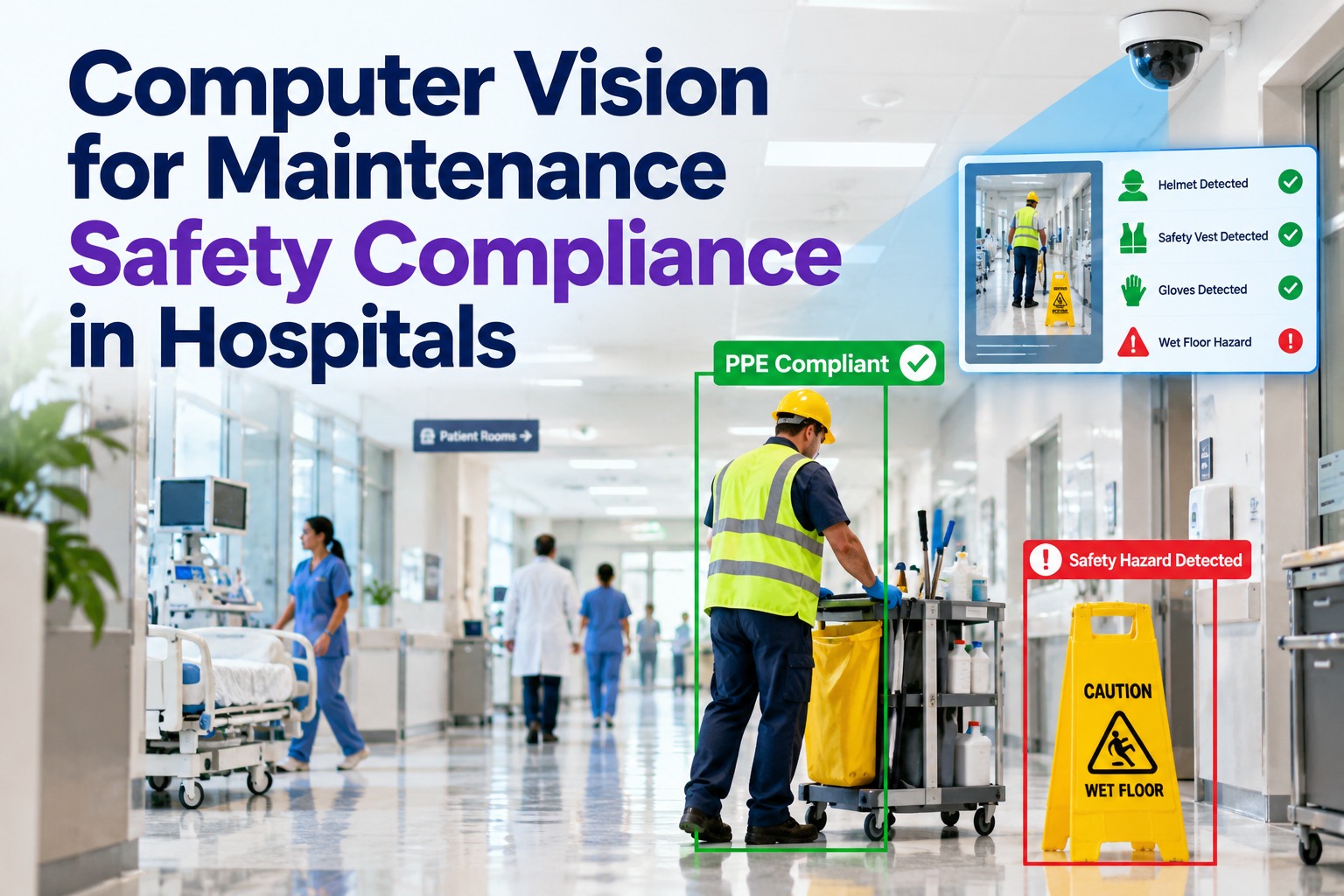
A maintenance technician opens a ceiling tile above a patient corridor. Dust drifts down, no barrier is up, and nobody is wearing a mask. Nobody planned it that way. It just was not caught. Hospital safety teams cannot be everywhere, and a paper checklist only shows what someone remembered to look for. Computer vision changes that by using cameras and AI to spot missing PPE, blocked exits, spills and unauthorized access as they happen. Detection alone fixes nothing, though. OxMaint AI maintenance management software turns every finding into an assigned corrective action with a record, so the hazard gets closed and you can prove it.
Hospitals · AI Safety · Maintenance Compliance · 2026
Computer Vision for Maintenance Safety Compliance in Hospitals
AI can see the hazard in seconds. Your workflow decides whether it gets fixed. Learn what computer vision can detect in a hospital, where it helps maintenance teams most, and how to close every alert with a documented action.
LIVE ALERT
Missing PPEPlant room B · 09:42
Blocked fire exitLevel 2 east · 09:47
Work order createdAssigned · due today
Where Hospital Maintenance Safety Slips
Maintenance staff work in ceilings, plant rooms, electrical panels and live patient areas. That is where small lapses become incidents. These four gaps appear again and again. Start free and log every one in OxMaint AI.
1
PPE not worn
Gloves, eye protection or respirators skipped during quick jobs.
2
Infection control breaches
Open ceilings or construction dust with no barrier in place.
3
Blocked egress & equipment
Carts, ladders or tools left in exits and corridors.
4
Restricted areas entered
Staff in electrical rooms or live work zones without clearance.
What Computer Vision Can Actually Detect
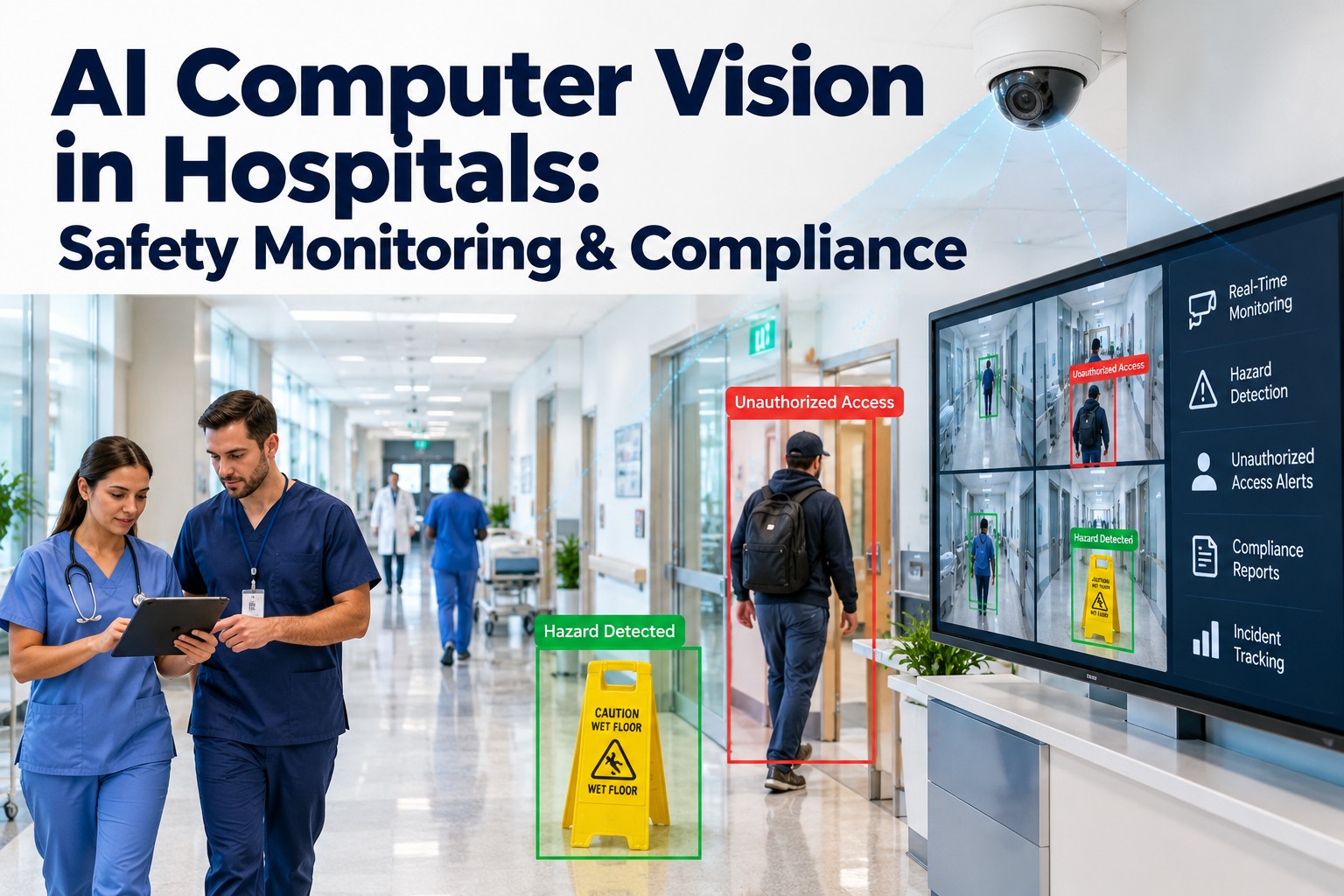
Modern vision models analyze camera feeds and flag defined conditions. Match each one to a maintenance rule you already enforce. Book a demo to see how findings become tasks.
🦺
PPE detection
Hard hats, gloves, masks, eye protection, high-vis
🚪
Exit & corridor blockage
Objects left in egress routes
💧
Spills & wet floors
Slip hazards in corridors and plant areas
⛔
Zone intrusion
People in restricted or live-work areas
🪜
Unsafe work practice
Ladders, working at height setups
🔥
Fire & smoke cues
Early visual signs of smoke or flame
From Camera Alert to Closed Action
An alert nobody acts on is just noise. Strong programs follow one path every time. Start free and build this workflow in OxMaint AI.
DETECT
Vision flags a hazardCamera and AI identify a defined condition, such as missing PPE in a plant room.
VERIFY
A person confirms itA safety officer reviews the event to filter false alarms before action.
ASSIGN
OxMaint AI creates the actionA corrective task goes to the right owner with priority, location and due date.
CLOSE
Fix, document, learnThe action is completed with notes and photos, and repeated issues show up in trends.
The Camera Finds the Hazard. The Record Proves You Fixed It.
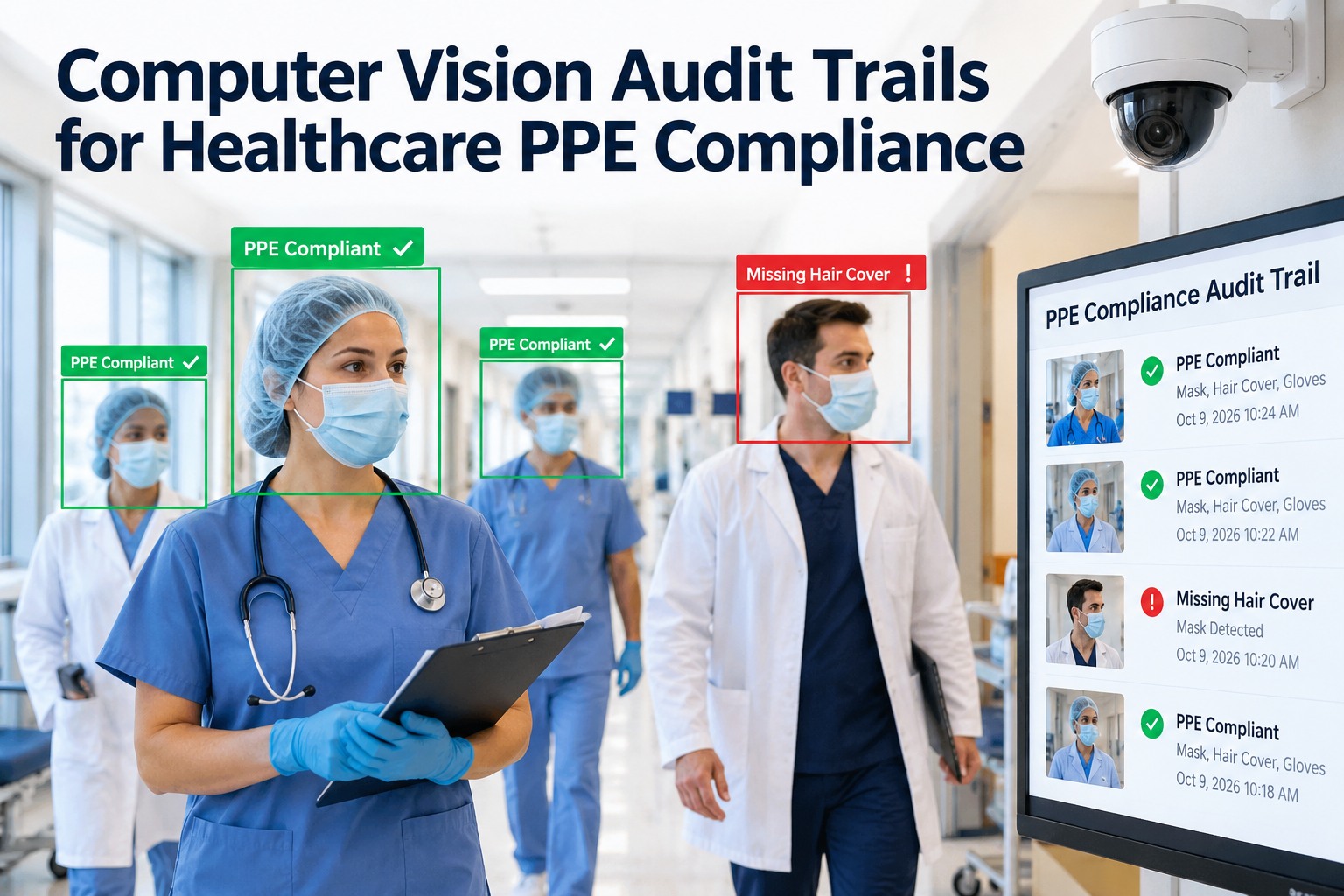
Joint Commission surveyors and internal auditors do not ask what your AI saw. They ask what you did about it. OxMaint AI links every finding to an inspection, corrective action and completion record in one place.
Manual Rounds vs AI-Assisted Safety
Manual rounds only
Vision + OxMaint AI
Coverage
Spot checks, when staff are present
Continuous in monitored areas
Response
Found at next round
Alert, then task within minutes
Evidence
Paper notes, memory
Timestamped event and action record
Trends
Rarely tracked
Repeat hotspots visible by area and team
Doing It Responsibly: Privacy First
Hospitals handle sensitive environments, so trust matters as much as technology. Build these safeguards in from day one. Book a demo to plan your rollout.
Keep cameras out of patient care spaces. Focus on plant rooms, corridors, loading areas and work zones.
Detect behavior, not identity. Flag "no mask in zone," not who the person is.
Involve staff and legal early. Explain the purpose and follow your local privacy and labor rules.
Limit retention and access. Store only what the investigation needs.
A Simple Four-Step Rollout
Week 1Pick one riskStart with PPE in plant rooms or blocked exits.
Week 2–3Set rules & ownersDefine what counts as a breach and who responds.
Week 4–6Pilot & tuneCut false alarms and track response time.
ThenExpandAdd zones and hazard types using the same workflow.
What OxMaint AI Adds to the Picture
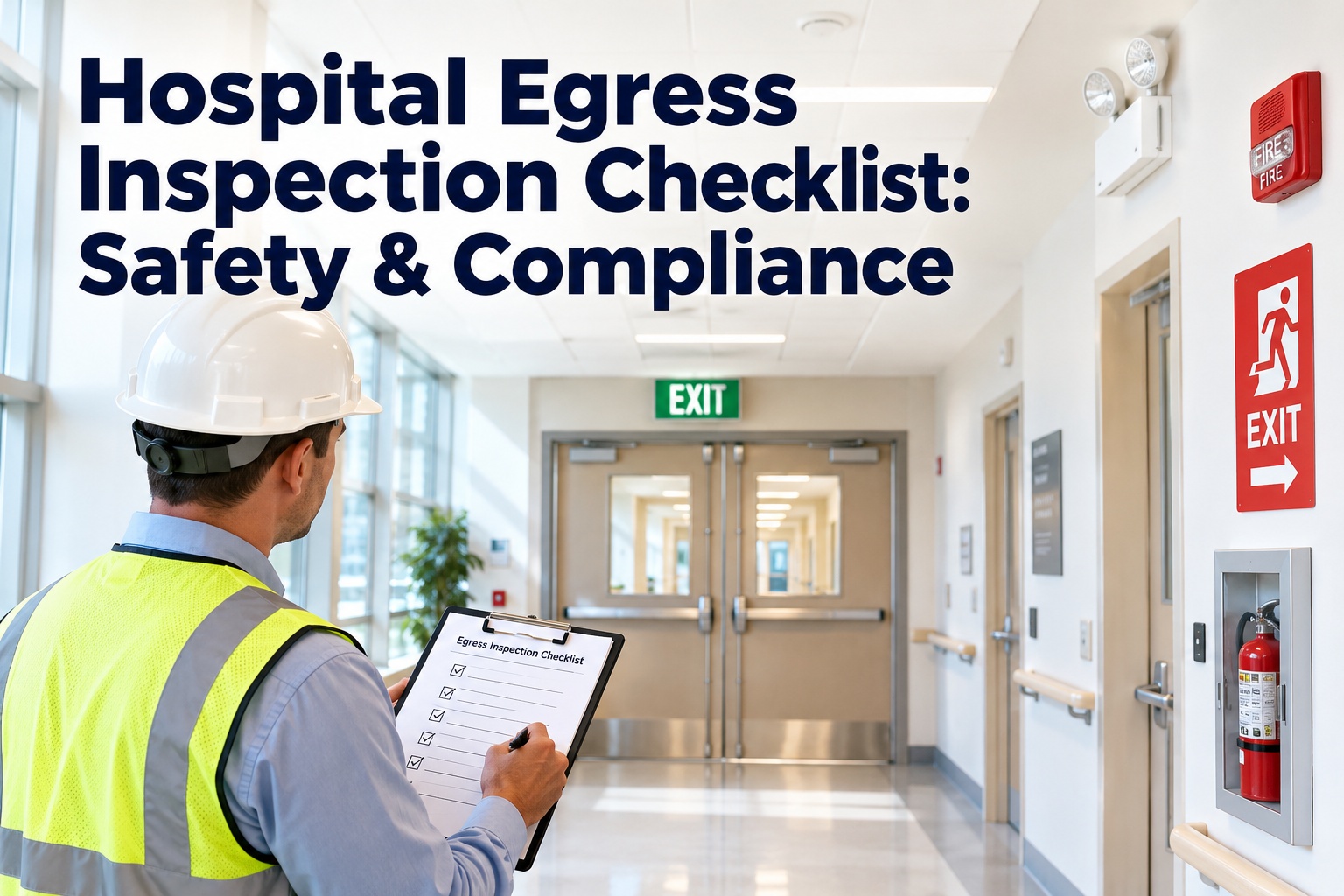
Inspection checklistsStandard safety rounds for plant rooms, ceilings and equipment.
Corrective action work ordersEvery hazard gets an owner, priority and due date.
Asset & location historySee repeat problems by area, team or equipment.
Audit-ready recordsFindings, actions and sign-offs in one searchable trail.
Frequently Asked Questions
Is computer vision allowed in hospitals?
Generally yes in non-patient areas when privacy, consent and local regulations are followed. Confirm with legal and compliance first.
Can AI really detect missing PPE?
Yes, for common items under good camera angles and lighting. Accuracy varies, so a human should confirm alerts.
Does OxMaint AI replace safety officers?
No. People still judge and respond. OxMaint AI makes sure every finding becomes a tracked, closed action.
Where should we start?
Pick one high-risk, low-privacy area, define the rule, and run a small pilot with clear owners.
Plan it with us.
Don't Just Detect Hazards. Close Them.
Give your maintenance and safety teams one system where every alert becomes an action and every action leaves proof.


.jpg)
