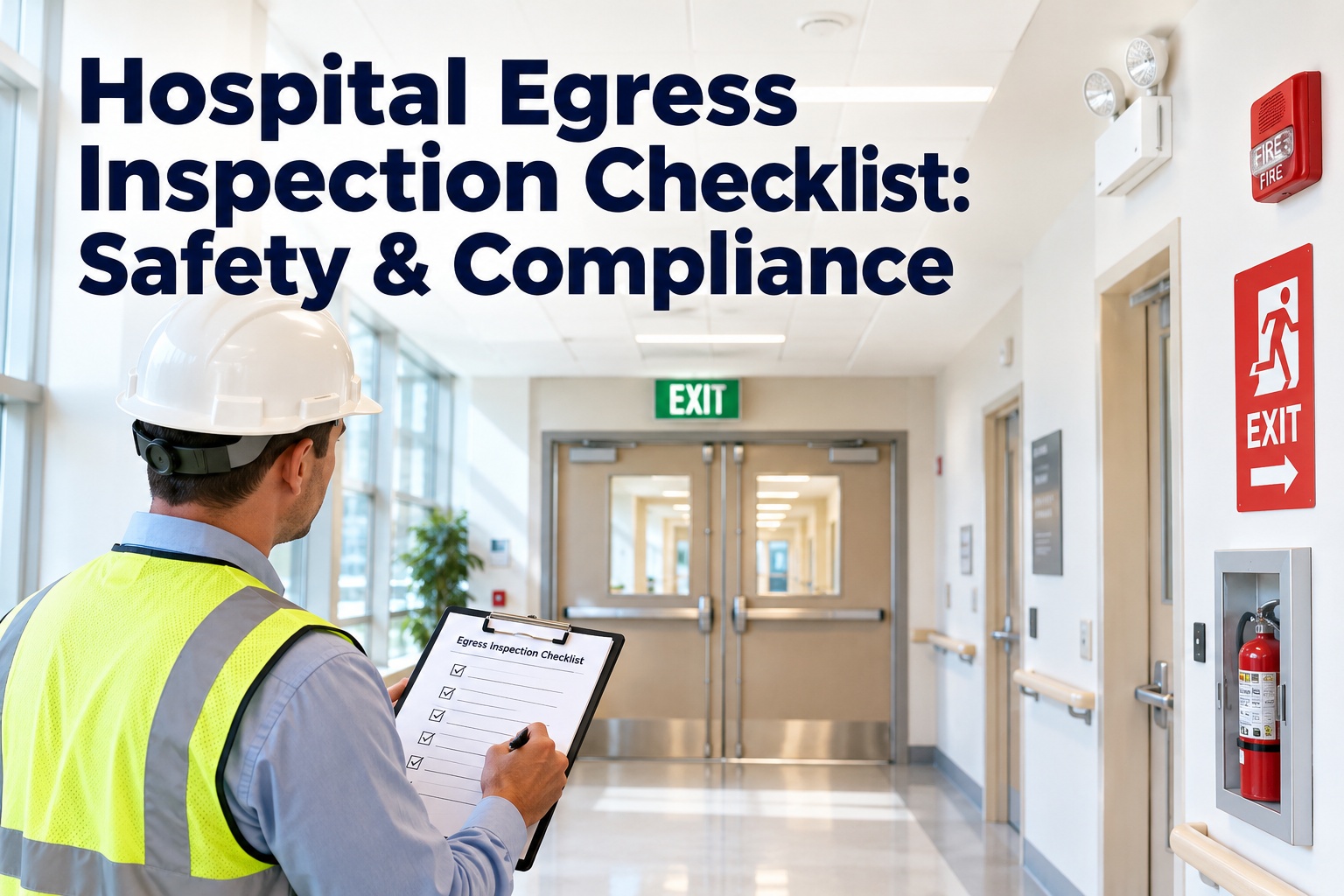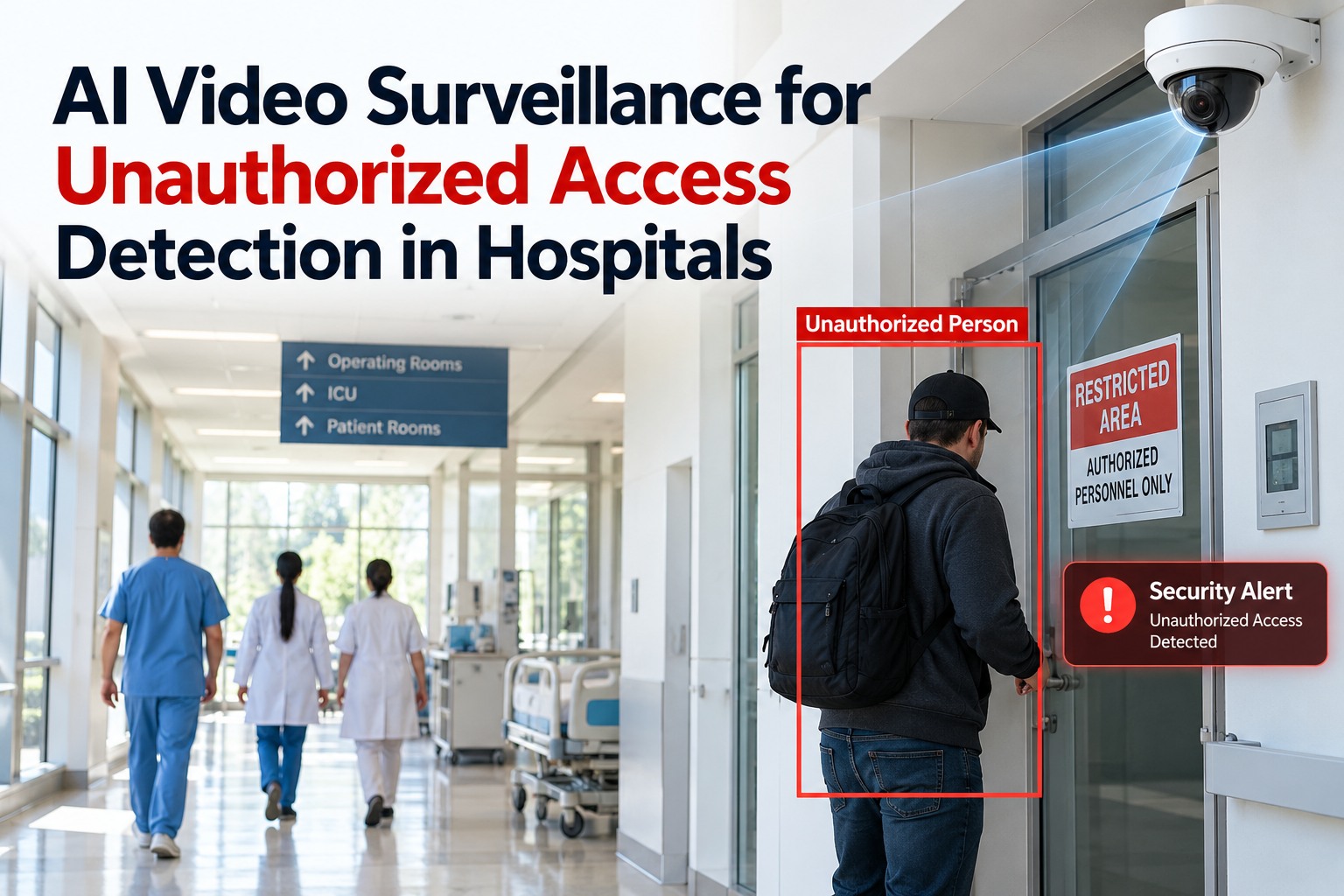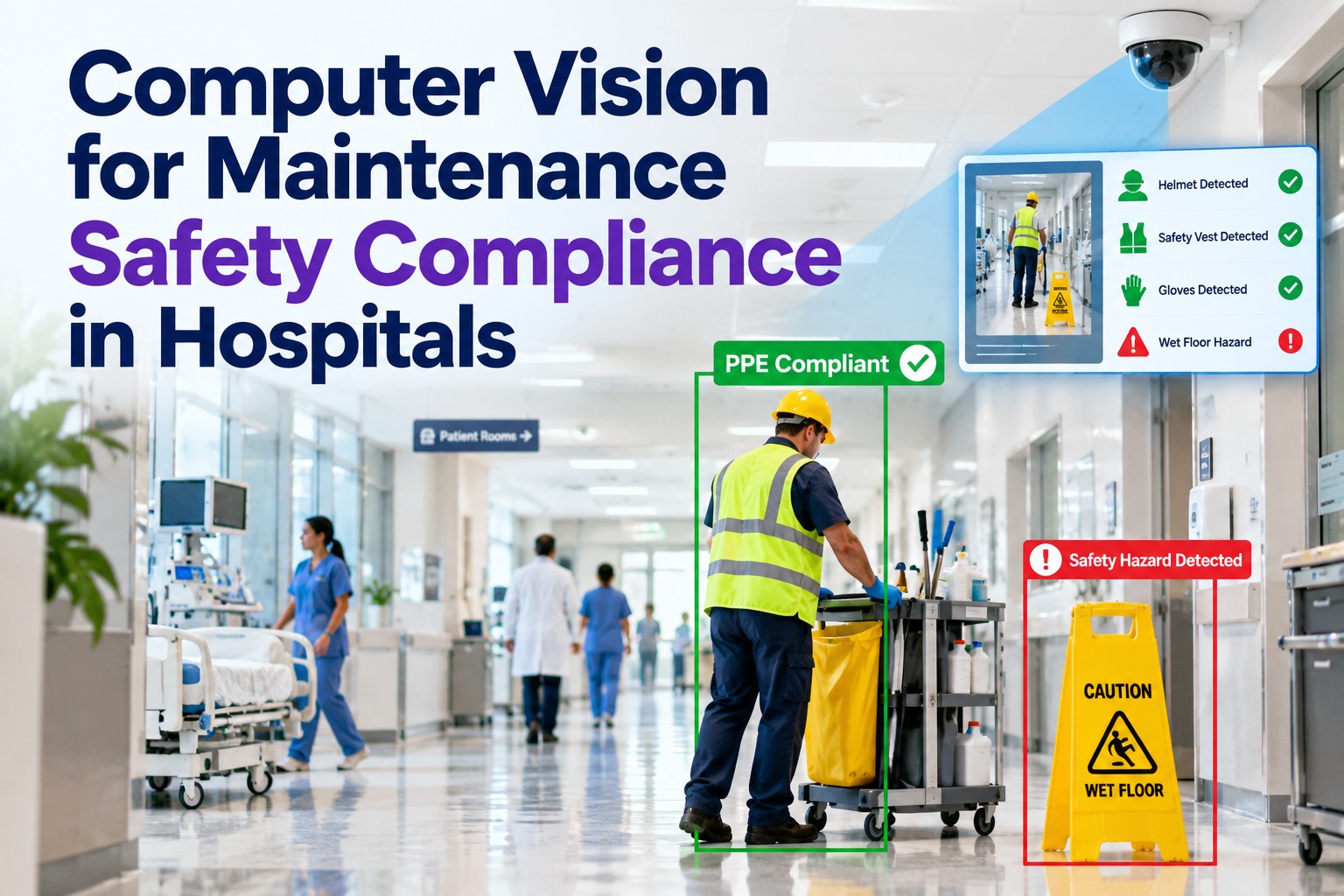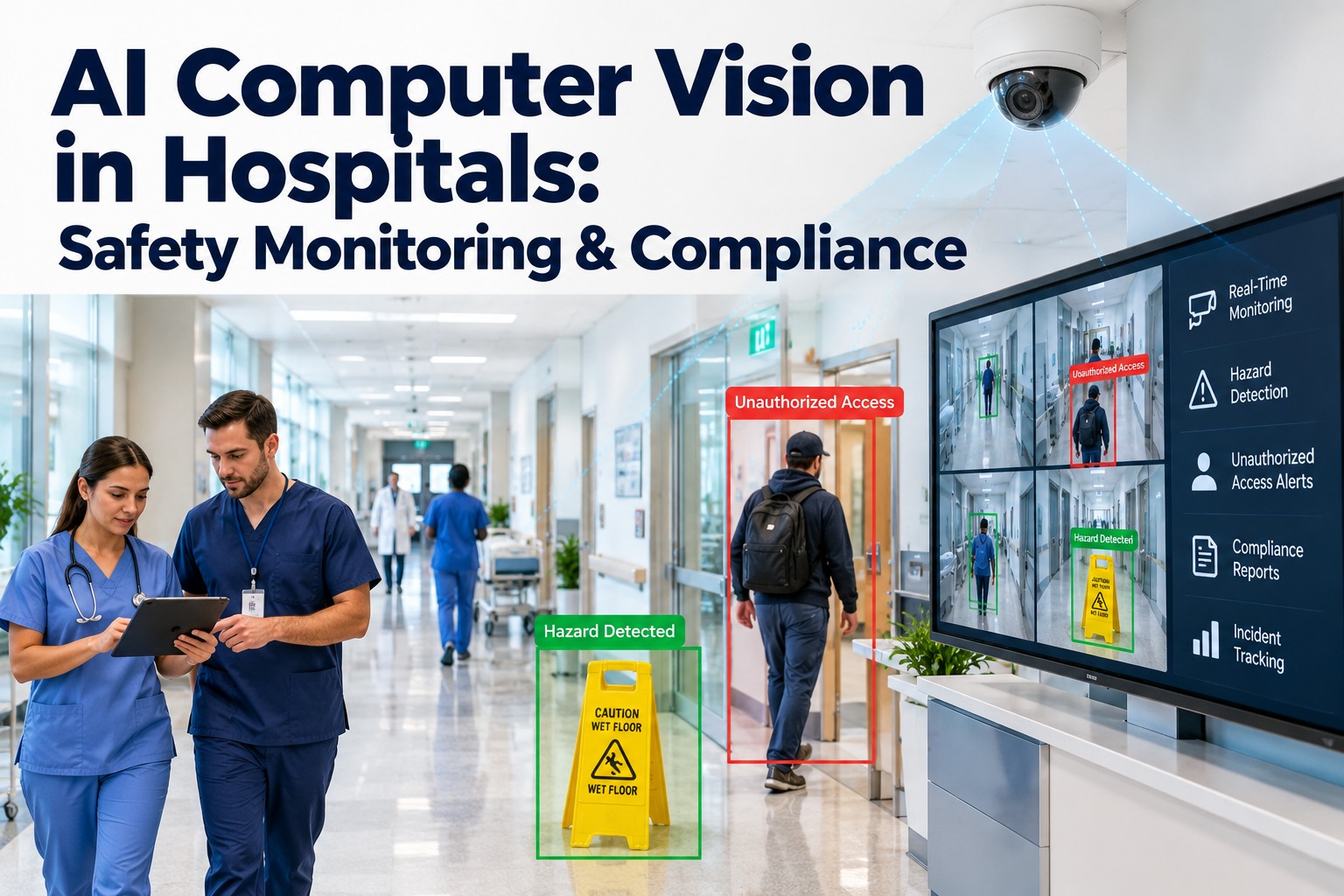
A cart parked in a fire corridor. A plant room door held open. A spill nobody reported. AI computer vision can spot all three — but a detection nobody owns is only a notification, and cameras in a hospital come with real privacy duties. OXMAINT AI is the AI-powered maintenance management software that turns each verified alert into an owned, closed corrective action.
AI Computer Vision in Hospitals: Safety Monitoring & Compliance
Blocked exits, unlocked plant rooms, unreported spills. Vision AI can flag them, but only a tracked fix closes the risk. OXMAINT AI, the AI-powered maintenance management software, turns every verified alert or staff report into a work order with an owner, a due date, a sign-off and a record — with privacy guardrails set first.
What AI Vision Can — and Can't — Do in a Hospital
Vision AI is strong at routine visual checks in fixed locations and weak at judgment. Accuracy depends on camera angle and lighting, so a person should verify alerts before anyone is sent. It supports your fire alarm, security staff and rounds; it does not replace them. OXMAINT AI picks up where the camera stops — assigning and proving the fix. Start free and give every alert an owner in OXMAINT AI.
Pilot Order: Start Where Patients Aren't
The safest rollout climbs a ladder of privacy sensitivity. Prove value and build trust in non-patient areas first, then move closer to care only with clinical and privacy sign-off. Each rung produces records you can show an auditor. Book a demo to plan your pilot ladder in OXMAINT AI.
A Detection Without an Owner Is Just a Notification.
OXMAINT AI turns every verified alert into a work order with a named owner, a due date and a closing record — so the risk is gone, not just seen.
Privacy Guardrails Before the First Camera
HIPAA does not name video analytics, but its privacy and security rules for protected health information govern how cameras are used. Set the rules before you install anything, and check state law, which can be stricter. Start free and keep your camera policy and audits on record.
General information, not legal advice — confirm requirements with your privacy officer and counsel.
From Detection to Corrective Action
Auditors care less about what the camera saw than what you did next. Whether an alert comes from a vision system or a staff report, OXMAINT AI raises it as a work order, assigns an owner and due date, and records the sign-off. Overdue items stay visible until they are closed. Book a demo to see your action ledger in OXMAINT AI.
Representative action ledger. Owners, due dates and statuses are set by your policy.
Camera-Only, Sensor-Only or Camera Plus CMMS?
Each approach sees something different, and only one closes the loop. Cameras catch what sensors cannot, such as a blocked exit; sensors measure what cameras cannot, such as temperature. Either way, a maintenance system turns the signal into a finished repair. Start free and connect findings to fixes in OXMAINT AI.
The programs that last start with one risk in one non-patient area, a named owner and a written privacy rule. Teams that begin with the technology instead of the corrective-action process end up with alert fatigue and an inbox nobody trusts. Prove the loop on a single hazard, then widen it.
Frequently Asked Questions
See the Hazard. Own the Fix. Prove It's Closed.
Turn every verified alert or staff report into a tracked corrective action with OXMAINT AI — named owners, due dates, sign-offs and a complete audit history. Start in one safe area, set your privacy rules first, and grow from there.