Healthcare CMMS Software: Features, Benefits, and Why Hospitals Are Switching in 2026
By Oxmaint on March 9, 2026
Hospital maintenance teams operate in one of the most demanding environments in the world — where every equipment failure can impact patient safety, regulatory compliance, and operational continuity. Yet many healthcare facilities still rely on spreadsheets, paper work orders, and reactive maintenance processes that increase operational risk and cost. Forward-thinking hospitals are adopting modern CMMS platforms that automate preventive maintenance, digitize inspections, and provide real-time visibility into every asset. Start your free trial today here to see how Oxmaint transforms hospital maintenance operations, or book a demo with our team and discover how your facility can reduce downtime, simplify compliance, and extend equipment lifespan.
4.8x
Higher cost of emergency repairs vs planned maintenance in healthcare
82%
Of hospitals still using paper or spreadsheet-based work orders in 2024
$1.5M
Average annual cost of unplanned equipment downtime per major hospital
34%
Reduction in maintenance labor costs reported after CMMS implementation
Stop Managing Hospital Maintenance on Spreadsheets
Oxmaint gives healthcare operations teams a unified platform for managing medical equipment, scheduling preventive maintenance, ensuring compliance, and forecasting capital expenditures. Most hospitals are fully operational within 2–4 weeks, eliminating paper workflows and improving maintenance visibility from day one.
A healthcare CMMS (Computerized Maintenance Management System) is a digital platform built specifically to manage the maintenance, compliance, and lifecycle of medical equipment and facility infrastructure. Hospitals depend on thousands of critical assets — from imaging machines to HVAC systems — and every one must be inspected, maintained, and documented for regulatory compliance.
A healthcare CMMS centralizes asset records, automates preventive maintenance schedules, tracks inspections, and provides complete audit trails for regulators such as the Joint Commission and CMS. Start a free trial and see how Oxmaint simplifies equipment management while protecting patient safety and compliance.
Healthcare CMMS
A unified platform for managing preventive maintenance schedules, work orders, regulatory inspections, and asset lifecycle data — built for the compliance demands of clinical environments.
Joint Commission-ready documentation
Medical equipment lifecycle tracking
Automated PM scheduling and alerts
Multi-facility portfolio visibility
See Every Feature Built for Clinical Environments
From medical equipment registries to Joint Commission-ready audit logs, Oxmaint covers the full spectrum of healthcare maintenance management. Configure your asset hierarchy and PM schedules in one session. No consultants, no implementation delays, no long onboarding cycles.
Not all CMMS platforms are designed for the complexity of healthcare environments. Hospitals require systems that support regulatory compliance, medical equipment lifecycle management, and multi-facility operations. The following features represent the core capabilities healthcare organizations rely on to maintain safety, reduce downtime, and control maintenance costs.
Start a free trial to explore these capabilities in Oxmaint, or book a demo to see how they work in real hospital environments.
Asset Management
Full Medical Equipment Registry
Centralized asset records covering every device, system, and component — with condition scores, service history, and warranty tracking in one place.
Compliance
Regulatory Inspection Management
Schedule and document Joint Commission, CMS, and OSHA inspections with digital sign-off, audit-ready logs, and automatic escalation for failed checks.
Preventive Maintenance
Automated PM Scheduling
Trigger maintenance by calendar, usage hours, or manufacturer specifications. Zero missed PMs. Zero manual follow-up. Technician assignments auto-dispatched.
Work Orders
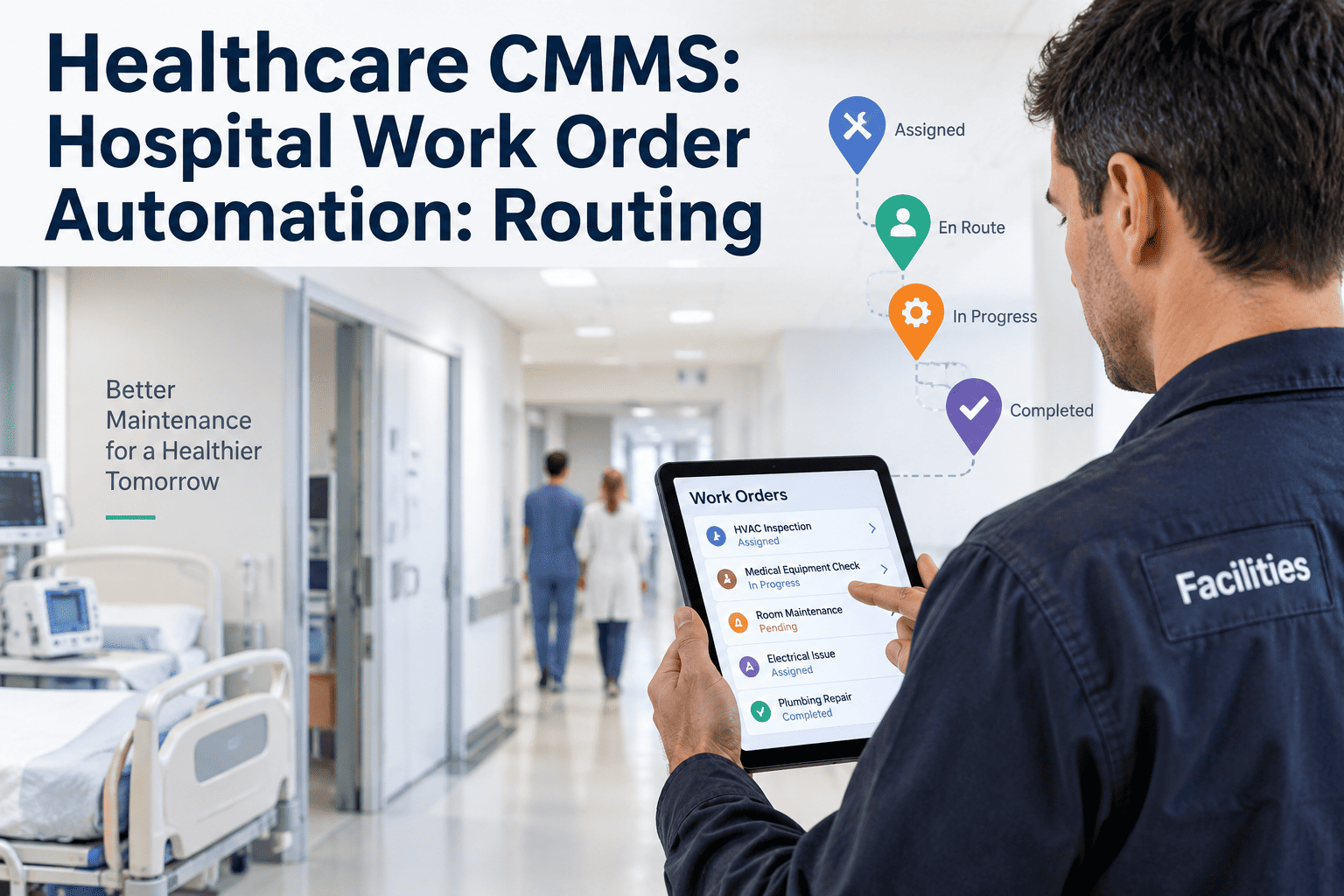
Digital Work Order Lifecycle
From request to closure — every work order captured, tracked, prioritized, and documented with technician notes, parts used, and labor time.
Reporting
Compliance-Ready Dashboards
Real-time KPI dashboards showing PM completion rates, open work orders by priority, equipment downtime, and department-level maintenance spend.
Mobile
Mobile-First Technician App
Technicians receive, update, and close work orders from any device. Photo capture, barcode scanning, and digital signatures — no paper, no re-entry.
CapEx Planning
5–10 Year CapEx Forecasting
Model asset replacement cycles based on condition scores and age data. Give finance teams investor-grade forecasts instead of end-of-year surprises.
Integration
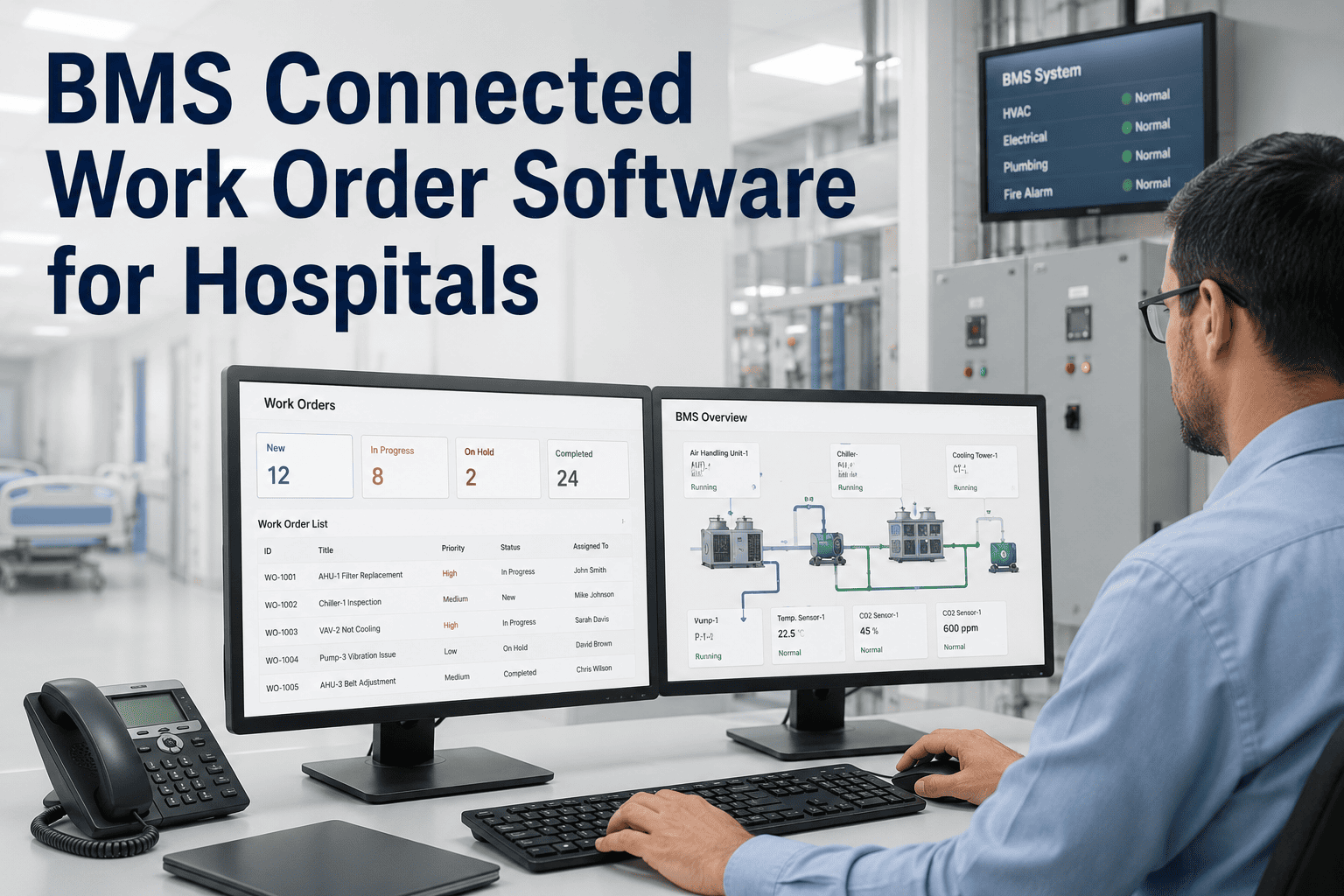
IoT and SCADA Connectivity
Connect building management systems, IoT sensors, and SCADA feeds to trigger condition-based maintenance before failures occur.
Reactive Maintenance Is Costing You More Than You Think
Emergency repairs run 4.8x higher than planned work. Audit scrambles eat weeks of productive time. Asset failures in clinical settings create patient safety exposure that no team should accept. Oxmaint shifts your operation from reactive to preventive — starting with your first asset record.
Healthcare organizations face unique operational pressures — strict regulatory requirements, patient safety responsibilities, and thousands of critical assets that must operate reliably every day. Traditional maintenance processes struggle to keep up with these demands.
As a result, hospitals are increasingly moving to modern CMMS platforms to eliminate reactive maintenance and gain complete operational visibility. If any of the challenges below sound familiar, it may be time to modernize your maintenance strategy. Book a demo to see how Oxmaint addresses these issues, or start a free trial to evaluate the platform yourself.
Reactive Maintenance Loops
Teams spend 60–70% of their time responding to failures rather than preventing them. Emergency repairs in clinical settings cost 4.8x more than planned work — and create patient safety exposure every time critical equipment goes down unexpectedly.
Audit and Inspection Gaps
Joint Commission surveys require documented proof of PM completion and equipment histories going back years. Paper records, shared drives, and disconnected spreadsheets make audit preparation a 3–6 week scramble. A single documentation gap can trigger a deficiency finding.
No Asset Lifecycle Visibility
Most hospital maintenance teams cannot tell you the condition score of their top 50 critical assets, let alone forecast replacement needs 3 years out. CapEx requests are built on intuition, not data — leading to underfunding until something breaks publicly.
Siloed Multi-Site Operations
Health systems with multiple campuses, clinics, and buildings operate as disconnected islands. No cross-facility visibility into maintenance spend, equipment condition, or vendor performance. Benchmarking is impossible without a unified platform.
Ready to Fix the Root Cause, Not Just the Symptoms?
Oxmaint addresses every pain point on this list — not with workarounds, but with purpose-built tools for healthcare operations. Automated PMs, digital inspections, multi-site dashboards, and CapEx models that actually hold up in a board meeting. See it working in your own environment.
How Oxmaint Solves Healthcare Maintenance Challenges
Oxmaint is designed specifically for healthcare operations teams responsible for maintaining critical medical equipment and facility infrastructure. The platform replaces fragmented maintenance tools with a unified system that tracks every asset, automates preventive maintenance, and maintains complete compliance documentation.
Healthcare facilities typically deploy Oxmaint to modernize maintenance operations by creating centralized asset registries, automating preventive maintenance, digitizing inspections, and providing real-time operational dashboards. Start a free trial and begin building your asset registry today.
01
Build Your Asset Registry
Import every asset — from HVAC units to infusion pumps — into a structured hierarchy. Portfolio, building, department, system, asset, component. Every record includes condition score, age, warranty status, and maintenance history.
02
Automate Preventive Maintenance
Attach PM schedules to each asset. Triggers fire automatically based on time, usage cycles, or IoT sensor thresholds. Technicians receive mobile assignments the moment a PM is due — no manual follow-up needed.
03
Digitize Inspections and Sign-Offs
Replace paper inspection checklists with digital forms that capture photos, technician signatures, and timestamped completion records. Every inspection is audit-ready the moment it is submitted.
04
Track Work Orders End to End
From department request to technician assignment to parts procurement to closure — every step documented. Priority escalation, SLA tracking, and full technician labor history attached to every asset record.
05
Forecast CapEx With Confidence
Oxmaint's rolling 5–10 year CapEx models use condition scores and age data to project asset replacement needs. Finance teams get defensible forecasts. Boards get visibility. Budget surprises go away.
06
Report Across Every Facility
Multi-campus health systems get portfolio-level dashboards showing maintenance spend, PM completion rates, asset condition scores, and compliance status — across every site, updated in real time.
The Numbers Don't Lie — Reactive Maintenance Is Bleeding Your Budget
Every unplanned failure costs 4.8x more than a scheduled PM. Every missed inspection is a potential deficiency finding. Every manual CapEx estimate is a bet against your facility's future. Oxmaint gives you the data and the platform to make better decisions — starting now.
Reactive maintenance often appears inexpensive until a critical asset fails unexpectedly. In healthcare environments, unplanned downtime can disrupt clinical operations, delay patient care, and significantly increase repair costs.
Preventive maintenance strategies powered by CMMS platforms reduce these risks by scheduling inspections and servicing before failures occur. The comparison below highlights why hospitals are transitioning from reactive maintenance to proactive asset management. Book a demo to see how Oxmaint helps healthcare facilities make this transition smoothly.
Operational Factor
Reactive Maintenance
Preventive with CMMS
Equipment Downtime
Unplanned. Avg 4–6 hrs per incident. Clinical disruption guaranteed.
Audit-ready at all times. Digital records with timestamps and signatures.
Asset Lifespan
Equipment fails before end of rated life. Premature CapEx spend.
PM adherence extends asset life 15–30%. CapEx cycles extended.
Technician Productivity
60–70% of time firefighting. No planned work schedule. Constant interruption.
Structured daily schedules. Planned PMs fill 70%+ of shift. Reactive drops sharply.
CapEx Forecasting
Guesswork. Requests built on intuition. Frequent budget surprises.
Data-driven 5–10 year models. Defensible to finance and boards.
34% Lower Labor Costs. 62% Faster Audits. 3.2x ROI in Year One.
These are not projections — they are outcomes reported by healthcare facilities that switched from reactive to preventive maintenance using Oxmaint. The ROI case is clear. The implementation is fast. The only question is how long your facility can afford to wait.
ROI and Results: What Healthcare Facilities Report After Switching
Hospitals that transition from reactive maintenance to preventive maintenance strategies using modern CMMS platforms consistently report measurable improvements in operational efficiency and compliance readiness. From reduced labor costs to longer equipment lifespan, the financial and operational benefits are significant.
34%
Reduction in maintenance labor costs
Driven by planned scheduling replacing reactive firefighting
62%
Faster Joint Commission audit preparation
Digital records replace manual document compilation
28%
Longer average asset lifespan
PM adherence extends equipment useful life significantly
3.2x
ROI in first 12 months
Based on reduced emergency spend and extended CapEx cycles
Still Have Questions? Let Us Walk You Through It.
Whether you manage a single hospital or a multi-campus health system, Oxmaint is built to fit your operation. Start a free 30-day trial and explore the full platform at your own pace — no credit card required. Or book a live demo and get answers specific to your facility's challenges from our healthcare operations team.
What makes a CMMS specifically designed for healthcare different from a standard CMMS?
Healthcare CMMS platforms are built around the compliance and documentation requirements of clinical environments — Joint Commission, CMS, OSHA, and HTM standards. That means digital inspection sign-offs with timestamps, audit-ready records accessible on demand, PM scheduling tied to medical device manufacturer specifications, and reporting structured around regulatory review cycles. Standard CMMS tools handle work orders and scheduling but lack the compliance architecture, documentation depth, and clinical context that hospital maintenance teams require.
How long does it take to implement a healthcare CMMS across a hospital or health system?
With Oxmaint, most single-facility hospitals are operational within 2–4 weeks. Multi-campus health systems typically complete full implementation in 6–10 weeks, depending on the size of the asset registry and the number of sites. The first step is importing existing asset data and building the equipment hierarchy. The second is configuring PM schedules and work order workflows. There are no heavy implementation fees or long consulting engagements — the platform is designed for fast time-to-value.
Can Oxmaint support multiple hospitals or clinics under a single health system?
Yes. Oxmaint is built specifically for multi-site operations. The asset hierarchy — Portfolio, Property, System, Asset, Component — maps directly to a health system structure with campuses, buildings, departments, and individual devices. Central teams see the full portfolio. Site teams see their facility. Role-based access controls what each user can view, edit, and approve. Cross-facility benchmarking, consolidated reporting, and portfolio-level CapEx forecasting are all available out of the box.
How does Oxmaint help with Joint Commission survey preparation?
Oxmaint maintains a continuous, searchable audit trail for every asset — including PM completion records, inspection sign-offs, corrective work orders, and technician history. During a Joint Commission survey, facilities can pull any asset's complete service history instantly, with timestamps and digital signatures. PM completion rate dashboards show compliance status in real time, so deficiencies are identified and corrected before surveyors arrive — not during the survey itself.
Take Control of Healthcare Maintenance — Starting Today
Healthcare facilities cannot afford unexpected equipment failures, compliance gaps, or inefficient maintenance workflows. Oxmaint gives hospital operations teams the tools they need to manage every asset, automate preventive maintenance, and maintain complete regulatory compliance — all in one powerful platform.
.jpeg)

.png)
.jpg)
