
The healthcare industry faces a workforce crisis that extends far beyond nursing and physician shortages. Behind every functioning hospital is a team of biomedical equipment technicians and clinical engineers who ensure critical medical equipment remains operational, yet this essential workforce is shrinking rapidly. With nearly half of today's Healthcare Technology Management professionals over age 45 and only 400 new graduates entering the field annually to fill over 7,300 annual job openings, hospitals are watching their most experienced technicians move toward retirement faster than the pipeline can replace them.
Combat Workforce Shortages with Intelligent Automation
Discover how Oxmaint helps hospitals do more with fewer resources by automating routine maintenance workflows, reducing technician workload by up to 40%, and extending equipment lifespan through predictive analytics.
The Association for the Advancement of Medical Instrumentation notes that the average HTM vacancy takes more than three months to fill, leaving critical gaps in hospital operations. As equipment becomes more complex and connected—with 10 to 15 devices per bed requiring constant attention—the remaining staff face excessive workloads that drive burnout and errors. Sign up to learn how automation can bridge this growing gap.
The Biomedical Workforce Crisis at a Glance
The Hidden Impact of HTM Staffing Shortages
When biomedical departments operate understaffed, the consequences cascade throughout the entire hospital. Equipment downtime increases as preventive maintenance schedules slip, leading to more emergency repairs and disrupted patient care. Clinical staff waste valuable time searching for functional equipment or troubleshooting device issues, pulling them away from direct patient care. Compliance risks rise as documentation falls behind, creating vulnerability during Joint Commission surveys and FDA audits.
The financial toll extends beyond overtime costs. Hospitals relying on external service providers face inconsistent quality control and premium pricing. Delayed procedures due to equipment unavailability result in lost revenue and patient dissatisfaction. Book a demo to see how automation reduces dependency on costly outsourced repairs.
Five Automation Strategies That Multiply Technician Impact
Predictive Maintenance Scheduling
AI algorithms analyze equipment usage patterns and performance data to predict failures before they occur, shifting teams from reactive firefighting to strategic prevention.
Automated Work Order Triage
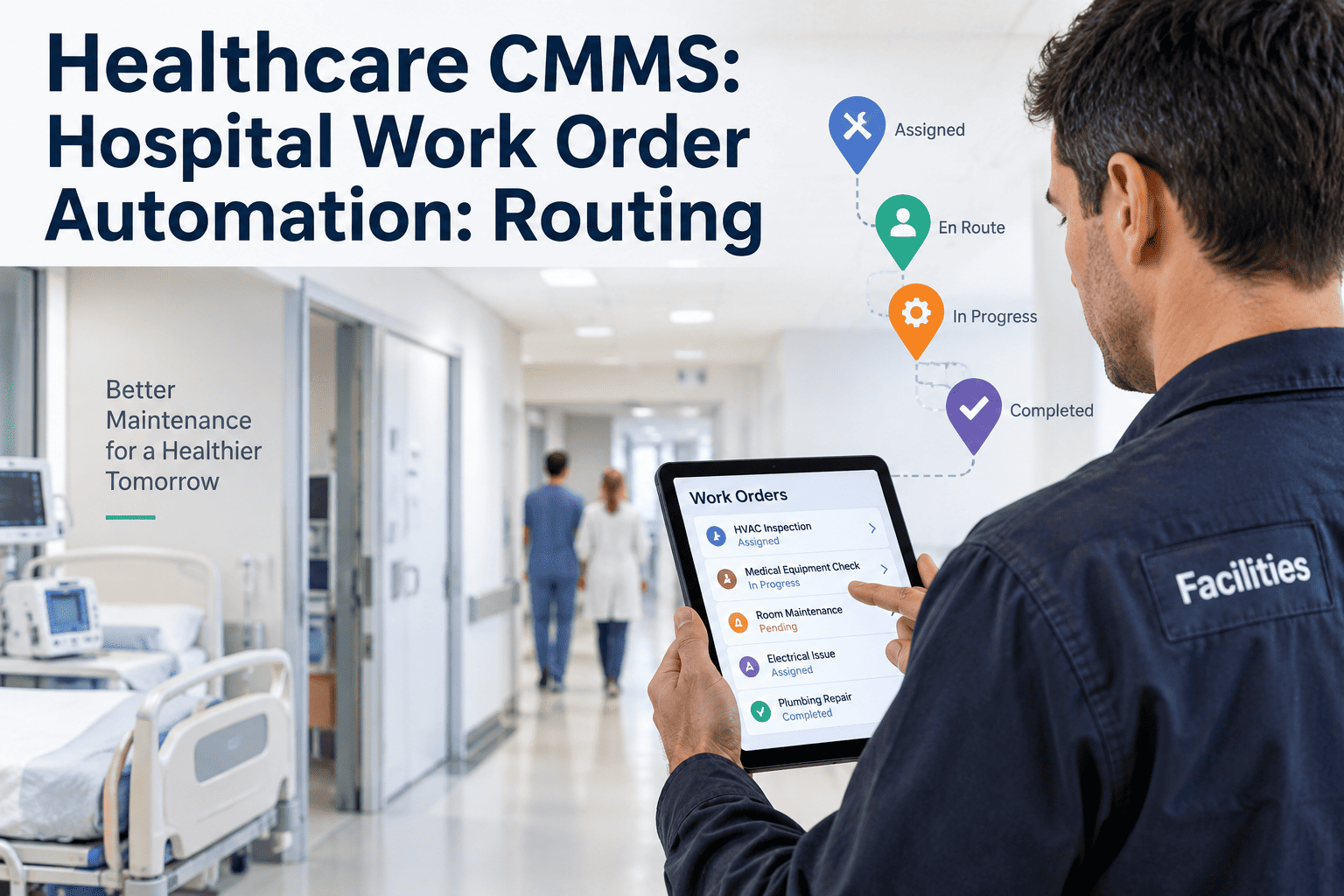
Intelligent routing prioritizes critical equipment repairs and automatically assigns tasks based on technician expertise, location, and current workload.
Remote Diagnostics Capability
Cloud-based monitoring allows technicians to diagnose and resolve issues remotely, eliminating unnecessary bedside visits and reducing response times by 60%.
Mobile-First Documentation
Voice-activated work order completion and barcode scanning eliminate paperwork, allowing technicians to document repairs in real-time while keeping hands free for tools.
Knowledge Base Automation
AI-powered troubleshooting guides provide step-by-step repair instructions based on equipment model and error codes, reducing reliance on senior technician expertise.
Quantifying the Automation Advantage
Hospitals implementing comprehensive maintenance automation report transformative results. Technician productivity increases by 25-40% as automated scheduling eliminates manual coordination and remote diagnostics reduce travel time between facilities. First-time fix rates improve by 45% when technicians access AI-guided troubleshooting and complete equipment histories before arriving at the bedside.
The burnout reduction is equally significant. Automating routine administrative tasks gives technicians more time for complex problem-solving and skill development. Sign up today to calculate your department's potential efficiency gains.
Efficiency Gains Through Automation
Retain Your Best Technicians with Smarter Workflows
Hospital leaders report that 55% of clinical engineers describe their workload as excessive or heavy. Oxmaint reduces administrative burden while increasing job satisfaction through intelligent automation designed specifically for healthcare technology management.
Bridging the Skills Gap with Technology
As experienced technicians retire, they take decades of institutional knowledge with them. Automation preserves this expertise through digital work instructions, video tutorials, and AI-assisted troubleshooting that guides less experienced staff through complex repairs. This knowledge transfer capability becomes critical as training programs struggle to produce enough qualified graduates.
Cloud-based platforms also enable remote expert support, allowing senior technicians to guide on-site staff through complicated procedures without traveling between facilities. Book a demo to explore remote collaboration features that maximize your senior staff's reach.
.png)
.jpg)