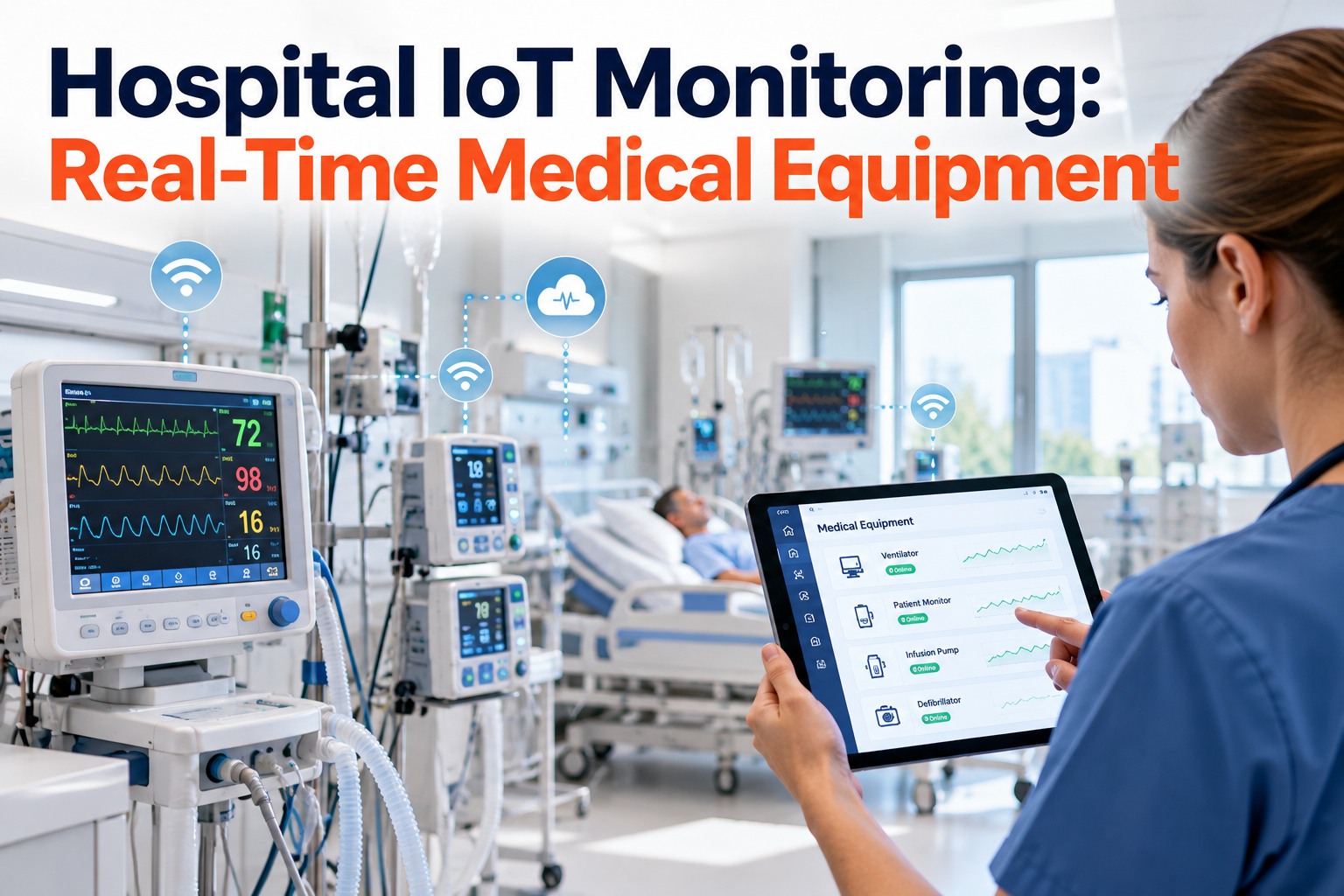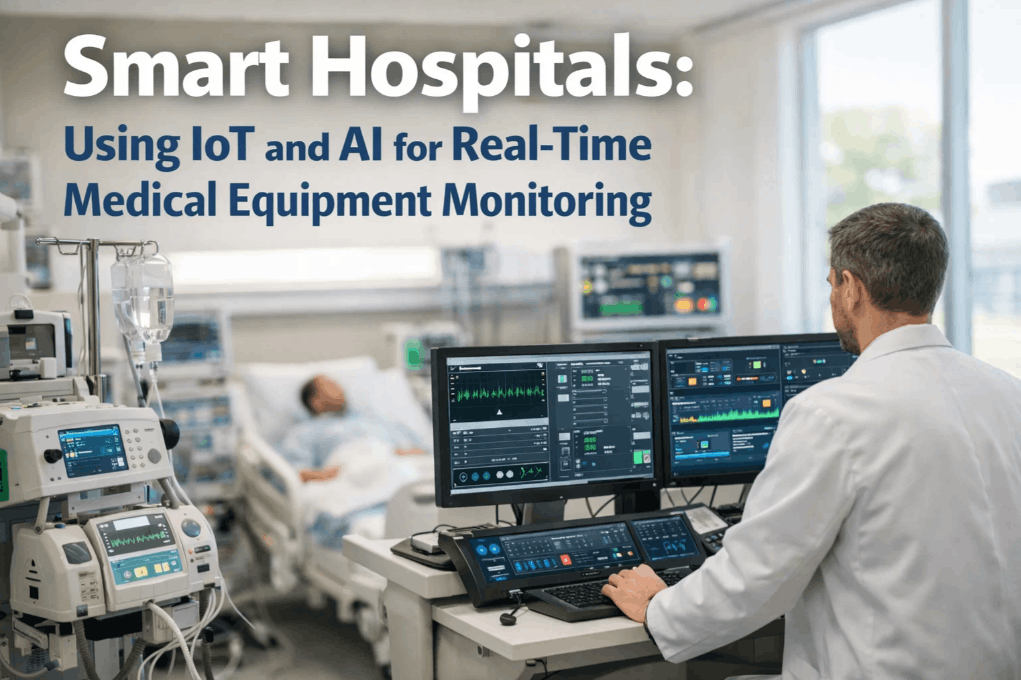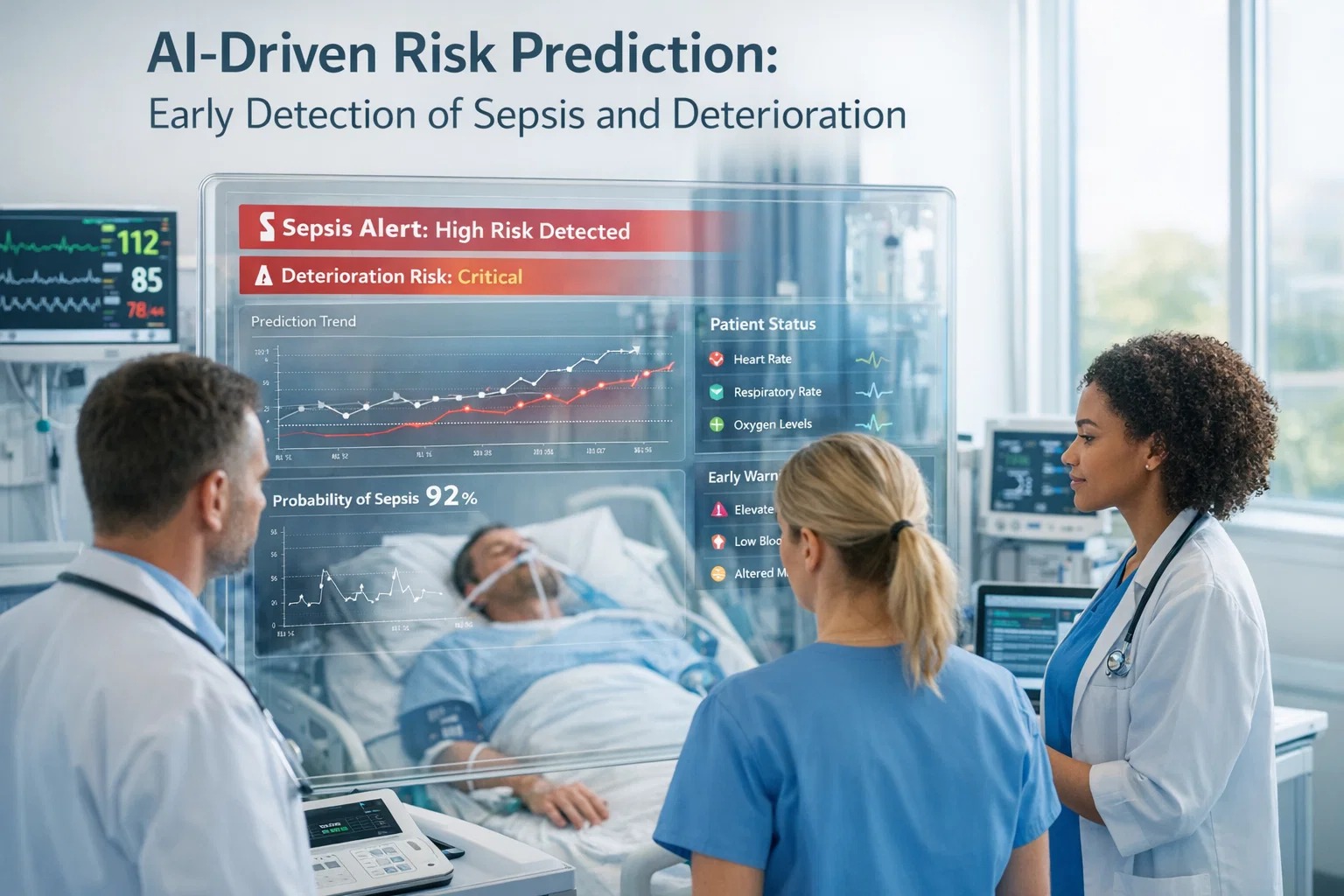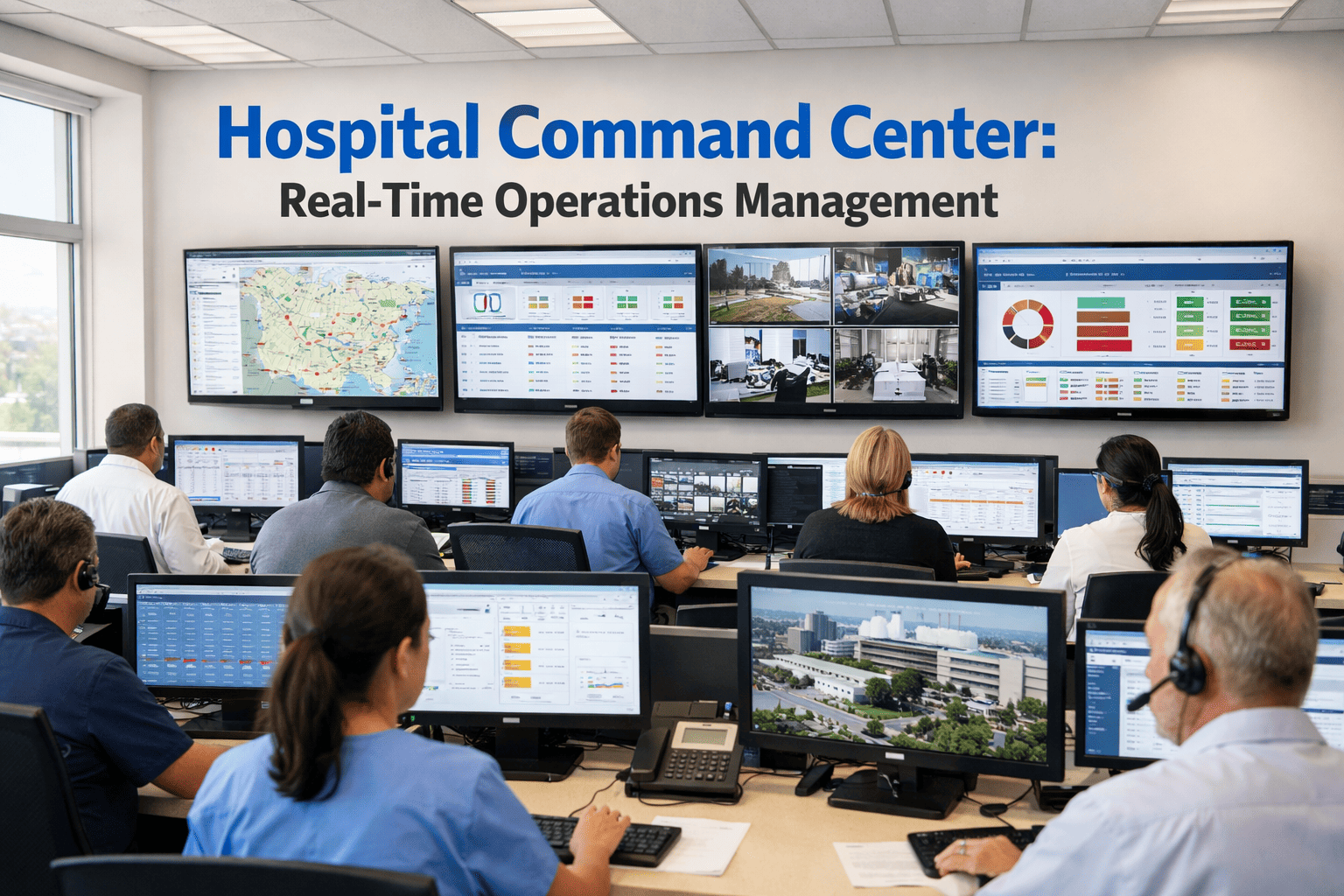
When a patient deteriorates in Bay 4, a bed opens in the ICU, three OR cases finish simultaneously, and your ED wait time crosses 4 hours — your operations team finds out in four different systems, or not at all. That fragmented visibility is not an operational inconvenience. It is the single most expensive failure mode in a modern health system. Oxmaint's Hospital Command Center unifies real-time patient flow, bed management, facility operations, and staff deployment into one executive-grade dashboard — so the decisions that protect patient safety and drive margin happen in minutes, not hours. Book a strategy session to see how Oxmaint Command Center is configured for your health system's operational priorities.
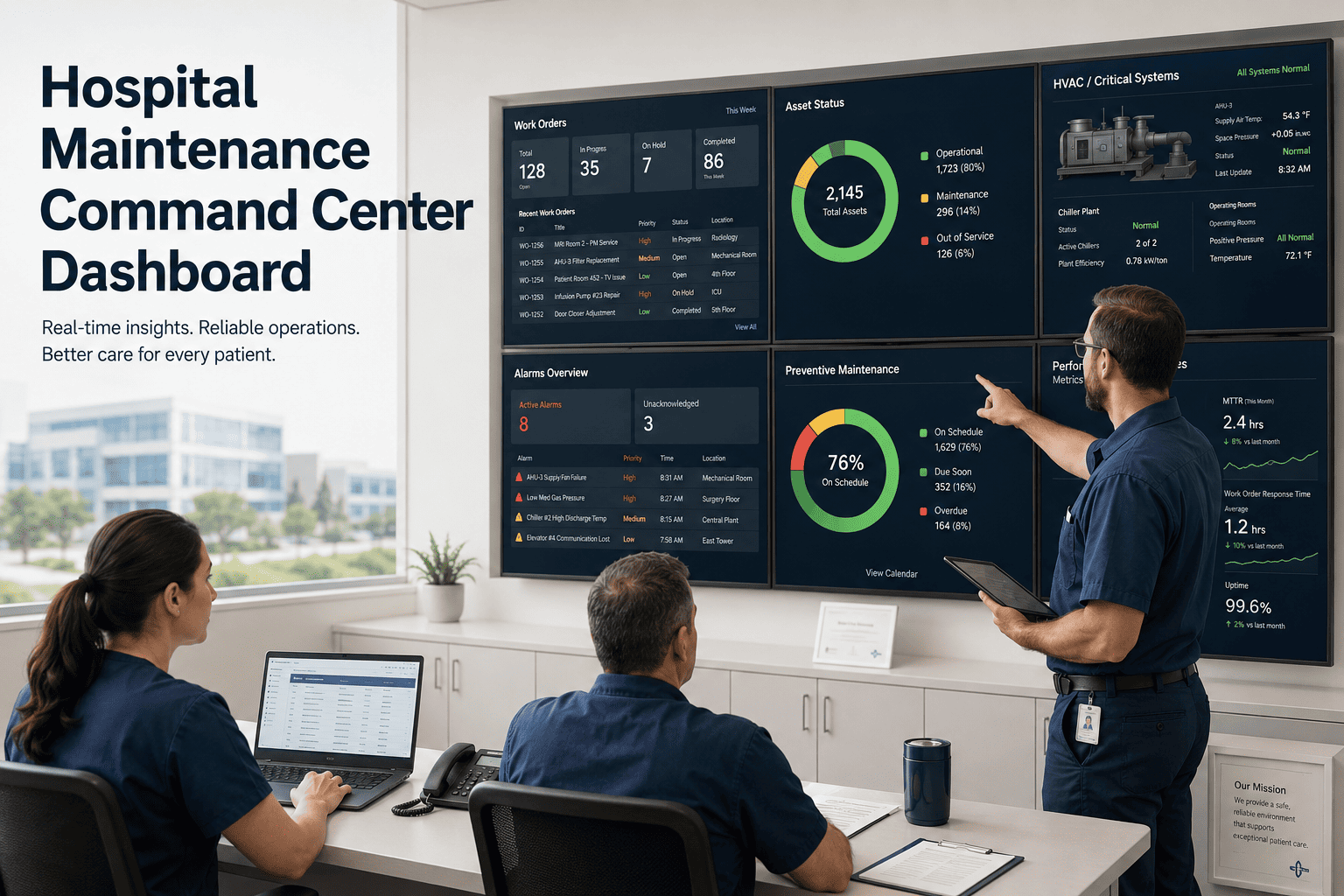
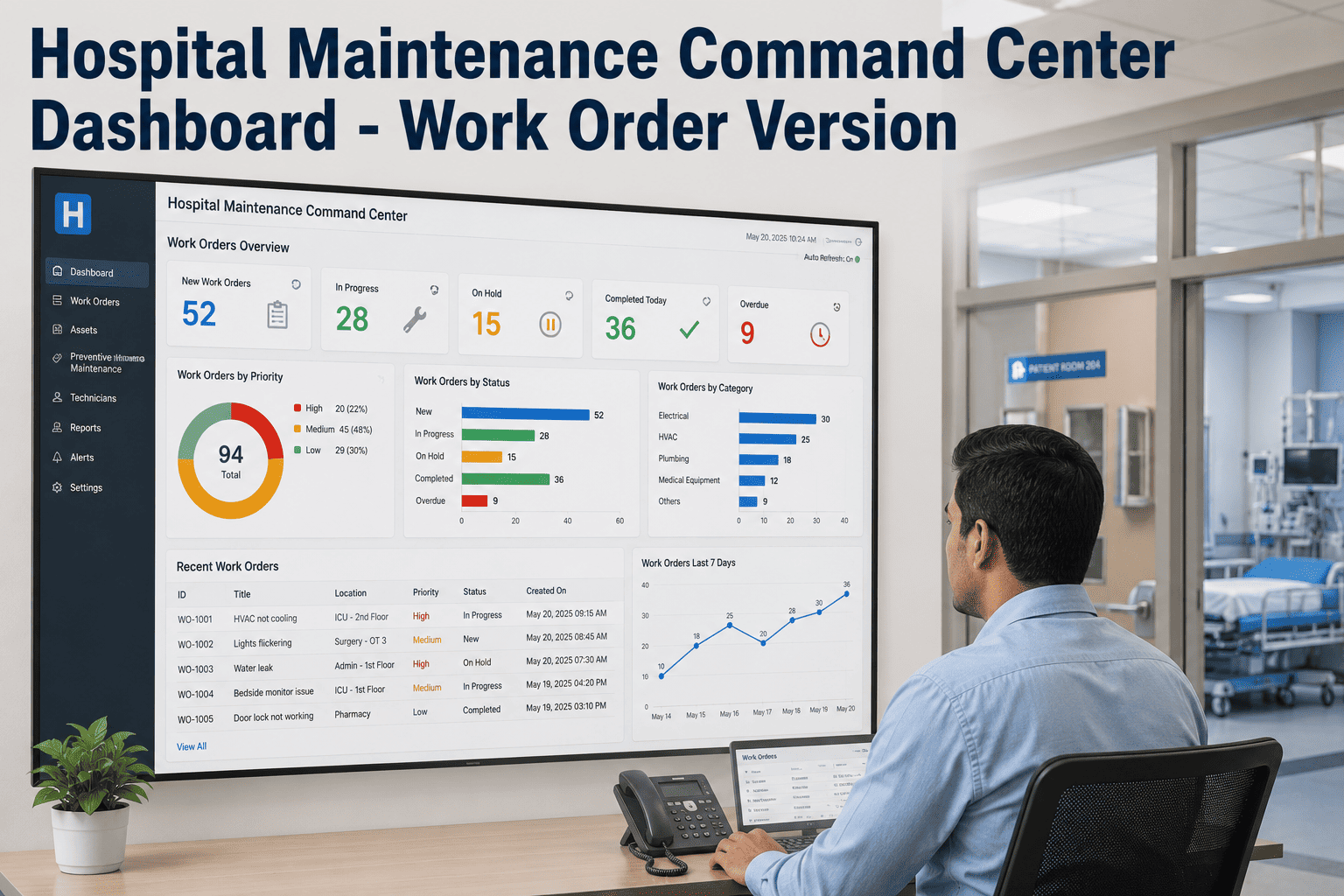
A hospital command center consolidates patient flow, bed management, OR and procedural throughput, transport coordination, and facility operations into a single real-time operations environment. Oxmaint delivers this as a configurable digital platform — integrating with your EHR, CMMS, and building management systems to give your VP of Operations, CNO, and facility leadership a live operational picture with the escalation logic and workflow routing to act on it immediately.
The Four Operational Failures a Command Center Eliminates
Each failure costs your health system revenue, patient satisfaction, and clinician capacity — every single day. Book a session to map your current operational gaps against the Oxmaint Command Center framework.
Without a unified bed board, your charge nurses, bed coordinators, and admissions team are calling each other to discover capacity that already exists. Oxmaint's live bed management dashboard surfaces every available, pending-clean, and pending-discharge bed across all units — with predictive discharge flagging so your team can place the next admission before the current patient leaves the floor.
ED boarding — patients waiting for inpatient beds — is a direct consequence of upstream bed management failure. When your command center cannot see discharge predictions, pending clean rooms, or transport bottlenecks in real time, your ED absorbs the delay. Oxmaint's patient flow module triggers automated escalation to the bed coordinator, EVS, and transport teams the moment a boarding threshold is crossed — before diversion becomes the only option.
OR delay cascades — late starts, room turnover bottlenecks, PACU holds — are invisible to your operations leadership until the schedule is already disrupted. Oxmaint integrates OR case status, PACU occupancy, and equipment readiness into the command center view, giving your surgical services coordinator and VP the real-time signal to intervene before a 20-minute delay becomes a cancelled afternoon case.
A failed HVAC unit in a sterile processing room, an elevator outage during peak discharge, or a medical gas alarm in a procedure suite — these events affect patient safety and regulatory standing. When facility management operates in a separate system from clinical operations, the command center never sees them. Oxmaint connects your CMMS and building management alerts directly into the operational dashboard, with automated routing to the right team and executive visibility from the moment an event opens.
Your Operations Intelligence — Unified, Live, and Actionable
Oxmaint Command Center pulls patient flow, bed status, OR throughput, and facility events into one executive dashboard — with escalation logic that routes the right alert to the right leader before the situation escalates further. Book a strategy session to see the command center configured for your health system's operational structure.
Command Center Implementation — Phased Deployment Roadmap
Oxmaint's command center deployment is structured to deliver operational value in the first 30 days — not after a 12-month implementation project.
EHR, ADT feed, CMMS, and building management system connections established. Live bed census, discharge prediction logic, and facility alert routing configured against your unit and department structure. No custom development — Oxmaint connects via HL7 FHIR and standard API integrations.
Threshold-based escalation rules configured for boarding time, bed turnaround, OR delay, and facility event severity. Executive, operational supervisor, and department-level dashboard views built with role-appropriate scope. Book a session to define your escalation thresholds and dashboard hierarchy.
Oxmaint's AI layer ingests historical admission, discharge, and census patterns to surface predictive capacity alerts — flagging anticipated boarding risk 2 to 4 hours ahead of threshold breach. Surgical schedule integration adds OR case completion predictions and PACU occupancy forecasting to the command center view.
Command center KPI reports — bed turnaround time, boarding duration, OR utilization, facility event MTTR — exportable for board reporting, operational reviews, and CMS survey documentation. Benchmark tracking against your pre-deployment baseline quantifies the operational and financial improvement attributable to the command center.
Command Center KPI Benchmarks — Health Systems Without Unified Operations
Outcomes — Health Systems Running Oxmaint Command Center
From 3.8 Hours to 91 Minutes — Bed Turnaround That Drives Real Margin
Health systems that deploy Oxmaint Command Center recover capacity that was always there — hidden behind disconnected systems and delayed information. Book a session to calculate the throughput and revenue impact for your specific census and case volume.
Oxmaint Command Center — Platform Capabilities
Every bed across every unit — available, pending-clean, pending-discharge, and blocked — visible in real time with predictive discharge flagging so your team places the next admission before the current patient leaves.
Oxmaint's predictive layer ingests your historical ADT patterns to surface boarding risk 2–4 hours ahead of threshold breach — giving your ops team the lead time to act, not react.
Case status, room turnover progress, PACU occupancy, and equipment readiness — all surfaced in the command center with automated alerts to surgical services leadership when a delay pattern emerges.
HVAC, medical gas, elevator, and critical equipment events routed from your CMMS and BMS directly into the command center — with escalation logic that reaches the right engineering and clinical leader within minutes.
Patient transport requests and EVS room assignments dispatched and tracked from the command center — with real-time status visible to bed coordinators and updated automatically as tasks are completed in the field.
Board-ready KPI exports — throughput, diversion frequency, OR utilization, facility MTTR — generated automatically from command center data. CMS and Joint Commission documentation assembled in under 2 hours for any survey or review cycle.
Oxmaint vs Competing Command Center and CMMS Platforms
Most hospital operations platforms handle one domain — bed management or facility management or OR scheduling. None connect all four into a unified executive command center with integrated escalation logic.
| Command Center Capability | Oxmaint | GE Command Center | TeleTracking | Cerner CareAware | Epic Capacity IQ | Infor HMS | ServiceChannel |
|---|---|---|---|---|---|---|---|
| Unified bed + facility + OR dashboard | Yes | Partial | Bed only | Partial | Bed only | Partial | No |
| AI-driven capacity prediction | Yes | Yes | Partial | Partial | Partial | No | No |
| Facility infrastructure alert routing | Yes | No | No | No | No | Custom | Partial |
| OR and surgical throughput monitoring | Yes | Partial | No | Yes | Yes | No | No |
| Automated executive escalation logic | Yes | Partial | Partial | Partial | Partial | No | No |
| Deploy in under 6 weeks without SI | Yes | No | No | No | No | No | Varies |
| CMS/Joint Commission audit export | Yes | Partial | Partial | Partial | Yes | Custom | No |
| Transport and EVS dispatch integration | Yes | Yes | Yes | Partial | Partial | No | No |
Frequently Asked Questions
Your Next OSHA Inspection, Board Review, or CMS Survey — Answered in 2 Hours, Not 3 Weeks
Oxmaint Command Center gives your operations, clinical, and facility leadership a shared real-time picture of everything happening across your health system — with the escalation logic to act on it before it becomes a patient safety event, a diversion, or a regulatory finding. Book a strategy session with your VP of Operations and see the command center configured for your census, campus, and case volume.