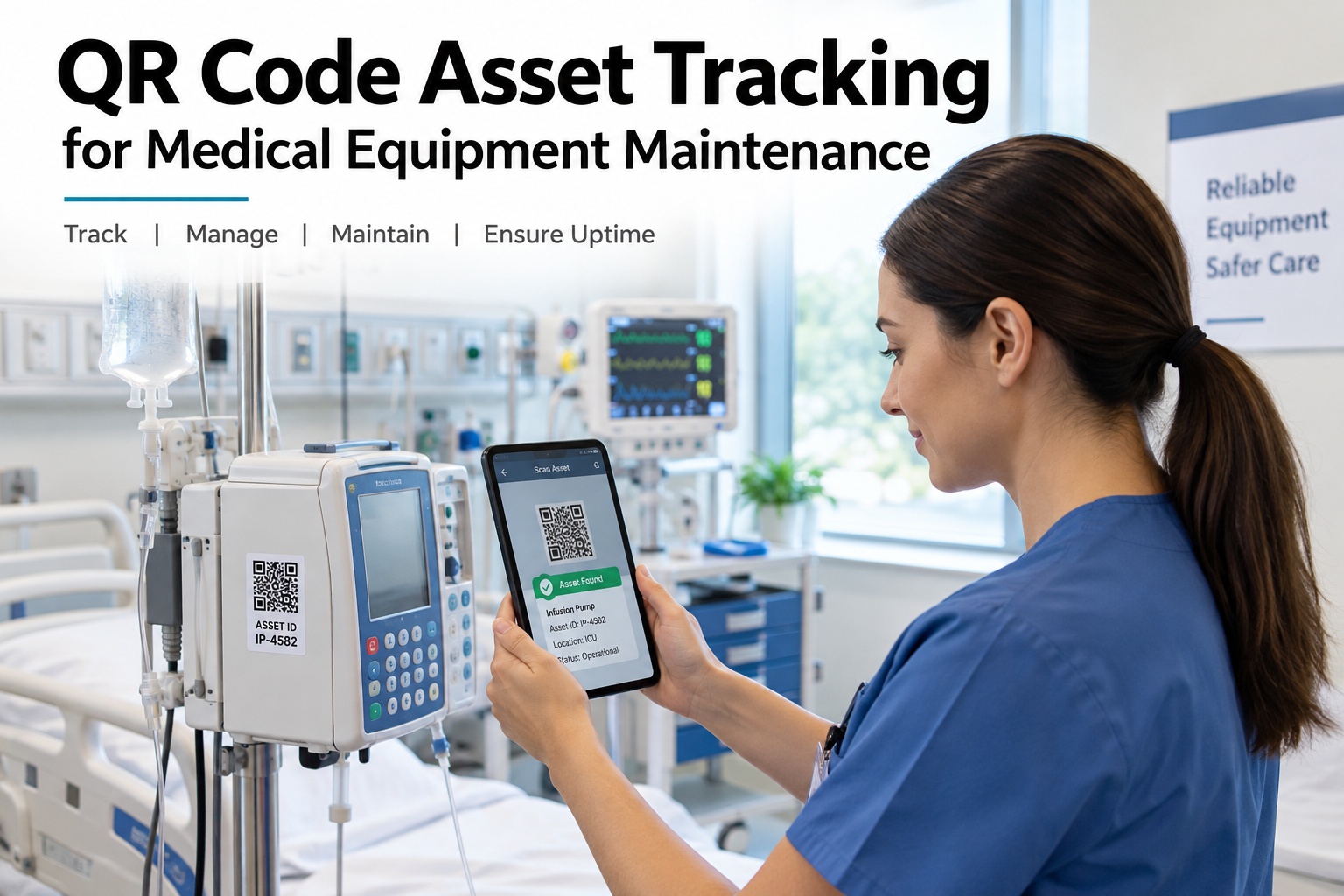
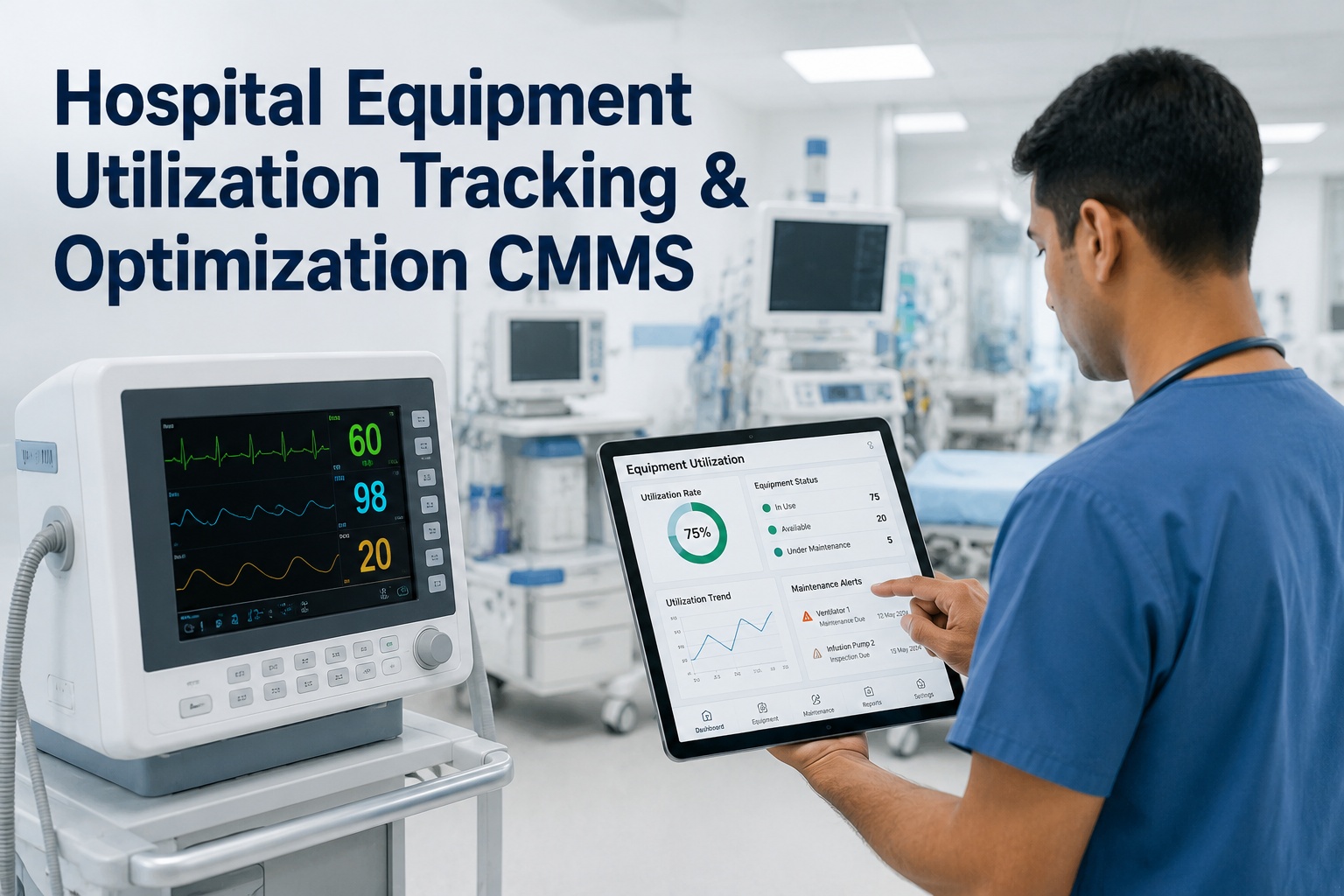
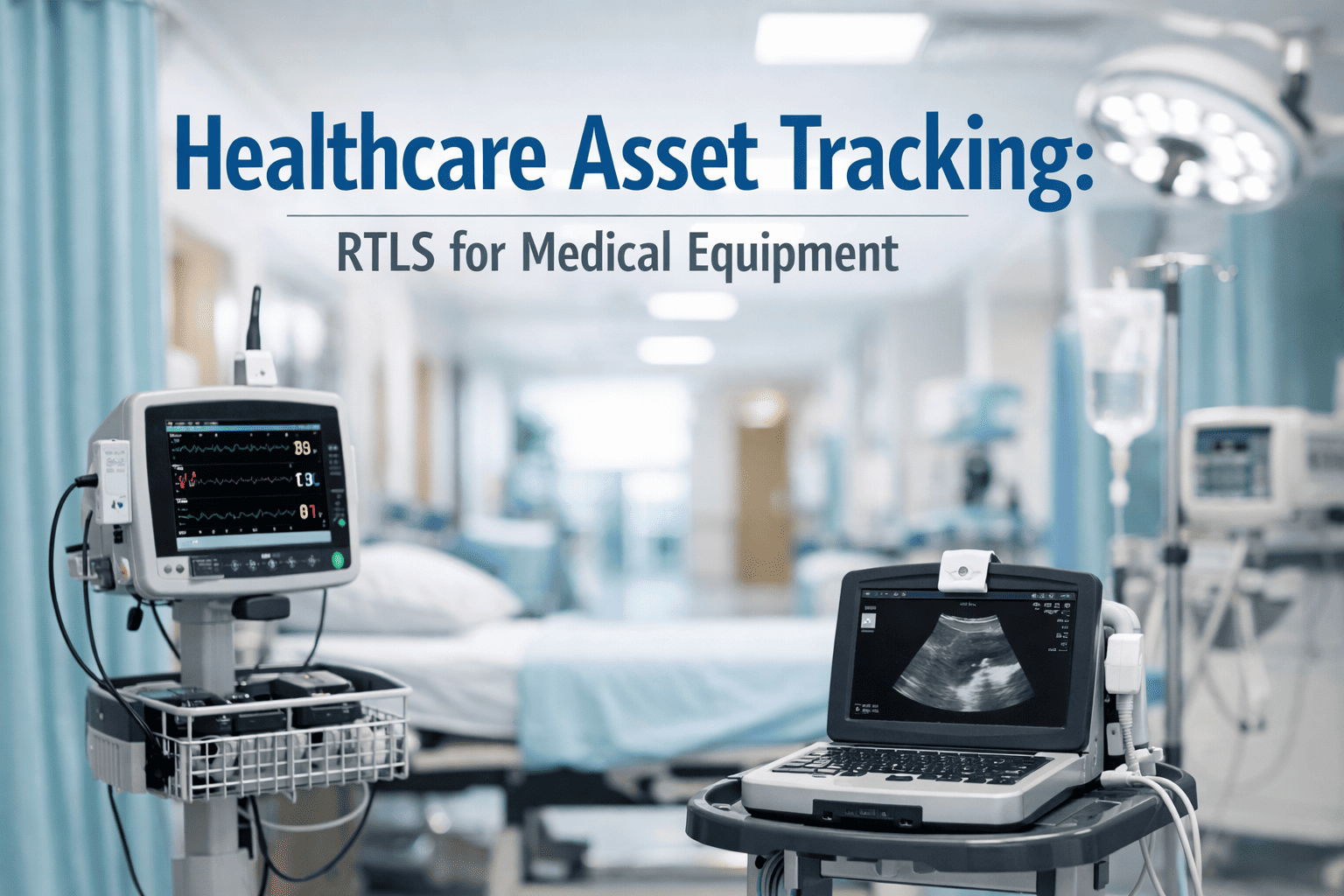
Every hour your clinical staff spends searching for infusion pumps, wheelchairs, or portable monitors is an hour not spent on patient care — and at scale, that invisible drain compounds into millions in labour waste, equipment over-purchasing, and preventable adverse events. Hospitals that still rely on manual logs, radio calls, and institutional memory to locate assets are operating with a blindspot that Indoor Positioning and RTLS technology eliminates entirely. Start a free trial to see how Oxmaint's RTLS integration closes your asset visibility gap from day one.
Hospital Indoor Positioning Systems (IPS) use RTLS, BLE, UWB, and Wi-Fi triangulation to deliver real-time location data on every tracked asset, staff member, and patient across your facility. Oxmaint integrates RTLS location feeds directly into your CMMS — connecting asset location to maintenance schedules, utilisation records, and compliance documentation in a single operational platform that your clinical, biomedical, and facilities teams share without friction.
The Operational Cost of Invisible Assets
You may already sense the problem. Equipment sits idle in a supply room while a nurse calls three floors to locate an identical unit. Preventive maintenance is scheduled — but the asset cannot be found in time. Regulatory audits require location records that do not exist. Book a demo to see how Oxmaint turns RTLS data into operational and compliance intelligence for your hospital.
Clinical staff waste 20–40 minutes per shift locating portable equipment. Across a 500-bed hospital, that is the equivalent of 6 full-time nurses consumed entirely by search activity — at a fully-loaded cost exceeding $800K annually.
Without utilisation data, procurement decisions are driven by complaints rather than evidence. Hospitals purchasing equipment they already own at adequate volume is not an edge case — it is systemic, and it is measurable once RTLS data exists.
Joint Commission and CMS surveys require documented evidence of preventive maintenance completion on life-safety and clinical equipment. If your team cannot locate an asset when maintenance is due, compliance documentation fails — not the equipment.
Bed turnaround delays caused by unavailable transport equipment, missing monitoring devices, or unlocatable IV poles directly extend ED boarding times and reduce throughput capacity — a patient safety and revenue impact that RTLS eliminates.
Your Assets Are in Your Hospital. You Just Cannot See Them.
Oxmaint's RTLS integration gives every department a live map of every tracked asset — and connects that location data to maintenance schedules, utilisation reports, and regulatory compliance records automatically. Book a demo to see your hospital asset map live in the first session.
RTLS Technology Selection: What Works in a Hospital Environment
No single positioning technology is optimal for every hospital use case. The right architecture depends on your accuracy requirement, infrastructure constraints, and the category of assets being tracked.
| Technology | Location Accuracy | Infrastructure Required | Best Hospital Use Case | Oxmaint Integration |
|---|---|---|---|---|
| BLE (Bluetooth Low Energy) | 3–5 metre room-level | BLE gateway network or existing Wi-Fi APs with BLE | Portable equipment, patient transport assets, general inventory | Native — BLE tag events feed Oxmaint asset records in real time |
| UWB (Ultra-Wideband) | 10–30 cm sub-metre | Dedicated UWB anchor network | High-value equipment, surgical instrumentation, infant security | UWB anchor data mapped to Oxmaint asset hierarchy and PM schedules |
| Wi-Fi RTLS | 5–15 metre zone-level | Existing Wi-Fi infrastructure with RSSI capability | Ventilators, infusion pumps, crash carts — large clinical assets | Wi-Fi RTLS feeds Oxmaint work order assignment and PM compliance tracking |
| RFID (Passive / Active) | Doorway / zone transition | RFID readers at key transition points | Linen, consumables, sterile supply chain, controlled medications | RFID transition events logged in Oxmaint inventory and audit trail |
| Hybrid BLE + UWB | Room-level to sub-metre | Combined gateway and anchor deployment | ICU, OR, and ED environments requiring highest location fidelity | Unified location feed into Oxmaint — single dashboard across both technologies |
What Oxmaint Delivers Beyond Location Data
Location alone is not ROI. The operational value of RTLS is realised only when location data connects to maintenance scheduling, utilisation analytics, and compliance documentation. That connection is what Oxmaint provides.
When a ventilator or infusion pump reaches a defined location threshold or usage hour count, Oxmaint automatically generates a preventive maintenance work order — routed to the biomedical technician on shift with full device history attached.
Every asset's active use time, idle time, and location dwell time is captured continuously. Procurement decisions are informed by real utilisation data — not by department requests that reflect perception rather than operational reality.
Every PM completion event is timestamped, location-stamped, and linked to the technician who performed the work. Audit evidence packages for Joint Commission EC.02.04.01 and EC.02.06.01 are exportable in under 30 minutes from Oxmaint.
BLE-equipped staff badges transmit location continuously. A single button press triggers an instant alert to security with the precise floor and zone — protecting nurses, lone workers, and high-risk clinical environments without infrastructure change.
Track transport equipment, stretchers, and patient wheelchairs in real time. Discharge workflows are triggered automatically when a bed zone becomes vacant, reducing bed turnaround from hours to minutes and measurably improving ED throughput.
For health systems operating across multiple campuses, Oxmaint consolidates RTLS feeds from every site into a single asset management dashboard — giving your VP of Facilities and CFO a unified view of equipment inventory, utilisation, and compliance status.
Business Case: ROI for Hospital Leadership
Implementation Roadmap
Every trackable asset — clinical equipment, transport assets, and high-value devices — registered in Oxmaint's asset hierarchy. BLE or UWB tags applied by your biomedical team following Oxmaint's tag deployment guide. No IT project, no VLAN changes, no vendor professional services required.
Preventive maintenance schedules imported from your existing CMMS or spreadsheet records and linked to live RTLS location feeds. Location-triggered PM work orders activated per equipment category. Biomedical and facilities teams on-boarded to mobile work order management.
Utilisation reports by department, by equipment category, and by shift activated for your CFO and VP of Operations. Procurement intelligence dashboard showing over-stocked and under-utilised equipment categories across departments — with quantified replacement deferral opportunity.
Joint Commission, CMS, and DNV audit evidence packages exportable on demand. Automated alerts when PM intervals are approaching or overdue. Staff safety alert integration activated for high-risk clinical zones. Book a demo to see the full audit export workflow for your accreditation scope.
See Your Hospital's Asset Map in the First Demo Session
Bring your current equipment inventory and PM compliance challenges to a 30-minute session. Oxmaint's team will configure a live view of your asset tracking architecture, PM gap analysis, and projected ROI based on your bed count and equipment categories — no commitment required. Book your strategy session now.
Frequently Asked Questions
Stop Budgeting for Equipment You Already Own
Your hospital's asset visibility problem has a measurable cost and a proven solution. In 30 minutes, Oxmaint will show you a live RTLS asset tracking configuration for your facility, a projected ROI based on your own operational data, and a deployment timeline that does not require an IT project. Schedule your strategy session with Oxmaint's healthcare team and leave with a business case your board will approve.