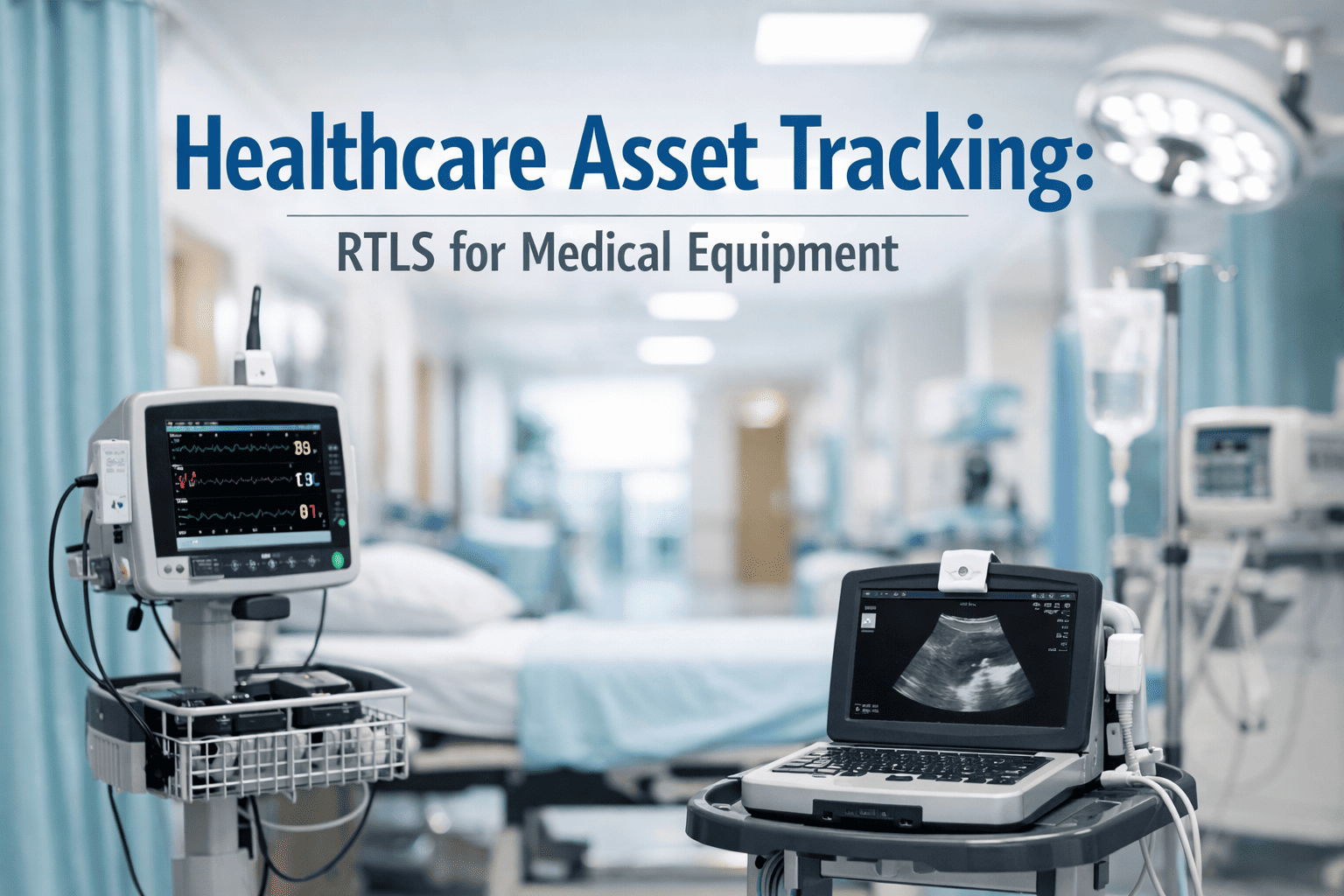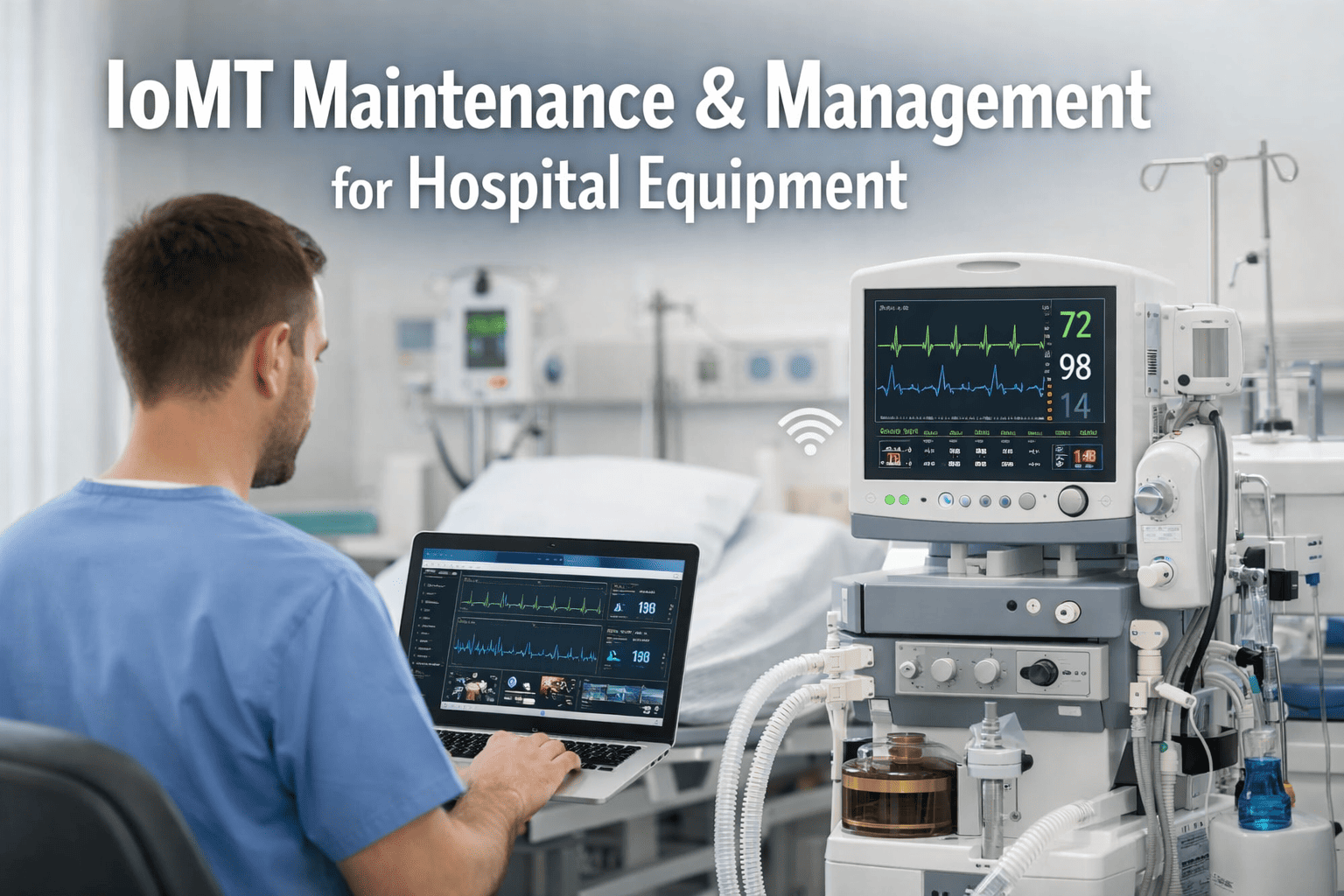
Every hour, clinical staff spend an average of 45 minutes searching for infusion pumps, ventilators, and wheelchairs that have no fixed location. That time is not a workflow inefficiency — it is direct care denied to patients. When your ICU nurse cannot locate a needed infusion pump in under 60 seconds, the cost is measured in outcomes, not just dollars. Hospital indoor positioning and real-time asset tracking technology closes that gap permanently. Book a strategy session to see how Oxmaint deploys RTLS-integrated asset tracking across your hospital within weeks.
Hospital indoor positioning systems use RTLS, BLE, UWB, or Wi-Fi triangulation to deliver continuous, room-level location data for every tagged asset — infusion pumps, ventilators, crash carts, imaging equipment, and more. Oxmaint integrates with your existing RTLS infrastructure or deploys its own BLE tag network to give your operations team a live, searchable asset map with automated utilization reporting, maintenance scheduling, and compliance documentation — without workflow disruption and without a multi-year IT project.
The Four Operational Problems Indoor Positioning Solves for Hospital Leadership
Each problem has a measurable cost. Each has a documented solution when location intelligence is applied correctly. Book a session to quantify the cost of each at your facility before your next capital budget cycle.
Without real-time location data, hospitals routinely purchase equipment they already own because existing inventory cannot be located. A 300-bed hospital typically has 20–35% of its mobile equipment unlocated at any given moment. Oxmaint's asset tracking delivers room-level location for every tagged asset, eliminating phantom procurement and recovering equipment from off-unit storage, soiled utility rooms, and patient discharge holds.
Preventive maintenance schedules cannot be executed against equipment that cannot be found. When biomed teams cannot locate a ventilator or defibrillator on its PM due date, the inspection is deferred — and deferred inspections become Joint Commission findings. Oxmaint links location data to PM schedules: when an asset's inspection is due, the system surfaces its current location, routes a technician, and closes the work order with documented completion — automatically.
Staff safety badges connected to the same indoor positioning network that tracks assets deliver sub-30-second duress alert response with precise room-level location. Without indoor positioning, security response to a staff duress event relies on verbal description — adding minutes that are clinically and legally consequential. Oxmaint's RTLS integration supports staff badge duress events within the same platform managing equipment location and maintenance.
Patient discharge is delayed when transport wheelchairs, IV poles, or discharge equipment cannot be located at the unit level. Bed turnover data shows that equipment-related delays account for 18–22 minutes of avoidable idle time per discharge. Oxmaint's asset heatmap identifies equipment pooling patterns — revealing where assets are clustering away from demand and triggering automated redistribution alerts to environmental services and transport teams.
You Cannot Optimize What You Cannot See. Real-Time Location Changes That.
Oxmaint gives your operations, biomed, and nursing leadership a live, searchable map of every tracked asset — with PM schedules, utilization data, and compliance documentation built in. Book a strategy session to see the asset location dashboard configured for your facility type.
RTLS Technology Options — What Each Delivers and When to Use It
Indoor positioning is not a single technology — it is a decision between accuracy, infrastructure cost, and coverage area. Your facility's profile determines the right stack.
| Technology | Location Accuracy | Infrastructure Required | Best Use Case | Tag Battery Life | Oxmaint Integration |
|---|---|---|---|---|---|
| BLE (Bluetooth Low Energy) | Room-level (3–5m) | BLE beacons — low cost, leverages existing Wi-Fi AP infrastructure in many cases | General asset tracking, staff safety, patient flow | 1–3 years per tag | Native — Oxmaint deploys BLE tag networks as standalone or integrates with existing |
| UWB (Ultra-Wideband) | Sub-meter (30cm) | Dedicated UWB anchors — higher infrastructure investment | High-value equipment (surgical robots, infusion pumps, imaging) | 6–18 months per tag | API integration with major UWB vendors (Zebra, Sewio, Pozyx) |
| Wi-Fi RTLS | Zone-level (5–15m) | Existing enterprise Wi-Fi — no new infrastructure if Cisco/Aruba deployed | Large campuses, multi-building tracking, lower-value assets | 2–5 years per tag | Cisco DNA Spaces, Aruba, Ekahau integration supported |
| RFID (Passive) | Choke-point detection | RFID readers at doorways, department entries | High-volume consumables, linen, instrument trays | No battery — passive tags | Choke-point event ingestion — inventory entry/exit logging in Oxmaint |
| Hybrid BLE + UWB | Room-level default, sub-meter on demand | BLE network with UWB overlays in critical zones (OR, ICU, ED) | Facilities requiring both broad coverage and high-precision zones | Mixed — managed per tag class | Unified asset map in Oxmaint — single dashboard regardless of tag type |
Deployment Roadmap — From Pilot to Full Facility Coverage
Oxmaint's deployment follows a structured sequence that delivers measurable value at each phase — without disrupting clinical operations or requiring an IT transformation project.
Every mobile asset class prioritized by search frequency, PM compliance rate, and capital value. Tag type selected per asset class. Floor plan imported into Oxmaint and zone boundaries configured per department. Existing RTLS infrastructure assessed for API integration eligibility.
BLE tags deployed on prioritized asset classes. Location data streaming into Oxmaint's live asset map. Clinical and biomed staff access configured with role-appropriate views — nurses see unit-level equipment finder; biomed sees PM-due asset locations; operations leadership sees utilization heatmaps. Book a session to see the live asset map interface for your floor plan.
Biomedical maintenance schedules linked to asset location data. PM-due alerts surface the asset's current room location to the biomed technician — eliminating search time before every inspection. Work order completion documented automatically against the asset's compliance record for Joint Commission and DNV audit readiness.
30-day utilization reports by asset class and department reveal true demand patterns. Over-stocked units identified for redistribution. Under-utilized asset classes flagged before the next capital budget submission. Leadership dashboards configured for COO, CNO, and Biomedical Director reporting cadence.
One Platform. Every Asset. Every Department. Every Compliance Requirement.
Oxmaint unifies indoor positioning, biomedical PM compliance, and capital utilization analytics in a single platform your operations team can deploy without a systems integrator. Book a session to see the deployment timeline for your facility size.
Oxmaint vs Competing RTLS and Asset Tracking Platforms
Most RTLS vendors sell location hardware. Oxmaint delivers location intelligence — integrated with the maintenance, compliance, and capital planning workflows that determine your facility's operational performance.
| Capability | Oxmaint | Zebra MotionWorks | CenTrak | Stanley RTLS | Impinj | GE Encompass | TeleTracking |
|---|---|---|---|---|---|---|---|
| Multi-technology RTLS (BLE+UWB+Wi-Fi) | Yes | BLE/UWB | IR/BLE | BLE/RFID | RFID | BLE | BLE |
| Biomed PM schedule linked to asset location | Yes | No | No | No | No | Partial | No |
| Joint Commission audit-ready export | Yes | No | No | No | No | Partial | Partial |
| Capital utilization analytics dashboard | Yes | Partial | No | No | No | Partial | Partial |
| Staff duress alert integration | Yes | Yes | Yes | Yes | No | No | No |
| Deployment without systems integrator | Yes | No | No | No | No | No | No |
| Equipment search via mobile — staff-facing | Yes | Yes | Yes | Partial | No | Partial | Yes |
| Patient flow and bed turnaround analytics | Yes | No | Partial | No | No | No | Yes |
Operational KPI Benchmarks — Hospital Asset Management
Quantified Results — Hospitals Using Oxmaint Indoor Positioning
Oxmaint Platform Features for Hospital Indoor Positioning
Room-level location for every tagged asset on an interactive floor plan — searchable by asset type, department, or serial number from any mobile device by any authorized staff member.
When a maintenance inspection is due, Oxmaint surfaces the asset's current room location to the biomed technician — routing the inspection directly, without a search step, and documenting completion automatically.
BLE, UWB, Wi-Fi, and RFID data streams unified in a single Oxmaint asset map — regardless of vendor. Existing Zebra, CenTrak, Ekahau, or Cisco RTLS infrastructure connected via API without rip-and-replace.
30, 60, and 90-day utilization reports by asset class and department — identifying over-stocked units, underutilized equipment, and capital procurement decisions that can be deferred or cancelled.
Staff location badges connected to the same indoor positioning network deliver room-level duress alerts to security in under 30 seconds — within the same platform managing equipment location and PM compliance.
All equipment maintenance records, location history, and PM compliance documentation exportable in under 2 hours for Joint Commission, DNV, or CMS survey response — no manual record assembly before the surveyor arrives.
Frequently Asked Questions — Hospital Leadership
Your Next Capital Budget Review Is the Right Time to Quantify the Cost of Not Knowing Where Your Equipment Is
Oxmaint delivers a live indoor positioning and asset management system your operations team can deploy in 6 weeks — with documented ROI on capital procurement, PM compliance, and clinical capacity recovery. Book a strategy session with your facility's operations leadership and leave with a quantified savings model specific to your patient bed count, asset inventory, and compliance profile.