India’s AI in Healthcare Strategy 2026: SAHI Framework & Impact

By Jack Edwards on March 12, 2026

png3

India is running one of the most ambitious national AI-in-healthcare experiments on the planet — and the operational, diagnostic, and infrastructure implications are reshaping how health facilities are managed from Kerala to Kashmir. Whether you oversee a hospital network, a diagnostics chain, or a public health portfolio, understanding where India's strategy is heading puts you ahead of the curve. Want to see how modern facility management platforms support AI-ready health infrastructure? start a free 30-day trial or book a demo with the Oxmaint team today.

India's AI in Healthcare Strategy: Key Initiatives and Impact | Oxmaint


Digital Health · India · 2026 4 min read

India's AI in Healthcare Strategy:
Key Initiatives and Impact

From NDHM to telemedicine at scale — how India's national AI agenda is reshaping diagnostics, patient access, and facility operations for 1.4 billion people.

$11.6B
Projected India healthtech market by 2025
1.4B
Population covered under National Digital Health Mission
300M+
Telemedicine consultations enabled since 2020
40%
Diagnostic errors reducible with AI-assisted screening tools
Foundation

What Is India's National AI Healthcare Strategy?

India's AI healthcare strategy is not a single policy — it is a layered ecosystem of government programs, national missions, and public-private partnerships designed to deploy artificial intelligence across diagnostics, disease surveillance, telemedicine, and infrastructure planning at a scale no other country has attempted. The National Digital Health Mission (NDHM), NITI Aayog's national AI framework, and the Ayushman Bharat Digital Mission (ABDM) together form the backbone of India's push to transform a fragmented, resource-constrained health system into a data-driven, AI-augmented national network.

For facility managers and health operations teams, this strategy signals one critical truth: the infrastructure required to support AI-ready healthcare — digitised asset records, predictive maintenance systems, real-time equipment monitoring — is no longer optional. It is the baseline expectation for any facility seeking to participate in India's digital health future. Start a free trial or book a demo to see how Oxmaint helps you build that foundation.

Policy Layer
NITI Aayog National Strategy for AI
India's apex planning body set the AI healthcare roadmap in 2018 — identifying cancer screening, chronic disease management, and diagnostics as priority AI deployment zones.
Infrastructure Layer
Ayushman Bharat Digital Mission
Universal health IDs, interoperable health data exchange, and a national health records framework that creates the data substrate AI systems need to function.
Access Layer
eSanjeevani Telemedicine Platform
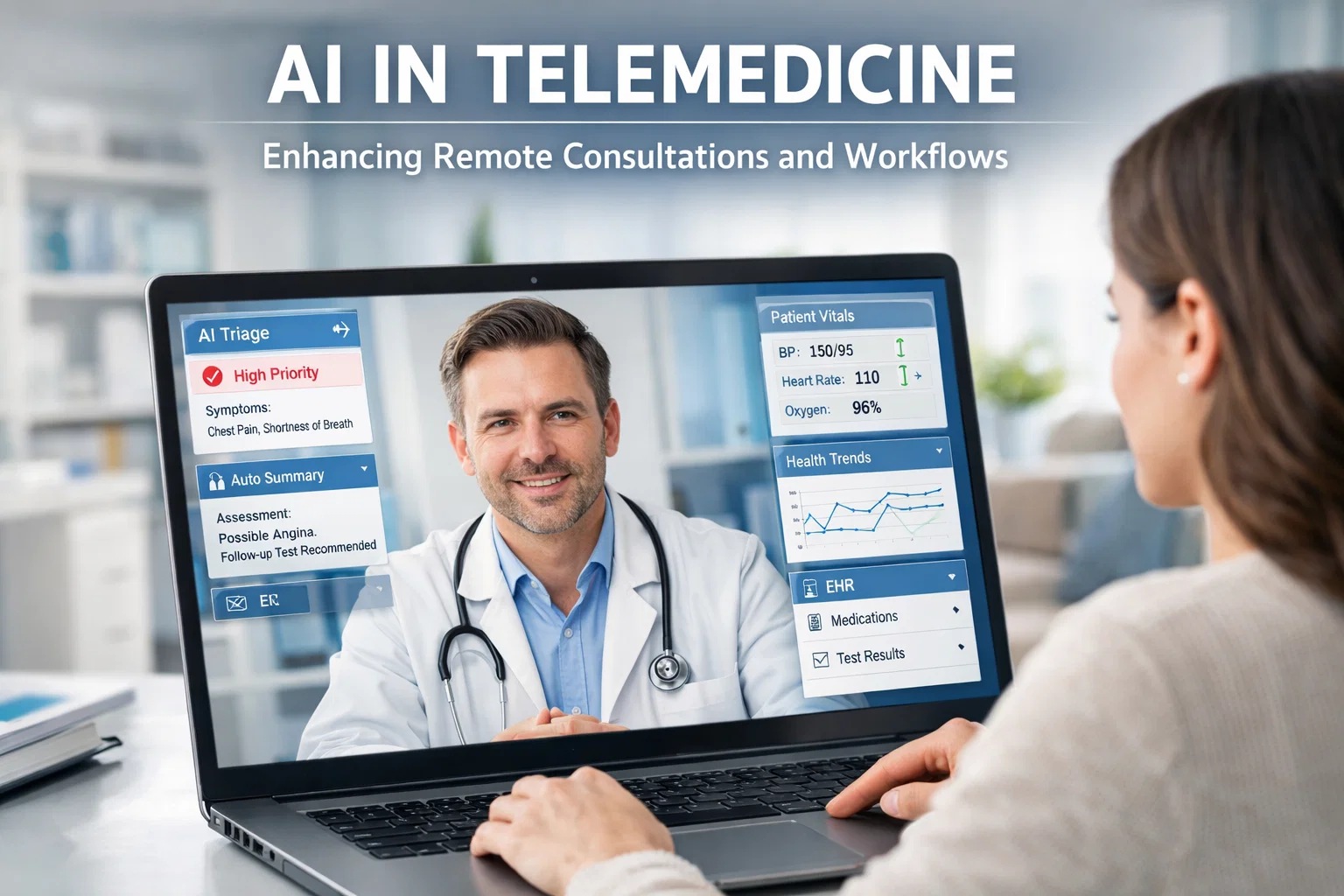
India's national telemedicine service connecting 300M+ patients with doctors remotely — making AI-augmented teleconsultation a mainstream care delivery channel.
Research Layer
IndiaAI Mission — Health Vertical
A Rs 10,372 crore national initiative funding AI research, compute infrastructure, and healthcare dataset curation across IITs, AIIMS, and national research institutions.

"India's AI healthcare strategy isn't a pilot program — it's national-scale infrastructure for a 1.4 billion-person system that cannot afford to stay reactive."
NITI Aayog — Responsible AI for All, 2023
Government Initiatives

Key Government Programs Driving AI Adoption

India's government is not waiting for the private sector to lead. Multiple concurrent national programs are actively deploying AI tools, digital infrastructure, and data frameworks across public health systems right now. Here are the eight initiatives with the highest operational impact for health facility teams. If your facility is planning for digital readiness, start a free trial or book a demo to see where Oxmaint fits in your roadmap.

01
Active Nationwide
National Digital Health Mission
Creates a universal digital health ID for every Indian citizen, enabling longitudinal health records that feed AI diagnostics and population health analytics. Over 530 million health IDs issued.
02
MoHFW Program
eSanjeevani Teleconsultation
World's largest government-run telemedicine platform. AI triage algorithms route patients to appropriate care tiers — reducing unnecessary emergency presentations by an estimated 22%.
03
NITI Aayog
AI-Powered Cancer Screening
AI screening tools deployed at district hospitals for cervical and breast cancer — achieving diagnostic accuracy above 90% with radiology resources that previously took weeks to access.
04
Rs 10,372 Cr Fund
IndiaAI Mission
National compute infrastructure, curated health datasets, and research grants for AI healthcare applications — specifically targeting tuberculosis detection, diabetic retinopathy, and sepsis prediction.
05
Disease Surveillance
Integrated Health Information Platform
Real-time disease outbreak detection using AI analysis of syndromic surveillance data across 700+ districts — cutting average outbreak identification time from 14 days to under 72 hours.
06
MeitY Initiative
National AI Portal — Health Datasets
Open dataset repository curating anonymised clinical data from government hospitals to train India-specific AI models — addressing the bias problem in models trained on Western patient data.
07
AIIMS Network
AI Research Centres at AIIMS Campuses
Dedicated AI research centres across 22 AIIMS campuses deploying machine learning for radiology, pathology, and drug discovery — producing India-built models validated on Indian patient populations.
08
State Programs
State-Level AI Health Missions
Kerala, Karnataka, Tamil Nadu, and Maharashtra each running state-specific AI health programs — from AI-assisted ophthalmology screening to predictive maternal health monitoring in rural PHCs.
Is Your Facility AI-Ready?
India's Digital Health Mandate Starts with Infrastructure

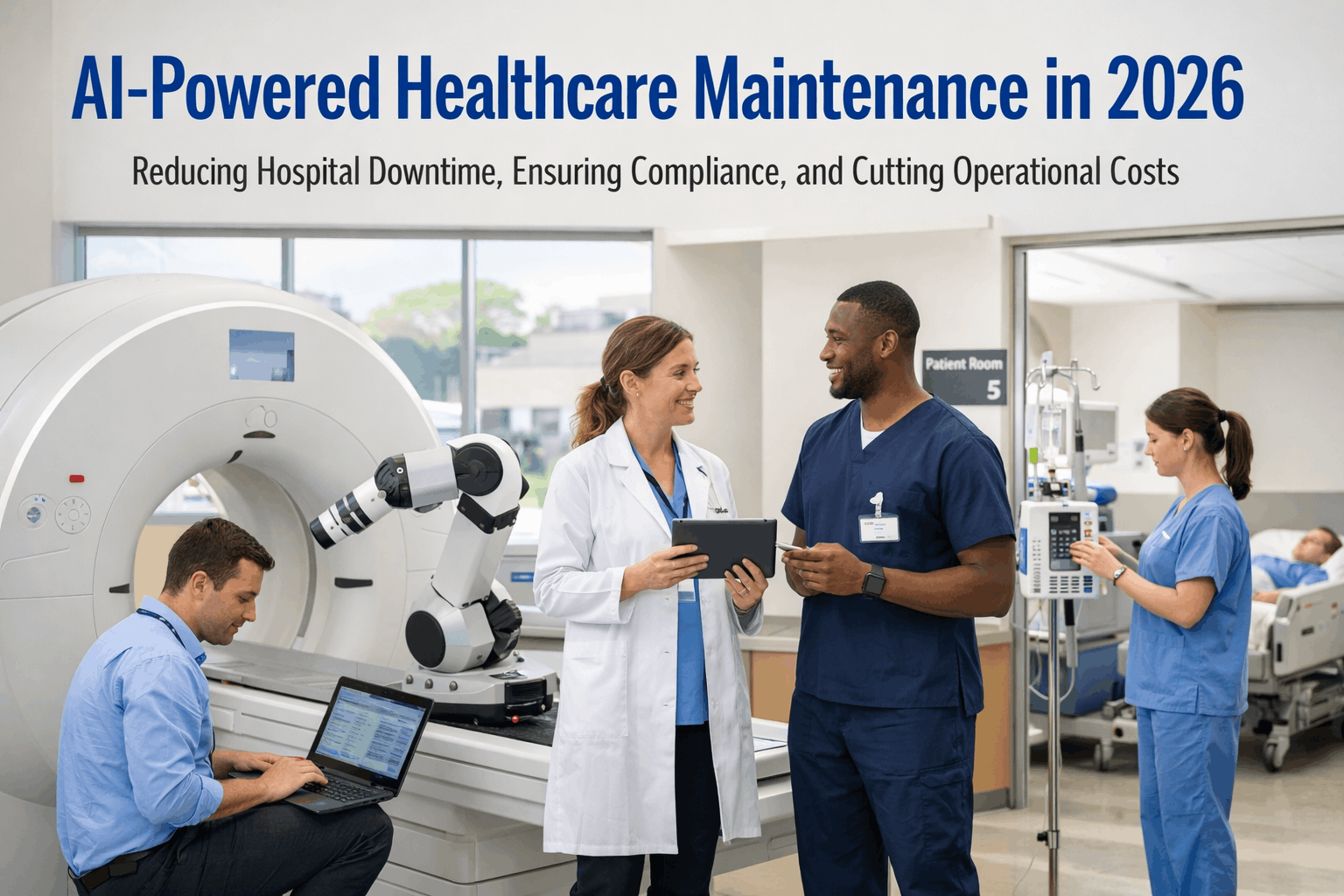
Before AI tools can work, your facility needs digitised assets, real-time equipment data, and structured maintenance records. Oxmaint gives hospitals and health facility teams the operational foundation to meet India's digital health standards — from work order management to CapEx forecasting across multi-site portfolios.

Operational Challenges

Why Most Facilities Are Not Ready for AI — Yet

India's AI healthcare strategy is ambitious and well-funded — but the gap between national policy and ground-level facility readiness is significant. AI tools require structured data, reliable equipment, and digitised operational records to function. Most Indian health facilities still have critical infrastructure gaps that block AI deployment before it starts. Understanding these pain points is the first step to closing them — and Oxmaint closes several of them directly. Start a free trial today or book a demo to see how.


Equipment Reliability
Unplanned downtime breaks AI diagnostic workflows
4.8x
Emergency repairs cost 4.8x more than scheduled maintenance — and a failed MRI or CT scanner shuts down the AI diagnostic pipeline entirely.

Data Silos
Disconnected records prevent AI model training
68%
68% of Indian public hospitals still manage maintenance records on paper or spreadsheets — making the structured data AI needs essentially unavailable.

Compliance Gaps
Manual PM logs create regulatory exposure
36%
36% of equipment failures are preventable with structured PM programs. Without digital scheduling, compliance audits for NABH and NQF accreditation become reactive scrambles.

CapEx Blind Spots
Budget surprises derail digital investment plans
22%
Reactive maintenance accelerates equipment degradation by 22%, pulling replacement cycles forward 3-5 years — consuming the capital budgeted for digital transformation initiatives.
Comparison

AI-Ready Facility vs. Traditional Facility Operations

The difference between a facility positioned to leverage India's AI health programs and one that is locked out of them comes down to operational infrastructure. This is the operational divide — and where it shows up in real metrics. Every dollar saved on reactive maintenance is a dollar available for digital health investment. Start a free trial or book a demo to model the gap for your facility.

Operational Factor
Traditional Facility
AI-Ready with Oxmaint
Equipment Uptime
Reactive — failures discovered mid-procedure
Condition-monitored — 48-72 hr advance warning
Maintenance Records
Paper logs — not retrievable for AI training or audit
Digital, structured, API-accessible data from day one
NABH Audit Readiness
Scrambled documentation — high citation risk
Auto-generated compliant records — always current
CapEx Planning
Budget surprises from unknown asset condition
5-10 year forecasting from live condition scores
Multi-Site Visibility
Siloed per campus — no portfolio-level data
Unified dashboard across all properties and systems
Repair Cost per Incident
Rs 3.5L - 16L per emergency repair event
Rs 60K - 2.5L per scheduled preventive visit
How Oxmaint Helps

How Oxmaint Builds the Infrastructure India's AI Health Strategy Needs

India's national AI programs generate policy, funding, and tools — but the operational infrastructure that makes them deployable at the facility level must be built by each health system. Oxmaint gives facility and operations teams the asset management, preventive maintenance, compliance documentation, and capital forecasting infrastructure that AI-ready healthcare demands. No consultants. No heavy onboarding. Operational in weeks. Start a free 30-day trial or book a demo and see the platform live.


Asset Intelligence
Full Equipment Registry with Live Condition Scoring
Every medical device, imaging system, and building asset tracked with condition scores, manufacturer data, and lifecycle forecasting — the structured data foundation AI tools require.

PM Automation
Preventive Schedules Triggered by Runtime and Cycles
PM tasks auto-generated from asset data — not static calendar reminders. Missed PMs escalate automatically. Equipment reliability that AI diagnostic workflows depend on is built in.

Compliance
NABH and Audit-Ready Documentation Always On
Every PM task and work order generates digitally-signed, timestamped records compliant with NABH, NQF, and GMP standards — retrievable on demand, never scrambled before an inspection.

IoT Integration
Real-Time Monitoring with 48-72 Hour Failure Warning
Connect clinical equipment sensors and BMS systems to receive live alerts before threshold breaches. Average early warning lead time of 48-72 hours — time to intervene before diagnostic workflows break down.

CapEx Forecasting
5-10 Year Capital Plans from Real Asset Health Data
Condition scores drive rolling capital replacement models. Operations directors get multi-year forecasts that protect the budget for digital health initiatives — not surprise equipment replacements.

Multi-Site
Portfolio-Level Reporting Across All Campuses
Manage 3, 10, or 30+ hospital campuses from a single dashboard. Cross-site PM compliance benchmarking, downtime rates, and asset health visible at portfolio level — not siloed by campus.

Mobile-First
Technician Workflows Fully Digital on Mobile
Field teams receive, execute, and close work orders on mobile with photo capture, checklists, and digital signatures. Complete records from every field action — no paper lag, no lost documentation.

Inventory
Spare Parts and MRO Procurement Integrated
Parts inventory linked to assets and work orders. Procurement tracked against budget. Unmanaged MRO spend cut 15-25% in year one — freeing capital for the digital health investments that matter.
Results

ROI Benchmarks: What Facilities Gain in Year One

Health facilities that implement structured asset management and preventive maintenance consistently see measurable operational gains within 6-12 months. These benchmarks represent the performance shift when moving from reactive to condition-based facility operations — freeing up capital and reliability for AI-driven care delivery programs. Start a free trial or book a demo and let our team model the ROI for your specific portfolio.

Cost Recovery
3.2x
Average ROI on preventive maintenance investment
Industry benchmark across health facility portfolios within 24 months
Asset Life
27%
Longer average equipment lifespan
Defers CapEx replacement by 3-5 years on average
MRO Savings
25%
Procurement cost reduction in year one
Capital redirected toward digital health initiatives and AI tools
FAQ

Frequently Asked Questions

What is India's National AI Healthcare Strategy and who is implementing it?
India's national AI healthcare strategy is a multi-layer government initiative coordinated primarily by NITI Aayog, the Ministry of Health and Family Welfare (MoHFW), and the Ministry of Electronics and Information Technology (MeitY). The strategy encompasses the Ayushman Bharat Digital Mission for health infrastructure, eSanjeevani for telemedicine, IndiaAI Mission for research and compute, and state-level programs in Kerala, Karnataka, Tamil Nadu, and Maharashtra. Together these programs target AI deployment across diagnostics, disease surveillance, maternal health, cancer screening, and chronic disease management — with the goal of extending quality care to all 1.4 billion citizens through technology-augmented healthcare delivery.
How does the Ayushman Bharat Digital Mission support AI in healthcare?
The Ayushman Bharat Digital Mission creates the data infrastructure that AI healthcare tools require to function at scale. By assigning every Indian citizen a unique digital health ID and building a national health records exchange, ABDM creates the longitudinal, structured patient data substrate that machine learning models need to train on Indian-specific clinical data. This addresses a critical problem with AI models trained on Western patient populations — they perform poorly on Indian disease profiles, body types, and clinical presentations. ABDM's data layer, combined with open dataset initiatives on the National AI Portal, enables the development of India-specific diagnostic AI that performs accurately across diverse regional populations.
What facility infrastructure do hospitals need to support AI-driven healthcare programs?
AI-driven healthcare programs at the facility level require three foundational infrastructure elements: reliable equipment with digitised condition records, structured maintenance and operational data that AI tools can ingest, and compliance documentation that meets NABH, NQF, and government audit requirements. In practice, this means hospitals need a digital asset registry with condition scoring for every medical device and building system, automated preventive maintenance scheduling to keep equipment operational, real-time IoT monitoring for early failure warning, and audit-ready documentation generated automatically. Facilities still operating on paper logs, Excel spreadsheets, or disconnected maintenance tools cannot participate effectively in national AI health programs — because the data layer those programs depend on simply does not exist in a usable form.
What is the ROI for hospitals investing in digital facility management ahead of AI health program adoption?
Hospitals that implement digital facility management platforms before AI health program adoption capture two layers of ROI simultaneously. The direct operational ROI from preventive maintenance averages 3x to 5x within 24 months — driven by a 25-35% reduction in emergency repair costs, 27% longer equipment lifespan, and 15-25% MRO procurement savings. The strategic ROI comes from being AI-ready: facilities with digitised asset records and structured maintenance data can participate in national telemedicine, diagnostics, and disease surveillance programs without a separate digital infrastructure investment. For multi-site health systems, the compounding effect across a 5-10 property portfolio makes the business case for digital facility management one of the strongest capital allocation decisions available in Indian healthcare operations today.


Get Started with Oxmaint
Build the Operational Foundation India's AI Health Strategy Demands

India's national AI healthcare programs are moving fast. The facilities that will benefit most are those that arrive with digitised assets, reliable equipment, and structured operational records already in place. Oxmaint gives health facility teams across India the asset management, preventive maintenance, compliance documentation, and CapEx forecasting infrastructure they need — with no heavy implementation, no specialist consultants, and results measurable within the first quarter.
Full medical equipment registry Automated PM scheduling NABH-ready documentation 5-10 year CapEx forecasting Multi-site portfolio reporting IoT and SCADA integration

Share This Story, Choose Your Platform!