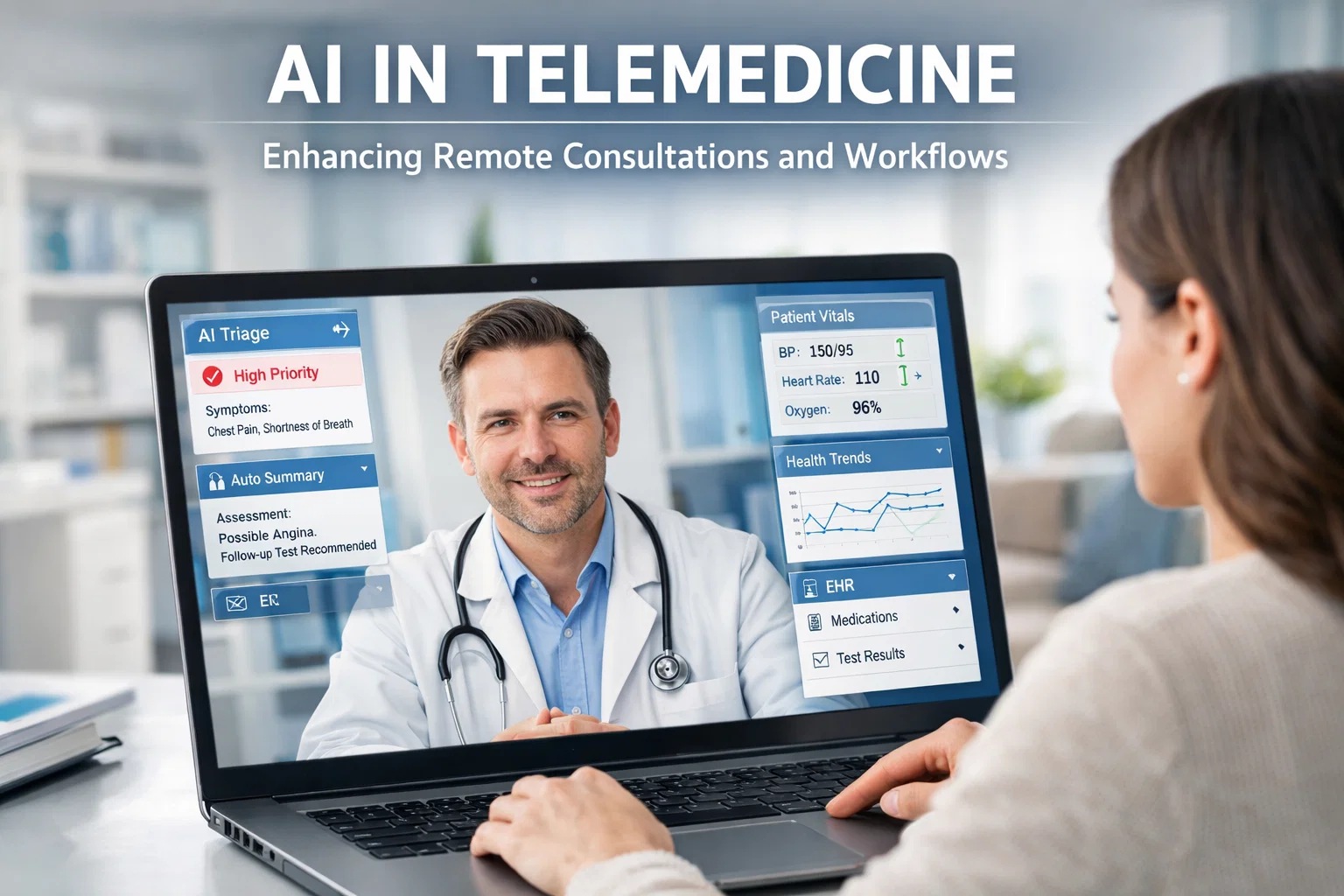
Telemedicine has moved from experimental to essential healthcare delivery. In the United States alone, over 116 million telehealth visits were recorded in 2023, and adoption continues to accelerate across the UK, UAE, Australia, India, and Germany. Artificial intelligence now sits at the core of every high-performing virtual care platform — automating patient intake, generating clinical notes in real time, connecting disparate EHR systems, and supporting remote diagnostics with precision that manual workflows cannot match. But AI-driven telemedicine is only as reliable as the physical infrastructure running beneath it. Connected medical devices, maintained equipment, and audit-ready compliance records are not optional — they are the foundation that determines whether virtual care actually delivers at scale. If you want to see how Oxmaint ensures that foundation never cracks, start a free trial for 30 days with full platform access and zero setup costs or book a demo with our team and we will walk you through every feature relevant to your specific facility operation.
What Is AI in Telemedicine?
Artificial intelligence in telemedicine is the deployment of machine learning, natural language processing, computer vision, and predictive analytics within virtual care platforms. These tools handle the tasks that consume the most clinical time — patient intake, symptom triage, consultation documentation, diagnostic support, and data synchronisation across EHR systems.
When properly implemented, AI reduces administrative workload for physicians by up to 45%, dramatically increases consultation throughput, and catches diagnostic risk factors that manual review frequently misses. Countries with high telehealth adoption — including the US, UK, and UAE — are deploying AI across every stage of the patient journey, from initial symptom check to post-visit follow-up. But AI-optimised clinical workflows still depend on reliable equipment and well-managed facility infrastructure to deliver. That is precisely where Oxmaint comes in — to start a free trial for 30 days and explore the platform that keeps your telemedicine environment running without disruption, or book a demo with our team and let us show you the healthcare-specific features that matter most to your operation.
Core AI Capabilities Transforming Telemedicine Workflows
Modern telehealth platforms deploy AI across six key operational domains. Each capability directly reduces clinical friction and improves patient outcomes at scale — with measurable results from deployment day one.
AI algorithms collect structured symptom data pre-consultation and route patients by acuity. Intake time drops from 25 minutes to under 5. Urgent cases are flagged automatically before the physician joins the call.
Natural language processing converts spoken consultations into structured clinical notes in real time. Physician documentation time drops by 45%, and note accuracy improves by removing transcription errors entirely.
FHIR-compliant AI integration layers sync patient data across disparate EHR platforms automatically. Manual entry errors — typically running at 10 to 15% — drop to near zero with automated real-time synchronisation.
Machine learning models analyse patient-submitted vitals, lab results, and diagnostic images — flagging anomalies and providing differential diagnosis support to the treating physician during the live consultation.
Risk stratification models identify patients at high probability of deterioration or readmission. Proactive outreach before a crisis develops reduces emergency admissions by up to 30% across high-volume telehealth programmes.
AI surfaces evidence-based treatment recommendations during consultations based on real-time patient data. Physicians make faster, better-informed decisions without interrupting the conversation or switching between systems.
The Operational Pain Points Behind Telemedicine Failures
AI solves clinical complexity — but it cannot fix broken operations. These four failure points account for the majority of telemedicine disruptions in healthcare facilities worldwide, regardless of how advanced the clinical software is.
70% of healthcare organisations operate three or more disconnected EHR or asset management systems. Physicians waste an average of 4.5 hours per week reconciling data from siloed platforms — clinical time that should be spent on patient care, not administrative firefighting.
Clinical documentation consumes up to 35% of a physician's working day. In telemedicine settings this burden intensifies — without in-room support staff, all documentation falls on the provider. Unchecked, this is the primary driver of clinician burnout globally.
A single telehealth device failure during peak hours disrupts 15 or more scheduled consultations. Without preventive maintenance in place, reactive repairs cost 4.8 times more than planned maintenance and arrive too late to prevent the disruption from happening.
HIPAA in the US, CQC standards in the UK, and DTAM requirements in the UAE all demand meticulous documentation of equipment use, maintenance records, and clinical workflows. Manual systems create gaps that become costly and time-consuming during regulatory audits.
Eliminate Operational Gaps in Your Telemedicine Infrastructure
Oxmaint gives healthcare operations teams a single platform for asset management, preventive maintenance scheduling, compliance documentation, and real-time equipment monitoring — all built for multi-site healthcare portfolios with no heavy implementation fees.
How Oxmaint Powers Reliable Telemedicine Operations
AI manages the clinical layer. Oxmaint manages the operational foundation beneath it. These are the six ways Oxmaint directly supports telemedicine performance across healthcare facilities — from single clinics to multi-site hospital portfolios.
Every telehealth device, IoT monitor, diagnostic tool, and network asset is tracked in a centralised registry with condition scores, service history, and lifecycle forecasts. No more blind spots in your asset inventory across any site.
Maintenance schedules tied directly to asset records — triggered by calendar intervals, usage hours, or live IoT sensor thresholds. Reduce unplanned device failures by up to 70% before they interrupt a single patient consultation.
Real-time data from connected medical devices and facility systems feeds directly into Oxmaint's dashboard. Condition-based alerts trigger maintenance before equipment fails — not after patient disruptions have already occurred.
Digital maintenance records with technician signatures, timestamps, and inspection checklists — built to satisfy HIPAA, CQC, OSHA, and DTAM requirements. Audit preparation time drops from days to hours.
Raise, assign, and close work orders directly from mobile — with full technician history and parts tracking attached to each asset record. Every repair is documented, linked, and retrievable at audit time.
Rolling 5 to 10 year CapEx models built on real asset condition data — not budget guesswork. Know exactly when each piece of telemedicine equipment needs replacement and plan for it before the capital shock arrives.
Healthcare facility managers across the US, UK, UAE, and Australia are using Oxmaint to close the infrastructure gaps that undermine telemedicine performance. To see this in your own environment, start a free 30-day trial of Oxmaint with instant access to every feature and no implementation costs required, or book a demo and let us build the walkthrough around your specific equipment portfolio and facility structure.
Before vs After: Telemedicine Operations with AI and Oxmaint
The difference between reactive and proactive operations is measurable and immediate. This comparison shows what healthcare facilities gain operationally when they pair AI telehealth tools with Oxmaint's CMMS platform.
| Operational Area | Without AI + Oxmaint CMMS | With AI + Oxmaint CMMS |
|---|---|---|
| Patient Triage Workflow | Manual intake: 15 to 25 minutes per patient | AI-automated: 3 to 5 minutes per patient |
| Clinical Documentation | 2 to 3 hours daily per physician | Under 45 minutes with NLP documentation tools |
| Equipment Downtime | Reactive, unplanned disruptions to consultations | Predicted, scheduled, and prevented before impact |
| EHR Data Integration | Manual entry with 10 to 15% error rates | Automated real-time sync, near-zero errors |
| Compliance Audit Preparation | Paper records requiring days of manual work | Digital audit trail ready within hours |
| Asset Lifecycle Visibility | Spreadsheets, whiteboards, or nothing at all | Full condition history and rolling CapEx forecasting |
Healthcare facilities that complete this transition report measurable improvements in consultation reliability and compliance readiness within weeks of deployment — not months. If you are ready to make that shift, start a free trial and see the operational difference in your own facility within days, or book a demo for a personalised walkthrough with one of our healthcare operations specialists.
See Exactly How Much Reactive Maintenance Is Costing You
Oxmaint's condition-based asset tracking and rolling CapEx models give healthcare facility teams full visibility into equipment health and maintenance costs — before the next emergency repair bill arrives. Get started with no implementation fees and no long onboarding.
ROI of AI and Predictive Maintenance in Healthcare Operations
The financial case for combining AI telemedicine tools with proactive asset management is overwhelming. These figures come from real-world healthcare facility deployments where reactive maintenance was replaced with condition-based planning.
Frequently Asked Questions
What AI tools are most commonly deployed in telemedicine platforms today?
The most widely deployed AI tools in telemedicine include NLP documentation assistants such as Nuance DAX and Suki AI, AI-powered triage chatbots, predictive analytics engines for patient risk stratification, remote monitoring algorithms for chronic disease management, and computer vision models for diagnostic imaging analysis. FHIR-compliant EHR integration layers allow these tools to operate seamlessly across disparate hospital and clinic systems without requiring costly custom development work.
How does AI actually improve patient triage in remote care settings?
AI triage systems collect structured symptom data through conversational pre-consultation interfaces before the physician joins the call. Machine learning models score patient acuity in real time, flag urgent cases, and route patients to the appropriate care pathway automatically. This reduces physician intake time by up to 40%, cuts no-show rates through automated reminders, and ensures every physician begins each session with a complete pre-assessed clinical summary — not a blank chart.
How does Oxmaint specifically support telemedicine facility operations?
Oxmaint provides healthcare facilities with a full CMMS platform managing the medical devices, IoT-connected equipment, and facility assets that telemedicine depends on. This includes preventive maintenance scheduling triggered by asset condition data, real-time equipment monitoring via IoT integration, HIPAA-aligned audit documentation with digital signatures, work order management with full technician history, spare parts inventory management, and rolling CapEx forecasting for equipment replacement planning — all accessible from a mobile-first interface across any number of sites.
What is the financial ROI of AI in telemedicine, and how does maintenance affect it?
Healthcare providers combining AI telehealth tools with proactive maintenance management consistently report 30 to 50% reductions in administrative overhead, 40% improvement in consultation throughput, and 70% fewer unplanned equipment disruptions. Emergency equipment repairs average 4.8 times the cost of planned maintenance — meaning every dollar invested in preventive maintenance delivers compounding returns. Oxmaint's CapEx forecasting models help facilities budget equipment replacement cycles proactively, avoiding the capital shocks that come with emergency procurement decisions.
Your Telemedicine Infrastructure Needs to Be Bulletproof
AI is transforming how patients receive care — but only healthcare facilities with reliable, well-maintained infrastructure can fully capture that value. Oxmaint gives your operations team the CMMS platform to manage every asset, schedule every maintenance task, and document every inspection to satisfy HIPAA, CQC, OSHA, and DTAM requirements — all in one place, with no heavy implementation fees and no long onboarding cycles.
Join healthcare operations teams across the US, UK, UAE, Australia, and beyond managing assets, maintenance, and compliance with Oxmaint. Get full platform access in minutes — not months.


.png)

