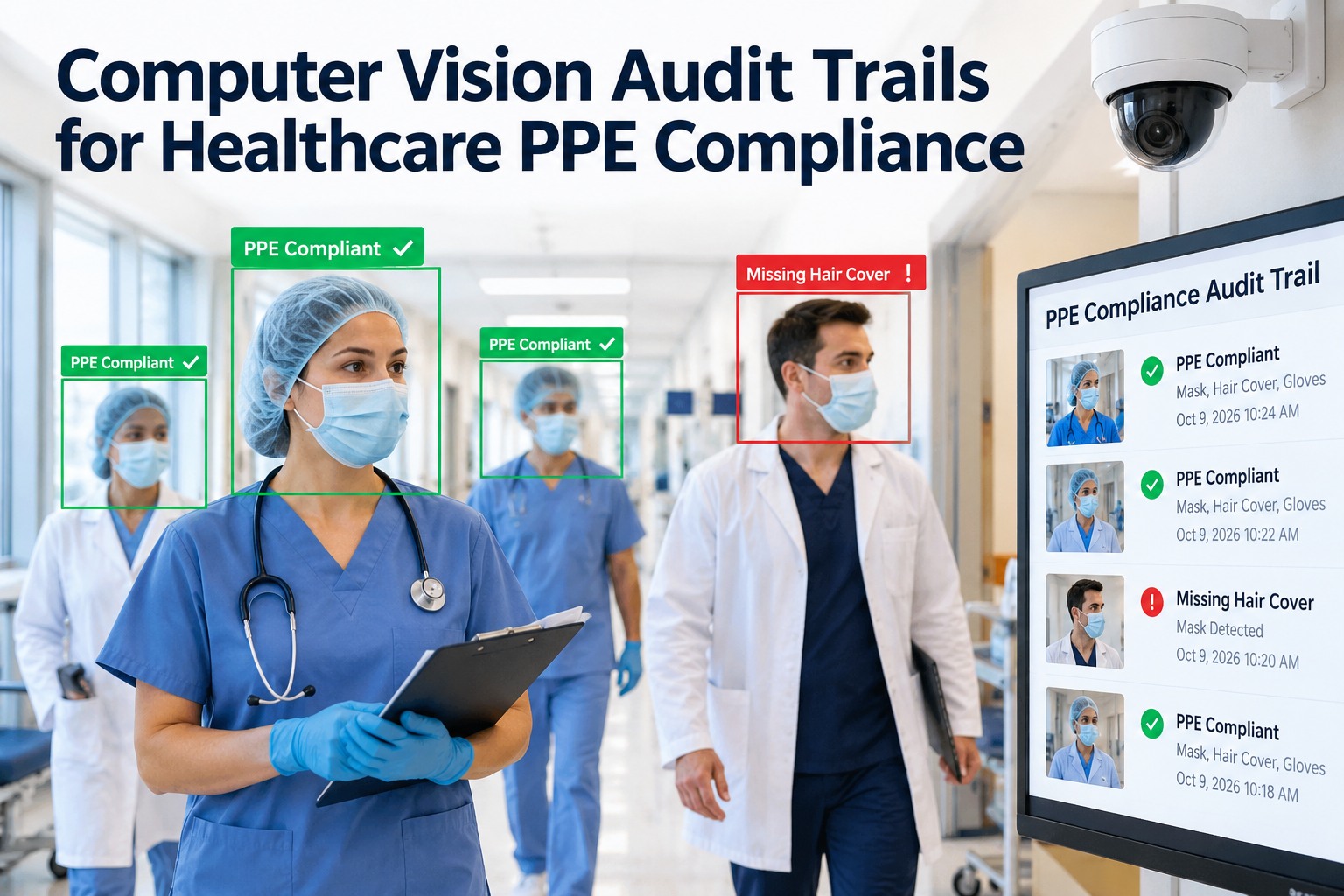
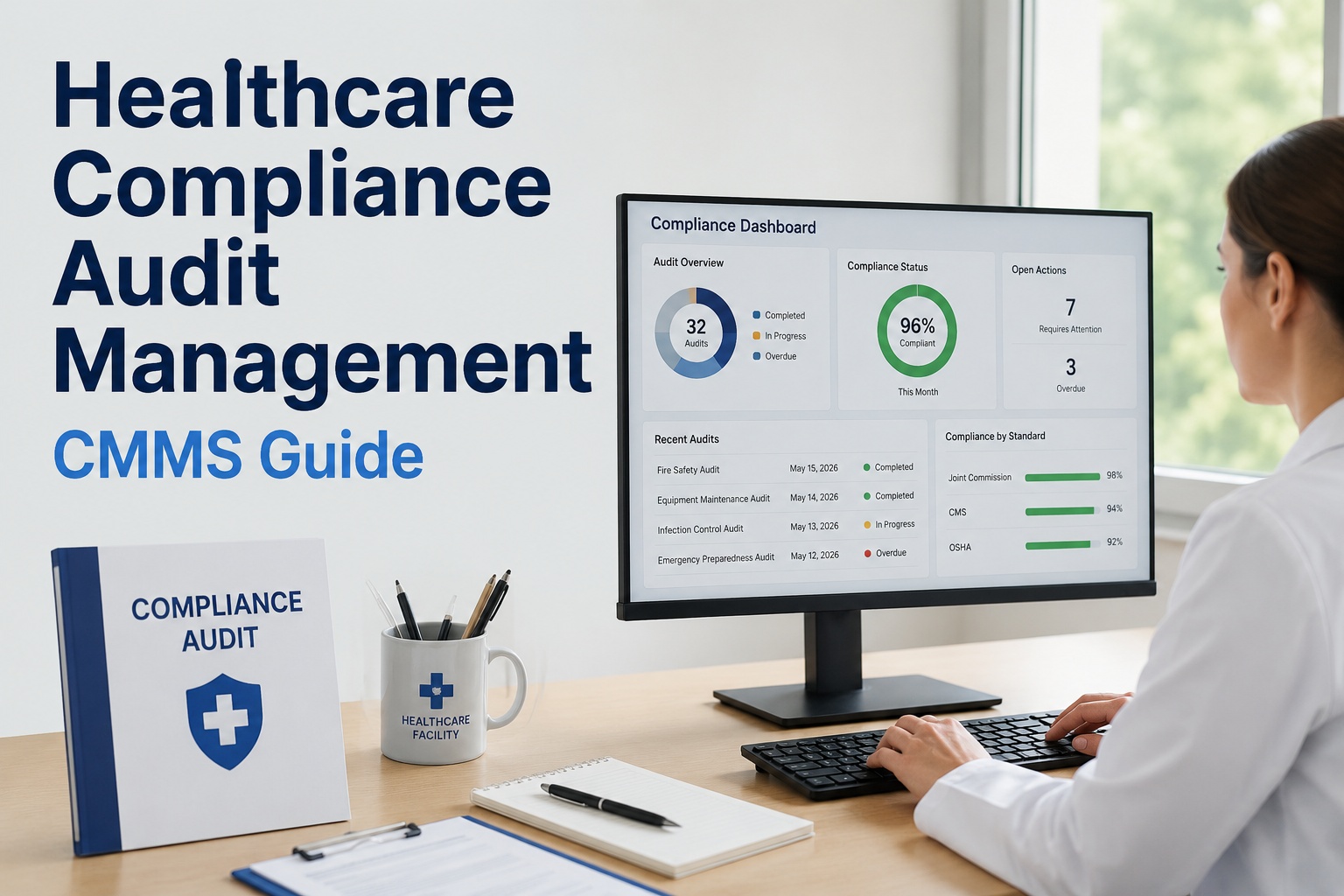
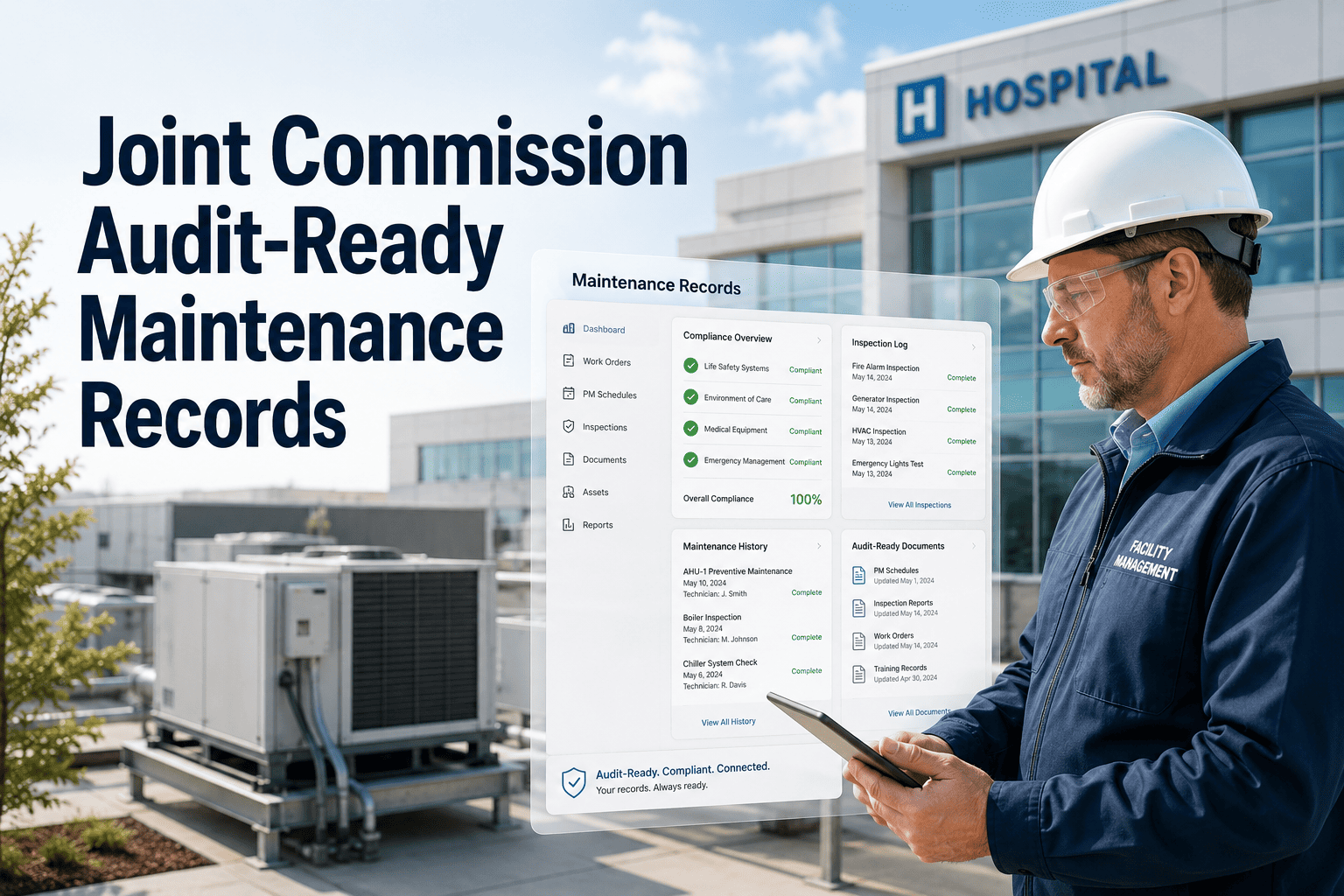
Most hospitals don't discover their documentation gaps during a routine review — they find them during a survey, when a TJC surveyor asks for a work order closed six months ago and the answer is a spreadsheet, a sticky note, or silence. A single documentation failure during an Environment of Care audit can trigger a corrective action plan, a $75,000 fine, and 90 days of operational disruption. This page is built for facility directors and maintenance managers who want to stop dreading the next survey and start walking into every audit fully armed. Want to see what audit-ready documentation looks like in practice? Start a free trial or book a demo to walk through a live compliance workflow with our healthcare team.
Healthcare Compliance Documentation:
Digital Audit Trails That Survive Any Survey
A field guide for facility directors, maintenance managers, and HTM teams to build timestamped, tamper-evident documentation systems that satisfy TJC, CMS, HIPAA, and NFPA standards — every shift, every site, every survey.
What Is a Digital Audit Trail — and Why Does It Matter in Healthcare?
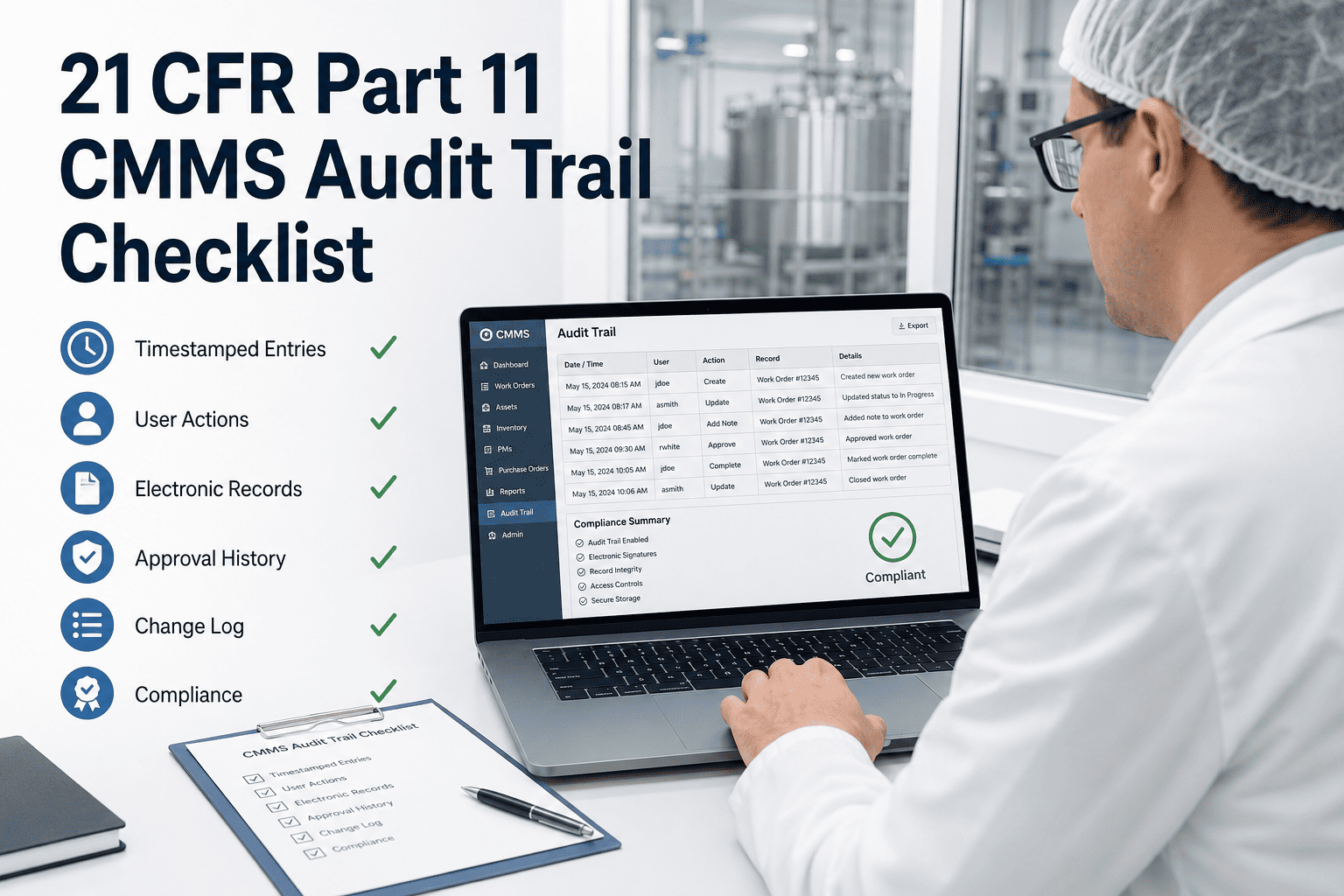
A digital audit trail is a timestamped, sequential, tamper-evident record of every action taken on a piece of equipment, work order, inspection, or asset — from creation to closure. In healthcare maintenance, it answers the six questions every TJC surveyor and CMS auditor asks: who did what, on which asset, using what parts, at what time, with whose authorization, and what was the outcome.
Unlike a paper logbook or a spreadsheet export, a genuine digital audit trail cannot be retroactively altered. Every entry is attributed, timestamped, and chained to the preceding record. This is the evidentiary standard that TJC's Environment of Care, CMS Conditions of Participation, HIPAA Security Rule, and NFPA 99 all require — but that most facilities still cannot produce on demand without hours of manual reconstruction. If your team is still pulling records from multiple systems before a survey, start a free trial to see what a unified, audit-ready record system looks like, or book a demo and walk through a live export with our compliance team.
The Four Regulatory Frameworks That Demand Digital Documentation
Every healthcare facility operates under overlapping compliance layers. Each has distinct documentation requirements — and all of them share one thing: they want a retrievable, timestamped, complete record. Here is what each framework specifically demands from your maintenance and asset management records.
8 Documentation Failure Modes That Expose Hospitals During Surveys
Documentation failures rarely happen because teams don't care — they happen because the system makes it too easy to skip a step, close a ticket incompletely, or store records in a place no one can find during an audit. These are the eight patterns that surface most consistently in TJC survey findings.
Manual Documentation vs. Digital Audit Trail: The Real Operational Gap
This is what a surveyor actually experiences — and what your team actually lives — depending on which documentation model your facility runs.
Results based on Oxmaint healthcare client transitions from manual documentation systems. Actual outcomes depend on facility size, staffing, and starting documentation baseline. Ready to close the gap? Start a free trial or book a demo with our compliance team today.
How Oxmaint Builds Audit-Ready Documentation — Automatically
Oxmaint's compliance documentation engine is not an add-on feature — it is baked into every work order, every inspection, every PM record, and every asset record from day one. Every action a technician takes generates a timestamped, attributed, immutable record that is immediately retrievable for any regulatory audit.
What Audit-Ready Documentation Delivers: Results by the Numbers
These figures reflect outcomes from healthcare facilities that transitioned from manual or legacy documentation systems to Oxmaint's compliance documentation framework. The gains are operational, financial, and regulatory.
The 6-Point Audit Trail Readiness Checklist Every FM Director Should Run Monthly
Before your next survey — planned or unannounced — run these six checks against your documentation system. Each represents a distinct audit vulnerability. A single failure on any of the six is a finding waiting to happen. The facilities that achieve 95% survey success rates run these checks continuously, not just pre-survey. Oxmaint automates all six — start a free trial and see your live readiness score, or book a demo to walk through each check with our healthcare compliance team.
Frequently Asked Questions: Healthcare Compliance Documentation
Tap any question to expand the full answer.
01
How long must hospitals retain maintenance and equipment documentation under TJC and CMS?
▾
TJC expects records available for the current accreditation cycle — typically three years — and recommends a minimum three-year retention from the date of activity. CMS Conditions of Participation align with state law, ranging from three to seven years in most US jurisdictions. For life-safety systems — fire suppression, emergency power, medical gas — many facilities retain records for the life of the system to support trend analysis and capital replacement planning.
The safest standard: retain all maintenance, PM, and inspection records indefinitely in a searchable digital system segmented by asset and regulatory category — so retrieval takes seconds regardless of when a surveyor arrives.
02
What did TJC's “Accreditation 360” update change about documentation requirements?
▾
In June 2025, The Joint Commission restructured its standards under “Accreditation 360: The New Standard” — consolidating from 1,551 to 774 standards. The numbering system changed significantly, but the core documentation substance did not. Every requirement for equipment inventory, PM documentation, work order records, and inspection logs still applies — reorganized, not reduced.
Facilities using Oxmaint do not need to rebuild their documentation workflow. The underlying data requirements remain identical, and the platform exports records compatible with both legacy and new standard references.
03
Can a CMMS like Oxmaint satisfy HIPAA audit trail requirements for maintenance-related systems?
▾
HIPAA Security Rule audit trail requirements under 45 CFR § 164.312(b) apply specifically to systems that process, store, or transmit electronic protected health information. A CMMS used for maintenance management does not typically touch ePHI directly and is not the primary HIPAA audit log target.
Where a CMMS integrates with BAS, BMS, or IoT systems intersecting clinical environments, facilities should ensure access controls and user activity logs meet their HIPAA compliance officer’s standards. Oxmaint maintains complete user activity logs with timestamps, role-based access controls, and audit exports for both internal review and external regulatory inquiry.
04
How does Oxmaint handle documentation for multi-site health systems with different state regulations?
▾
Oxmaint’s portfolio architecture lets health systems set a baseline documentation standard at the portfolio level — configured to satisfy the most stringent applicable requirement across all sites — while accommodating site-specific regulatory overlays where state law diverges.
Portfolio-level reporting gives operations leadership consolidated visibility across documentation completeness, PM compliance, and open deficiencies for every campus without manual aggregation. Multi-site TJC portfolio surveys require exactly this kind of standardized, consolidated evidence.
Stop Scrambling Before Surveys. Build Documentation That's Always Ready.
Oxmaint gives hospital maintenance teams the timestamped work orders, mandatory closure enforcement, digital inspection trails, PM compliance dashboards, and one-click survey exports to walk into any TJC, CMS, or state regulatory audit fully prepared — not reactive. No lengthy onboarding. No heavy implementation cost. Complete, audit-ready documentation from day one across every asset, every site, and every technician on your team.