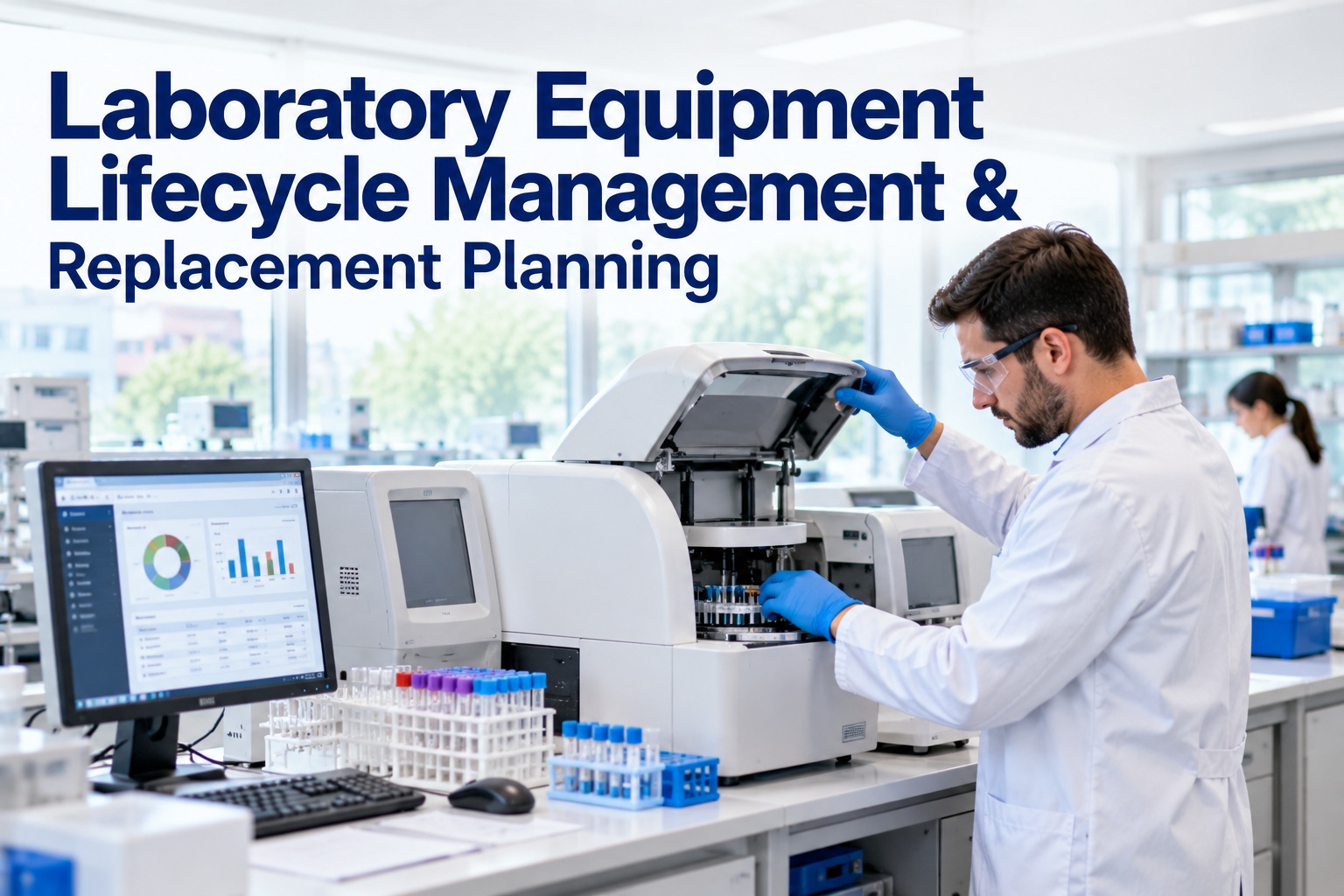
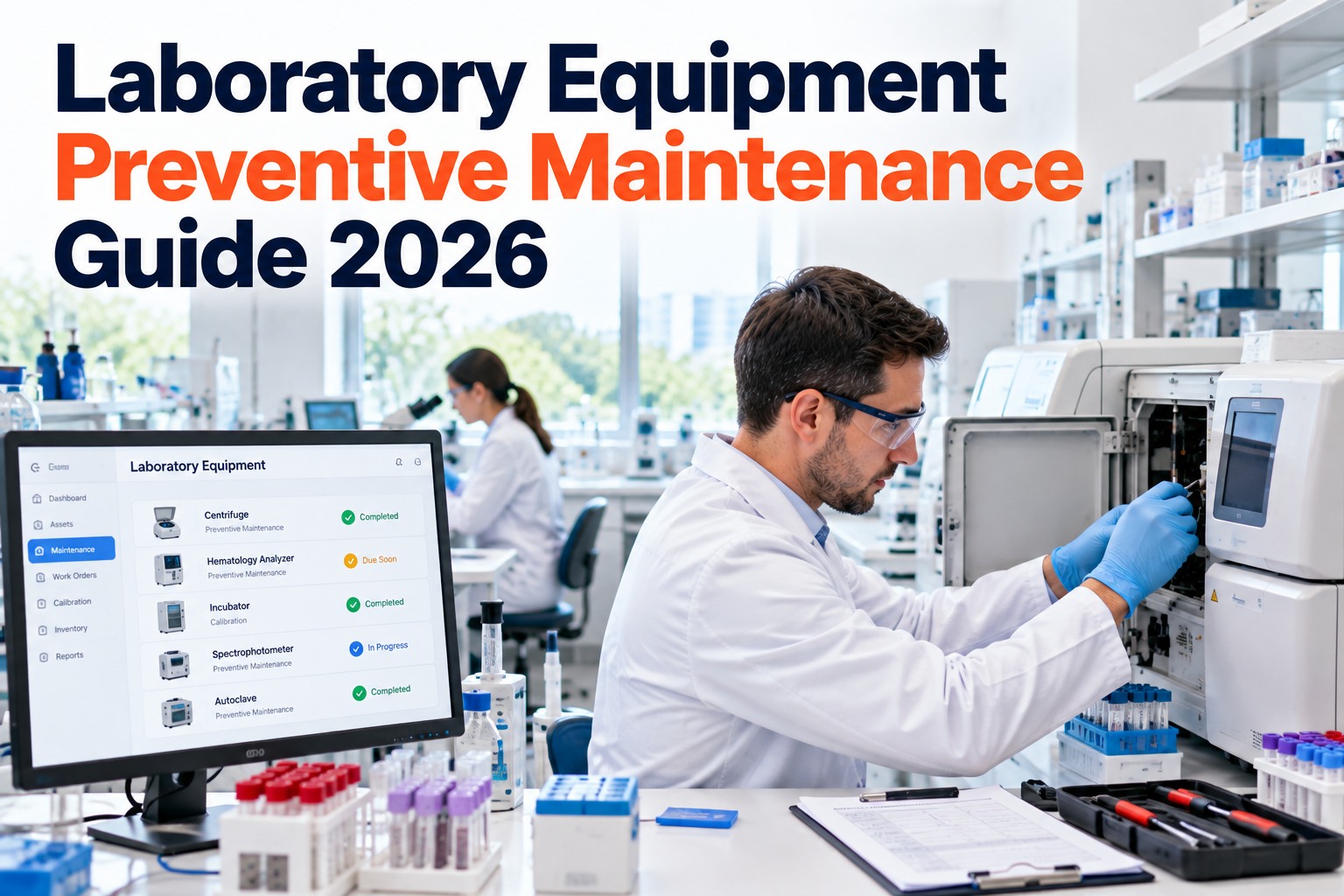
Every analyzer, centrifuge, incubator and freezer in your laboratory is on a clock. Early on it runs smoothly. Later the service calls grow, the calibration drift gets harder to manage and a vendor announces end of support. Labs that plan for this moment budget calmly. Labs that do not find out when a critical instrument fails mid-run. Lifecycle management is the practice of tracking every asset from purchase to retirement so replacement becomes a plan, not an emergency. This guide shows how, and how OXMAINT AI, the AI-powered CMMS, keeps maintenance, calibration and replacement planning in one record.
Know the age, cost, condition and calibration status of every instrument, then decide when to repair and when to replace using facts. OXMAINT AI, the AI-powered CMMS and maintenance management software, builds that picture automatically as your team does the work.
Record model, serial, cost, warranty, supplier and expected service life.
2
Install & Validate
Document setup, verification and baseline performance before first use.
3
Operate & Maintain
Schedule PMs, calibration and repairs, and log every service event.
4
Evaluate
Review age, repair trends, downtime, parts and vendor support status.
5
Replace & Retire
Plan the switch, transfer data, decommission and close the record.
Why the "Replace Now" Moment Is Hard to See
As instruments age, repair costs usually creep up while reliability slips, but each single invoice feels reasonable. Only the trend tells the truth. The curve below is an illustration of the idea, not data from a specific instrument. Start free and capture every repair cost per asset.
Repair or Replace? A Fair Way to Decide
There is no single age at which every instrument should go. Weigh the evidence in your records. If most items in the right-hand column are true, it is time to build a replacement case. Book a demo to see these signals tracked automatically.
KEEP AND MAINTAIN WHEN
Repair costs are stable and low
Calibration holds within limits
Parts and vendor support remain available
Unplanned downtime is rare
Performance still meets testing needs
vs
PLAN REPLACEMENT WHEN
Repair costs climb year over year
Calibration drift or QC failures repeat
Parts are scarce or support is ending
Breakdowns delay results or force workarounds
Newer technology offers real benefits
A Replacement Budget Built on Guesswork Gets Cut.
Leadership approves capital requests backed by numbers: age, cost to date, downtime and vendor status. OXMAINT AI collects those facts as a by-product of daily maintenance, so your case is ready before the instrument fails.
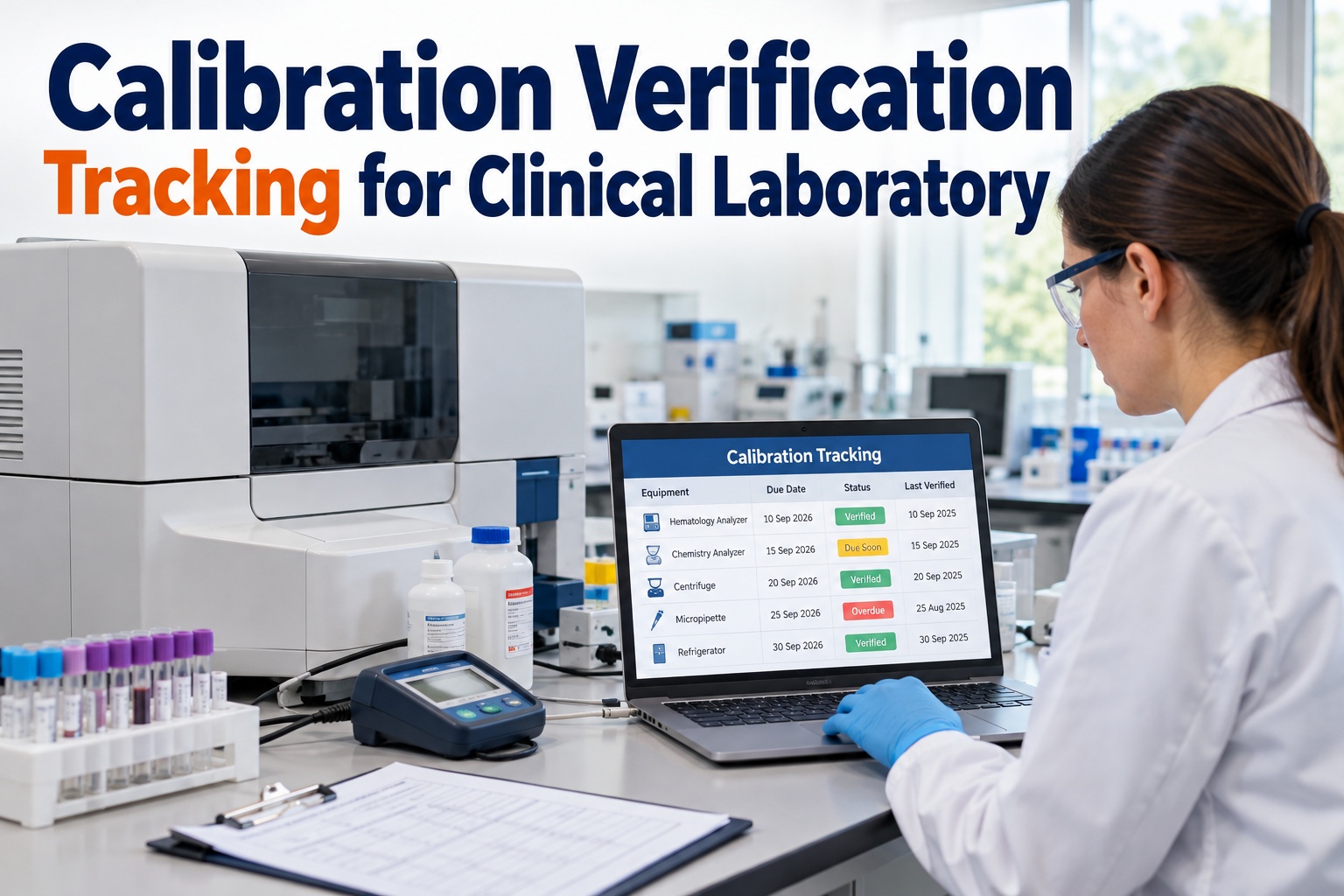
Laboratories carry documentation expectations for maintenance and calibration under regulations and accreditation programs such as CLIA, and each instrument has its own manufacturer requirements. A status board makes gaps visible before an inspector or a failed QC run does. The example below is illustrative. Start free and set calibration due dates.
Every analyzer and instrument with age, cost, warranty, supplier and location.
◉
PM & Calibration Scheduling
Due dates created on time, with reminders and overdue alerts.
◉
Service History & Costs
Every repair, part and hour recorded on the asset for true cost of ownership.
◉
Mobile Work Orders
Technicians log checks, results and photos at the bench.
◉
Parts & Inventory
Track consumables and spares so maintenance never waits on a missing part.
◉
AI Insights & Reports
Highlight repeat failures, rising costs and assets nearing review.
“
We used to replace equipment when it died and hunt for paperwork when someone asked. Now every instrument has its age, service cost and calibration history in one place, and our capital request practically writes itself. Fewer surprises, calmer budget meetings.
What is laboratory equipment lifecycle management?
It is the practice of tracking each instrument from purchase through installation, use, maintenance, evaluation and retirement, so decisions about repair and replacement are based on real data.
How do I know when to replace lab equipment?
Look for rising repair costs, repeated calibration or QC issues, more downtime, scarce parts or ending vendor support. A system that stores this history makes the pattern obvious. Start free in OXMAINT AI.
Does tracking calibration make us compliant?
Records support compliance, but they do not guarantee it. Follow manufacturer instructions, CLIA and any accreditation requirements that apply to your lab, and involve your quality and compliance teams.
What should be in a lab asset record?
Identification details, purchase cost, warranty, location, expected life, maintenance and calibration schedules, service history, parts used and downtime events.
How does a CMMS help with replacement planning?
It gathers age, cost and failure data automatically as work is done, then reports on the assets that are costing the most or approaching review. Book a demo to see it live.
Replace on Your Schedule, Not the Instrument's.
Track every asset, keep calibration and PMs on time and build replacement plans from real history. Start lifecycle management for your laboratory with OXMAINT AI.