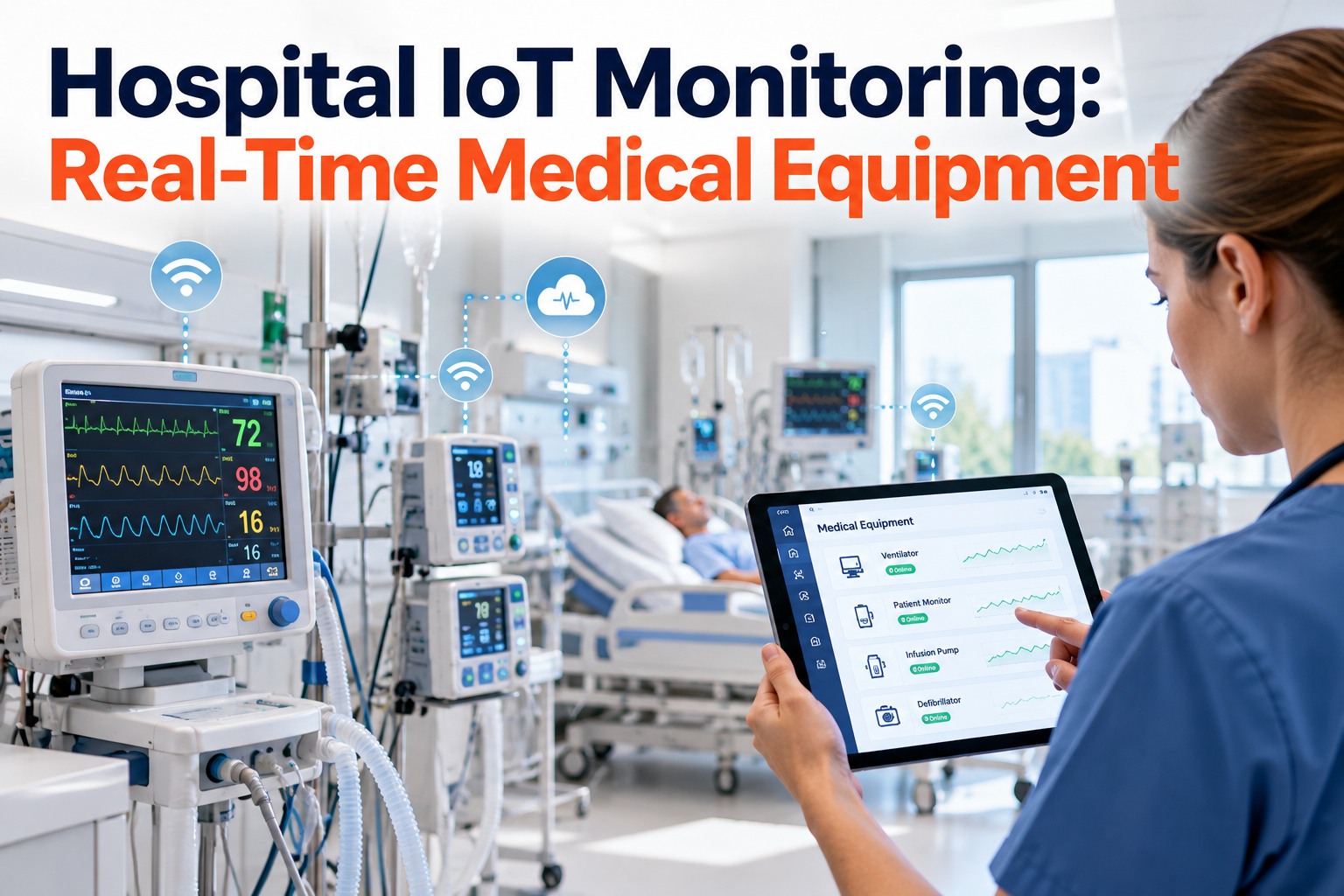
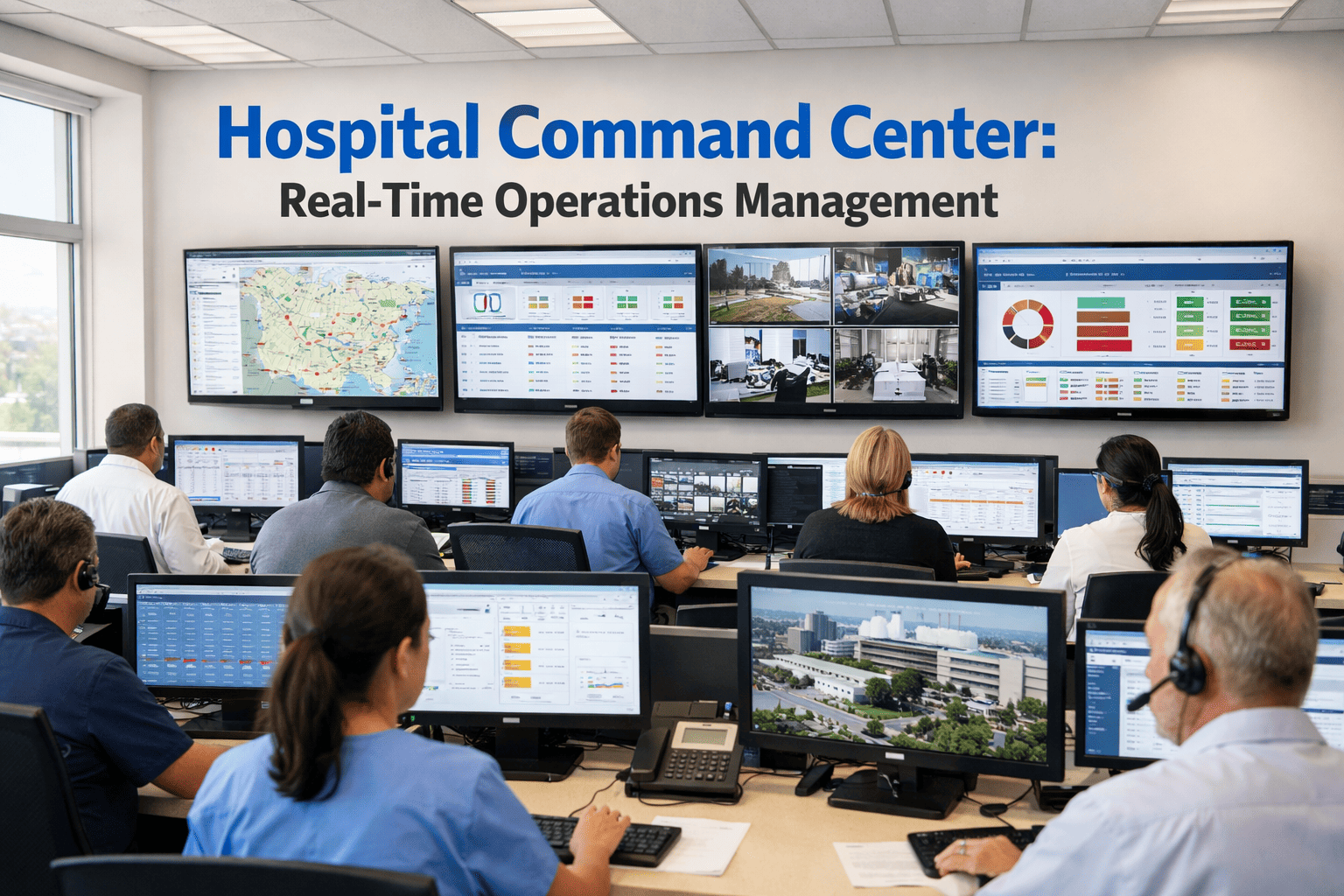
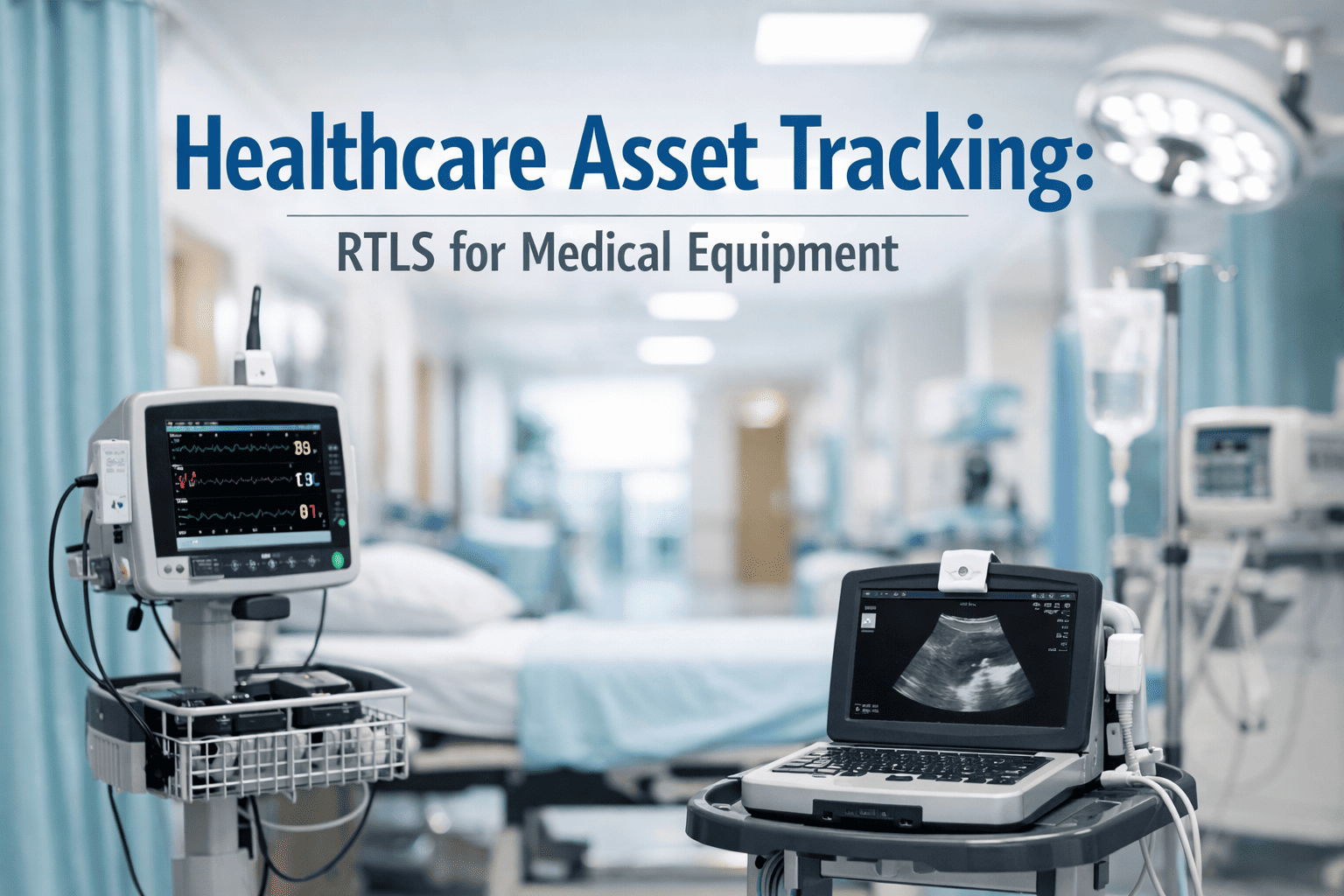
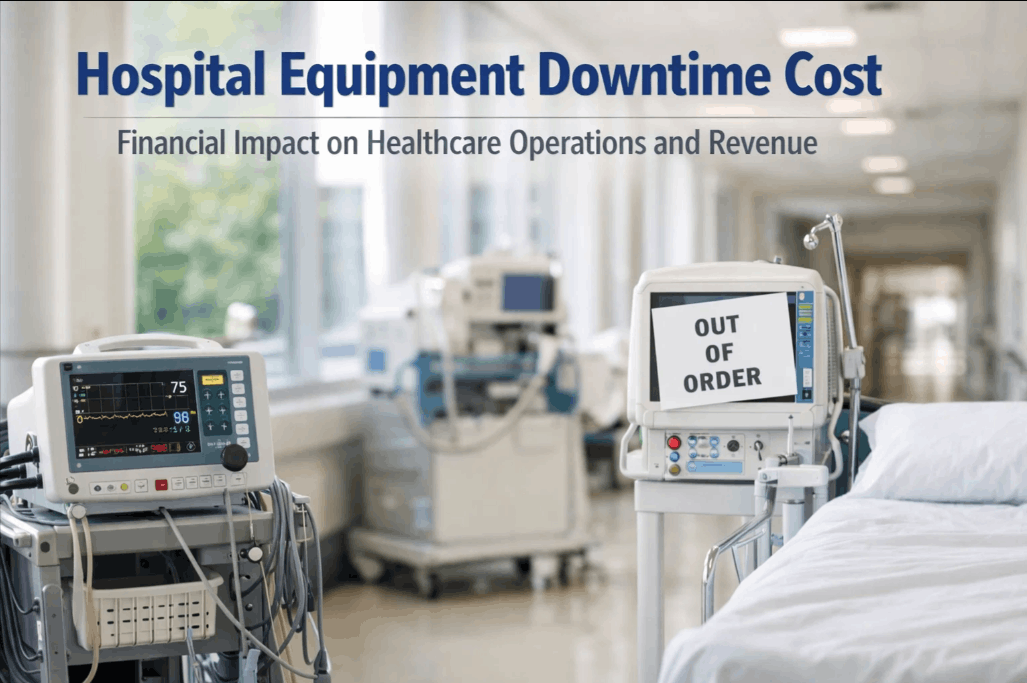
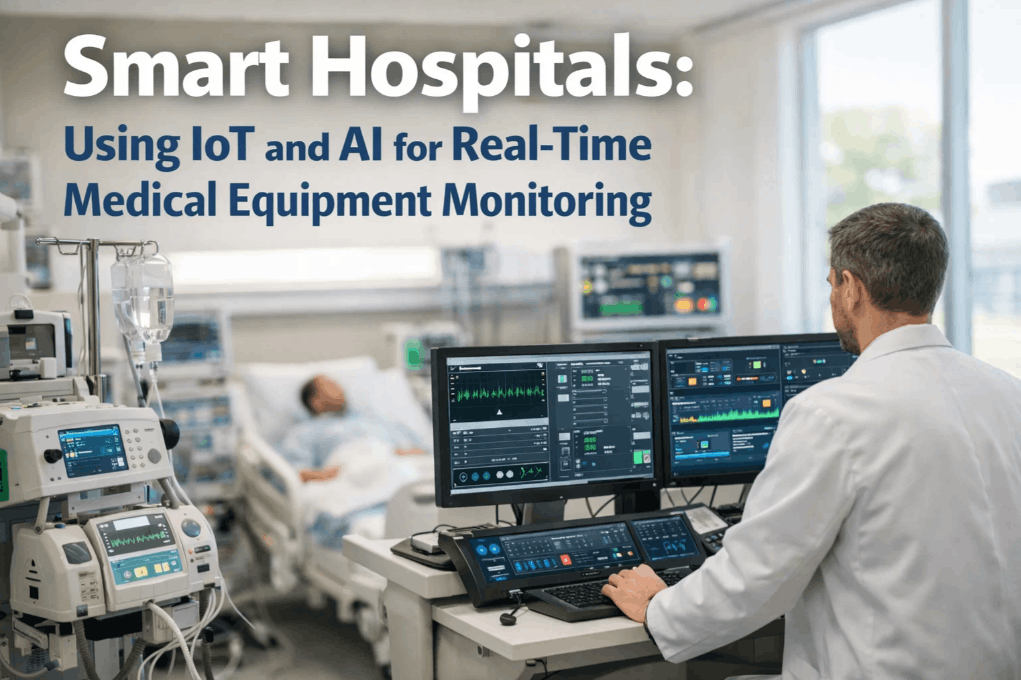
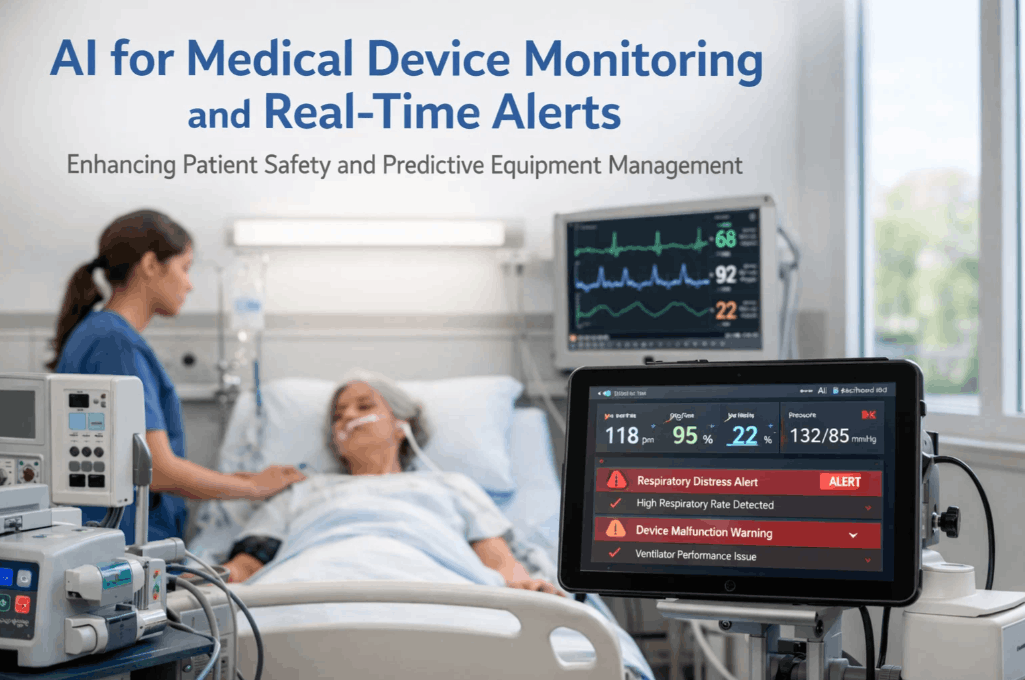
Hospital asset management software has become a critical operational backbone for modern healthcare facilities navigating the complex challenge of tracking thousands of medical devices, equipment units, and supplies across sprawling multi-department environments. In a sector where a misplaced infusion pump or an untracked ventilator can directly impact patient outcomes, real-time visibility into every piece of medical equipment is no longer a luxury — it is a clinical and financial imperative. The convergence of RTLS technology, IoT sensors, AI-powered analytics, and cloud-based inventory platforms is fundamentally transforming how hospitals manage, locate, maintain, and optimize their physical assets at scale. Sign Up Free to see it in action, or Book a Demo with our healthcare asset specialists today.
Why Hospitals Struggle Without a Dedicated Asset Management System
The average hospital operates with thousands of mobile medical assets — IV pumps, patient monitors, wheelchairs, portable X-ray machines, defibrillators, and surgical instruments — distributed across dozens of wards, procedure rooms, storage bays, and service corridors. Without a centralized tracking system, clinical staff waste an estimated 20 to 30 minutes per shift searching for equipment that has been relocated, borrowed, or left in the wrong department. This operational friction compounds across every shift, every ward, and every facility in a health network, resulting in staggering productivity losses, unnecessary equipment purchases driven by perceived shortages, and regulatory compliance gaps that expose hospitals to audit risk. Sign Up Free to start eliminating these inefficiencies, or Book a Demo to see how a real-time tracking system works in a live hospital environment.
Beyond the daily inconvenience of missing equipment, the absence of structured asset management creates deeper systemic problems. Preventive maintenance schedules slip when clinical engineering teams lack reliable asset location data. Equipment utilization rates drop because procurement decisions are made without visibility into whether existing inventory is actually being used or simply sitting idle in storage. Patient care quality suffers when nurses cannot quickly access the devices they need at the point of care. Explore how OxMaint eliminates these operational gaps with intelligent real-time asset tracking purpose-built for healthcare environments.
What Hospital Asset Management Software Solves
Real-Time Equipment Location
RTLS-enabled tracking provides second-by-second location data for every tagged asset, eliminating time-consuming manual searches and ensuring clinical staff can find critical equipment instantly at the point of care.
Preventive Maintenance Automation
Automated maintenance scheduling triggers work orders based on usage hours, calibration deadlines, and manufacturer service intervals — keeping equipment compliant, safe, and operational without manual tracking.
Asset Utilization Analytics
Usage data collected across all tracked equipment surfaces underutilized assets, identifies over-procurement patterns, and generates evidence-based capital planning recommendations that reduce unnecessary expenditure.
Regulatory Compliance Tracking
Automated documentation of inspection histories, maintenance records, and certification status ensures hospitals maintain audit-ready compliance with Joint Commission, FDA, and accreditation body requirements.
Core Technologies Powering Modern Hospital Asset Tracking Systems
The technological foundation of contemporary hospital asset management software has evolved significantly beyond simple barcode scanning and spreadsheet-based inventory logs. Today's leading platforms integrate a layered stack of location and data technologies that deliver continuous, automated asset visibility without requiring manual check-in or check-out processes that historically broke down under the operational pressures of busy clinical environments.
Real-Time Location Systems (RTLS) represent the most impactful technological advancement in hospital asset tracking. Using a combination of Bluetooth Low Energy (BLE) beacons, Wi-Fi triangulation, ultrasound, and infrared sensors embedded throughout the facility, RTLS platforms generate live location coordinates for every tagged asset — accurate to within one to three meters depending on the technology deployed. This granularity is sufficient to identify whether a device is in a specific patient room, a supply closet, or the biomedical engineering workshop, enabling both clinical staff and operations teams to act on real-time data rather than last-known-location estimates. Book a demo to see how OxMaint's RTLS integration delivers live asset tracking across your entire facility.
RTLS and IoT Sensor Integration
Bluetooth Low Energy tags attached to medical equipment communicate continuously with fixed reader infrastructure deployed throughout the hospital, transmitting location signals that the asset management platform processes into real-time maps and movement histories accessible from any desktop or mobile device on the clinical network.
Barcode and RFID Scanning
For assets that do not require continuous location tracking, barcode and RFID scanning capabilities enable rapid inventory counts, check-in and check-out workflows, and maintenance verification — providing a cost-effective complement to active RTLS for lower-priority equipment categories and consumable supply management.
EHR and CMMS Integration
Leading hospital asset management platforms integrate bidirectionally with Electronic Health Record systems and Computerized Maintenance Management Systems — connecting asset location and utilization data with patient care workflows, work order management, and capital equipment lifecycle records in a unified operational data environment.
AI-Powered Demand Forecasting
Machine learning models trained on historical equipment usage patterns, patient census data, and seasonal admission trends generate predictive demand forecasts that enable materials management teams to position the right quantity of equipment in the right locations before clinical demand peaks — reducing both shortages and excess inventory simultaneously.
Mobile Workflow Applications
Native mobile applications give clinical engineers, supply chain staff, and nursing supervisors real-time access to asset location maps, maintenance status dashboards, and inventory reports from smartphones and tablets — enabling distributed teams to act on asset data without returning to a fixed workstation or calling the biomedical engineering department.
Key Benefits of Implementing Hospital Asset Management Software
The operational and financial returns from deploying a comprehensive hospital asset management system extend well beyond the immediate convenience of being able to locate a missing IV pole. Hospitals that implement structured asset tracking programs consistently report measurable improvements across clinical efficiency, equipment lifecycle costs, capital expenditure accuracy, and regulatory compliance readiness — outcomes that compound in value as the platform matures and accumulates richer utilization history data.
Hospital Asset Management: Impact by the Numbers
One of the most financially significant benefits is the direct reduction in ghost assets — equipment that appears in the hospital's inventory records but cannot be physically located, verified, or put into service. Ghost assets inflate insurance premiums, distort depreciation accounting, and trigger unnecessary replacement purchases that burden already stretched capital equipment budgets. A properly implemented asset management system performs continuous automated reconciliation between the physical asset estate and the inventory database, eliminating ghost assets and providing finance teams with accurate equipment valuations that support sound capital planning decisions.
Hospital Equipment Tracking System: Features to Prioritize
Not all hospital asset management platforms deliver equivalent capability, and the feature set that matters most will depend on the specific operational priorities — and technology infrastructure maturity — of the deploying institution. However, several core capabilities consistently distinguish enterprise-grade healthcare asset tracking systems from lighter-weight inventory tools that cannot meet the reliability and integration requirements of complex hospital environments.
Interactive floor plan visualizations that display real-time asset locations across every department and floor enable clinical and operations staff to instantly identify where specific equipment is located, whether it is in use or available, and how long it has been stationary — without making a single phone call or physically searching the ward.
Configurable alert rules that trigger notifications when equipment exits a defined zone, approaches a maintenance deadline, or remains unaccounted for beyond a set threshold give operations teams proactive visibility into asset status changes that require immediate action — before they escalate into clinical disruptions or compliance failures.
Utilization rate reporting aggregated by equipment type, department, shift, and time period provides the evidence base for data-driven procurement decisions, rental vs. purchase analyses, and right-sizing of equipment inventories — replacing gut-feel capital requests with objective usage data that finance committees can evaluate with confidence.
Complete equipment lifecycle management — from initial receiving inspection through every scheduled maintenance event, unplanned repair, and final decommissioning — provides clinical engineering teams with the documented service histories required for accreditation surveys, insurance audits, and manufacturer warranty claims.
RTLS Hospital Asset Tracking: How Real-Time Location Systems Work in Practice
Implementing RTLS-based hospital asset tracking involves deploying a physical infrastructure layer — typically a network of fixed Bluetooth or Wi-Fi readers installed at regular intervals throughout the facility — combined with small battery-powered tags attached to each tracked asset. The tags broadcast periodic location signals that are received by nearby readers, processed by the platform's location engine, and translated into a precise location coordinate that is updated on the asset management dashboard in near real time. The entire process is passive and automatic — no staff action is required to maintain continuous location awareness of every tagged device.
Asset Tagging and Registration
Each medical device or equipment unit is assigned a unique RTLS tag and registered in the asset management platform with its full equipment profile — device type, manufacturer, model, serial number, department assignment, and maintenance schedule — establishing the foundational data record that all subsequent tracking and reporting is built upon.
Continuous Location Signal Broadcast
Tags transmit BLE or Wi-Fi signals at configurable intervals — typically every 10 to 30 seconds — to the fixed reader infrastructure deployed throughout the facility. Reader density is designed to ensure complete coverage with no signal dead zones, guaranteeing that every tagged asset remains continuously visible regardless of its location within the hospital.
Location Engine Processing
The platform's location engine receives signals from multiple readers simultaneously and applies trilateration or fingerprinting algorithms to calculate precise asset coordinates — resolving location to the specific room, bay, or corridor level and updating the live asset map dashboard that clinical and operations users access through web or mobile interfaces.
Utilization and Movement Analytics
Location data streams are continuously analyzed to build utilization records for each asset — time in use, idle periods, movement patterns between departments, and dwell time in specific zones — creating the rich usage history dataset that powers capacity planning recommendations, maintenance triggers, and operational efficiency reports.
Alerts, Reporting, and Continuous Optimization
Automated alerts notify relevant staff of maintenance deadlines, unauthorized asset movements, or inventory shortfalls, while scheduled and on-demand reports deliver equipment utilization summaries, compliance documentation, and capital planning data to department managers, clinical engineers, and hospital administrators through role-specific dashboard views.
Healthcare Inventory Management: Connecting Assets to Supply Chain Efficiency
Hospital asset management software functions most effectively when integrated into a broader healthcare inventory management strategy that connects durable medical equipment tracking with consumable supply management, pharmaceutical inventory, and linen and equipment distribution workflows. The operational data generated by asset tracking platforms — utilization rates, departmental demand patterns, maintenance consumption histories — provides the supply chain intelligence that enables materials management teams to optimize par levels, reduce waste, and negotiate more effectively with equipment vendors and service contract providers.
Hospitals that integrate asset management data with procurement systems gain the ability to benchmark their equipment utilization rates against network-wide averages, identify departments where excess inventory is accumulating, and build evidence-based business cases for equipment sharing or pooling programs that reduce total asset acquisition costs across the health system. The most advanced implementations use AI-powered demand forecasting to generate automated replenishment recommendations that maintain optimal equipment availability without accumulating the buffer stock excess that inflates carrying costs and obscures true utilization patterns. Learn how OxMaint connects asset tracking with supply chain intelligence to drive measurable cost reductions across your health system.
Frequently Asked Questions
Hospital asset management software is a platform that enables healthcare facilities to track, manage, and optimize their physical medical equipment inventory in real time. It works by combining RTLS tags or barcode/RFID scanning technology attached to equipment with a centralized software platform that processes location signals, tracks utilization, automates maintenance scheduling, and generates compliance reports. The result is complete, continuous visibility into the location, status, and usage history of every tracked asset across the facility.
Hospital asset management platforms can track virtually any medical device or equipment unit — from high-value capital assets such as infusion pumps, patient monitors, ventilators, portable ultrasound machines, and defibrillators, to lower-value mobile equipment including wheelchairs, stretchers, IV poles, and suction units. The platform can also track biomedical instruments, surgical equipment sets, and shared departmental devices. Tracking priority is typically tiered based on asset value, clinical criticality, and theft or loss risk.
RTLS (Real-Time Location System) tracking is fully automated and continuous — tags on equipment broadcast location signals to fixed infrastructure readers without any staff intervention required, providing second-by-second location updates. Barcode-based inventory management requires a staff member to physically scan each item to record its location, making it a point-in-time snapshot that becomes stale immediately after scanning. RTLS delivers significantly more accurate and current asset visibility, particularly for high-utilization mobile equipment that moves frequently between departments.
Implementation timelines vary based on facility size, infrastructure complexity, and the scope of the initial rollout. A focused deployment covering a single department or high-priority asset class can typically be completed in four to eight weeks. A facility-wide RTLS deployment across a large hospital campus — including reader infrastructure installation, asset tagging, system integration, and staff training — generally requires three to six months. Many hospitals adopt a phased approach, beginning with the highest-value or most frequently lost equipment categories and expanding coverage progressively as the platform demonstrates ROI.
Yes. Enterprise-grade hospital asset management platforms are designed with open API architectures and HL7/FHIR-compatible data exchange capabilities that support integration with major EHR platforms including Epic, Cerner, and Meditech, as well as leading CMMS solutions. Integration with EHR systems allows equipment utilization data to be correlated with patient care workflows, while CMMS integration ensures that maintenance records, work orders, and service histories maintained in the asset management platform are synchronized with the clinical engineering department's existing operational systems.
Hospitals implementing asset management software typically achieve full return on investment within 9 to 18 months of deployment, driven by a combination of reduced equipment loss and theft, lower unnecessary procurement from improved utilization visibility, staff time savings from eliminated equipment searches, reduced maintenance costs from proactive preventive maintenance programs, and avoidance of compliance penalties from improved documentation. The financial return is most pronounced in large facilities with high mobile equipment inventory, where asset loss rates and procurement inefficiencies represent the largest addressable cost pools.