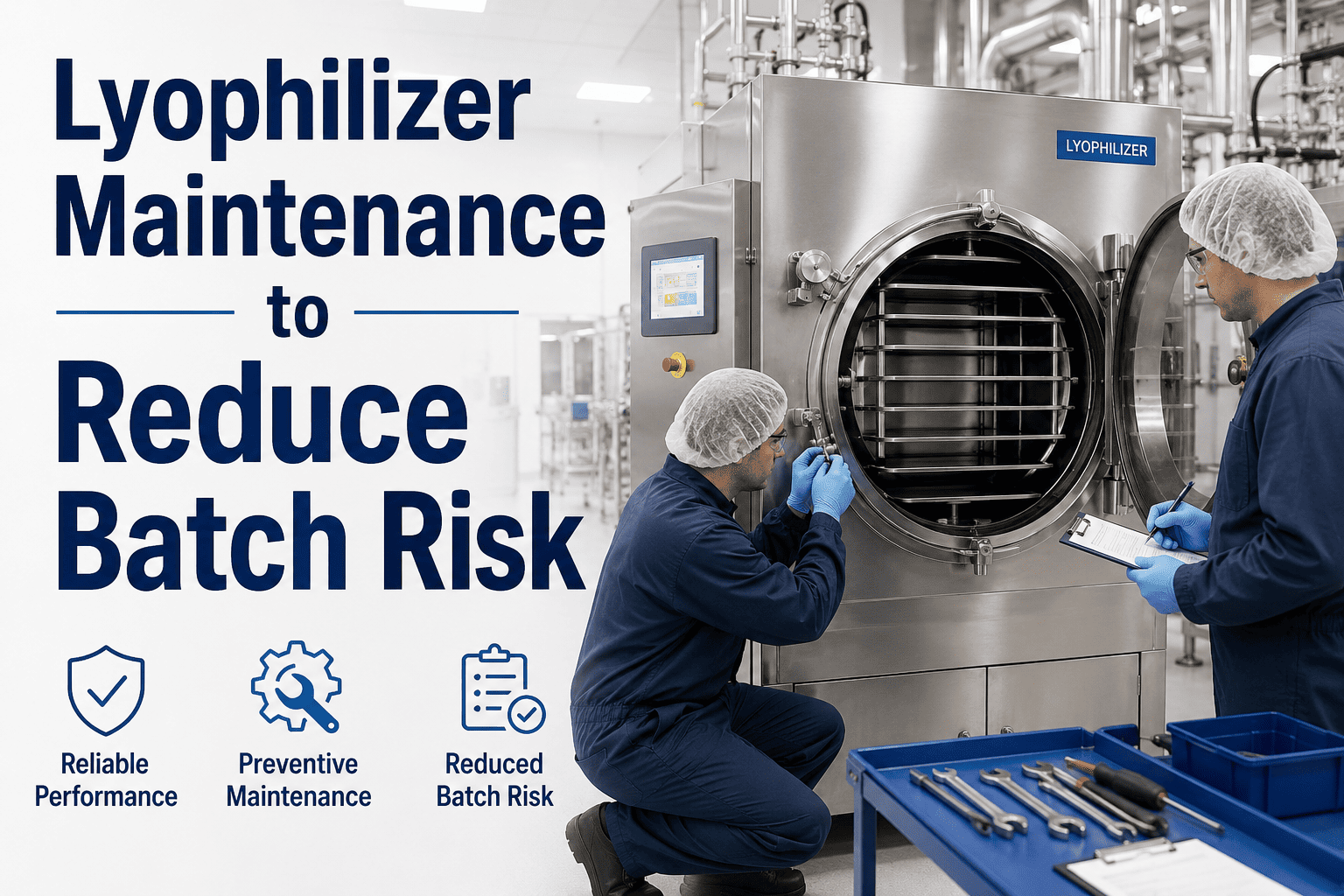
A single batch of lyophilized product can hold thousands of vials, and even a small external leak in the chamber seal can put every one of them at risk — which is why vacuum integrity is treated as a sterility assurance control, not a process parameter. Lyophilizer vacuum monitoring connects leak rate trending, chamber pressure rise data, and inspection history to one maintenance record, so a developing leak shows up as a work order instead of a failed batch. A failed leak rate test does not just affect the current cycle — it calls every cycle run since the last passed test into question. Here is how leaks actually develop and how a connected CMMS catches them before a batch is on hold.
One Leak Rate Failure Puts Every Cycle Since the Last Pass on Hold
Vacuum integrity is the foundation of sterility assurance in freeze-drying. A failure does not just stop one cycle — it reopens every cycle run since the previous passed test.
Integrity
Where Lyophilizer Leaks Actually Come From
Vacuum integrity loss rarely comes from one obvious cause. These are the most common sources.
Door and Chamber Seals
Gaskets and door seals degrade with repeated steam-in-place cycling, allowing atmospheric air to leak into a graded space during the most sterility-sensitive phase of drying.
Valve and Vacuum Line Wear
Flaws in vacuum isolation valves, gas supply lines, and compressors create slow leaks that reduce process efficiency well before triggering an outright test failure.
Condenser and Refrigerant Paths
Refrigerant migration and heat-transfer fluid circulation through shelves and condenser coils are documented sources of both real and virtual leak signals.
Trapped Moisture and Virtual Leaks
Water absorbed on internal surfaces can mimic a real leak signal. Distinguishing virtual leaks from true vessel breaches is essential before any corrective action.
See Vacuum Trend Monitoring on a Live Lyophilizer Record
Walk through how OxMaint logs leak rate test history, seal inspection intervals, and batch-impact flags tied to each lyophilizer asset.
Why Secondary Drying Is the Most Vulnerable Phase
A lyophilizing product is most exposed to microbial contamination during secondary drying, when mass transfer of water vapor from product to condenser slows down significantly.
Freezing
Vacuum demand is lower; leak risk is present but less sterility-critical at this stage.
Primary Drying
High water vapor mass transfer partially masks small leaks, though vacuum stability still matters for cycle consistency.
Secondary Drying
Water vapor mass transfer is minimal, so any leak path has the clearest opportunity to introduce contamination risk.
Leak Detection Methods at a Glance
Each method answers a different question about vacuum integrity.
| Method | What It Detects | Best Used For |
|---|---|---|
| Pressure rise test | Overall chamber leak rate | Routine post-SIP qualification |
| Helium leak testing | Gross and small leaks in vessel, valves, seals | Periodic deep verification |
| Mass spectrometry monitoring | Gas composition shifts, leak location | Continuous in-process trending |
| Oxygen concentration trend | Air ingress through small leak paths | Real-time leak rate estimation |
There is no single industry standard for lyophilizer leak rate specifications, which is exactly why a documented, trended history per unit matters more than any one test result. A failed leak rate test calls into question every cycle run since the last passed test — that is the real cost of treating vacuum integrity as a one-time check instead of a tracked asset condition.
Frequently Asked Questions
Track Vacuum Integrity Before It Becomes a Batch Hold
Give every lyophilizer a documented leak history and a flagged trend line, so the next leak shows up as routine maintenance, not a sterility investigation.