Freeze-drying failures are among the most costly events in pharmaceutical manufacturing — a single lyophilizer batch loss can exceed $3M in biologics, and the root cause traces back to preventable equipment failures in the majority of cases. Vacuum leaks, condenser saturation, shelf temperature deviation, and undetected alarm histories are the leading contributors. OxMaint tracks lyophilizer PM, system checks, and equipment alarms to give your team a complete maintenance record before every critical batch.
Biologics · Freeze-Drying · Batch Risk Reduction
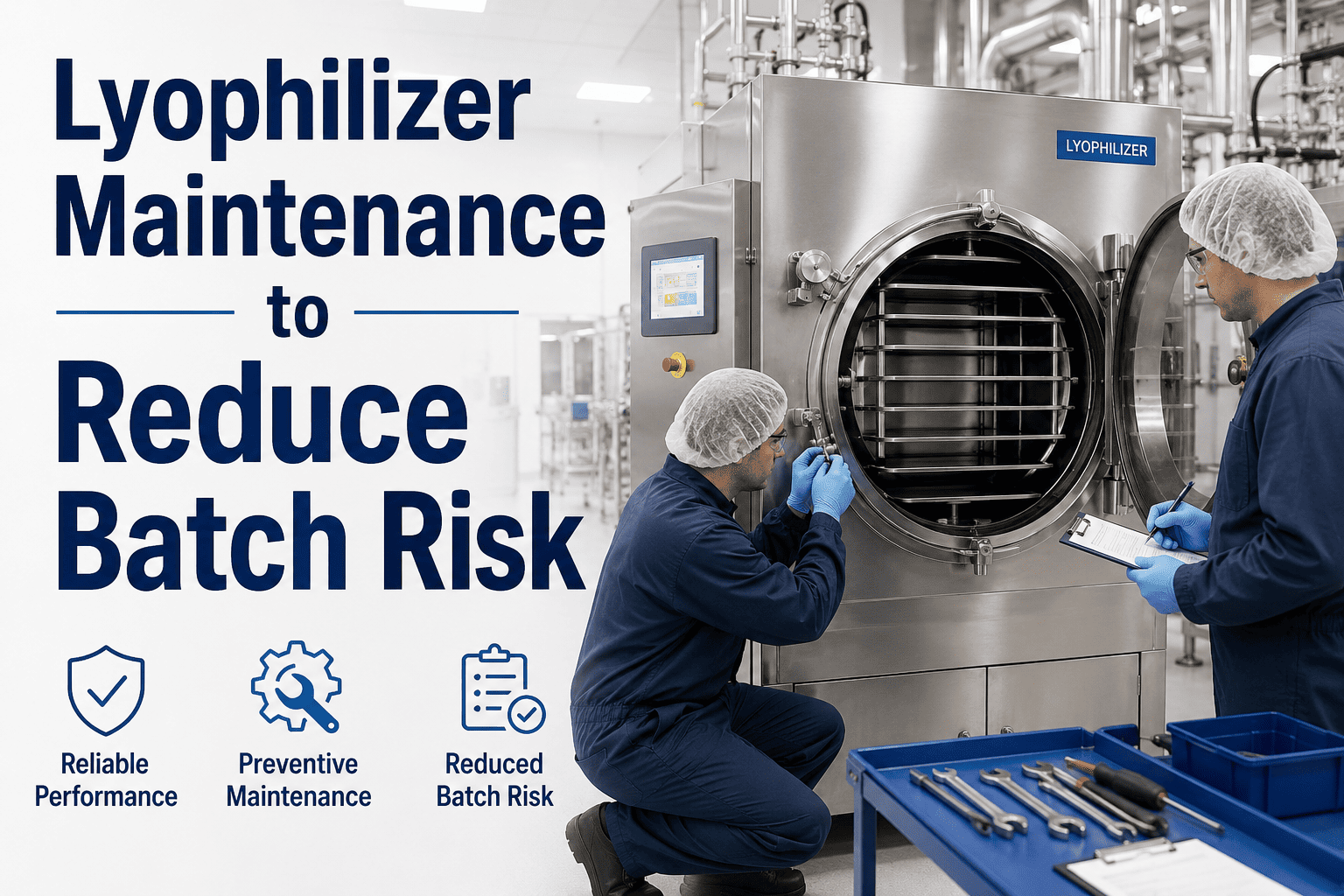
Lyophilizer Maintenance to Reduce Batch Risk
Track PM intervals, vacuum integrity, condenser performance, and alarm histories — the four pillars of lyophilizer reliability that protect every freeze-drying batch.
Batch Loss Risk Drivers
Vacuum system failure
82%
Door/gasket seal failure
44%
Source: Pharmaceutical Engineering reviews of lyophilization failures, 2019–2024
The 4 Maintenance Pillars
What Your Lyophilizer Maintenance Program Must Cover
01
PM Schedule Compliance
Oil changes, pump rebuilds, gasket replacements, and shelf calibrations must follow validated intervals. A single overdue oil change in a vacuum pump has caused complete batch loss events. Every PM must be completed on time, documented, and QA-reviewed before the next production cycle.
02
Vacuum System Integrity
Vacuum leak rate testing must be performed before every batch. The acceptable leak rate is defined by your validated process parameters — typically less than 10 to 30 microns per hour. Trend data showing increasing leak rates predicts imminent seal failure before catastrophic vacuum loss occurs mid-cycle.
03
Condenser Performance Tracking
Condenser temperature, ice capacity, and defrost cycle efficiency must be monitored and trended over time. A condenser that is gradually losing capacity will not fail suddenly — it will perform adequately until a batch with higher moisture load overwhelms it. Early detection through trend data prevents this entirely.
04
Alarm History Review
Lyophilizer alarm logs contain the early warning signals for almost every major failure event. An alarm that fired and was reset without investigation is a documented missed opportunity. Every alarm must be logged, investigated, and resolved before the next batch — not cleared from the panel and forgotten.
PM Interval Reference
Lyophilizer Critical Maintenance Intervals — Industry Standards
| Maintenance Task |
Standard Interval |
Failure Risk if Missed |
Batch Impact |
| Vacuum pump oil change |
Every 500 hrs or quarterly |
Critical |
Complete vacuum loss, total batch loss |
| Door gasket inspection |
Before each batch |
Critical |
Vacuum breach, sterility risk |
| Shelf temperature calibration |
Quarterly or post-repair |
High |
Product temperature excursion, failed cycle |
| Vacuum leak rate test |
Before each batch |
Critical |
Sub-specification drying, batch rejection |
| Condenser defrost and inspection |
Monthly |
High |
Ice saturation, condenser bypass, batch fail |
| Refrigeration system check |
Quarterly |
High |
Inadequate cooling, product temperature drift |
| Stoppering mechanism inspection |
Every 6 months |
Medium |
Incomplete stoppering, sterility failure |
Never lose a lyophilizer batch to a missed PM again
OxMaint tracks every interval, logs every alarm, and generates QA-ready maintenance evidence before each batch cycle.
Predictive Maintenance
How Vacuum Leak Rate Trending Prevents Batch Loss
A lyophilizer vacuum pump that is developing a leak will not fail immediately — it will show a gradual increase in leak rate across successive batch cycles. Trending this data reveals the failure trajectory weeks before it becomes critical. The table below shows the kind of early warning data that prevents reactive shutdowns:
| Measurement Date |
Leak Rate (microns/hr) |
Acceptable Limit |
Status |
Action Required |
| Month 1 |
6 |
25 |
Normal |
Continue scheduled PM |
| Month 2 |
8 |
25 |
Normal |
No action required |
| Month 3 |
14 |
25 |
Monitor |
Increase frequency of checks |
| Month 4 |
21 |
25 |
Warning |
Schedule gasket inspection before next batch |
| Month 5 (if unaddressed) |
31 |
25 |
Out of Spec |
Batch hold — mandatory repair before production |
Expert Review
What Lyophilization Engineers Say About Maintenance Risk
"
In twenty years of lyophilizer maintenance consulting, the pattern is always the same: the facility that lost the batch had the alarm history in their records but never trended it. Proactive alarm review is the single highest-ROI maintenance activity in freeze-drying operations.
— Lyophilization Process Engineer, Contract Biologics Manufacturer, 20 years experience
"
Vacuum pump oil is cheap. Batch loss investigation, regulatory notification, and reprocessing is not. The facilities with the best lyophilizer reliability records are not the ones with the best equipment — they are the ones with the most disciplined PM programs and the most complete maintenance data.
— Technical Director, Freeze-Drying Equipment Services, pharmaceutical sector specialist
Common Questions
Lyophilizer Maintenance — What Teams Ask
How often should vacuum leak rate testing be performed on a lyophilizer?
Best practice is to perform a vacuum leak rate test before every batch to confirm the system is within its validated leak rate limit. At minimum, your maintenance master plan should specify a frequency based on your production schedule and equipment history — typically daily or before each production campaign. Facilities using lyophilizers for biologics and aseptic products face higher regulatory scrutiny, and pre-batch vacuum testing is considered a GMP requirement rather than optional verification.
OxMaint records vacuum test results and alerts your team when measurements approach action limits.
What should a lyophilizer maintenance record include for GMP compliance?
A GMP-compliant lyophilizer maintenance record should include the date and time of each maintenance activity, the name and signature of the technician who performed it, the specific task completed (including part numbers for any replacements), the results of any performance verification tests conducted after maintenance, and a QA review signature before the unit is returned to service. Calibration records for shelf temperature sensors, pressure sensors, and product temperature probes must be separately maintained and referenced in the batch record. All records should be traceable to specific batch numbers and retrievable for regulatory inspection on demand.
Book a demo to see how OxMaint structures lyophilizer maintenance records for GMP compliance.
Can lyophilizer alarm history be used to predict equipment failure?
Yes — lyophilizer alarm data is one of the most reliable predictive maintenance inputs available for freeze-drying equipment. Patterns in vacuum system alarms, condenser temperature alarms, and shelf temperature deviation alarms over time reveal developing equipment issues well before catastrophic failure occurs. The key requirement is that every alarm be logged with timestamp and disposition, not simply acknowledged and cleared from the panel. A structured CMMS that captures alarm history and generates trend reports enables your maintenance team to act on degradation signals before they become batch loss events.
What is the typical cost impact of a lyophilizer batch failure?
The financial impact of a lyophilizer batch failure in biologics manufacturing typically ranges from $500,000 for a small-scale batch to over $5M for a commercial biologics run, including raw material costs, processing time, investigation labor, regulatory documentation requirements, and production schedule disruption. In addition to direct batch loss costs, repeat failures trigger regulatory scrutiny, potential market supply disruptions, and may require revalidation of the lyophilization process before production can resume. Preventive maintenance programs with documented ROI typically show a 15 to 30 times return on maintenance investment when measured against avoided batch loss costs.
Start your free trial and see how OxMaint quantifies your maintenance program's batch protection value.
Lyophilizer Maintenance · Batch Protection · GMP Records
Protect Every Freeze-Drying Batch With Complete Maintenance Records
OxMaint tracks lyophilizer PMs, vacuum test results, condenser performance, and alarm histories — giving your QA team the documented evidence they need before every batch cycle.