When FDA or ISO auditors arrive on-site, the inspection war room becomes the nerve center of your compliance defense. Every record request, every data pull, every cross-reference check flows through that room — and facilities without a CMMS-backed playbook spend the first 90 minutes scrambling for documents that should be retrievable in under five minutes. Book a demo with OxMaint to see a live war room dashboard in action, or start a free trial and build your inspection-ready CMMS stack before your next audit cycle.
Blog · FDA Inspection Ops · CMMS Playbook
Pharma Inspection War Room CMMS Playbook
The complete guide to preparing your inspection war room with live maintenance records, calibration proof, open work orders, and site-level compliance dashboards — so every inspector request gets answered in minutes, not hours.
4–8 hrs
Average time lost per inspection day when records are paper-based or siloed
3 min
Target retrieval time for any maintenance record in an OxMaint-backed war room
72%
of pharma sites that received maintenance-related 483s had no centralized CMMS dashboard during inspection
The 3-Phase War Room Preparation Playbook
Phase 3
During Inspection
Phase 1 — 72 Hours Before Inspection
01
Run a CMMS audit of all open and overdue preventive maintenance work orders. Close what can be closed legitimately. Escalate what cannot. Every overdue PM visible to an inspector is a potential observation.
02
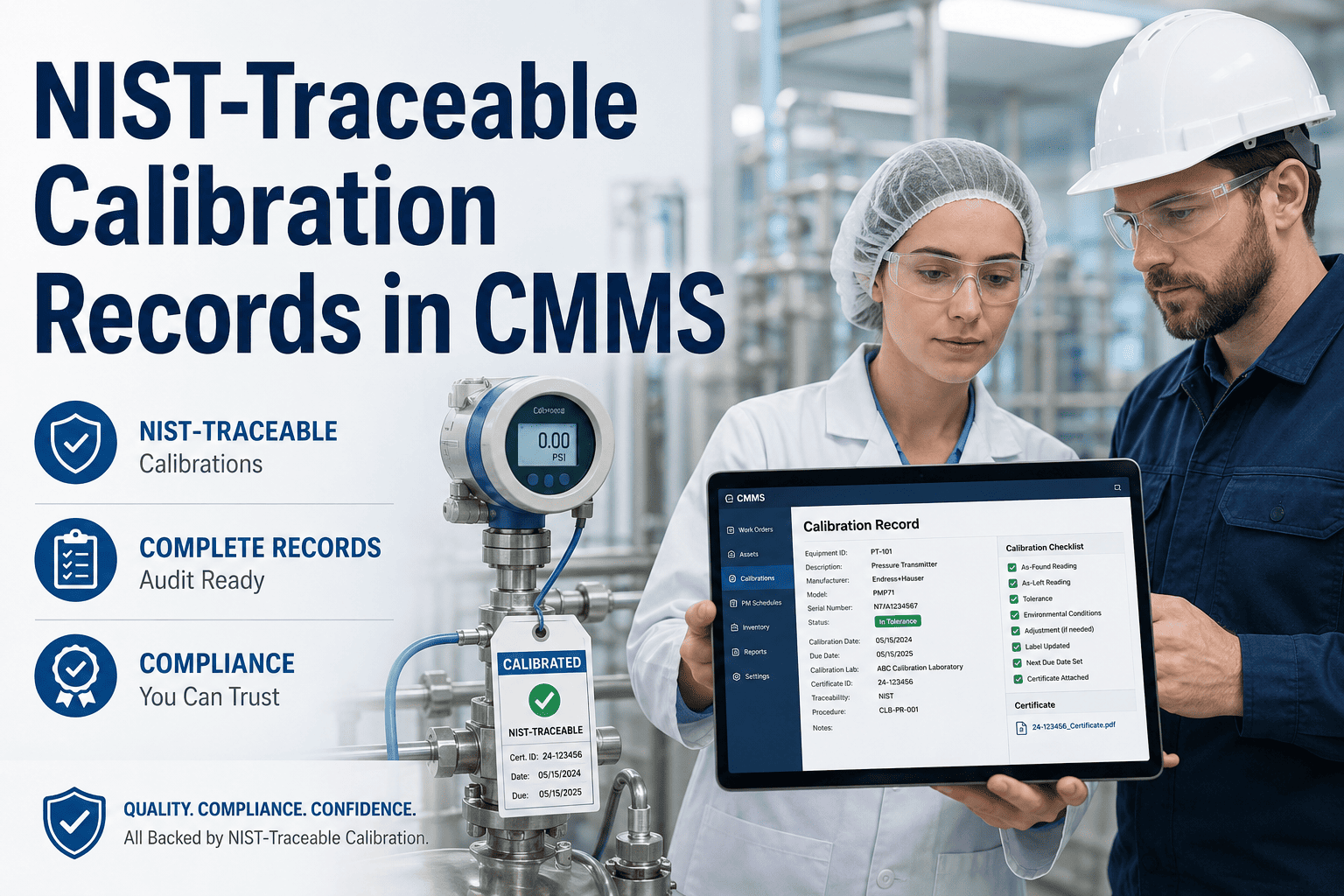
Pull the calibration due-date report for all critical instruments. Confirm that no instrument in scope for the inspection has an expired or lapsed calibration certificate in the CMMS asset record.
03
Generate the prior-observation corrective action status report. Every item from your last inspection response must show a closed work order with QA sign-off — not just a document notation.
04
Verify equipment history completeness for all GMP-critical assets. Gaps in PM history — missing a single scheduled event — are among the most common maintenance-related 483 citations.
The 5 CMMS Dashboards Every War Room Needs
These five live views should be configured, bookmarked, and printable before inspection day. Each one answers a category of inspector request without requiring manual data compilation.
1
PM Compliance Dashboard
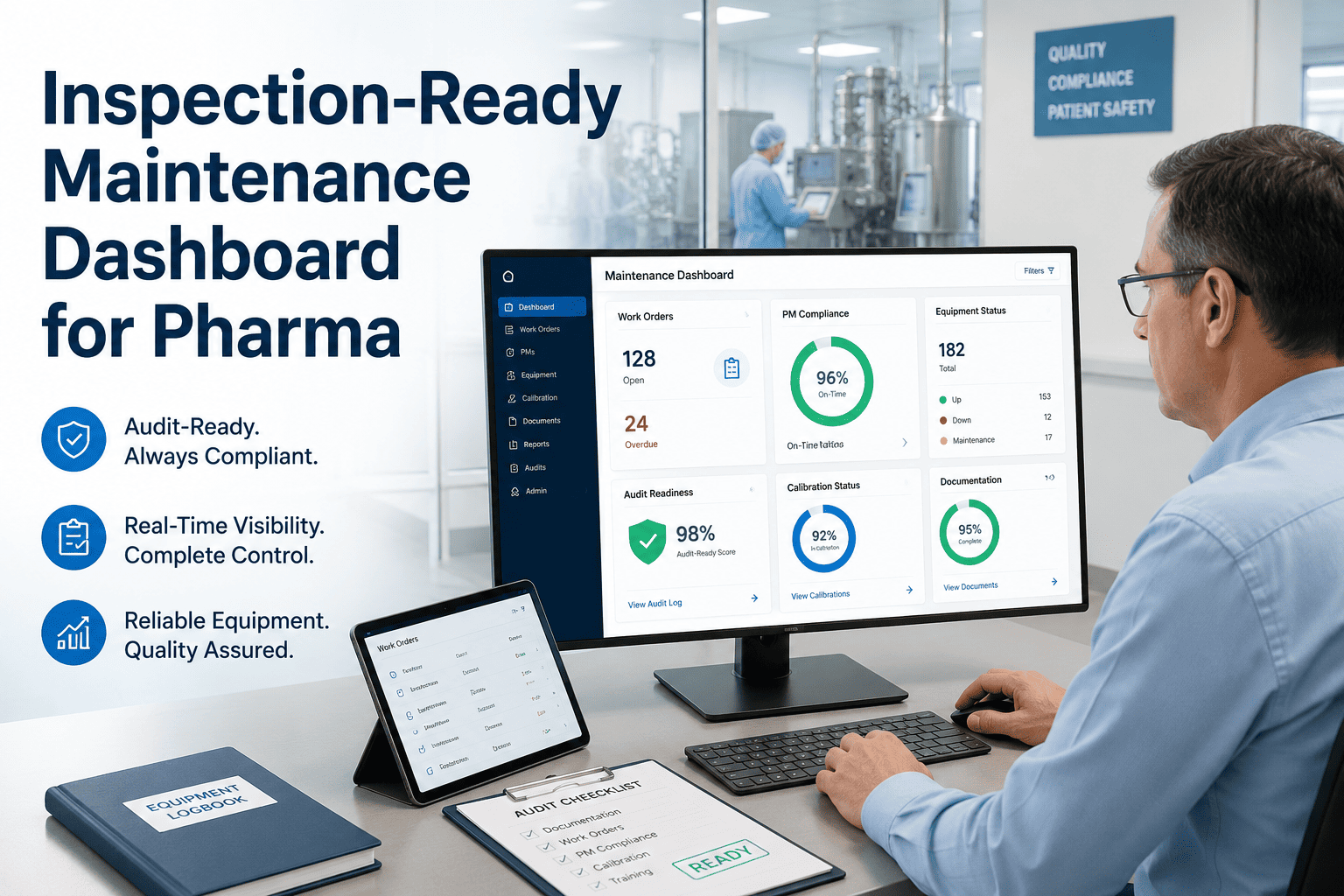
Shows on-time PM rate by equipment category, location, and time window. Lets you demonstrate overall compliance posture and isolate any anomalies before the inspector does.
Target compliance rate
95%+
2
Calibration Status Board
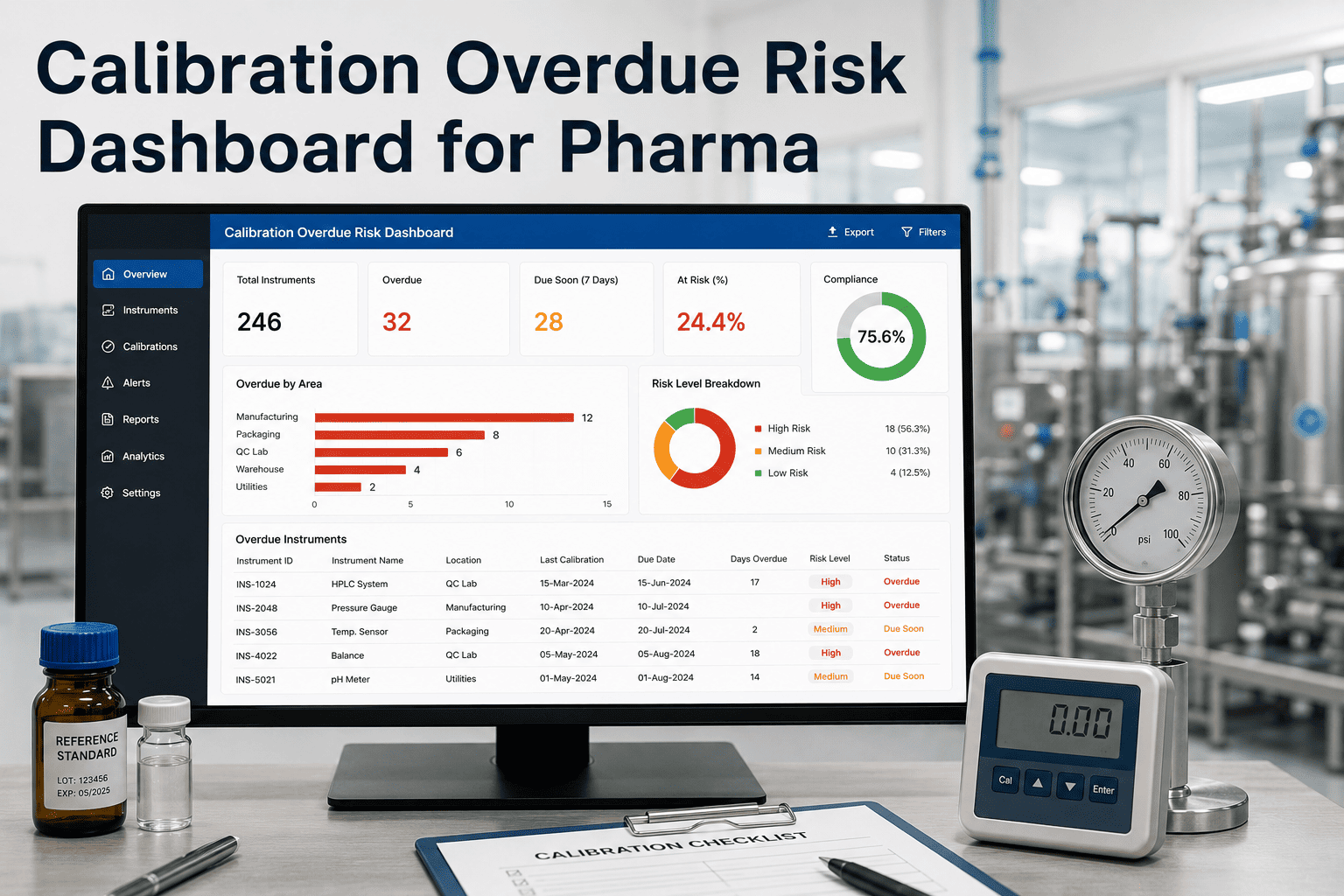
Real-time view of all instrument calibration statuses — active, due, overdue, quarantine. Filters by asset class and production area. Exportable as a PDF evidence package.
Instruments with current cert
100%
3
Open Work Order Tracker
All open, in-progress, and pending-approval work orders in one view. Filters to show only GMP-impacting work. Demonstrates that open items are known, owned, and managed — not forgotten.
Open items with owner assigned
100%
4
Prior Observation Closure Board
Displays corrective actions from prior inspection responses — each linked to a closed work order with QA sign-off. The single most important view for avoiding repeat observations.
Prior observations closed
88%
5
Site-Level Deviation Summary
Aggregates all maintenance deviations by category, frequency, and resolution time for the inspection window. Allows proactive disclosure of issues before the inspector identifies them independently.
Deviations closed on time
91%
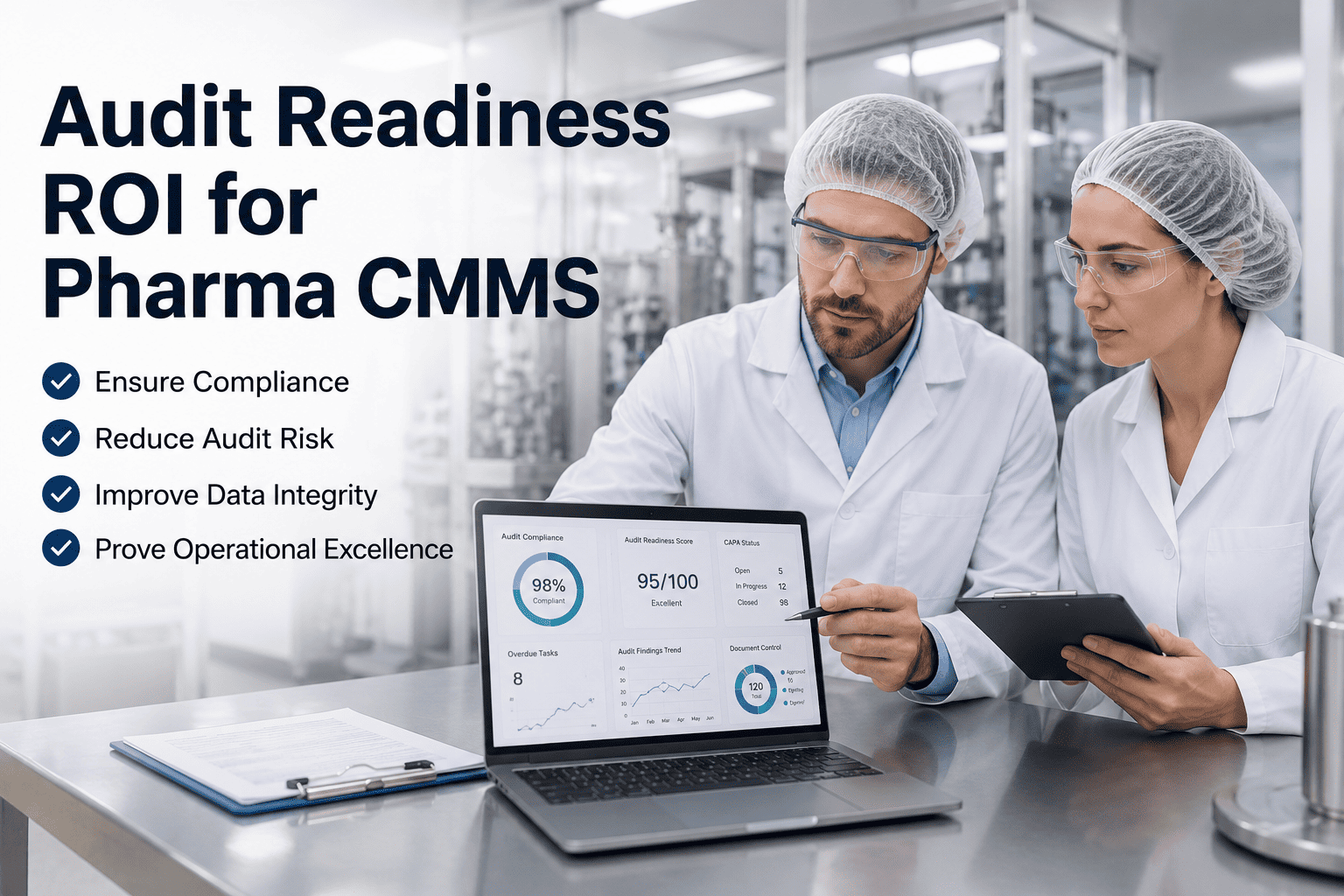
OxMaint pre-builds all five of these dashboards as configurable views — ready to display live during any inspection with no data preparation time required.
See the War Room Dashboard Live
Most Common Inspector Requests and CMMS Response
| Inspector Request |
Manual Response Time |
OxMaint Response Time |
Source in CMMS |
| PM history for Reactor A over past 12 months |
2–4 hours |
4 minutes |
Asset history export |
| Calibration certificate for pH meter #114 |
30–60 minutes |
90 seconds |
Calibration record attachment |
| Evidence that prior 483 finding was corrected |
3–6 hours |
6 minutes |
Observation-linked work order |
| List of all overdue PMs in the last quarter |
1–3 hours |
2 minutes |
PM compliance dashboard |
| HVAC maintenance record for cleanroom Class 7 |
1–2 hours |
3 minutes |
Location-filtered work orders |
| Technician qualifications for critical equipment |
2–4 hours |
5 minutes |
Technician competency record |
MP
Dr. Meera Pillai
GMP Compliance Lead · 22 Years in Pharma Regulatory Affairs and Inspection Management
The war room posture tells the inspector everything within the first hour. Facilities that can pull any record in under five minutes signal a culture of compliance — the inspector's mental model shifts from adversarial to collaborative. Facilities that spend the first morning searching for a PM binder communicate that maintenance management is an afterthought. I always tell clients: your CMMS is not just a maintenance tool during inspections — it is your primary credibility instrument. If it cannot produce a clean calibration history or a closed-corrective-action package on demand, it is a liability, not an asset.
Frequently Asked Questions
What should be physically present in a pharma inspection war room?
The war room should have dedicated workstations with live CMMS access, a large monitor or screen for dashboard display, and a designated CMMS operator who handles all inspector record requests. Printed master lists of all critical equipment, calibration schedules, and PM calendars should be available as backup. The room should also have a log that records every inspector request and response time — this log itself becomes a compliance document if inspector requests escalate.
Book a demo to see OxMaint's inspection-mode view designed specifically for war room operators.
How far back do maintenance records need to go for an FDA inspection?
FDA generally expects maintenance records to be available for the period corresponding to the products currently in distribution — typically two years for most drug manufacturers, and longer for biologics and sterile facilities. For equipment with a known prior inspection history, records back to the last inspection date are the minimum. A CMMS that maintains a complete, searchable electronic history eliminates the physical storage burden and makes any date range retrievable instantly.
Start a free trial to see how OxMaint archives and retrieves multi-year maintenance histories.
What is the biggest mistake pharma sites make during inspection preparation?
The most common and damaging mistake is closing work orders or updating records in the week before inspection to correct known gaps. FDA investigators are specifically trained to look for unusual clusters of record activity immediately before inspection dates, which they identify through audit trail review. The correct approach is continuous compliance — maintaining records accurately throughout the inspection period rather than correcting them retroactively. A CMMS with a locked audit trail prevents backdated entries and demonstrates to investigators that your records are trustworthy.
Book a demo to see OxMaint's audit trail integrity controls.
Can OxMaint generate a full inspection-ready maintenance package for a specific equipment item?
Yes. OxMaint's asset history export produces a single consolidated PDF that includes the complete PM history, calibration records, deviation log, corrective action records, and technician sign-off trail for any individual equipment item. The export is formatted specifically for regulatory review and includes a table of contents for fast navigation during inspection. This package can be generated for any asset in under three minutes, covering any date range the inspector specifies.
Build Your Inspection War Room Before the Auditors Arrive
OxMaint gives your war room team live dashboards, instant record retrieval, and a complete corrective action trail — everything FDA and ISO inspectors ask for, ready in minutes.