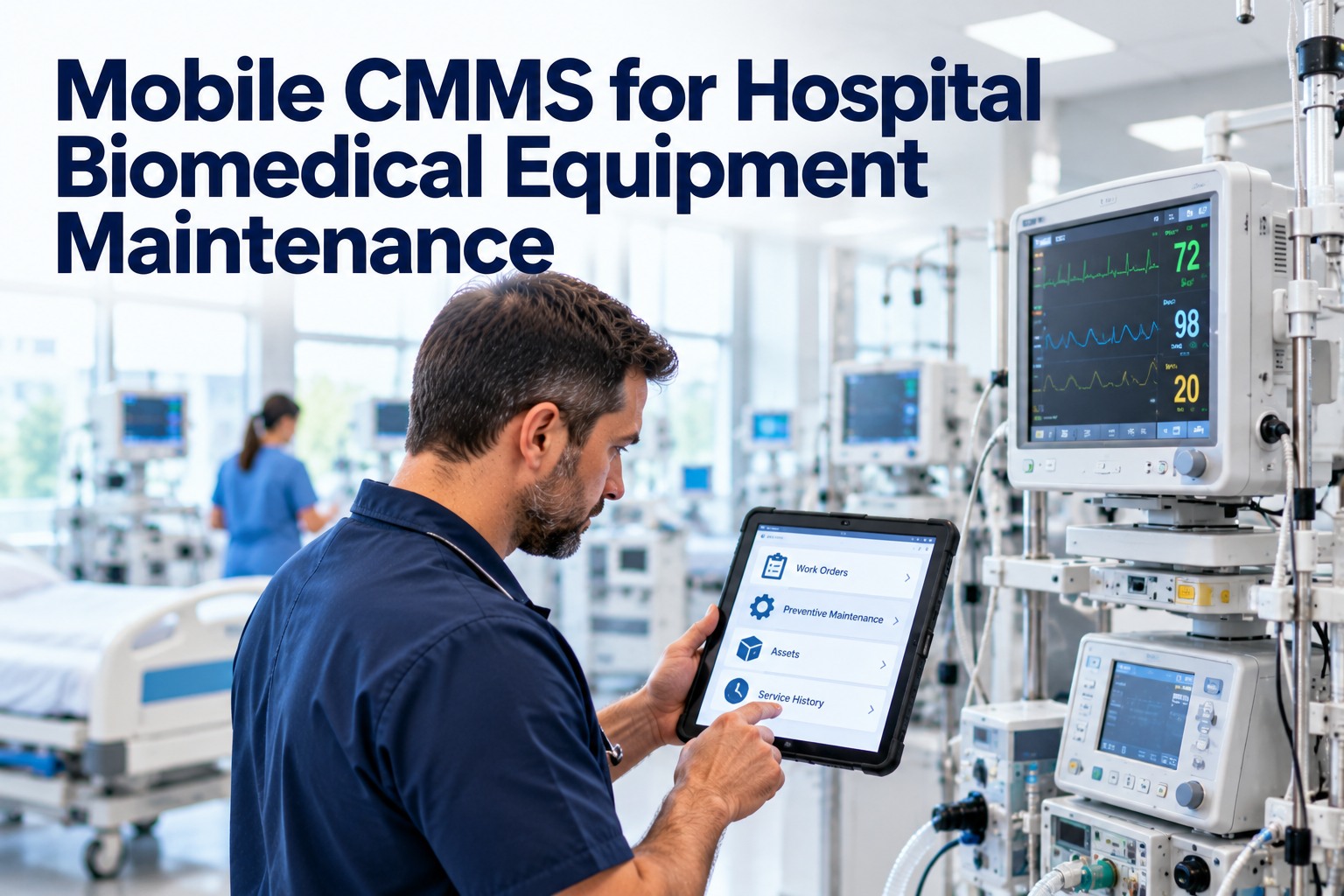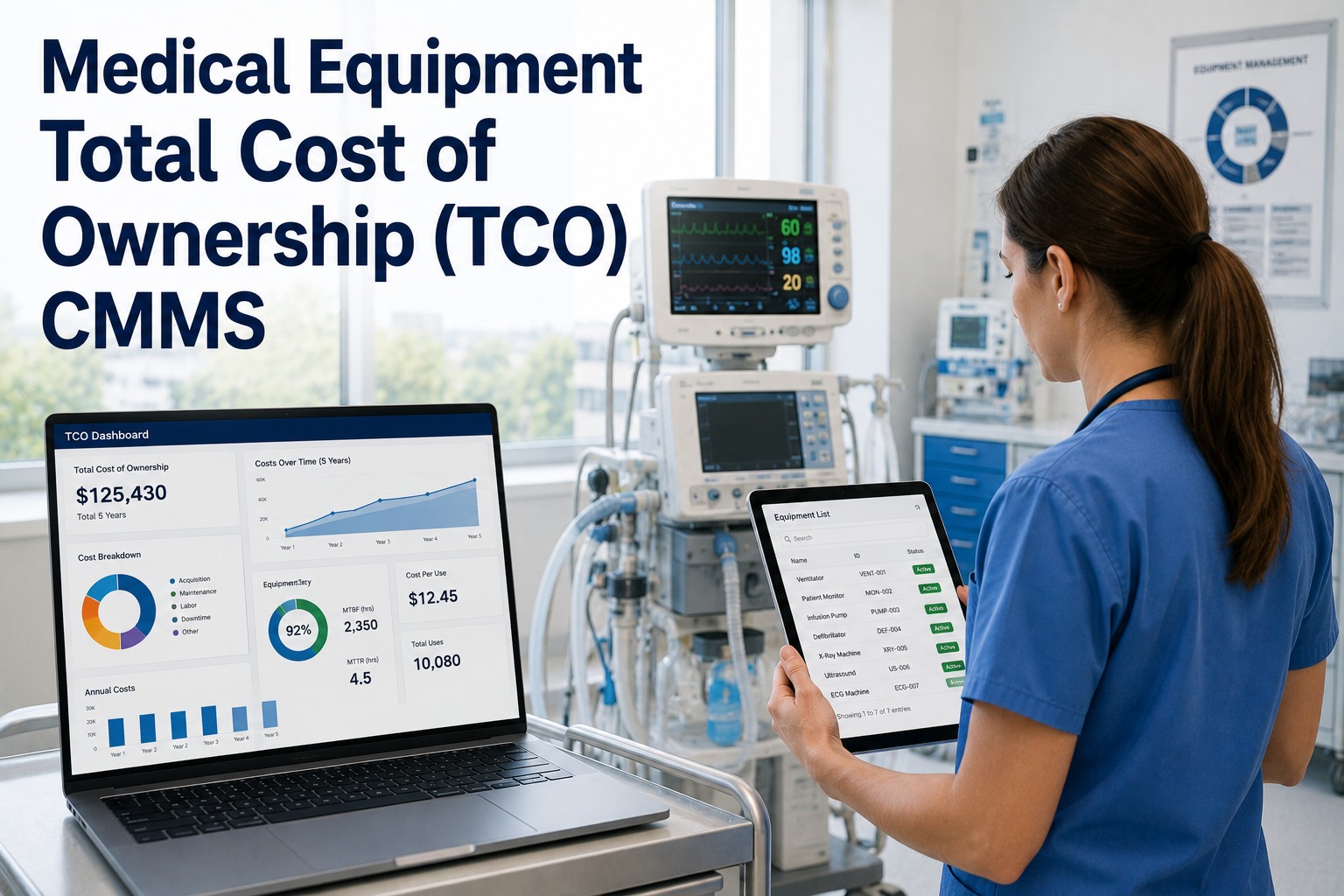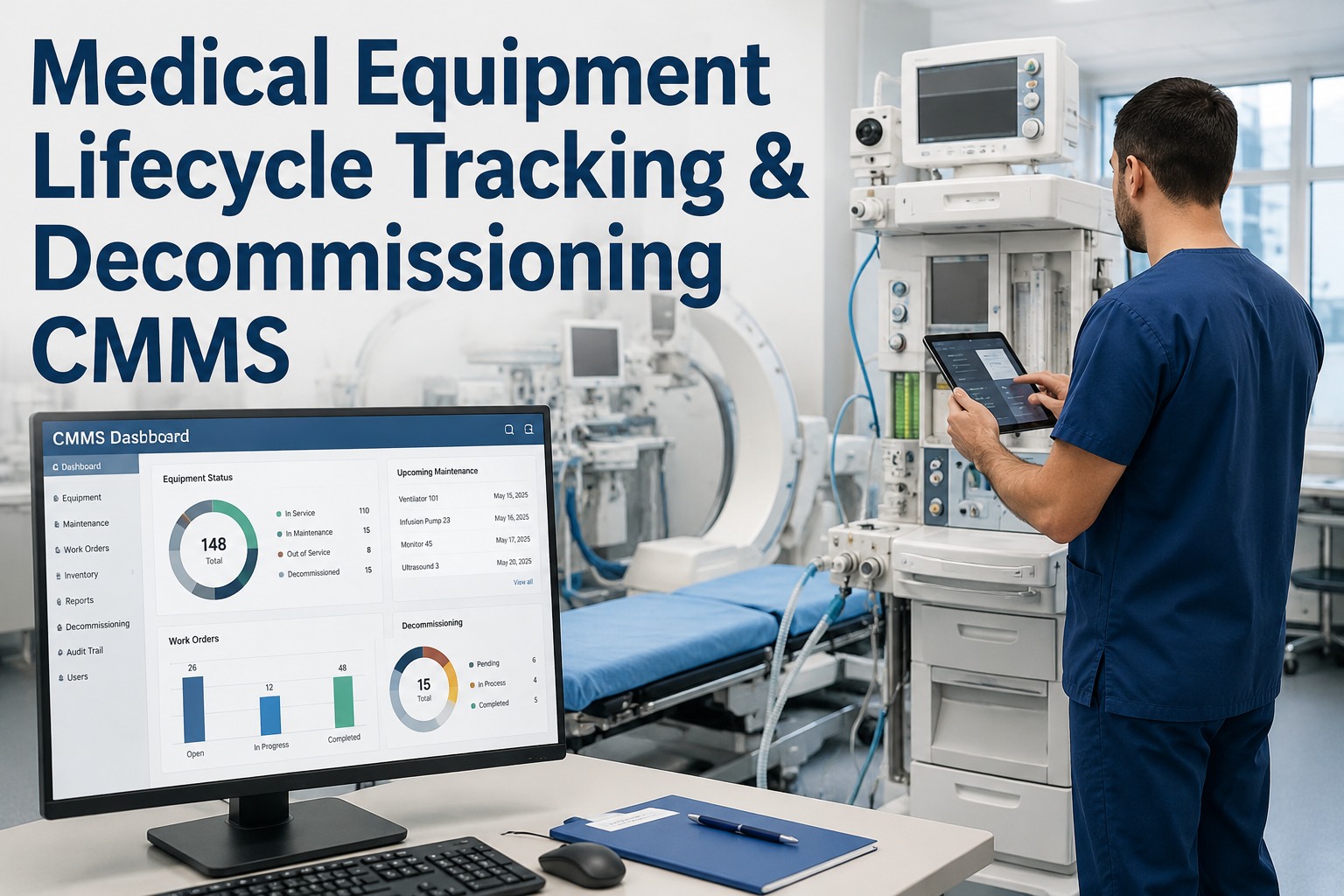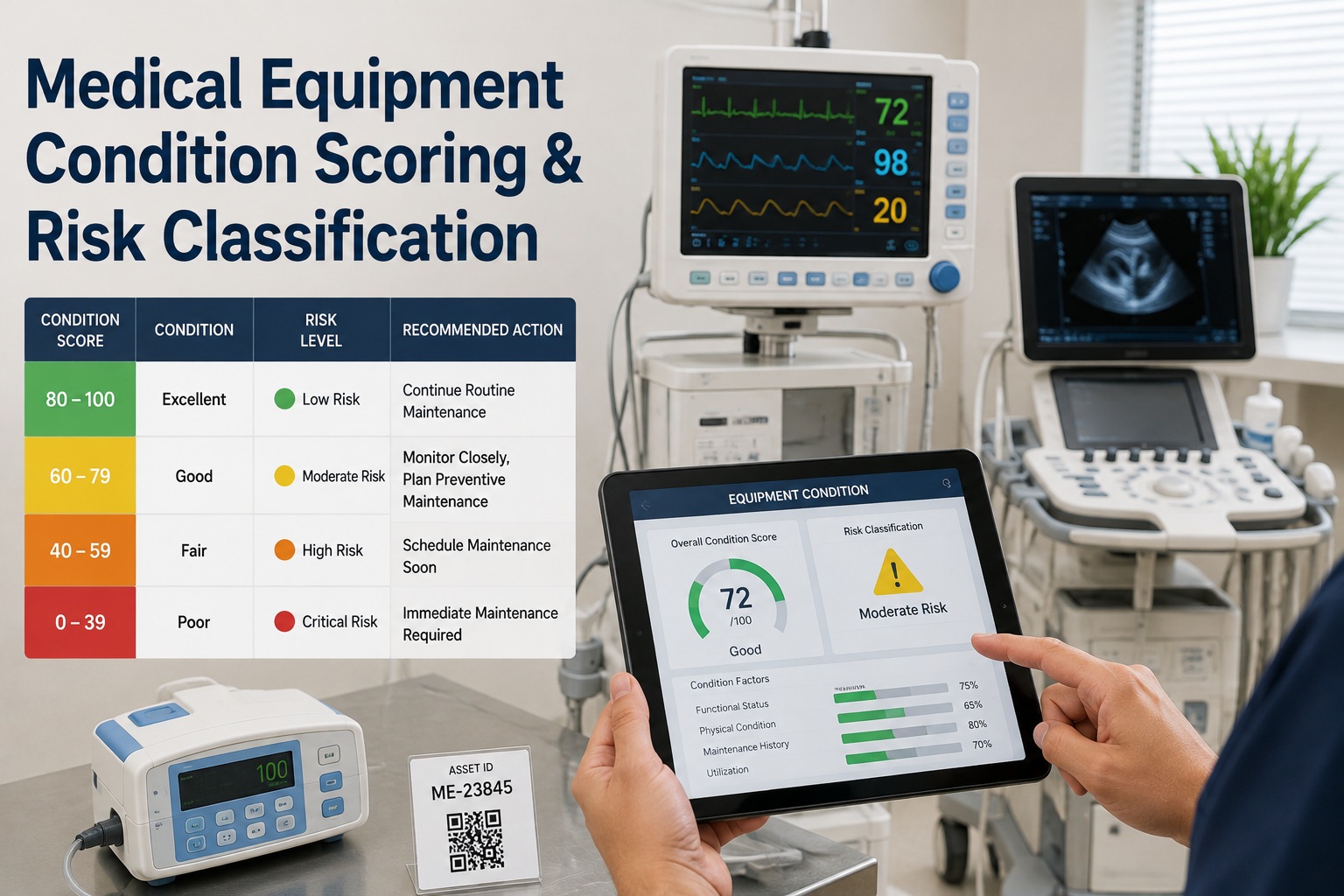
Medical equipment condition scoring assigns a quantified risk value to every device in a hospital inventory based on its clinical function, physical risk, and maintenance history, enabling biomedical engineering teams to concentrate preventive maintenance (PM) hours where patient safety is highest. Risk classification healthcare frameworks—rooted in ECRI methodology and ISO 55000 asset management principles—separate a life-support ventilator from a low-risk exam chair, ensuring maintenance intensity matches actual clinical risk. Without a structured condition scoring guide, biomed teams waste thousands of hours over-maintaining low-risk assets while critical infusion pumps and defibrillators slip into reactive failure. OxMaint's AI-powered CMMS automates equipment condition scoring and CMMS risk classification, giving healthcare facilities a live, auditable view of medical equipment risk that drives smarter PM tiers and reduces downtime by up to 50%. Start Free Trial to modernize your clinical engineering program today.
Medical Equipment Risk Classification
Are you treating a ceiling fan like an anesthesia machine?
A 600-bed hospital manages 8,000+ medical devices. Without condition-based risk scoring, biomed teams spread PM hours evenly—over-servicing low-risk assets while life-support equipment misses critical inspections. OxMaint's CMMS condition scoring healthcare module concentrates your biomedical engineering effort exactly where patient risk lives.
Why Risk Scoring Matters
The hidden cost of equal-treatment PM schedules
The Joint Commission and ECRI standards require medical equipment maintenance programs to be based on documented risk. Yet, a 2024 AAMI survey found that 62% of clinical engineering departments still use uniform PM intervals—treating every asset on the same 6-month or 12-month cycle. The financial and clinical impact is staggering: over-maintenance drains budgets, while under-maintained high-risk devices cause adverse patient events, averaging $42,000 per incident in liability and operational downtime. Medical equipment risk scoring solves this by assigning a dynamic, mathematically defensible risk score to each device.
Scoring Methodology
How to calculate medical equipment risk scores
A defensible hospital risk classification model evaluates three primary dimensions. The resulting score dictates the PM tier, inspection frequency, and the level of redundancy required. The ECRI-based risk classification formula multiplies clinical function by physical risk and maintenance history to generate a 1–100 condition score.
Clinical Function (F)
What does the device do? Life support (F=10), Surgical (F=8), Therapy (F=6), Monitoring (F=4), or Non-patient care (F=1). A ventilator scores 10; a workstation on wheels scores 2.
Physical Risk (R)
What happens if it fails? Patient death (R=10), injury (R=7), minor delay (R=4), or no impact (R=1). Anesthesia machines carry R=10; exam lights carry R=1.
Maintenance History (M)
How has it behaved? Devices with 3+ failures in 12 months get +5; devices with zero corrective work orders get -2. This modifier is fully automated in a CMMS.
PM Tier Design
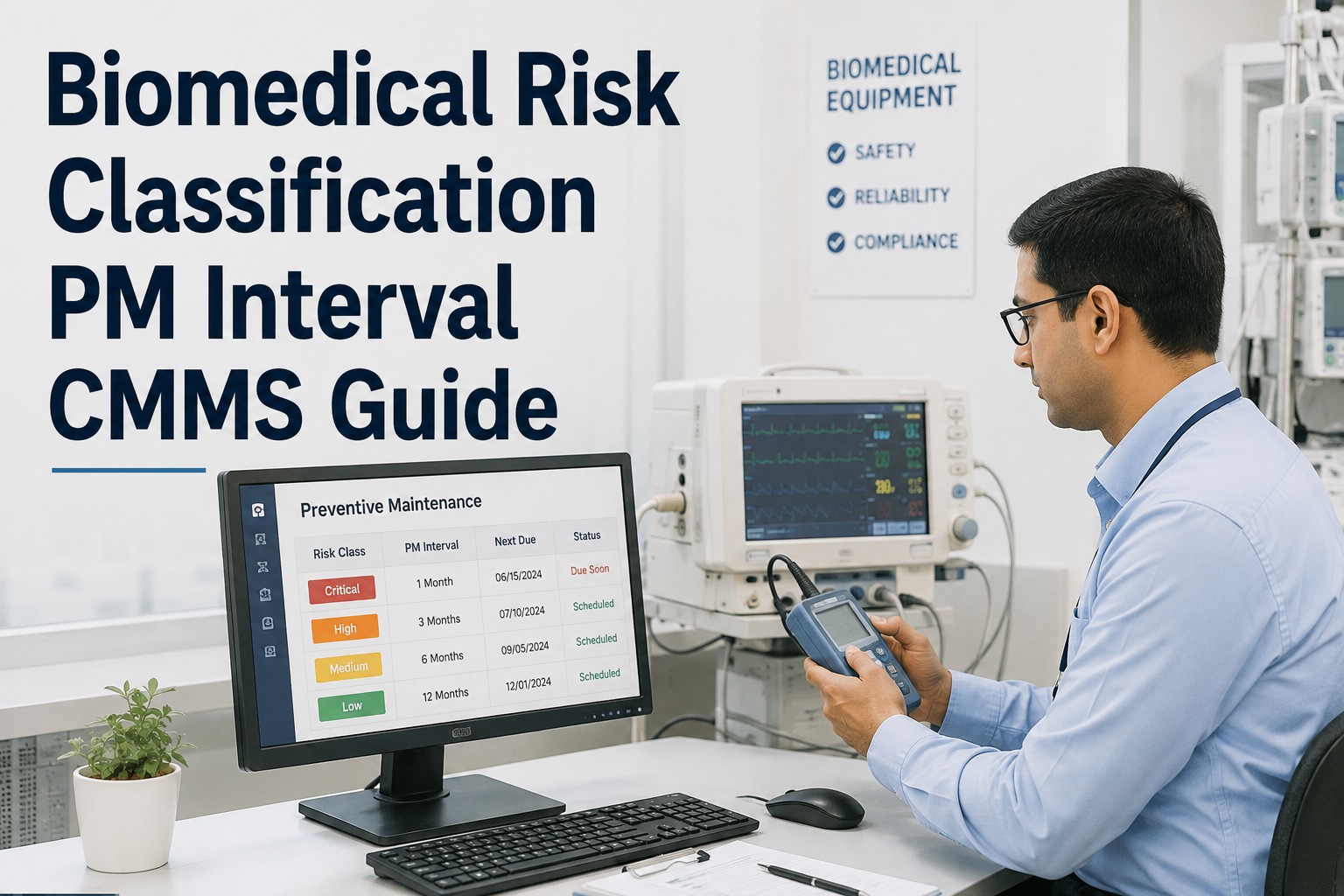
Equipment risk classification tiers & PM frequency
Once you calculate the medical equipment risk score, assets are grouped into tiers. These tiers dictate inspection frequency, redundancy requirements, and the depth of the preventive maintenance procedure. Tier 1 devices demand the strictest adherence to OEM guidelines, while Tier 4 devices may only require documented functional checks—freeing up hundreds of biomed hours annually.
| Risk Tier | Score Range | Asset Examples | PM Frequency | Redundancy Rule |
|---|---|---|---|---|
| Tier 1: Critical | 80–100 | Defibrillators, ventilators, anesthesia machines | Quarterly | Immediate backup required; zero downtime tolerance |
| Tier 2: High | 60–79 | Infusion pumps, electrosurgical units, monitoring systems | Semi-annual | Backup unit within 15 min |
| Tier 3: Moderate | 30–59 | Beds, stretchers, exam lights, non-critical monitors | Annual | Standard swap-out acceptable |
| Tier 4: Low | 1–29 | Scales, wheelchairs, cabinets, non-patient electronics | Biennial / On-demand | No redundancy required |
Real-World Impact
A 180-asset ICU department transformation
Consider a hospital ICU managing 180 high-acuity assets. Before implementing CMMS condition scoring, the biomed team ran a uniform 6-month PM cycle on everything—costing $84,000 annually in labor and frequently pulling infusion pumps offline during peak hours. After deploying OxMaint's equipment condition guide, 40% of assets were reclassified to a 12-month cycle based on excellent maintenance history (M modifier), while 15 high-risk devices were escalated to quarterly inspections.
- $84K annual PM labor cost
- 14% unscheduled downtime during shifts
- Uniform 6-month PM for all 180 assets
- Manual spreadsheet-based audit prep
- $51K annual PM labor cost
- 3% unscheduled downtime during shifts
- Condition-scored tiers (quarterly to biennial)
- One-click audit readiness with live history
How OxMaint Helps
CMMS condition scoring healthcare capabilities
OxMaint turns theoretical risk classification into a live, automated system. Our AI-powered CMMS platform calculates and updates equipment condition scores in real time—eliminating the need for manual spreadsheet tracking and ensuring your biomedical engineering team is always working on the right asset at the right time.
Dynamic Risk Recalculation
Every completed work order, failure event, and inspection updates the asset's M-modifier instantly. No more static annual reviews—OxMaint shifts PM tiers automatically as maintenance history evolves, cutting unplanned downtime 30–50%.
Predictive Failure Alerts
AI analyzes vibration, utilization, and corrective work order patterns to flag Tier 1 and Tier 2 devices trending toward failure—alerting biomed teams 7–14 days before a catastrophic breakdown.
Automated Audit Readiness
Every condition score, PM deferral, and risk reclassification is logged immutably. Generate Joint Commission, FDA, and ISO 55000 compliance reports in seconds—no more hunting through paper binders.
Parts & Inventory Linkage
When a Tier 1 device triggers a high-risk score, OxMaint automatically reserves critical spare parts and checks vendor lead times—ensuring zero delays when life-support equipment needs immediate attention.
See OxMaint's condition scoring on your medical equipment
Book a 30-minute demo. We'll import your asset list, apply the ECRI risk formula, and show you exactly where your biomed hours should go.
Frequently Asked Questions
Medical equipment risk classification questions, answered
What is medical equipment condition scoring?
Medical equipment condition scoring is a quantitative method that assigns a risk value (typically 1–100) to each clinical device based on its function, physical risk, and maintenance history. It allows biomed teams to prioritize preventive maintenance hours toward life-support and high-risk equipment, reducing both patient safety incidents and unnecessary labor costs. A CMMS like OxMaint automates this scoring dynamically.
How does ECRI risk classification work for hospital equipment?
ECRI-based risk classification evaluates devices across clinical function (e.g., life support vs. non-patient care), physical risk (patient death vs. no impact), and maintenance requirements. Devices are grouped into tiers that dictate PM frequency—typically quarterly for critical life support, semi-annual for therapy, and annual or biennial for low-risk assets. This ensures compliance with Joint Commission standards. You can Book a Demo to see the ECRI matrix pre-loaded in OxMaint.
How does a CMMS calculate equipment risk scores?
A CMMS calculates risk scores by combining static asset attributes (function and physical risk) with dynamic maintenance history modifiers. Every completed work order, failure log, and inspection result updates the asset's score in real time. This eliminates the manual effort of annual spreadsheet reviews and ensures risk classifications always reflect the device's current operational condition.
How often should medical equipment risk classifications be reviewed?
Static risk classifications should be reviewed annually, but dynamic condition scoring—powered by a CMMS—updates continuously. If a Tier 3 device experiences three failures in six months, its maintenance history modifier should push it to Tier 2 automatically, escalating its PM frequency. OxMaint handles this recalculation instantly after every work order, or you can Start Free Trial to test it on your inventory.
Can condition scoring reduce biomedical engineering maintenance costs?
Yes. By shifting low-risk assets from a 6-month to a 12-month or 24-month PM cycle, hospitals typically reduce biomed labor costs by 30–40% without increasing patient risk. The freed hours are redirected to high-risk Tier 1 and Tier 2 devices, reducing adverse events and extending the useful life of critical equipment through condition-based, rather than calendar-based, maintenance.
Stop guessing where your maintenance hours belong
Deploy OxMaint's AI-powered CMMS risk classification in days, not months. See your live equipment condition scores and cut unplanned downtime by up to 50%.
Free 14-day trial · No credit card