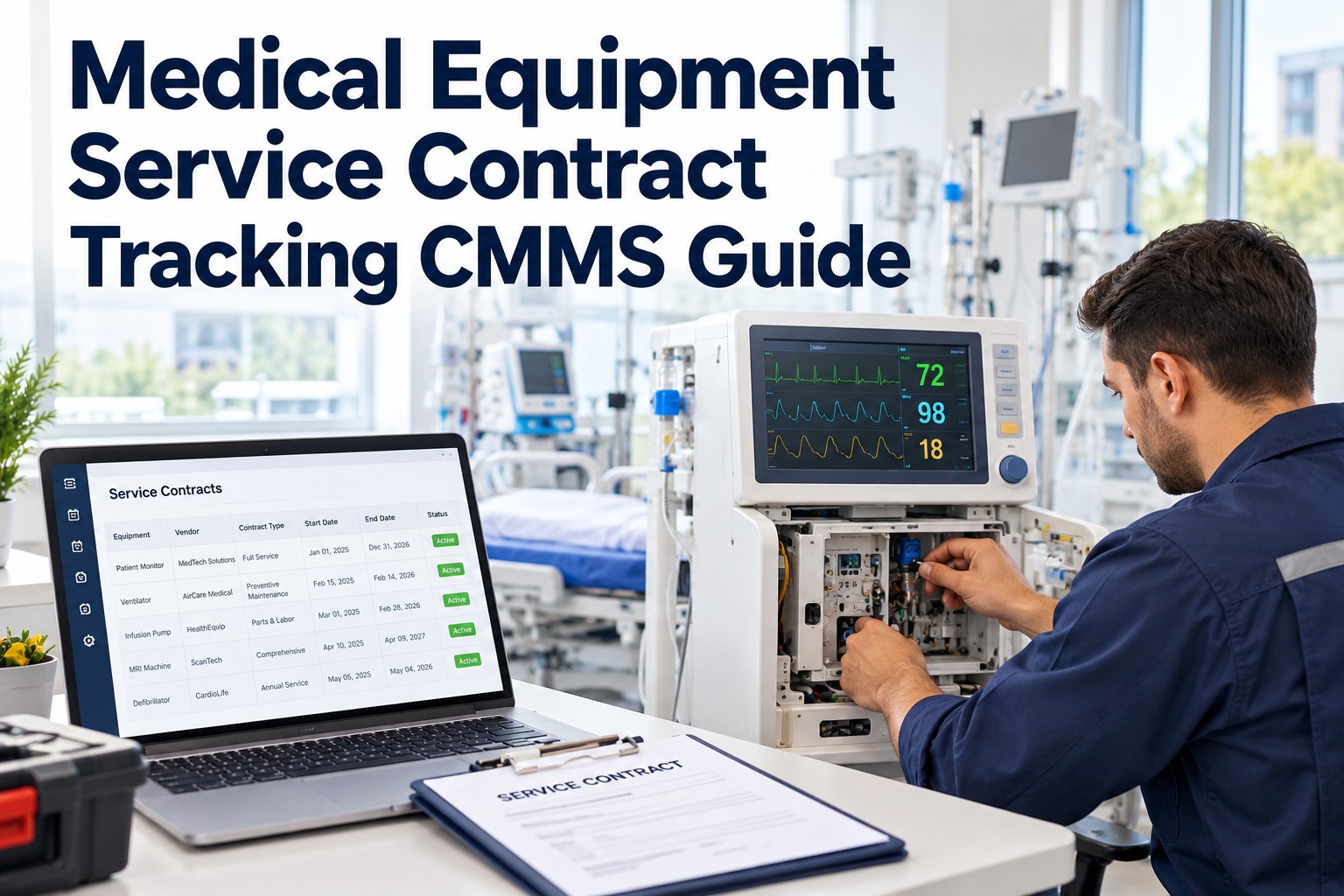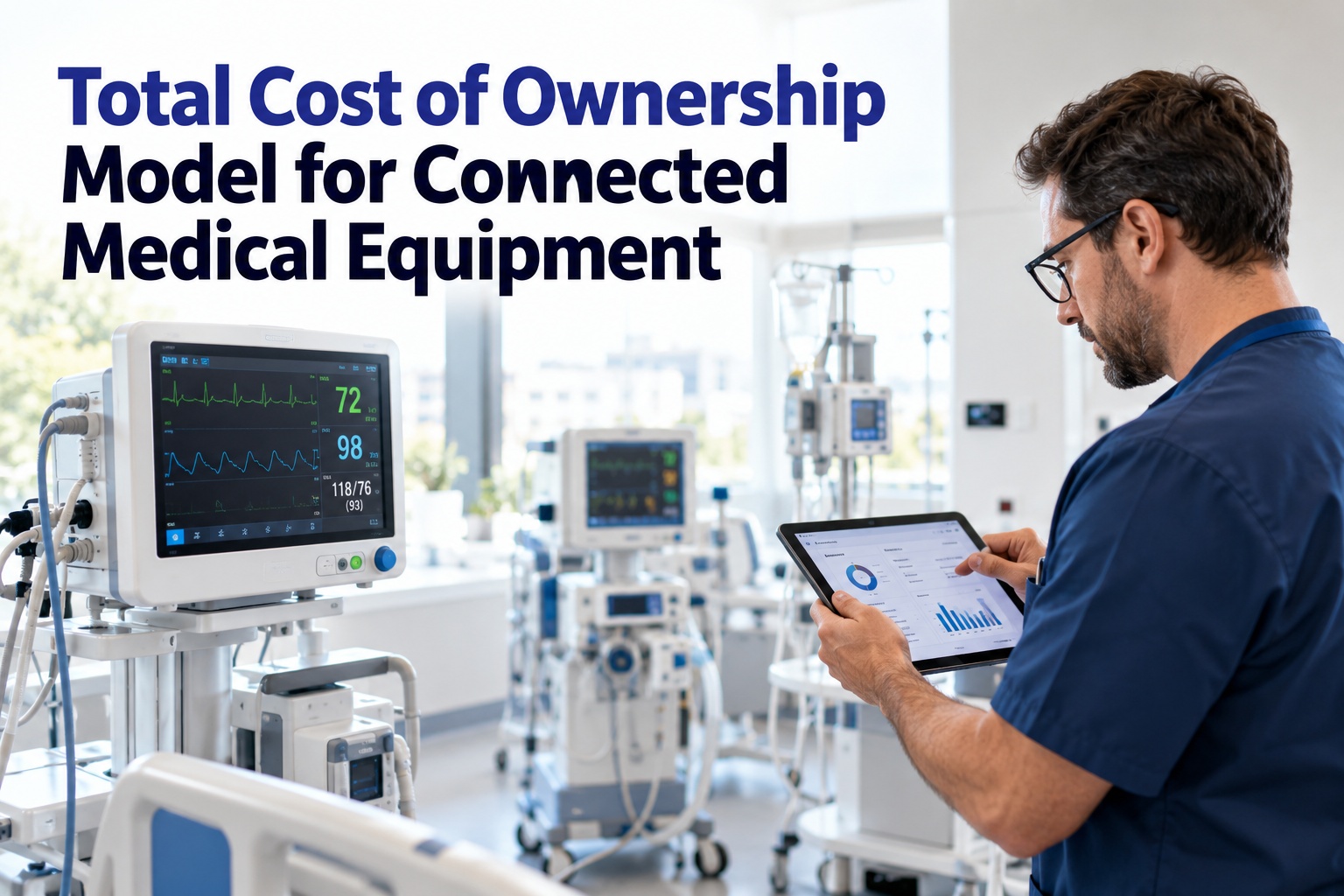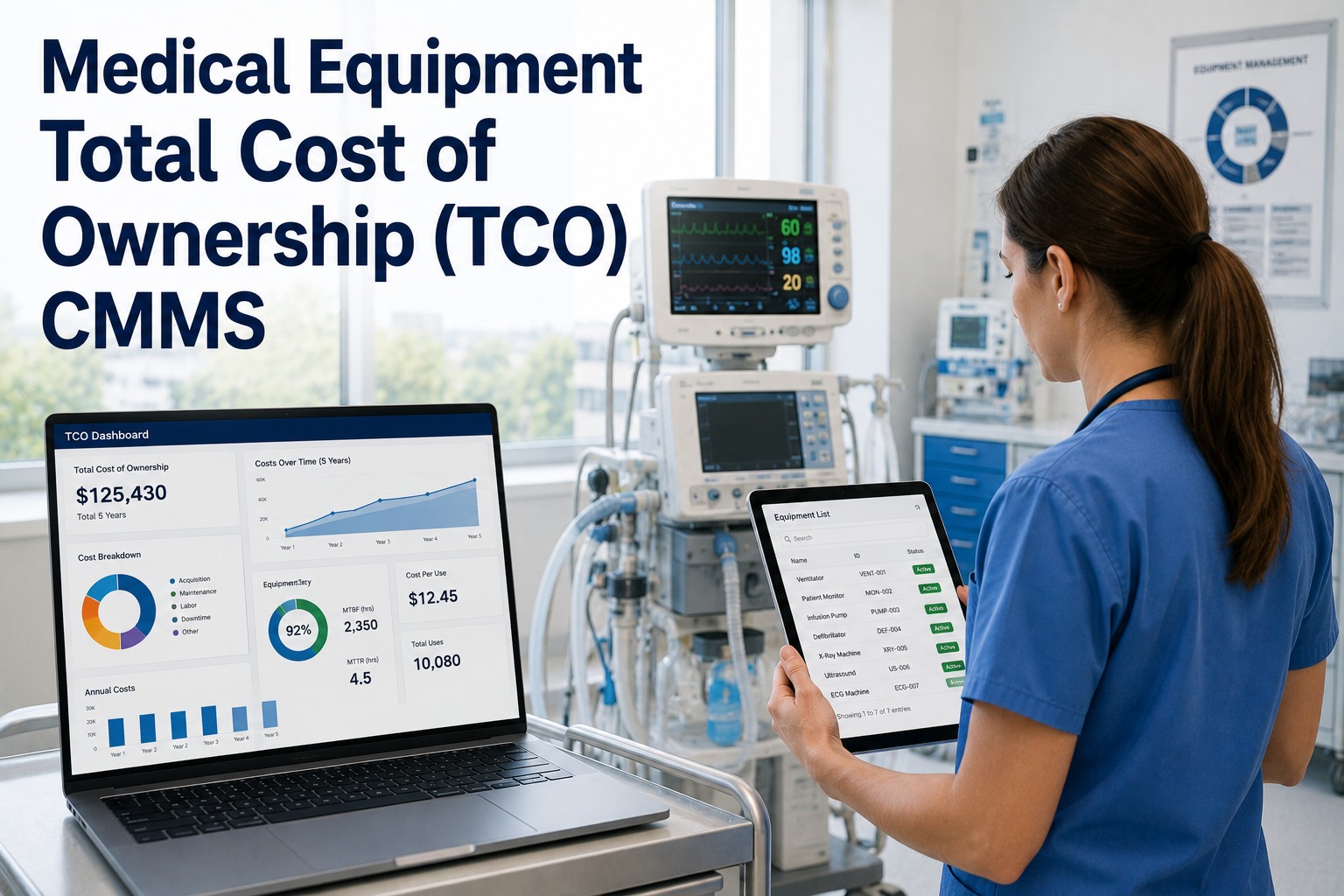
Medical equipment TCO — total cost of ownership — is the single most misunderstood number in healthcare capital purchasing, because acquisition price typically represents less than 25% of what a device actually costs to own over its 10-year lifecycle. A $1.2M MRI scanner that looks like a deal on the procurement spreadsheet can quietly consume $3.8M in service contracts, calibration labor, consumables, downtime, and end-of-life disposal before it is finally retired. This guide breaks down the full medical equipment TCO model — acquisition, maintenance, consumables, downtime, and disposal — and shows how a CMMS built for healthcare aggregates every cost stream into one defensible lifecycle number. Track it all in OxMaint with a Start Free Trial or book a personalized walkthrough.
Sticker price is 25% of the story. TCO is what actually drains your budget.
Most clinical engineering teams justify medical equipment purchases on acquisition cost alone — then lose $250K–$1.2M per device over a decade to reactive service, untracked consumables, and unplanned downtime. OxMaint aggregates every cost stream into one lifecycle TCO so procurement becomes a defensible financial decision, not a bid comparison.
What drives medical equipment TCO across a 10-year lifecycle?
A defensible total cost of ownership model aggregates five distinct cost categories. Most hospitals track only the first two — the remaining three account for 55–70% of lifecycle spend and are where a CMMS delivers the largest savings.
Capital purchase, installation, training & validation
Purchase price plus delivery, site prep, bio-medical engineering acceptance testing, clinical training, and FDA/Joint Commission validation. This is the only number most bid-comparison sheets capture — and it is the smallest lever you have.
OEM contracts, in-house labor, parts & calibration
Service contracts on imaging equipment run 7–11% of purchase price annually. In-house biomed labor, replacement parts, and ISO 17025 calibration records add another 4–8%. Without a CMMS these costs are scattered across ERP, paper, and spreadsheets — invisible to the buyer.
Reagents, disposables, filters & accessories
A single CT scanner burns through $40K–$80K per year in tubes, coolants, and filtration. A 400-bed hospital runs $1.4M annually in untracked consumables. These costs rarely appear on the capital justification form — but they hit the operating budget every month for a decade.
Lost revenue, idle staff, patient rescheduling & risk
An MRI down for 48 hours costs $48K–$92K in lost scan revenue and rescheduling overhead. Unplanned downtime on critical ventilators and monitors introduces patient-safety risk and Joint Commission findings. This is the largest hidden cost — and the most preventable with predictive maintenance.
Decommissioning, data sanitization & regulated disposal
Decommissioning imaging equipment requires lead shielding removal, HIPAA-compliant data wipes, and EPA-regulated disposal of refrigerants and batteries. A single MRI retirement costs $18K–$45K — rarely budgeted at acquisition, always due at year 10.
How to calculate medical equipment TCO with a CMMS
The TCO formula is simple in principle — acquisition plus every operating cost over the asset's life — but impossible to compute without a system that captures costs at the work-order level. Here is the model and a real-world example.
| Cost Stream | Annual / One-Time | Calculation | 10-Year Total |
|---|---|---|---|
| Acquisition & install | One-time | $1,200,000 | $1,200,000 |
| OEM service contract | $96,000/yr (8%) | $96,000 × 10 | $960,000 |
| In-house biomed labor & parts | $52,000/yr | $52,000 × 10 | $520,000 |
| Consumables (tube, coolant, filters) | $60,000/yr | $60,000 × 10 | $600,000 |
| Downtime (6 days/yr @ $14K/day) | $84,000/yr | $84,000 × 10 | $840,000 |
| End-of-life decommissioning | One-time | $32,000 | $32,000 |
| 10-Year TCO | $4,152,000 | ||
Insight: Acquisition is only 29% of TCO. Downtime and consumables — the two streams most hospitals never track at the asset level — account for 35%. A CMMS that cuts downtime 40% and optimizes consumable replacement saves $672,000 per scanner over its lifecycle.
Procurement TCO tracking: spreadsheet vs CMMS-driven
The gap between spreadsheet-based TCO estimation and CMMS-tracked TCO is not incremental — it is the difference between guessing and knowing. Here is how the two approaches compare across the metrics that matter to clinical engineering and finance.
| Dimension | Spreadsheet / Bid Sheet | OxMaint CMMS TCO Tracking |
|---|---|---|
| Cost data source | Manual entry from invoices, ERP exports, memory | Auto-captured from every work order, PO, and meter reading |
| Cost streams tracked | 1–2 (acquisition + service contract) | All 5 streams down to individual asset level |
| Downtime cost | Not calculated — treated as "unavailable" | Auto-calculated from lost scan revenue & reschedule rate |
| Calibration & compliance | Paper logs, spreadsheet reminders, audit panic | Automated PM triggers, ISO 17025 records, audit-ready in 1 click |
| Replacement decision | Based on age or "gut feel" from biomed team | Data-driven: TCO trend curve + MTBF decline + downtime spike |
| Time to produce TCO report | 2–3 weeks of manual reconciliation | Real-time dashboard, always current |
| Accuracy vs actual spend | ±35–45% (missing consumables & downtime) | ±3–5% (every dollar tied to a closed work order) |
How OxMaint turns medical equipment TCO from estimate to evidence
OxMaint is an AI-powered CMMS and EAM platform that captures every cost stream at the work-order level, so your TCO number is built from real transactions — not estimates. Four capabilities deliver measurable ROI within the first 90 days.
Per-asset cost ledger
Every work order, part, and consumable is auto-attributed to the asset's lifecycle record. You see true TCO per device — not department averages — in real time.
Predictive maintenance AI
Machine-learning models analyze vibration, temperature, and usage-meter data to predict failures 7–21 days before they happen — shifting work from emergency repair to scheduled intervention.
Compliance & calibration automation
Automated PM schedules, ISO 17025 calibration tracking, and Joint Commission-ready audit logs eliminate the 80+ hours typically spent reconciling paper records before a survey.
Replacement-decision analytics
TCO trend curves, MTBF decline rates, and downtime-cost spikes flag the exact quarter when repairing an asset costs more than replacing it — ending "run-to-failure" inertia.
See OxMaint calculate TCO on your own medical equipment — live.
Book a 30-minute demo and we'll import your asset list, map your cost streams, and show you the real TCO gap in your current fleet — before you spend another capital dollar.
Where CMMS-driven TCO tracking delivers the biggest savings
Not every asset category benefits equally from TCO tracking. High-value imaging and life-support equipment carry the largest hidden cost pools — and the largest recoverable savings when a CMMS brings them into view.
Predictive AI reduces unplanned MRI outages by 40–55%, recovering $37K–$51K per scanner per year in lost scan revenue.
Usage-meter tracking extends tube life 12–18% by matching scan protocols to thermal limits — delaying a $48K replacement.
Condition-based PMs replace fixed-interval checks, eliminating unnecessary labor on 300+ critical-care ventilators.
| Asset Category | Avg. Acquisition | 10-Yr TCO (Est.) | Annual Savings w/ CMMS | Payback Period |
|---|---|---|---|---|
| MRI Scanner (1.5T/3T) | $1.2M–$2.8M | $4.1M–$9.2M | $85K–$140K | 3–5 months |
| CT Scanner (64-slice+) | $800K–$1.5M | $2.9M–$5.1M | $52K–$88K | 2–4 months |
| Ultrasound (portable & cart) | $45K–$120K | $140K–$340K | $8K–$19K | 4–6 months |
| Patient Monitors (ICU) | $8K–$22K each | $24K–$58K | $2.1K–$4.8K each | 3–5 months |
| Anesthesia Machines | $35K–$90K | $110K–$260K | $9K–$21K | 3–5 months |
| Infusion Pumps (fleet of 500) | $2.8K each | $7.2K each | $420K fleet-wide | 2–3 months |
Medical equipment TCO & CMMS — frequently asked questions
What is medical equipment total cost of ownership (TCO)?
Medical equipment TCO is the complete lifecycle cost of a device — acquisition, maintenance and calibration, consumables, downtime, and end-of-life disposal — summed over its entire service life, typically 8–12 years. It is the number that reveals whether a "cheaper" device is actually cheaper to own, and it requires a CMMS to track accurately because 55–70% of the cost occurs after the purchase order is closed.
How does a CMMS reduce medical equipment TCO?
A CMMS reduces TCO by capturing every cost at the work-order level, automating preventive maintenance to cut unplanned downtime 30–50%, optimizing consumable and parts replacement, and providing data-driven replacement timing so you retire assets at their economic break-even rather than running them to failure. OxMaint's AI predictive models extend this further by flagging failures 7–21 days in advance.
How much can a hospital save with CMMS-based TCO tracking?
A typical 400-bed hospital with 8,000+ tracked medical devices recovers $420K–$1.1M annually in reduced downtime, optimized service contracts, and condition-based PMs. The largest savings come from imaging equipment — a single MRI can recover $85K–$140K per year. Most OxMaint deployments pay back within 3–5 months. Book a demo to see the projected savings for your specific fleet.
What cost streams should be included in medical equipment TCO?
A complete TCO model includes five streams: (1) acquisition and validation, (2) maintenance, service contracts, and calibration, (3) consumables and disposables, (4) downtime and lost revenue, and (5) end-of-life decommissioning and regulated disposal. Most hospitals capture only streams 1 and 2, missing the 55–70% of lifecycle cost hidden in consumables, downtime, and disposal.
How long does it take to implement a CMMS for medical equipment TCO tracking?
OxMaint can be deployed and importing your asset register, work-order history, and PM schedules within 2–4 weeks. The system integrates with your existing ERP and ERP procurement data, so cost streams begin populating immediately. Most clinical engineering teams are fully operational — generating real TCO dashboards — within 30–45 days of kickoff. Start a free 14-day trial to explore the platform on your data.
Stop buying on sticker price. Start owning on lifecycle cost.
OxMaint gives you the TCO visibility, predictive maintenance, and compliance automation your clinical engineering team has been missing — on every device, in real time, audit-ready.
Free 14-day trial · No credit card