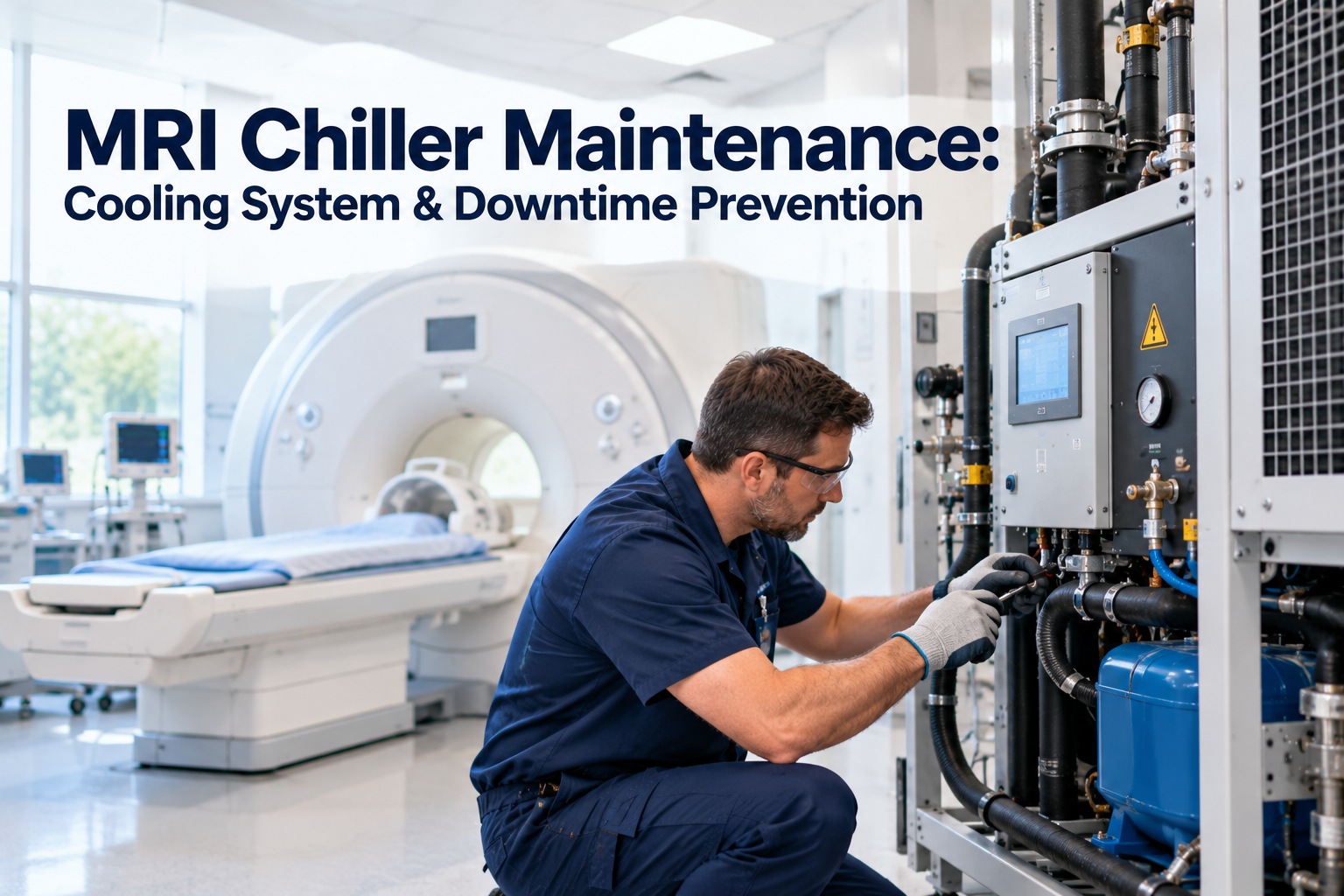
MRI Chiller Maintenance: Cooling System & Downtime Prevention

By Willam Jerry on October 17, 2026

mri-chiller-maintenance-cooling-system-and-prevention

An MRI scanner is only as available as the water that cools it. Behind the quiet imaging suite, a chiller circulates cold water to the magnet's compressor, the gradient system and the RF electronics. When that loop drifts out of range, scans get cancelled, patients are rebooked and imaging revenue stops. The frustrating part: most chiller failures send warnings for days or weeks first. This guide shows what to inspect, what to watch and how to schedule it, and how OXMAINT AI, the AI-powered CMMS, keeps cooling-system maintenance on time and fully documented.

MRI & Diagnostic Imaging · Chiller Maintenance · Cooling Systems · Temperature Monitoring · Downtime Prevention

MRI Chiller Maintenance: Cooling System & Downtime Prevention

Keep the cooling loop healthy and the scanner stays on the schedule. OXMAINT AI, the AI-powered CMMS and maintenance management software, automates chiller PMs, logs temperature and flow readings and flags drift before it becomes a shutdown.

Chiller health check
Supply temperatureStable
Water flowIn range
Fluid level & mixVerified
Condenser coilCleaning due
Weeks of Warning
many cooling faults show drift in temperature, flow or noise first
4 Time Scales
daily, monthly, quarterly and annual checks cover the loop
OEM-Guided
intervals and limits follow the manufacturer's specifications
Full Log
readings and service history stored on the asset

What the Chiller Actually Cools

The chiller sits outside the scan room, but it is part of the imaging chain. Chilled water carries heat away from the components that cannot run hot, and a separate heat-rejection side sends that heat outdoors. Understanding the loop shows you where to look. Book a demo to see how OXMAINT AI tracks each part of it.

MRI SUITE LOADS Magnet compressor Gradient system RF electronics CHILLER Pumps and compressors Controls and sensors Coolant fluid HEAT REJECTION Condenser coil or dry cooler, fans Outdoors cold supply warm return heat out Monitor temperature, flow and pressure at each point Simplified illustration. Layouts and components vary by scanner and chiller model.

What Happens When Cooling Is Lost

A cooling problem rarely stays small. It moves through the system step by step, and every step costs more than the last. Catching it at the first link is the whole point of preventive maintenance. Start free and set alerts for overdue chiller tasks.

1
Chiller fault
Low flow, fouled coil or failing pump
→
2
Water warms up
Supply temperature drifts above range
→
3
Components overheat
System alarms and protective shutdowns
→
4
Scans stop
Rebooked patients, service calls, possible extended recovery

Warning Signs Worth Acting On

Operators and technicians often notice the symptoms first. Make sure those observations reach maintenance as a logged request, not a hallway conversation.

▲
Temperature creep
Supply water running warmer than its normal baseline
≈
Flow or pressure changes
Readings drifting from the usual range
⚠
Repeat alarms
Warnings that clear and return on the chiller or scanner
♫
New noise or vibration
Pumps, fans or compressors sounding different
◉
Leaks or residue
Wet fittings, stains or low fluid level
◷
Longer runtimes
Fans or compressors working harder in the same weather

A Chiller You Cannot See Is a Chiller You Cannot Trust.

Rooftop and plant-room equipment is easy to overlook until the scanner goes down. OXMAINT AI puts every chiller PM, reading and repair on one schedule, with reminders, photos and history your team and your imaging vendor can both rely on.

A Maintenance Rhythm for MRI Cooling

Use this as a starting framework, then align every task and interval with the chiller and MRI manufacturers' instructions and your service contracts. Book a demo to load this schedule into OXMAINT AI.

D
DAILY
Review chiller and scanner alarms
Note supply temperature and status
Walk-by for leaks, noise, odor
M
MONTHLY
Check fluid level and visible condition
Inspect strainers, fittings and hoses
Confirm fans and pumps run smoothly
Q
QUARTERLY
Clean condenser or dry cooler coils
Verify controls, sensors and setpoints
Review trends and repeat alarms
A
ANNUAL
Full OEM-style service and fluid analysis
Electrical and safety checks
Update records and plan upgrades

Quick Troubleshooting Guide

These are common starting points, not repair instructions. Chillers and MRI systems involve high-voltage, pressurized and specialized equipment, so leave diagnosis and repair to qualified technicians and the manufacturer.

SymptomCommon Causes to ConsiderWho Should Check
Supply water too warmDirty coils, low flow, high ambient heat, control issueFacilities and chiller technician
Low flow alarmBlocked strainer, air in loop, pump wear, valve positionChiller technician
Frequent short cyclingSetpoint or sensor problem, fouled heat exchange, refrigerant issueLicensed HVAC-R technician
Scanner reports cooling faultChiller trip, power interruption, loop problemFacilities first, then imaging vendor

How OXMAINT AI Protects MRI Uptime

One system links the chiller, the scanner and the people who care for both. Start free and add your imaging suite equipment.

◉
Asset Register
Chillers, pumps, dry coolers and MRI units with specs, warranty and service contacts.
◉
Automated PM Schedules
Daily to annual tasks created on time, with reminders and overdue alerts.
◉
Mobile Readings & Photos
Log temperatures, flow and condition on rounds, building a trend history.
◉
Work Orders & Priority
Turn warnings into assigned jobs, with urgent cooling faults at the top.
◉
Parts & Inventory
Track strainers, filters and common spares so repairs do not stall.
◉
AI Insights & Reports
Spot repeat alarms, missed PMs and slow trends before they cause downtime.
“

The chiller was always out of sight and out of mind until a scan day went wrong. Now every check is on a schedule, readings are logged on rounds, and when something drifts we see it in the history. Imaging stays on its schedule, and the vendor gets a clean record when we call.

Facilities Director · Imaging Center

Frequently Asked Questions

Why does an MRI need a chiller?
MRI systems produce heat in components such as the gradient system and RF electronics, and the magnet's cooling equipment also needs steady cooling. A chiller circulates cold water to carry that heat away.
How often should an MRI chiller be serviced?
Follow the chiller and MRI manufacturers' instructions and your service agreements. Most programs combine daily checks, regular inspections, coil cleaning and a full annual service. Start free in OXMAINT AI.
Can facilities staff repair an MRI chiller?
Facilities teams handle routine checks, cleaning and monitoring, while repairs involving refrigerant, electrical or MRI-specific components should go to qualified technicians or the manufacturer.
What should we track for MRI cooling systems?
Supply temperature, flow, pressure, alarms, fluid condition, runtime and every service action. Trends often reveal problems before they cause a shutdown.
How does a CMMS prevent imaging downtime?
It schedules preventive tasks, stores readings and history, routes urgent faults to the right person and shows repeat problems early. Book a demo to see it live.

Keep the Cooling Loop Steady. Keep the Scanner Busy.

Schedule every chiller check, log every reading and fix drift before it becomes a cancelled scan. Start preventive maintenance for your imaging suite with OXMAINT AI.


Share This Story, Choose Your Platform!