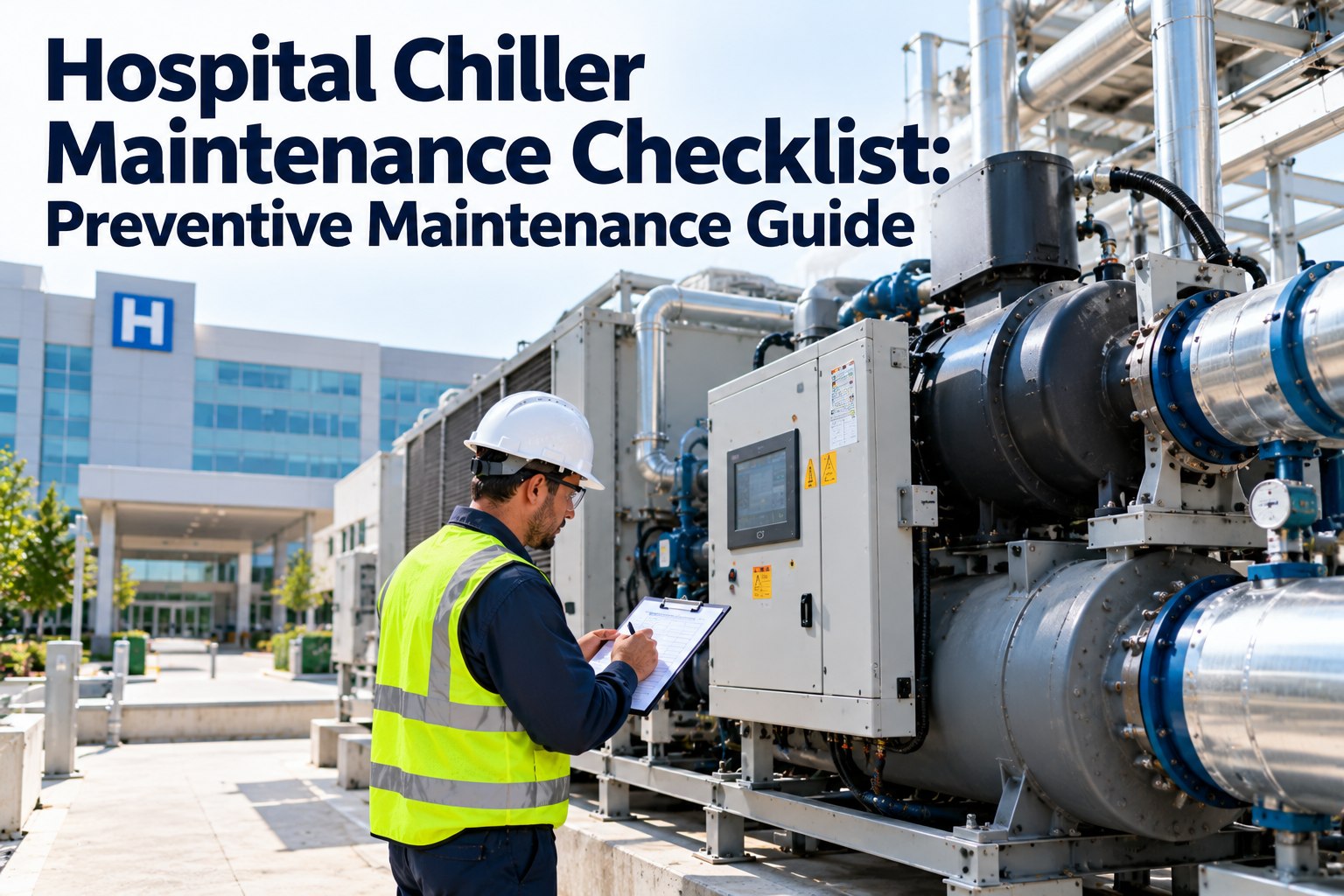
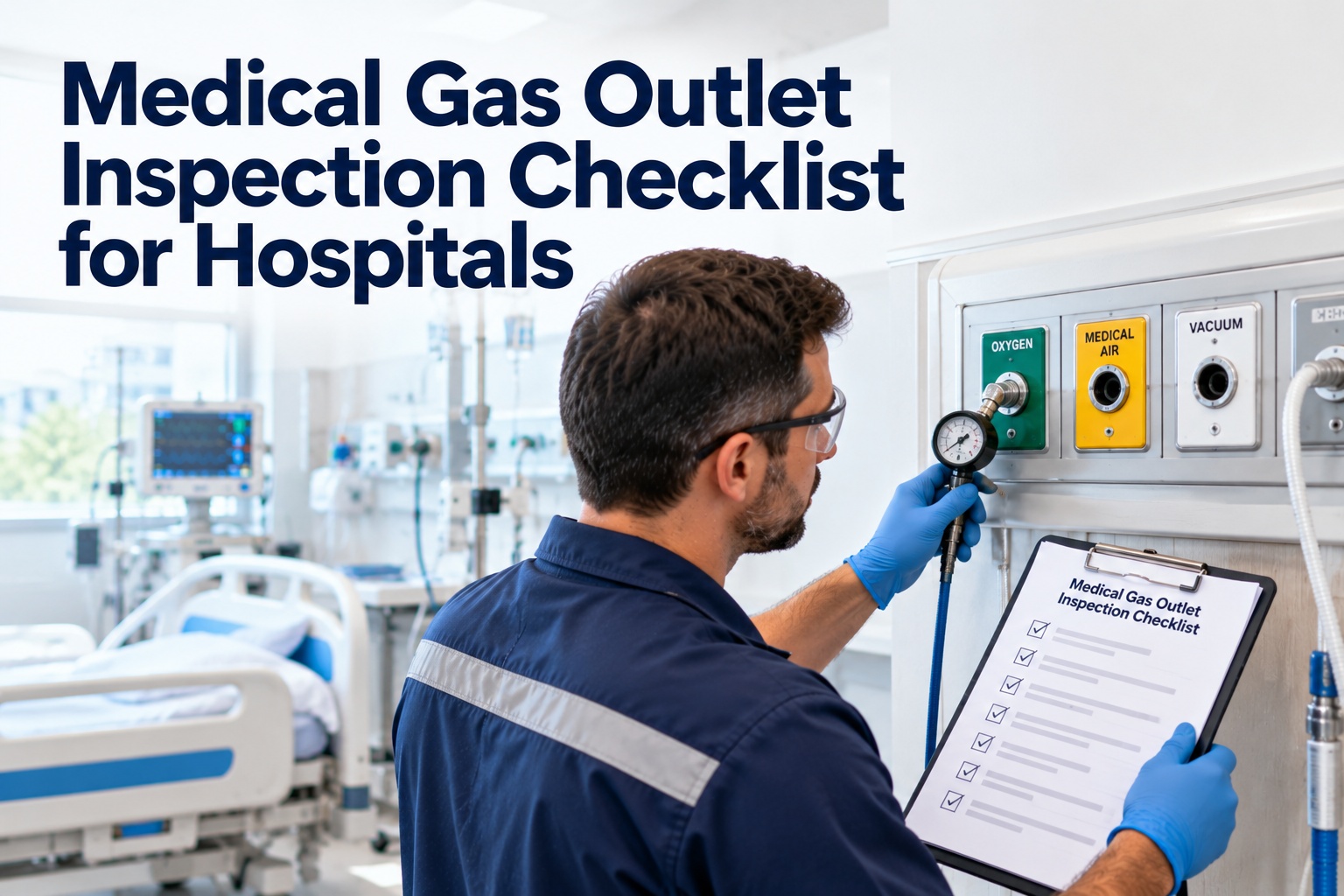
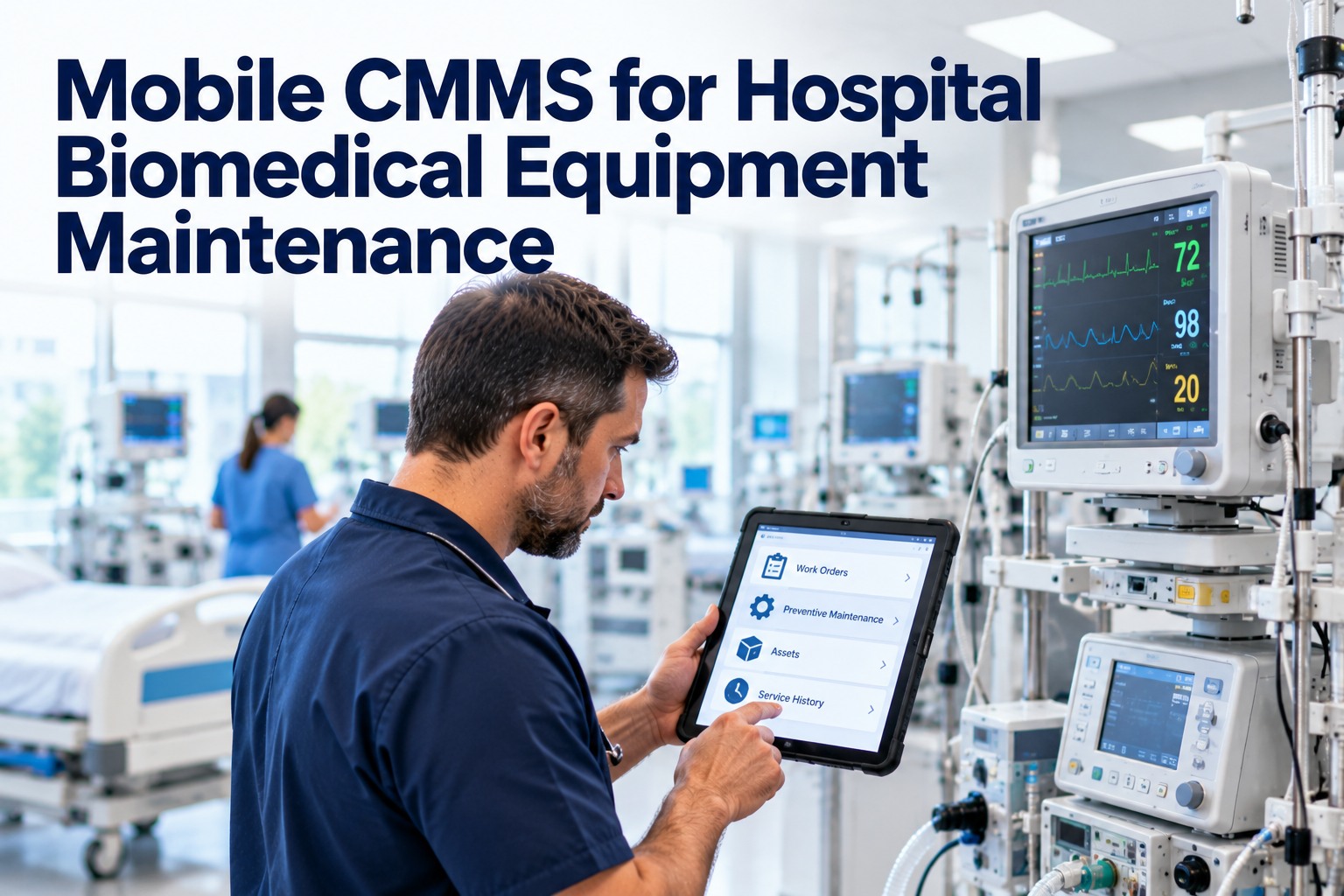
In most buildings a chiller going down means an uncomfortable afternoon. In a hospital it can mean an operating room that falls out of its required temperature and humidity band, an isolation room that loses pressure, or a pharmacy fridge drifting toward spoiled medication. The chiller is critical infrastructure, and it fails on a schedule you can predict — scale, refrigerant drift, a tired compressor. This checklist walks the preventive maintenance that keeps it reliable, grouped by system and tied to the clinical areas it protects, all trackable in OXMAINT AI, or book a demo of hospital HVAC maintenance.
HOSPITAL CHILLER · PREVENTIVE MAINTENANCE CHECKLIST · CRITICAL-AREA RELIABILITY
Hospital Chiller Maintenance Checklist: Preventive Maintenance Guide
Missed PMs and a logged fault that never became a work order are how critical cooling slips. OXMAINT AI, the AI-powered CMMS, runs the chiller workflow in one platform — check or fault to ranked issue to assigned work order, with every preventive and predictive task kept on time. A failed check on this checklist opens a tracked job on the spot.
Operating Rooms
Isolation Rooms
Pharmacy & Labs
Imaging & Data
Why a Hospital Chiller Is Different
A chiller in an office can fail without anyone getting hurt. In a hospital, the cooling it provides is a regulated clinical condition — critical areas have required temperature and humidity ranges, and losing them can cancel surgeries, compromise sterile fields and spoil temperature-sensitive stock. That is why the maintenance is non-negotiable and the record matters. Start free and put every chiller on a PM schedule in OXMAINT AI.
Operating & Procedure Rooms
Tight temperature and humidity bands and high air change rates — a chiller loss can halt the schedule.
Isolation & Infection Control
Pressure relationships depend on conditioned air; losing cooling can break containment.
Pharmacy & Laboratories
Temperature-controlled storage and testing — drift risks medication and sample integrity.
Imaging & Data Rooms
MRI, CT and server rooms shed heat constantly and fault fast without cooling.
Maintenance Frequency at a Glance
Chiller work runs on nested intervals — a quick daily look, deeper monthly and quarterly checks, and a full annual service, often timed around the cooling season. These are the standard cadences; your equipment manual and facility plan set the specifics.
Daily / Weekly
Log temperatures, pressures and amps; listen and look for leaks, noise and alarms.
Monthly
Inspect tubes and coils, check refrigerant and oil, verify controls and safeties.
Quarterly
Water treatment review, electrical connections, actuator and valve checks.
Annual
Full service — tube cleaning, eddy-current testing, oil and refrigerant analysis, overhaul items.
The Chiller PM Checklist, by System
The checklist is grouped by the chiller's own systems, so nothing is missed. Tick each item as you go — in OXMAINT AI these items run on a mobile PM that turns any failed check into a work order on the spot.
Critical-Area RuleRedundancy Is Part of the Maintenance
In a hospital, keeping a chiller running is not enough — you have to prove the backup will take over if it doesn't. A redundant chiller that has never been test-started is not redundancy. Treat the standby, the changeover and the emergency-power path as maintained assets with their own checks, not as a plan on paper.
1Exercise the standby — the backup chiller is test-run under load on a schedule, not left cold.
2Prove the changeover — automatic lead-lag and failure transfer are verified to work.
3Confirm emergency power — the chiller runs on the generator-fed supply when utility power drops.
4Keep the contingency current — the plan for a total loss is documented, staffed and rehearsed.
Why Hospital Chillers Fail Early
A chiller rarely dies without warning — it degrades through a few well-known paths that a disciplined PM program catches. These are the ones that shorten a chiller's life.
×Water Treatment Neglect
Scale and fouling on condenser tubes quietly erode efficiency and lead to failure.
×Ignored Refrigerant Drift
A slow leak or low charge runs the compressor hard until it fails.
×Skipped Oil Analysis
Compressor wear goes unseen without regular oil sampling and trending.
×Untested Redundancy
A backup that only exists on paper offers nothing when the lead chiller trips.
×PMs That Slip
A paper calendar with no trigger lets the annual service and tube cleaning drift.
×No Record for Audit
When an accreditation survey asks for PM history, it is scattered or missing.
In a Hospital, the Chiller Record Is a Safety Record.
Accreditation surveys and clinical risk both come back to the same question: can you prove the cooling that protects patients has been maintained? OXMAINT AI turns every chiller check into a dated, work-order-linked entry per unit, so the proof is ready before anyone asks.
1PM on mobile
→
2Failed check → work order
→
3Repair logged & closed
→
4Ready for survey
How OXMAINT AI Runs Hospital Chiller Maintenance
OXMAINT AI is the AI-powered CMMS that keeps every chiller on its PM schedule, turns a failed check into a work order, and keeps the whole history ready for an accreditation survey. Start free and bring your hospital chillers onto OXMAINT AI.
Chiller Asset Register
Every chiller, pump and tower logged with specs, manuals and full service history.
Nested PM Scheduling
Daily, monthly, quarterly and annual tasks triggered automatically, so none is missed.
Mobile Checklists
This checklist on a phone in the plant room, with readings and a check-to-work-order link.
Condition & Reading Trends
Temperatures, pressures and oil results trended per chiller, so drift surfaces early.
Work Order Management
Every repair assigned, prioritized by clinical impact, dated and closed on the record.
Audit-Ready Reporting
Complete PM and repair history per chiller, retrievable for accreditation and compliance.
EXPERT REVIEW
Written for healthcare facilities, plant operations and biomedical or HVAC maintenance teams responsible for hospital cooling. The checklist items, intervals and critical-area notes here are a general framework drawn from standard chiller and hospital HVAC maintenance practice — the exact tasks, frequencies and the temperature and humidity requirements for each clinical space come from the equipment manufacturer, your facility plan, and the governing codes and standards (such as ASHRAE Standard 170 and your accreditation requirements). Treat them as a starting point, not binding values. OXMAINT AI is a maintenance management platform that schedules, records and reports the work; it does not replace a licensed HVAC professional, a commissioning authority, or your facility's compliance program.
Frequently Asked Questions
Why is hospital chiller maintenance more critical than in other buildings?
Because the cooling a hospital chiller provides is a clinical requirement, not a comfort one. Operating rooms, isolation rooms, pharmacies and laboratories have required temperature and humidity ranges, and losing them can cancel surgeries, break infection-control containment or spoil temperature-sensitive medication. A chiller failure in a hospital is a patient-safety and compliance event, which is why the maintenance and its documentation are held to a higher standard.
Start free and schedule hospital chiller PM in OXMAINT AI.
How often should a hospital chiller be serviced?
On nested intervals: daily or weekly logging of temperatures, pressures and currents; monthly checks of refrigerant, oil, tubes and controls; quarterly water-treatment and electrical reviews; and a full annual service that includes tube cleaning, eddy-current testing and oil and refrigerant analysis, usually timed around the cooling season. The equipment manual and your facility plan set the exact schedule.
Book a demo and see nested PM scheduling in OXMAINT AI.
What does chiller maintenance have to do with ASHRAE Standard 170?
ASHRAE Standard 170 sets ventilation and environmental conditions — including temperature and humidity ranges — for healthcare spaces, and the chiller is what delivers the cooling those conditions depend on. If the chiller underperforms, a critical area can fall out of its required range. Maintaining the chiller reliably is therefore part of how a facility holds the conditions the standard requires, though the standard itself and its verification belong to your compliance team.
Book a demo of hospital HVAC tracking in OXMAINT AI.
Why is chiller redundancy treated as a maintenance item?
Because a backup chiller only protects the hospital if it actually starts and carries load when the lead unit fails. A standby that is never test-run, a changeover that has never been proven, or an emergency-power path that has never been exercised is redundancy in name only. Treating the standby, the automatic transfer and the generator-fed supply as maintained assets with their own checks is what makes the redundancy real.
Can a CMMS help a hospital pass an accreditation survey?
Yes — a CMMS keeps every chiller on its PM schedule, runs the field checklist with readings, turns a failed check into a tracked work order, and stores the whole dated history per unit. When a survey asks for proof that critical cooling has been maintained, the record is retrievable immediately instead of reconstructed from scattered logs. The compliance program and professional judgement remain the facility's; the CMMS makes the evidence complete and repeatable.
Start free and keep audit-ready chiller records in OXMAINT AI.
Keep the Cooling the Patients Depend On.
Run your hospital chillers on OXMAINT AI: every unit on a nested PM schedule, readings trended, redundancy tested, and every check and repair logged per chiller — so critical areas stay in range and the record is always survey-ready.