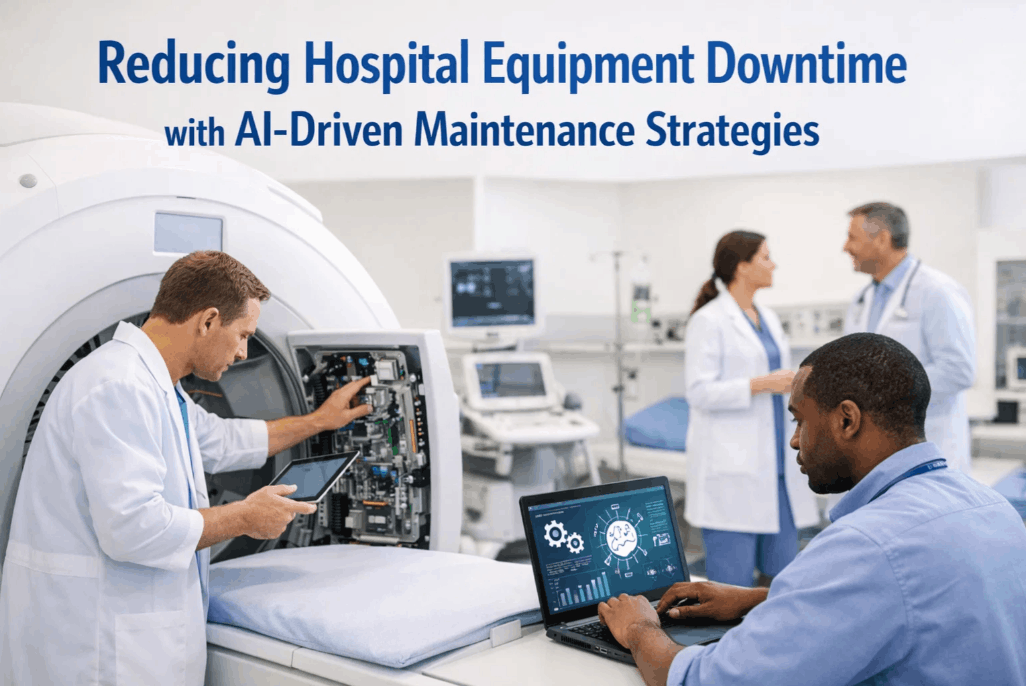
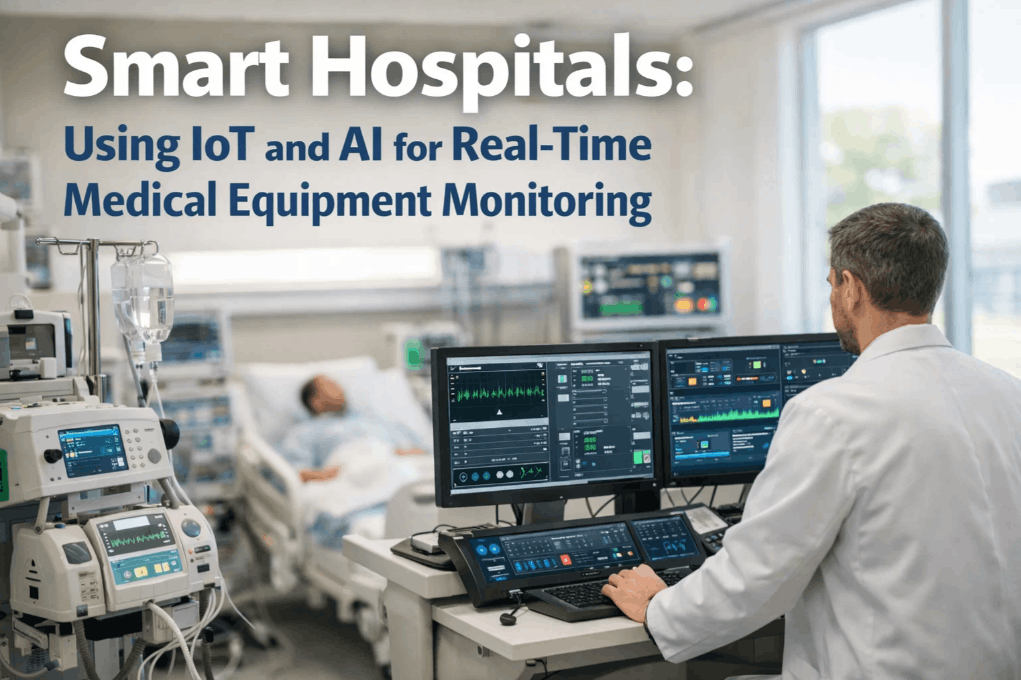
Every hour an MRI machine sits idle costs your hospital $50,000 in lost revenue and delayed patient care. Across the United States, hospitals lose a staggering $20-30 billion annually due to medical equipment downtime. When critical ICU equipment like ventilators or infusion pumps fail unexpectedly, the consequences extend far beyond financial losses—they directly impact patient outcomes and staff morale. Traditional reactive maintenance approaches are no longer sufficient in today's high-stakes healthcare environment. Predictive maintenance software is transforming how biomedical engineering teams manage MRI and ICU equipment, reducing unexpected failures by over 30% and shifting hospitals from costly emergency repairs to proactive, data-driven care strategies. Sign up today to discover how leading hospitals are protecting their revenue while ensuring uninterrupted patient care.
The Hidden Crisis of Medical Equipment Downtime
Unplanned downtime doesn't just hurt your budget—it disrupts patient care, creates scheduling chaos, and damages your hospital's reputation.
Lost per hour when MRI systems go down
Reduction in unexpected failures with AI-driven predictive maintenance
Average annual loss per hospital due to equipment downtime
Why MRI and ICU Equipment Failure Is a Critical Risk
Magnetic Resonance Imaging (MRI) machines represent one of the most significant capital investments for any healthcare facility, often costing between $2-5 million per unit. These sophisticated systems operate under demanding conditions, running 12-16 hours daily, and require extraordinary precision. Even minor calibration drift can compromise diagnostic accuracy and patient safety. When an MRI goes offline unexpectedly, the ripple effects are immediate: rescheduled procedures, frustrated patients, idle staff, and substantial revenue loss.
Similarly, ICU equipment—including ventilators, patient monitors, infusion pumps, and dialysis machines—operates in life-critical environments where failure is not an option. The Joint Commission and FDA mandate strict maintenance protocols for these devices, yet many hospitals still rely on outdated reactive maintenance models that only address problems after they occur. Book a demo to see how predictive analytics can safeguard your critical care equipment before failures happen.
The True Cost of Equipment Downtime
- Immediate Revenue Loss: Cancelled imaging sessions and delayed surgeries mean fewer billable services
- Overtime Expenses: Staff work longer hours to rebook patients and manage manual workarounds
- Patient Dissatisfaction: Frustrated patients often seek care elsewhere, damaging reputation and future revenue
- Regulatory Risks: Delays in care can create reporting liabilities and quality metric penalties
- Emergency Repair Premiums: Reactive maintenance costs 3-5 times more than preventive approaches
What Is Predictive Maintenance for Healthcare Equipment?
Predictive maintenance (PdM) represents a paradigm shift from traditional maintenance strategies. Unlike reactive maintenance that fixes equipment after failure, or preventive maintenance that follows rigid schedules regardless of actual equipment condition, predictive maintenance uses real-time data analytics, machine learning, and IoT sensors to forecast when equipment may fail—allowing repairs to be conducted proactively before disruption occurs.
For MRI and ICU equipment, this means continuous monitoring of critical parameters such as vibration patterns, temperature fluctuations, power system assessments, and fluid analysis. AI algorithms analyze vast amounts of operational data to identify subtle anomalies that human technicians might miss, predicting failures days or even weeks in advance. Sign up now to implement intelligent monitoring across your medical device fleet.
How Predictive Maintenance Works
IoT sensors collect real-time performance data from equipment
AI algorithms analyze patterns and detect anomalies
System predicts potential failures before they occur
Maintenance teams intervene during planned downtime
Key Benefits of Predictive Maintenance for MRI and ICU Equipment
Implementing predictive maintenance software delivers measurable improvements across operational, financial, and clinical dimensions. Hospitals leveraging AI-driven predictive maintenance report significant reductions in unexpected equipment failures while extending asset lifecycles by 20-30%.
Reduced Unplanned Downtime
Predictive maintenance programs typically reduce unplanned downtime by 60-75%, ensuring critical imaging and life-support equipment remains available when patients need it most.
Cost Savings
For a typical imaging suite valued at $2-5 million, effective predictive maintenance can save $200,000-500,000 annually in avoided downtime, extended equipment life, and reduced emergency service calls.
Enhanced Patient Safety
By preventing equipment failures in critical care settings, predictive maintenance directly protects patient safety and ensures continuous monitoring and therapeutic capabilities.
Regulatory Compliance
Automated documentation and audit trails ensure compliance with Joint Commission standards, FDA requirements, and CMS Conditions of Participation for equipment maintenance.
The global predictive maintenance market is experiencing explosive growth, projected to reach $88.8 billion by 2032 with a CAGR of 31.6%. Healthcare represents one of the fastest-growing sectors adopting this technology, driven by the critical need for equipment reliability and the high cost of failures. Book a demo to learn how Oxmaint can position your facility at the forefront of this transformation.
Ready to Eliminate Costly Equipment Downtime?
Join leading hospitals using Oxmaint to protect their MRI and ICU equipment with AI-powered predictive maintenance.
Implementing Predictive Maintenance: A Strategic Roadmap
Transitioning from reactive or preventive maintenance to predictive maintenance requires a structured approach. Healthcare facilities should follow a phased implementation strategy that ensures minimal disruption to current operations while building capabilities for long-term success.
Phase 1: Assessment and Planning (Months 1-3)
Begin with a comprehensive equipment inventory and risk assessment. Classify all MRI and ICU equipment based on criticality—Class A for life-support devices requiring immediate response, Class B for diagnostic equipment affecting patient care, and Class C for support devices. Evaluate current maintenance costs, failure histories, and compliance gaps. This baseline assessment informs your predictive maintenance strategy and ROI projections. Sign up to access our equipment assessment tools and criticality matrix templates.
Phase 2: Technology Deployment (Months 4-9)
Deploy IoT sensors on high-value critical equipment first, particularly MRI machines and ICU ventilators. Integrate predictive maintenance software with your existing CMMS to centralize maintenance activity, track device history, and automate work order generation. Train biomedical engineering staff on interpreting predictive analytics and responding to early warning alerts. Establish clear protocols for escalating alerts based on failure probability and equipment criticality.
Phase 3: Optimization and Scale (Months 10-18)
Analyze performance metrics to refine predictive algorithms and maintenance intervals. Expand sensor coverage to additional equipment classes based on proven ROI. Develop advanced capabilities such as automated spare parts inventory management and vendor performance tracking. Continuous improvement processes ensure your predictive maintenance program evolves with technology advancements and changing operational needs. Book a demo to see our optimization dashboard in action.
Critical Success Factors
- Executive Sponsorship: Secure leadership commitment for resource allocation and organizational change
- Data Quality: Ensure accurate equipment baselines and consistent sensor calibration
- Staff Training: Invest in comprehensive education for biomedical engineering teams
- Vendor Partnerships: Collaborate with OEMs for specialized equipment expertise
- Continuous Monitoring: Regularly review KPIs including MTBF, MTTR, and cost per maintenance hour
Why Choose Oxmaint for Healthcare Predictive Maintenance
Oxmaint delivers a comprehensive predictive maintenance platform specifically designed for healthcare environments. Our solution integrates seamlessly with existing hospital systems while providing the specialized capabilities biomedical engineering teams need to manage complex medical device fleets.
Our AI-powered analytics engine processes real-time data from MRI systems, ventilators, patient monitors, and other critical ICU equipment to deliver actionable insights. The platform automates preventive maintenance scheduling, tracks calibration and safety testing, manages recalls and safety alerts, and maintains complete audit trails for regulatory compliance. Mobile access ensures technicians can access work orders, procedures, and device histories at the point of service, improving documentation quality and response times. Sign up today to experience the Oxmaint difference.
Real-Time Monitoring
Continuous IoT sensor integration for immediate anomaly detection
AI-Powered Predictions
Machine learning algorithms that improve accuracy over time
Compliance Ready
Automated documentation for Joint Commission and FDA requirements
Mobile First
Technician-friendly mobile app for field maintenance operations
Frequently Asked Questions
How does predictive maintenance differ from preventive maintenance for MRI machines?
Preventive maintenance follows fixed schedules based on time or usage intervals, regardless of actual equipment condition. Predictive maintenance uses real-time sensor data and AI analytics to monitor actual equipment health, performing maintenance only when specific indicators suggest impending failure. This approach reduces unnecessary maintenance while preventing unexpected breakdowns, optimizing both costs and equipment availability.
What types of sensors are used for monitoring ICU equipment?
ICU equipment monitoring typically employs vibration sensors for mechanical components, temperature sensors for overheating detection, power quality monitors for electrical issues, and fluid analysis sensors for devices like dialysis machines. Oxmaint integrates with existing equipment sensors where available and can deploy additional IoT devices for comprehensive coverage of critical assets.
How quickly can hospitals see ROI from predictive maintenance implementation?
Most hospitals begin seeing measurable ROI within 6-12 months of implementation. Immediate benefits include reduced emergency repair costs and improved technician productivity. Long-term savings accumulate through extended equipment lifespan, reduced downtime, and optimized spare parts inventory. Given that a single prevented MRI failure can save $50,000 in lost revenue, the financial case is compelling for high-value critical equipment.
Does predictive maintenance software integrate with existing hospital CMMS platforms?
Yes, Oxmaint is designed for seamless integration with existing CMMS platforms including ServiceNow, Nuvolo, Accruent TMF, and IBM Maximo. Our API-first architecture ensures data flows bidirectionally between systems, maintaining single sources of truth for asset records while adding predictive capabilities to your current maintenance infrastructure. Book a demo to discuss your specific integration requirements.
What regulatory standards does predictive maintenance software help hospitals meet?
Predictive maintenance software supports compliance with Joint Commission Environment of Care (EC) standards, FDA Quality System Regulation, CMS Conditions of Participation, NFPA 99 for healthcare facilities electrical safety, and OSHA workplace safety regulations. Automated documentation, audit trails, and recall management features ensure your maintenance program meets or exceeds regulatory requirements.
Can predictive maintenance work for older MRI and ICU equipment without modern sensors?
Absolutely. Oxmaint can retrofit older equipment with wireless IoT sensors to capture essential performance data. Additionally, our platform analyzes work order history, failure patterns, and usage data to generate predictive insights even for legacy devices. Many hospitals successfully implement predictive maintenance across mixed fleets of new and aging equipment, prioritizing high-risk assets for sensor deployment.
Transform Your Healthcare Maintenance Strategy Today
Stop losing revenue to unexpected equipment failures. Start protecting your patients and your bottom line with Oxmaint predictive maintenance.
Join hundreds of healthcare facilities already using Oxmaint to ensure equipment reliability