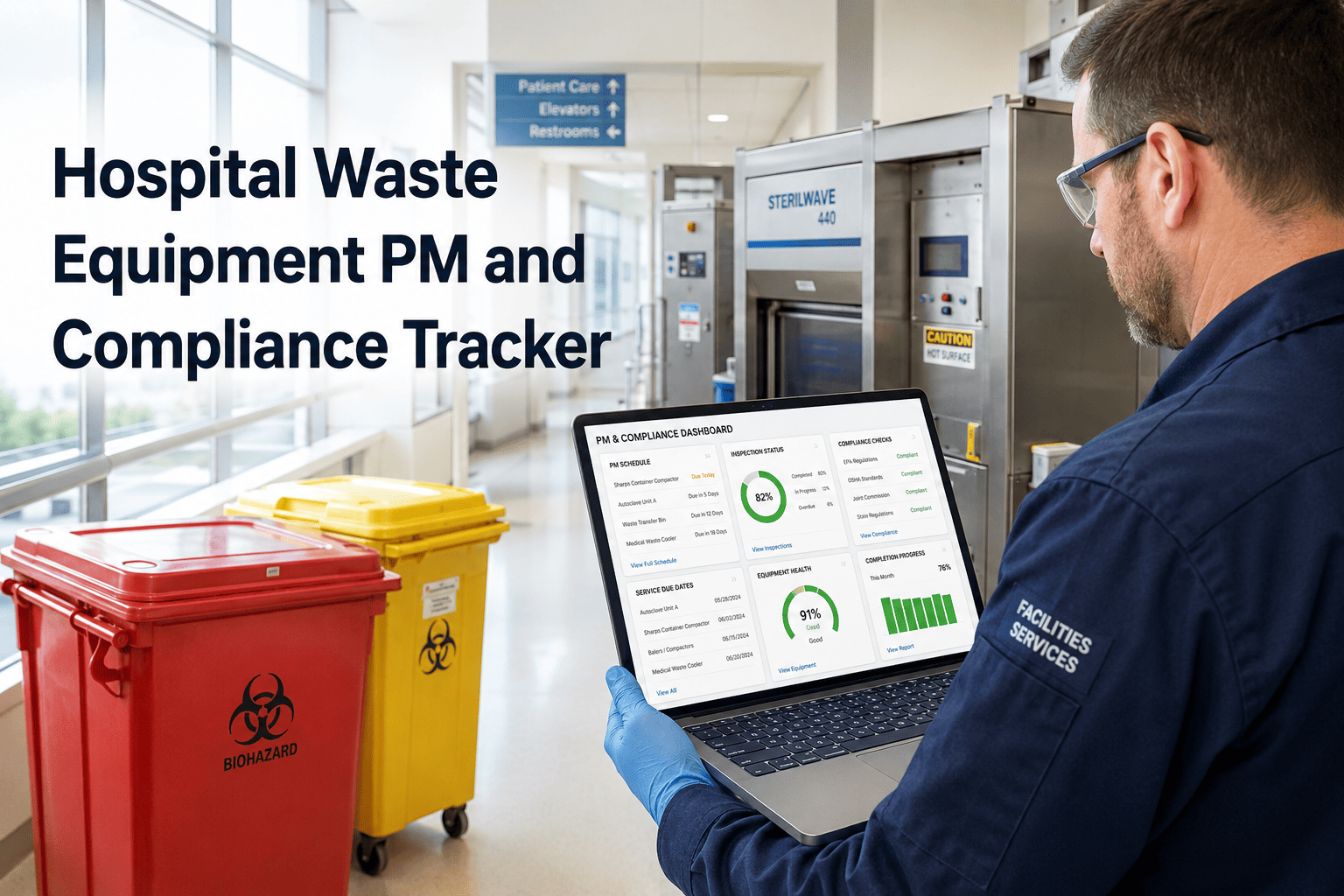
A single sterilization documentation gap — one missing biological indicator result, one unrecorded cycle parameter, one unsigned load release — costs a US hospital an average of $92,000 per associated infection event, plus Joint Commission survey jeopardy that no retroactive fix resolves. In 2024, 61 percent of Joint Commission infection prevention findings cited incomplete sterilization documentation. The autoclaves ran. The instruments were processed. The failure was in the retrievable record. That gap is exactly what Oxmaint closes. Book a demo to see how Oxmaint digitizes autoclave PM schedules, BI tracking, and sterilization compliance across your sterile processing operation.
Sterilization compliance requires documented control of four areas: autoclave PM per manufacturer IFU and AAMI ST79, biological indicator testing with incubation records, cycle parameter verification per load, and load release documentation with instrument traceability. Oxmaint digitizes every PM task, BI result, cycle record, and load release — connecting sterile processing execution to auditable documentation automatically.
Four Compliance Areas Where Documentation Failures Create Patient Risk
Door gasket inspection, chamber drain cleaning, safety valve testing, and pressure transducer calibration — all at manufacturer-specified intervals. A missed PM invalidates every load processed after the missed service date. Oxmaint schedules every PM task per autoclave model IFU and flags overdue items before they become survey findings.
Every implantable load requires a BI test with documented incubation results before release. Routine BI testing at minimum daily must record incubation start, read time, result, and technician identity. Paper BI logs are the most common documentation gap in Joint Commission sterile processing surveys. Oxmaint captures the entire BI workflow digitally — tied to the specific load and autoclave.
Every cycle must produce a documented record of temperature, pressure, and exposure time — verified against validated parameters. Bowie-Dick tests must be logged daily before the first load. Oxmaint captures parameters digitally per load, links each record to the autoclave asset, and flags any deviation for immediate review.
Load release requires verified chemical indicators, confirmed cycle parameters, and negative BI results for implantable loads — before instruments reach the OR. IUSS events must include clinical justification and patient linkage. Oxmaint creates a retrievable chain from patient procedure back to the specific autoclave cycle.
Every Cycle. Every BI. Every Load Release. Documented at the Sterilizer — Not After.
Oxmaint captures sterilization cycle parameters, BI results, and load release authorizations on mobile — completing documentation at the point of processing, not reconstructed before the survey. Start your free trial to see the sterile processing workflow for your autoclave fleet.
Implementation Roadmap
Every autoclave, tabletop sterilizer, and low-temperature unit registered with manufacturer IFU-specified PM intervals. PM task templates built per model — door gasket cycles, chamber drain schedules, safety valve intervals, annual calibration.
BI testing workflows per load type configured — routine daily, implantable hold-for-result, and positive BI quarantine protocols. Cycle parameter capture activated with validated ranges. Load release sign-off and instrument traceability enabled. Book a demo to see BI tracking and cycle capture for your sterilizer fleet.
Sterilization compliance dashboard activated — PM currency, BI compliance rates, cycle deviation trends, IUSS frequency tracking, and overdue corrective actions. Survey-ready packages exportable for Joint Commission, CMS, and state surveys in under 2 hours.
Oxmaint vs Competing Platforms — Sterilization Compliance
| Capability | Oxmaint | MaintainX | UpKeep | Fiix | Limble | IBM Maximo |
|---|---|---|---|---|---|---|
| Autoclave PM per manufacturer IFU | Yes | Generic | Generic | Generic | Generic | Yes |
| BI tracking with incubation workflow | Yes | No | No | No | No | Custom |
| Cycle parameter capture per load | Yes | No | No | No | No | Custom |
| Instrument traceability to patient | Yes | No | No | No | No | Custom |
| Positive BI quarantine and recall | Yes | No | No | No | No | Custom |
| Joint Commission survey-ready export | Yes | Partial | Partial | Partial | Partial | Yes |
| Deploys in weeks, no consultant | Yes | Yes | Yes | Varies | Yes | No |
Client Results — First Year After Deployment
Before and After Oxmaint
| Documentation Area | Before Oxmaint | After Oxmaint |
|---|---|---|
| BI result retrieval for surveyor | 20 to 45 minutes searching paper logs | Under 2 minutes — search by date, load, or sterilizer |
| Autoclave PM compliance | Overdue PMs discovered at survey | Automated alerts 7 days and 1 day before due date |
| Instrument traceability | No link between sterilizer cycle and patient | Full chain — patient to autoclave cycle in under 5 minutes |
| Cycle parameter records | Paper printouts — faded, lost, or misfiled | Digital record per cycle with permanent retention |
| Survey preparation | 2 to 4 weeks assembling paper records | Under 2 hours — automated export from Oxmaint |
| Positive BI recall | Manual phone calls — incomplete recall documentation | Automated quarantine with affected load identification |
From 78% to 100% BI Compliance — in 60 Days
Close the sterilization documentation gap before the next survey — not after. Book a demo to see your current compliance gap identified in the first deployment session.
Frequently Asked Questions
Close the Sterilization Documentation Gap Before the Next Survey
Digital autoclave PM tracking, BI documentation, cycle parameter capture, and instrument traceability — all live in Oxmaint within 4 to 6 weeks, no IT project required. Book a demo with your sterile processing manager and see the full compliance workflow configured for your sterilizer fleet.