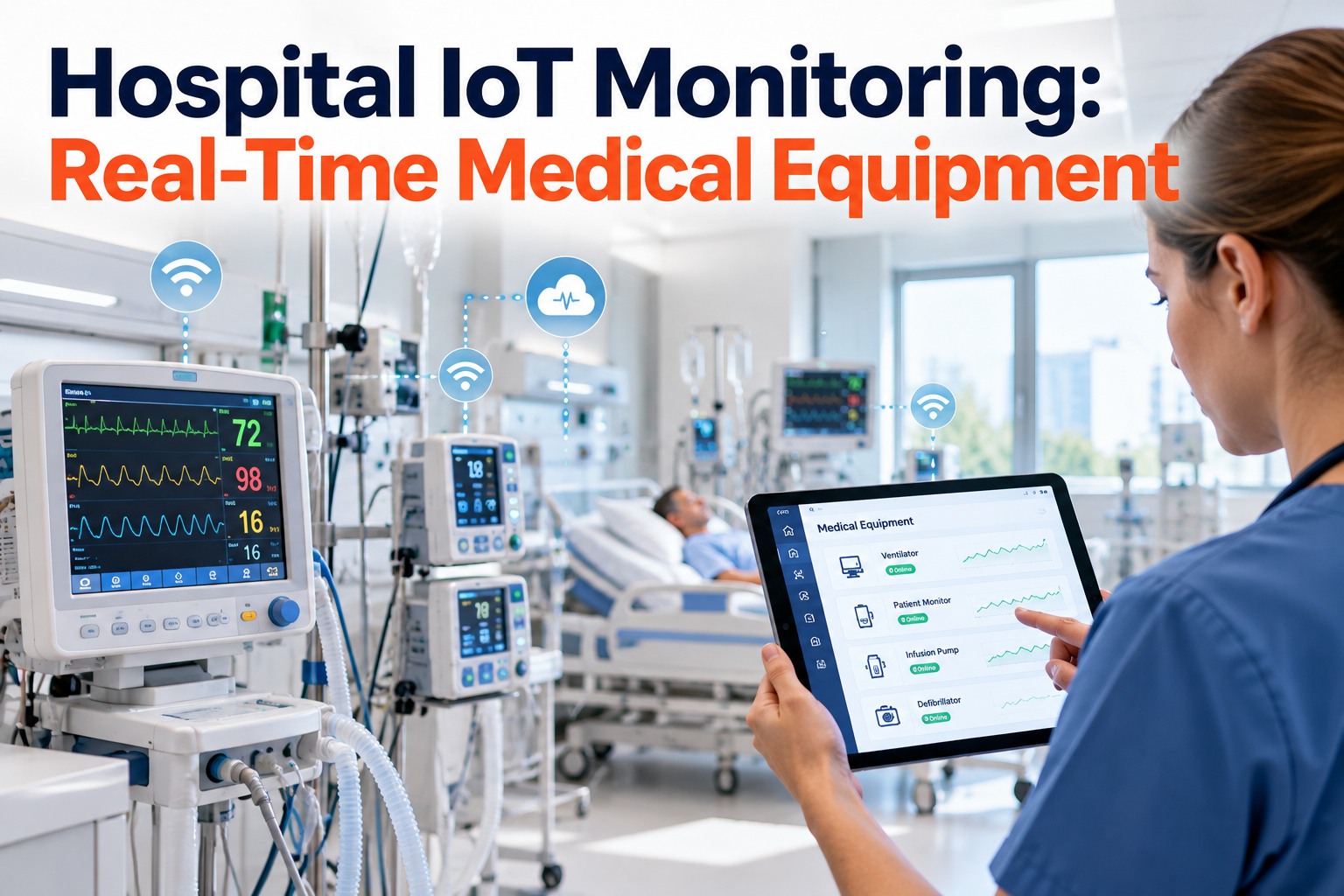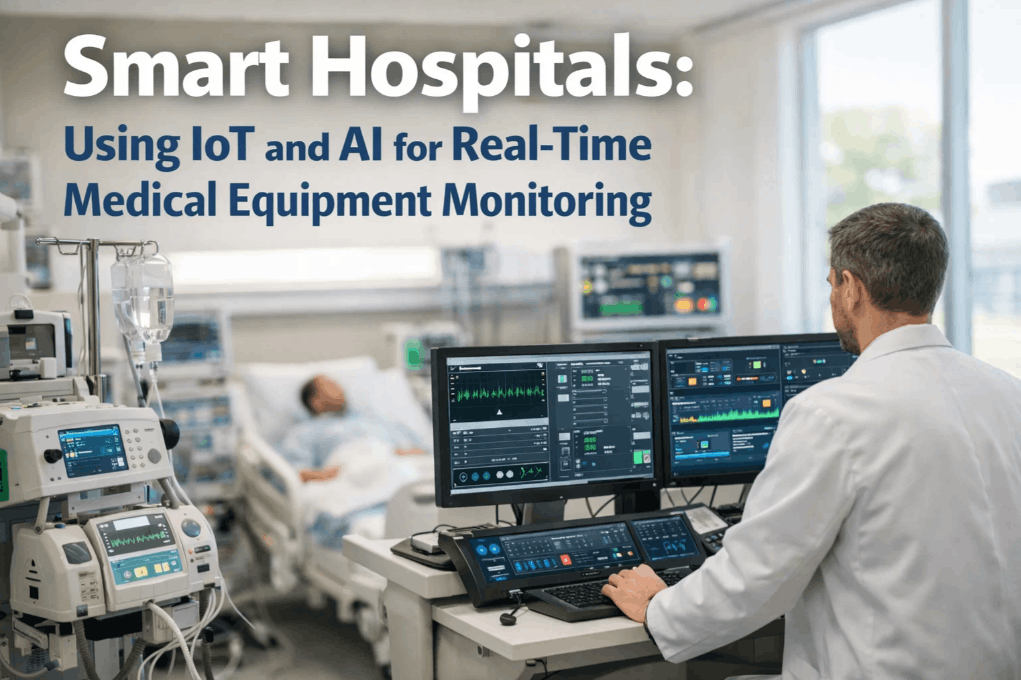
When a generator, medical gas pump or blood-bank freezer starts to drift, minutes matter. Yet many hospitals still learn about it from a rounding sheet, a nurse's call or an alarm nobody owns. Edge monitoring processes sensor signals close to the equipment, so a developing problem is spotted on-site and turned into action quickly. This guide shows which equipment to monitor first, how edge differs from cloud, and how an alert becomes a work order. OxMaint AI connects that whole path in one maintenance platform.
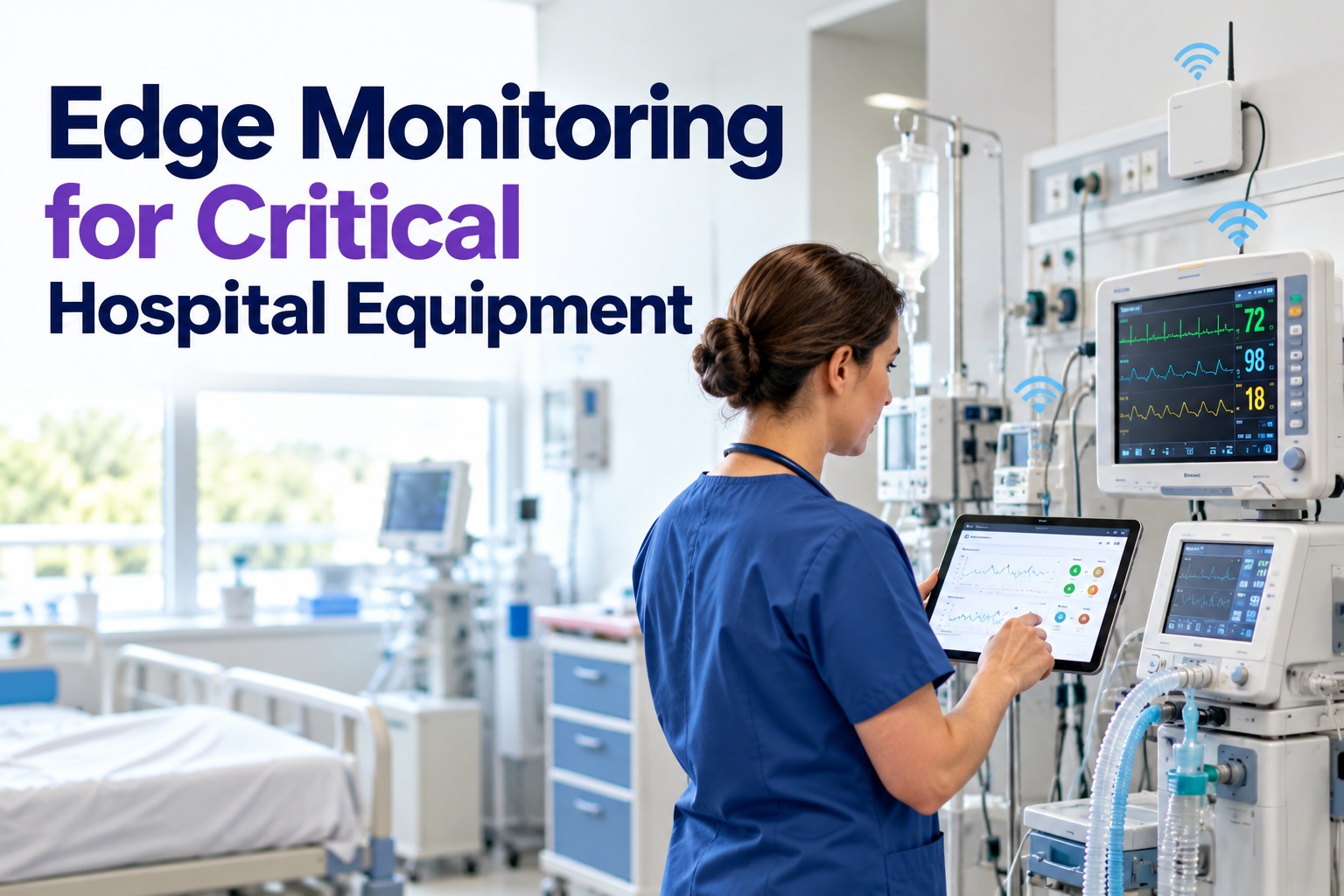
Edge Monitoring for Critical Hospital Equipment
Warnings that sit in one system while the repair lives in another are warnings that get missed.
OxMaint AI CMMS connects sensor and camera signals to condition alerts, work orders and maintenance schedules in one platform, with edge AI that can run on your own site.
The result: real-time asset visibility for the equipment your hospital cannot afford to lose.
Which Equipment Deserves Edge Monitoring First?
You do not monitor everything at once. Rank by what happens to patients if the asset stops. Start free and tier your assets in minutes.
Watch: runtime, temperature, pressure, vibration, load.
Alert within momentsWatch: temperature range, cycle data, cooling health.
Alert the same shiftWatch: runtime, vibration, inspection results.
Plan into the PM scheduleEdge vs Cloud: Where Should Analysis Happen?
It is not either/or. Time-sensitive checks belong close to the equipment; long-term learning belongs in the platform. Book a demo to see both in OxMaint AI.
At the Edge
- Fast local detection, with no round trip to a distant server
- Sensitive data can stay on site
- Keeps working when the connection is weak
- Best for: alarms, camera and thermal checks
In the Platform
- Long-term trends across every building
- Work orders, parts and history linked
- Predictive models learn from every repair
- Best for: planning, reporting, PM tuning
An Alert Nobody Acts On Is Just Noise
Monitoring only helps when the alert reaches the right technician with the right asset history. OxMaint AI turns abnormal readings into assigned work orders, so detection leads to a fix.
The Alert Ladder: From Signal to Fix
Every alert should climb the same five rungs, with no gaps where it can stall. Start free and build your ladder.
What OxMaint AI Connects
Real-time readings from machine and sensor feeds into the asset record.
Detects leaks, corrosion, cracks and abnormal heat, then can raise a work order.
On-premise inference so analysis runs locally and data stays on your site.
Auto-assigned jobs, labor and parts logging, and dynamic PM scheduling.
Scan a device to see its history, open jobs and health score.
Plain-language handover summaries so no alert is lost at crew change.
Scope note: OxMaint AI monitors the condition of equipment to keep it running. It is a maintenance platform, not a patient-monitoring or clinical system. See OxMaint AI for healthcare.
Before You Deploy: 5 Questions to Answer
Involve IT, clinical engineering and facilities early. Connected equipment needs agreed security and network rules before sensors go live. Book a demo to map your first ten assets.
Frequently Asked Questions
See Problems Early. Fix Them Fast.
Start with your most critical assets, connect their signals, and let every alert turn into a tracked work order your team can act on.