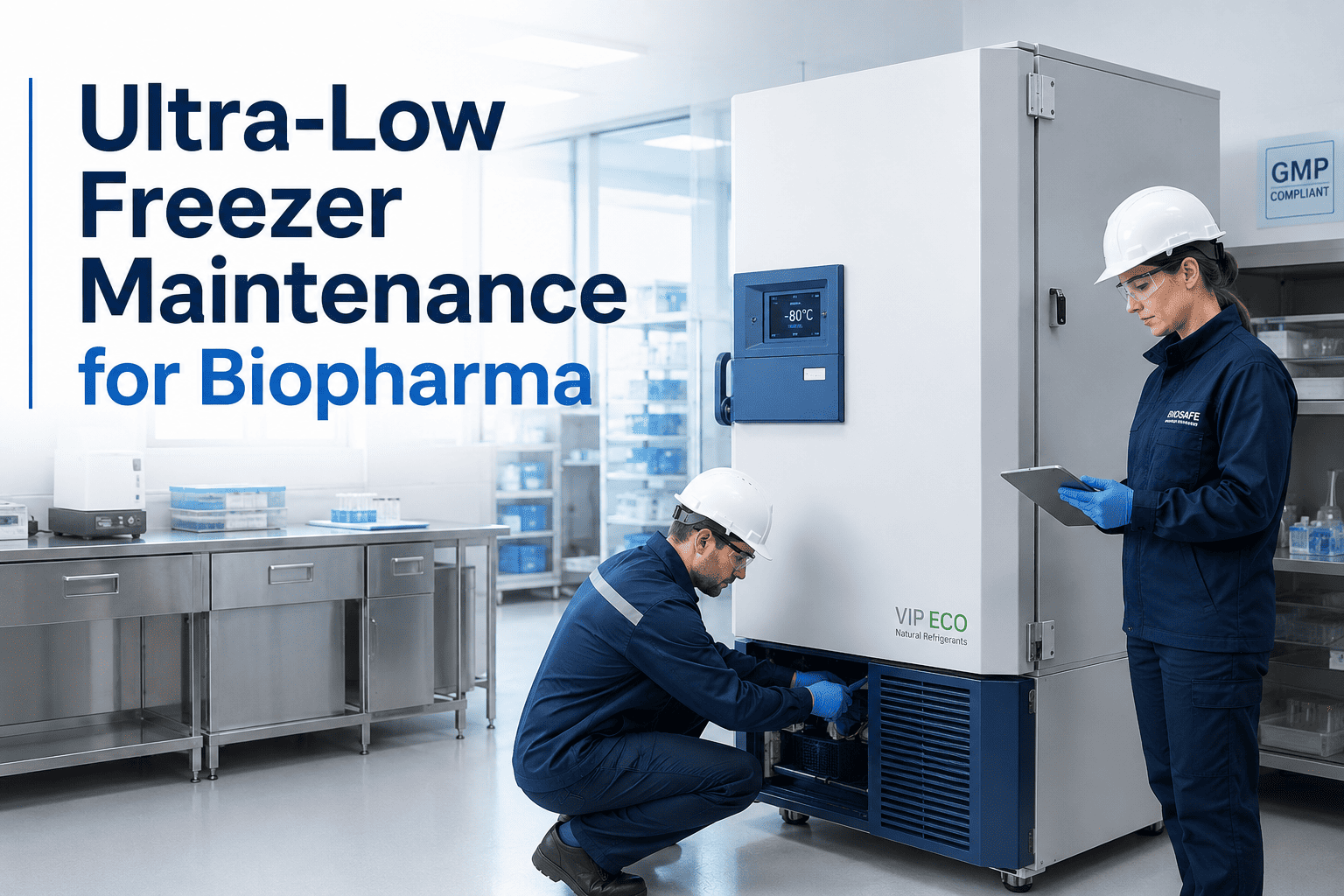
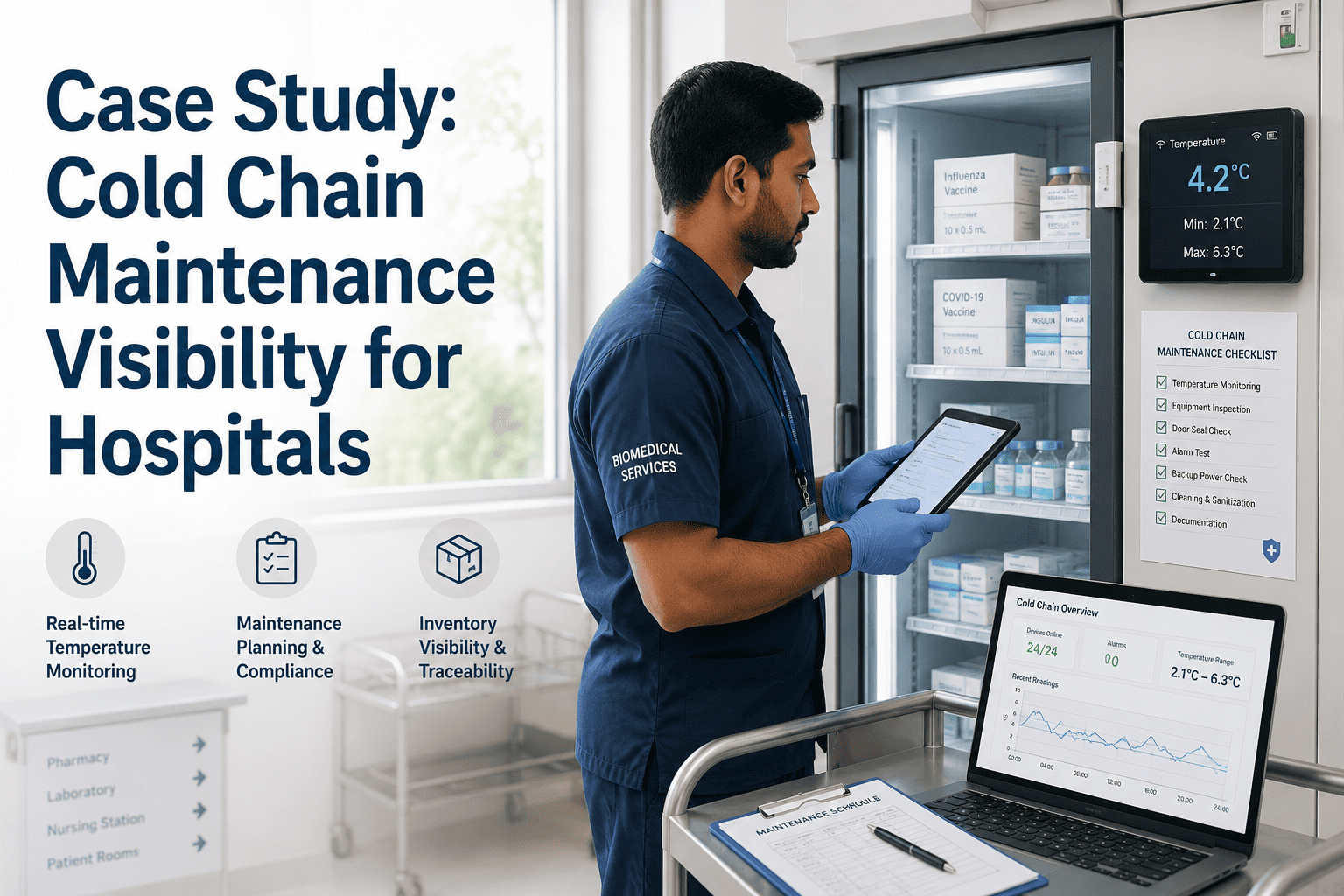
Ultra-low temperature freezers operating at -80°C are among the most critical — and most failure-prone — pieces of equipment in any biopharma facility. A single undetected temperature excursion can destroy irreplaceable biological samples, clinical trial material, or patient-specific cell therapy products that took months to produce. Yet many facilities still rely on manual temperature log sheets, informal alarm response procedures, and paper-based PM records that leave dangerous gaps. This guide covers ULT freezer PM tasks, alarm response protocols, temperature mapping requirements, and backup equipment workflows — everything your team needs to protect biologics and build an audit-ready cold storage program. For digital ULT freezer PM and alarm response tracking, start a free OxMaint trial or book a 30-minute cold storage maintenance walkthrough.
Guide · Biopharma · Ultra-Low Freezer Maintenance
Ultra-Low Freezer Maintenance for Biopharma
Protect biologics and samples with structured ULT freezer PM, validated alarm response, temperature mapping tasks, and tested backup equipment workflows that satisfy FDA cold chain requirements.
-80°C
Validated operating target
Alert Limit
-70°C
Action Limit
-65°C
Response Time
<30 min
PM Schedule: What Gets Missed Most Often
Most ULT freezer failures are preventable. Condenser coil buildup, low refrigerant levels, and failed backup battery are the top three preventable failure causes — and all three are caught with a structured PM schedule.
Daily
Read and log freezer temperature from display and remote monitoring system — both must agree
Verify alarm system is active — test alarm silencing and re-arm immediately
Confirm door gasket seals fully on closing — no visible gaps or ice buildup at door edge
Check ambient room temperature around unit — must be within validated operating envelope (typically 15–25°C)
Monthly
Clean condenser coils with dry compressed air or vacuum — buildup is the leading cause of compressor failure
Inspect and replace door gaskets showing cracks, compression loss, or ice-based deformation
Test battery backup unit — run a discharge/recharge cycle, confirm hold time meets site SOP requirement
Verify remote monitoring connectivity — simulate alarm and confirm receipt at all notification contacts
Annual
Full temperature mapping per validated protocol — minimum 9 sensor locations, 72-hour continuous recording
Refrigerant level check and compressor performance assessment by qualified refrigeration technician
Calibration of all temperature sensors and alarm set points against NIST-traceable reference
Full requalification (OQ/PQ) generating documentation package for GMP compliance file
Alarm Response Protocol
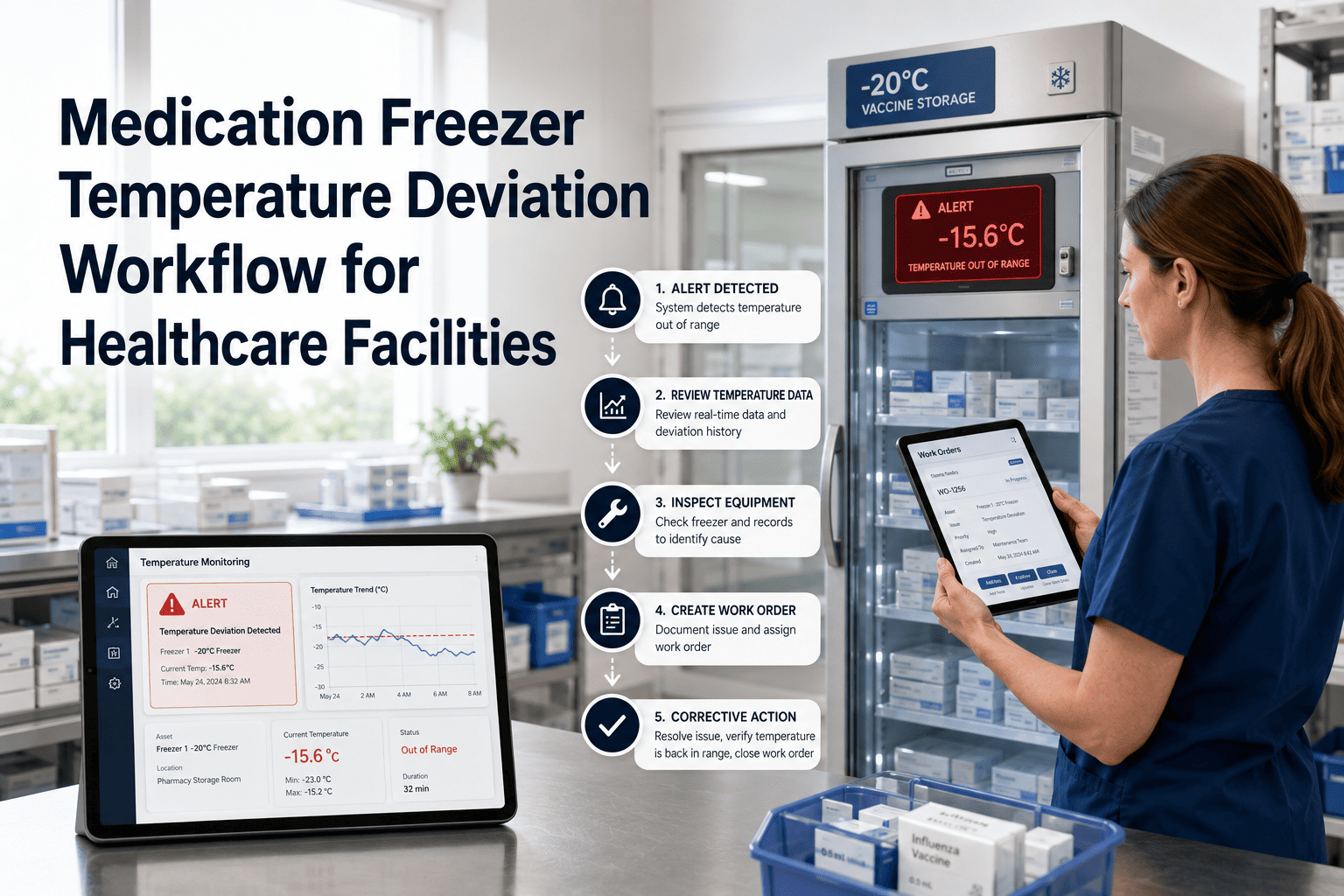
When a ULT freezer alarm triggers, every minute matters. The difference between a recoverable event and a batch loss is often the speed and completeness of the response — and whether the response is documented in real time.
0 – 5 min
Immediate Verification
Confirm alarm is genuine (not a sensor error). Read temperature from both display and independent logger. Check room temperature and verify unit door is closed and sealed. Do not open freezer door.
5 – 15 min
Root Cause Assessment
Check compressor operation (listen for abnormal sound), verify condenser fan is running, check for power supply issues. If temperature is above action limit, initiate material transfer protocol immediately.
15 – 30 min
Material Protection Decision
If temperature exceeds action limit or root cause cannot be resolved within response window, transfer material to qualified backup unit. Document transfer with timestamps, operator ID, and destination unit ID.
Within 24 hrs
Deviation Record & Impact Assessment
Open a deviation record documenting the full event timeline, temperature range reached, duration, materials exposed, and immediate actions taken. QA must assess impact and document disposition decision for all affected material before its next use.
Never Miss a ULT Alarm Response Step
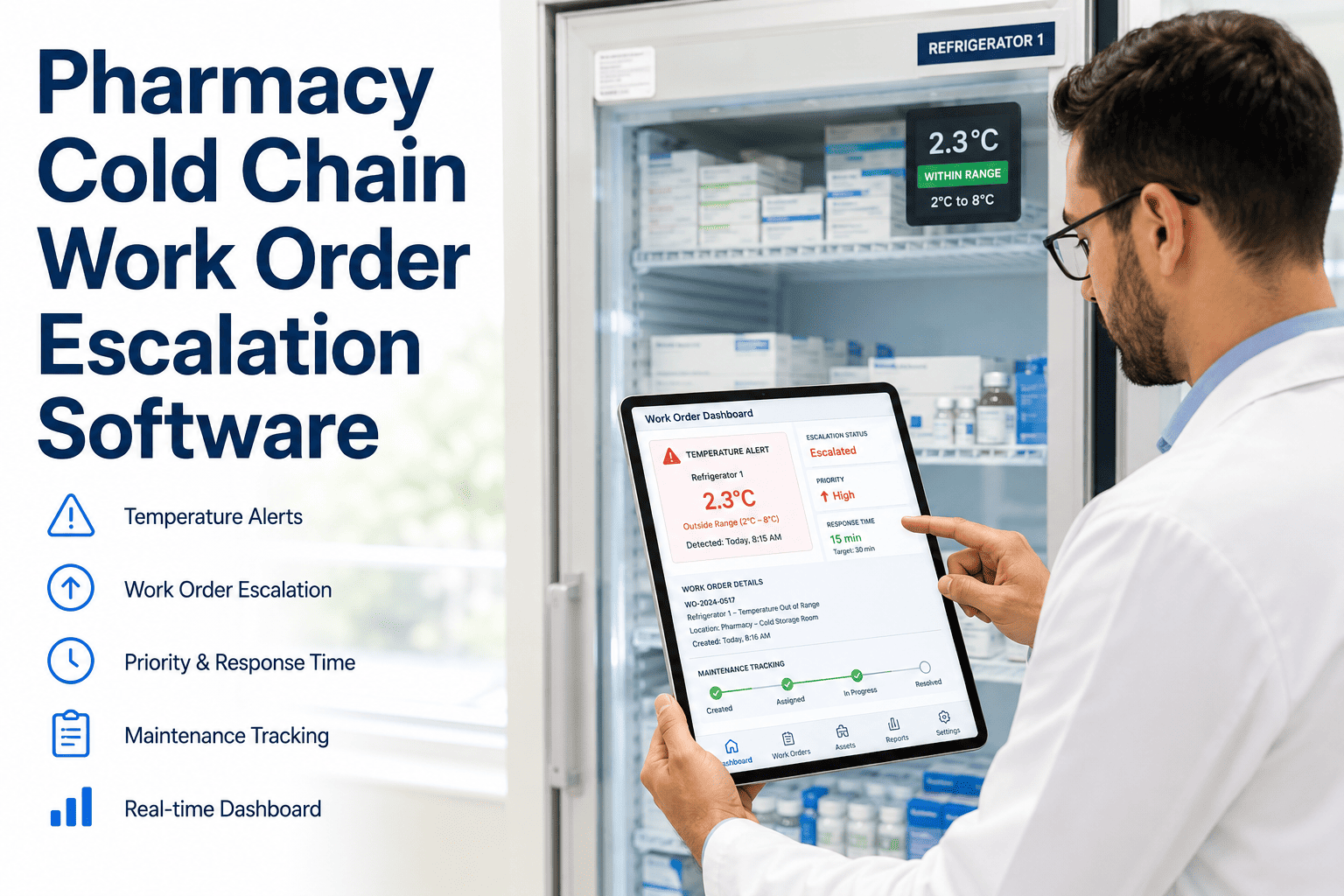
OxMaint creates a mobile work order the moment a ULT alarm triggers — guiding the technician through every response step with timestamped completion, deviation record generation, and QA notification built in.
Temperature Mapping: What Qualifies a ULT Freezer
Temperature mapping is not optional for GMP cold storage — it is the validation evidence that proves a freezer maintains its claimed temperature uniformly across all storage zones, including the worst-case location.
| Mapping Parameter |
Requirement |
Documentation Needed |
| Sensor Locations |
Minimum 9 locations: all 8 corners + geometric center; add shelves if present |
Sensor placement diagram with coordinates recorded in validation protocol |
| Recording Duration |
72 hours minimum at steady-state operation; include a door-open simulation event |
Continuous data file from calibrated data loggers, NIST-traceable |
| Acceptance Criteria |
All locations remain within ±5°C of set point throughout recording period |
Temperature range, mean kinetic temperature (MKT), and hot/cold spot identification |
| Sensor Calibration |
All data loggers calibrated within 12 months of use; calibration certificates on file |
Calibration certificates listing serial number, calibration date, and expiry |
| Requalification Trigger |
Annual + any relocation, major repair, or power failure event >2 hours |
New mapping report filed in equipment qualification record in CMMS |
Expert Review
PV
Priya Venkataraman
Cold Chain Validation Specialist · 19 Years · Biopharma, Cell Therapy & Clinical Sample Storage
"The two most costly ULT freezer failures I have seen in 19 years both had the same root cause: no one cleaned the condenser coils. One facility lost six months of CAR-T precursor material. The other lost irreplaceable clinical trial samples from 120 patients. Both freezers had given warning signs for weeks — rising compressor temperature, slightly elevated interior readings, longer recovery time after door openings. A monthly condenser cleaning task and a trend review of daily temperature readings would have caught both before failure. The technology to prevent these losses costs under $200 a year in maintenance time. The cost of the losses was in the millions. There is no justification for running a ULT freezer on reactive maintenance."
★★★★★
Frequently Asked Questions
How often should ULT freezer condenser coils be cleaned in a biopharma facility?
Condenser coils on ultra-low freezers should be cleaned at a minimum of once per month in a biopharma facility environment. If the room has elevated dust levels or the freezer runs in a busy lab with frequent traffic, increase to every two weeks. Condenser coil buildup reduces heat exchange efficiency, forces the compressor to work harder, raises operating temperature over time, and is the single leading cause of compressor failure in ULT equipment. Cleaning takes under ten minutes with dry compressed air or a vacuum brush attachment — it does not require a refrigeration technician. This one task, tracked and completed consistently in a CMMS, prevents the majority of ULT freezer failures.
Start a free trial to set up your first ULT PM schedule.
What are the GMP requirements for ULT freezer temperature monitoring in biopharma?
Under FDA 21 CFR Part 211 and ICH Q1A stability guidelines, temperature-sensitive biological materials must be stored under defined, monitored, and documented conditions. For ULT freezers, this means: a validated temperature range with documented alert and action limits, a continuous electronic monitoring system with alarm capability, alarm response procedures with defined response time, all temperature records retained in a compliant system for the material's retention period, and annual temperature mapping with NIST-traceable equipment. If the freezer stores investigational products under 21 CFR Part 312, temperature records become part of the IND submission and any deviation must be reported.
Book a demo to see how OxMaint manages temperature monitoring integration.
What is the correct process for transferring biological material from a failing ULT freezer?
When a ULT freezer reaches its action limit or cannot be stabilized within the alarm response window, the material transfer protocol must be activated immediately. The correct sequence is: identify the pre-qualified backup unit and confirm it is operating within range; use pre-cooled dry ice containers for transport if the backup unit is in a different location; transfer material in the smallest practical quantities to minimize exposure time; record each item transferred with its unique identifier, current temperature of origin unit, transfer timestamp, and destination unit ID. After transfer, open a deviation record and initiate a QA impact assessment to determine if any material was exposed to temperatures outside its validated stability range. All of this documentation must be completed before the material is used in manufacturing. OxMaint's mobile work orders support this workflow with timestamped task completion and photo capture.
How does OxMaint support ULT freezer maintenance and alarm response tracking?
OxMaint manages ULT freezers as individual assets in a biopharma facility hierarchy, each with its own PM schedule, qualification record, temperature mapping history, and linked alarm response work orders. Daily temperature log tasks are delivered to technicians as mobile work orders with numeric entry fields — no paper, no after-the-fact transcription. When a remote monitoring integration triggers an alarm, OxMaint creates an alarm response work order and escalates to on-call personnel. The technician completes each response step on mobile with timestamps, and the completed record automatically links to the affected freezer's asset history and generates a draft deviation record for QA review. The full platform deploys in days.
Start a free trial and have your first ULT freezer PM configured today.
Protect Your Biologics with a PM System That Never Forgets
OxMaint gives biopharma maintenance teams structured ULT freezer PM schedules, guided alarm response workflows, temperature mapping record management, and audit-ready cold storage documentation — deployed in days.