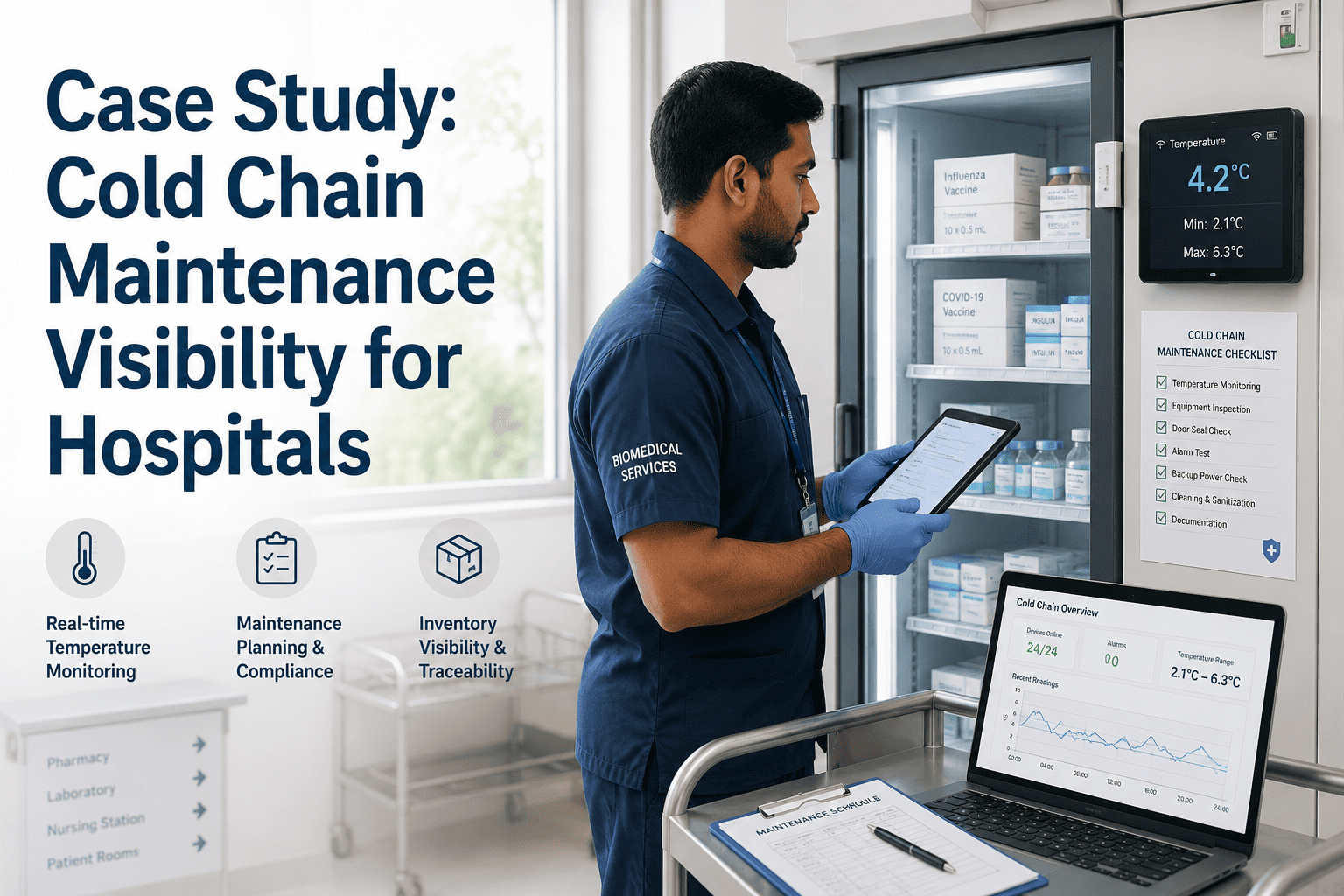
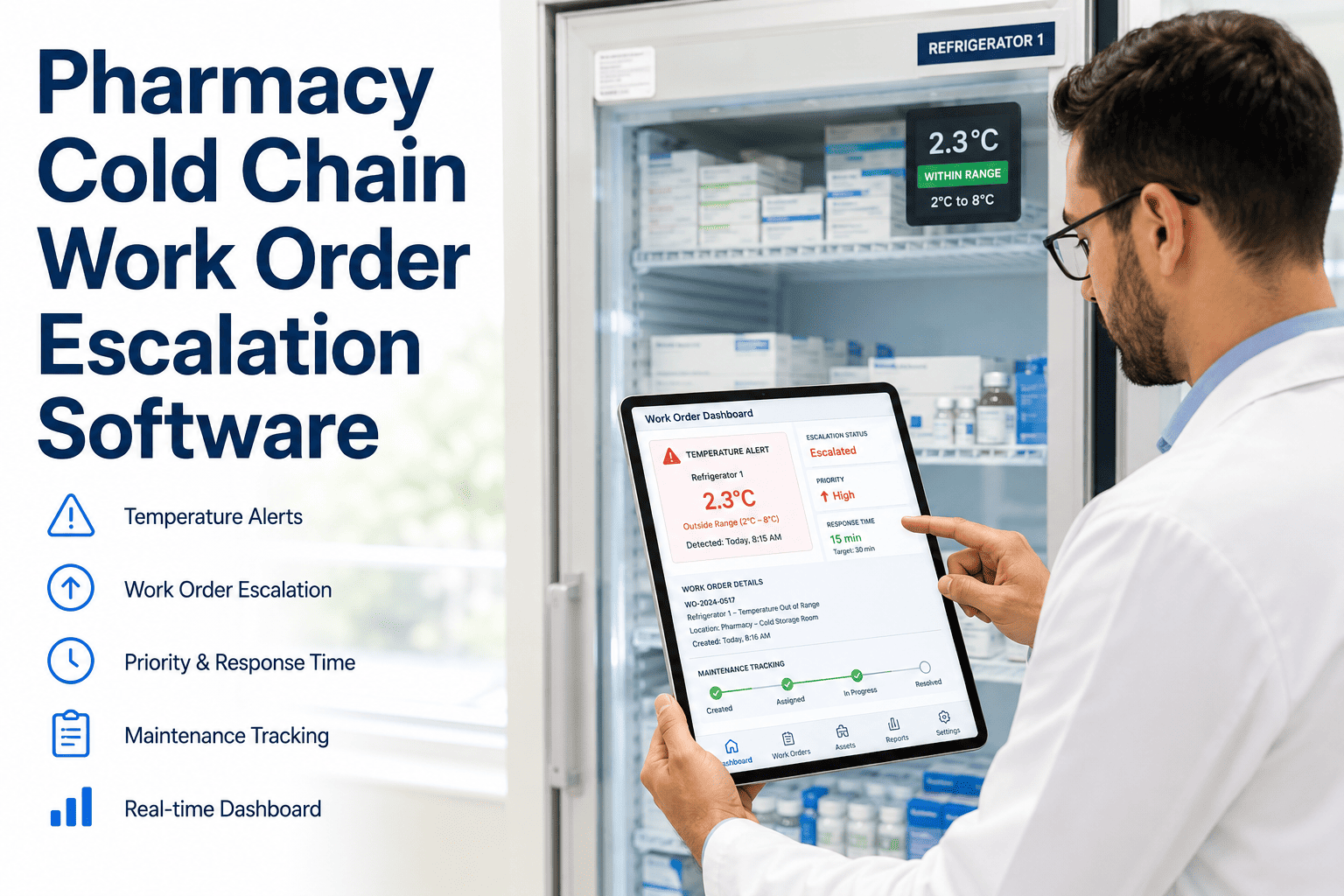
A regional hospital network with six cold storage rooms spread across three campuses spent years finding out about refrigeration problems the same way most hospitals do — after a nurse noticed something felt warm. Book a demo to see the same maintenance visibility this network built with Oxmaint, where every cold storage asset across every campus reports into one dashboard instead of three separate spreadsheets nobody fully trusted. Within four months of rolling out asset-level tracking and scheduled preventive maintenance, the network cut unplanned refrigeration downtime by more than half and finally had a maintenance history long enough to predict which units needed replacement before they failed. This case study walks through what changed, what it took, and what the numbers looked like before and after. Pharmacy and facilities leaders ready to see it for their own sites can sign up for Oxmaint directly.
Case Study
Cold Chain Visibility
Multi-Site Healthcare
Case Study: Cold Chain Maintenance Visibility for Hospitals
How a three-campus regional hospital network replaced disconnected spreadsheets with one live maintenance record for every refrigerator and freezer it operates.
Facility typeRegional hospital network, 3 campuses
Cold storage assets38 refrigerators and freezers
Core challengeNo shared visibility into asset condition or history
Time to measurable result4 months
The Challenge
Three Campuses, Three Spreadsheets, Zero Shared History
Each campus tracked its own cold storage equipment in its own spreadsheet, maintained by whoever happened to own the task that month. When a freezer on one campus failed, facilities had no easy way to check whether the identical model on another campus had a similar history, because the records simply weren't connected. Maintenance was reactive almost by design — a unit got attention once it alarmed, not before.
01
No cross-campus visibility
Facilities leadership couldn't see asset condition across sites without calling each campus individually.
02
Reactive-only maintenance
Without a shared PM schedule, units were serviced only after something already went wrong.
03
No pattern recognition
Recurring compressor issues on a specific model went unnoticed until a third unit failed.
The Solution
One Asset Register, One Maintenance Calendar, Three Campuses
The rollout started with a full equipment audit, then moved into scheduled preventive maintenance and live temperature integration over the following weeks.
Week 1–2
Equipment audit
Every refrigerator and freezer across all three campuses registered as a tracked asset with model, age, and location.
Week 3–4
PM schedules built
Preventive maintenance templates applied by equipment type, replacing the ad-hoc reactive approach.
Month 2
Monitoring connected
Existing temperature sensors linked into the same asset records, so alerts and maintenance history finally lived together.
Month 3–4
Pattern review
Maintenance history across campuses revealed a recurring failure pattern on one equipment model, prompting early replacement.
See how one dashboard could cover every campus you operate
The same asset-level visibility this network built can be configured for your own cold storage footprint in a single working session.
The Results
Before and After, by the Numbers
| Metric | Before Oxmaint | After Oxmaint |
|---|
| Unplanned refrigeration downtime | Baseline, reactive only | Reduced by more than half |
| Cross-campus asset visibility | Phone calls between sites | One live dashboard |
| Maintenance history per unit | Inconsistent, often missing | Complete from registration date |
| Time to compile audit records | Several days per request | Minutes, exported on demand |
50%+Reduction in unplanned refrigeration downtime
38Assets brought onto one shared maintenance record
1Dashboard replacing three disconnected spreadsheets
4 moFrom rollout start to measurable downtime reduction
Expert Review
In the Facilities Director's Own Words
"We had been treating each campus's cold storage equipment like it was someone else's problem to track. The moment we had one register and one maintenance calendar, the recurring failures we'd been chalking up to bad luck turned out to be the same model failing the same way three times. We replaced it proactively on the fourth unit instead of waiting for it to alarm."
FD
Director of Facilities
Regional Hospital Network, USA
FAQ
Frequently Asked Questions
How long does it take to onboard a multi-campus cold storage footprint like this?
The equipment audit and asset registration phase typically takes one to two weeks depending on inventory size, with PM schedules live shortly after.
Book a demo to scope a timeline for your own footprint.
Did this hospital network need to replace its existing temperature sensors?
No, existing sensors and data loggers were connected into Oxmaint's asset records rather than replaced, which is the typical path for most facilities with monitoring hardware already in place.
How was the recurring equipment failure pattern actually identified?
Once maintenance history lived in one place across all three campuses, repair records on the same equipment model from different sites became visible side by side, surfacing the pattern within a few months.
Can each campus still manage its own technicians and work orders independently?
Yes, each site retains its own technician assignments and day-to-day workflow while leadership keeps a rolled-up view across every campus.
Sign up to see the multi-site structure in your own account.
What kind of result should a smaller, single-site facility expect?
Smaller facilities generally see the visibility benefit immediately since there's only one site to register, though the magnitude of downtime reduction depends on how reactive the prior process was.
Stop finding out about cold storage failures from a nurse
Build the same asset-level visibility across every campus you operate, with maintenance history that finally connects across sites.