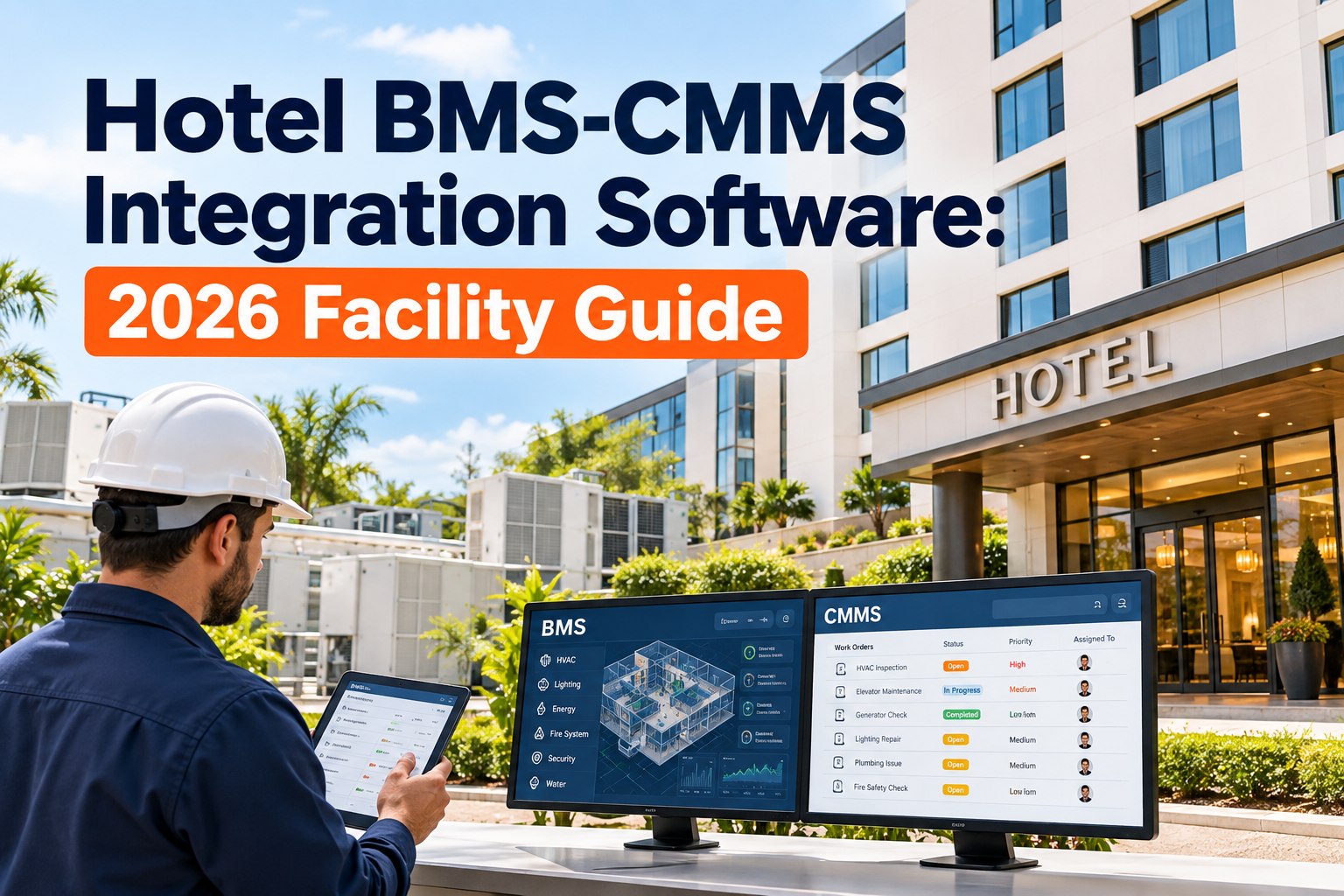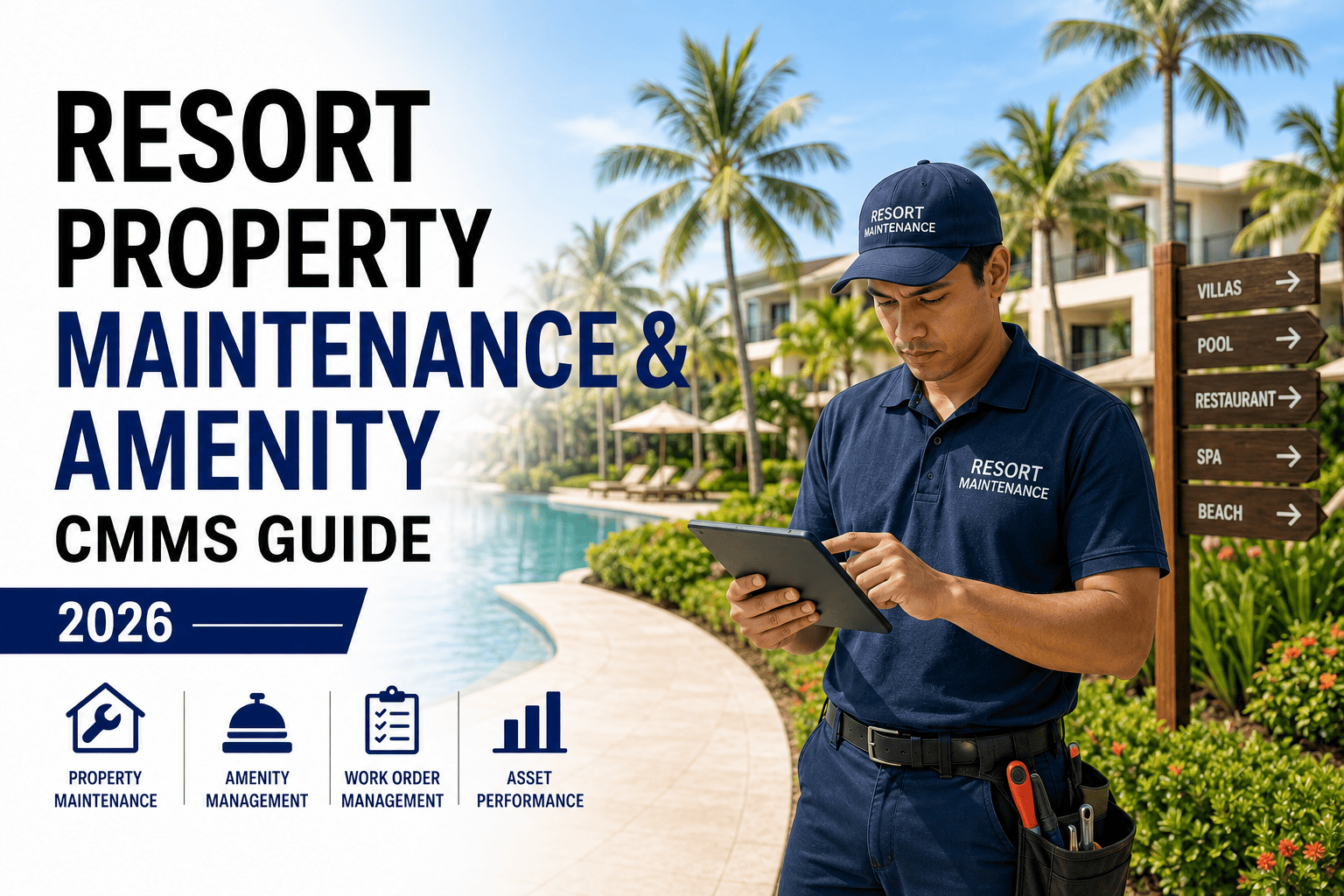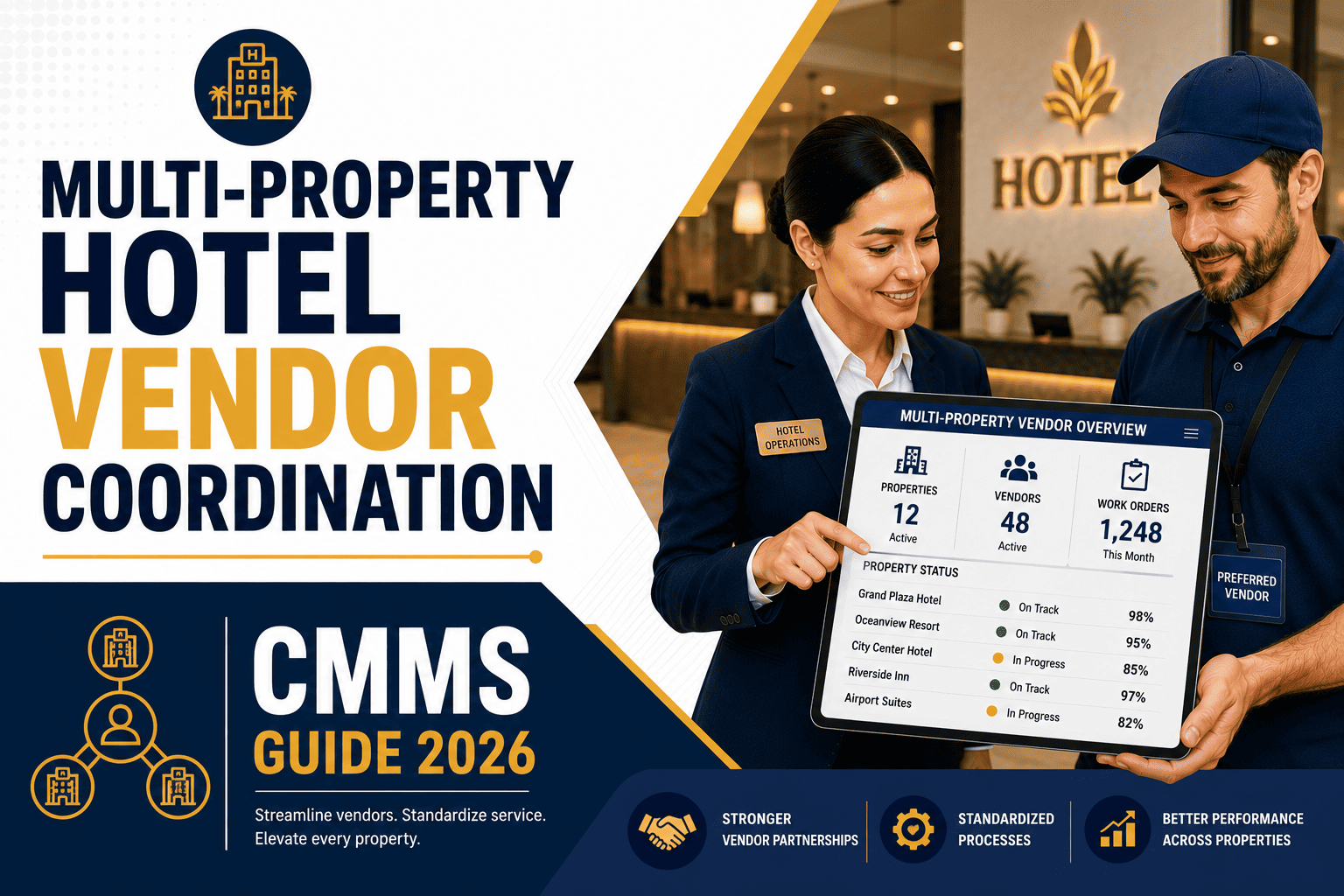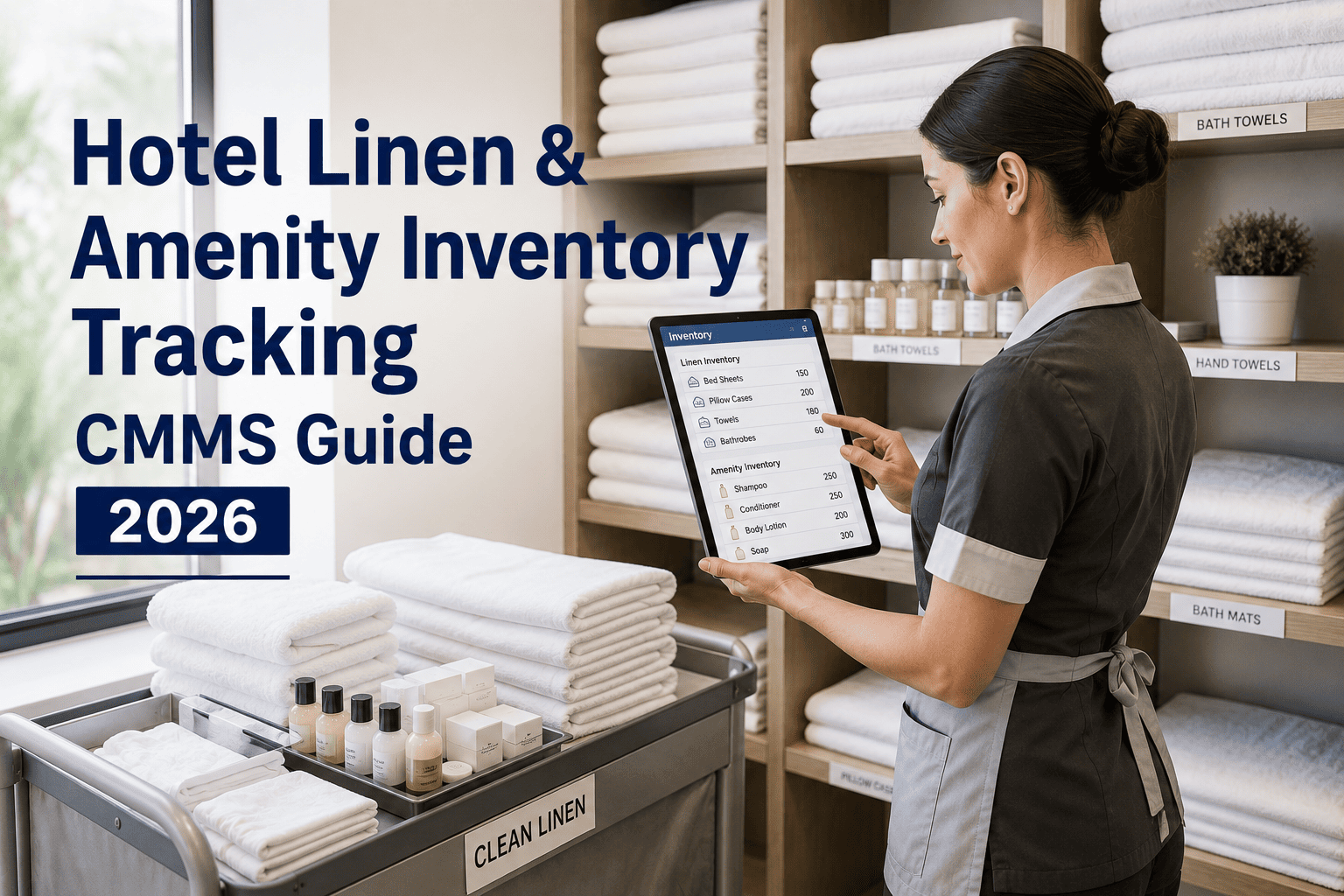
All-inclusive resort maintenance demands far more than a hotel CMMS — it must orchestrate multiple restaurant kitchens, beach facilities, pools, entertainment venues, spas and guest rooms under one preventive and reactive workload. A multi-amenity CMMS centralizes work orders, asset tracking and PM scheduling so maintenance teams can coordinate across every surface area without dropped tickets or duplicate parts orders. This 2026 guide breaks down the CMMS structure that handles all-inclusive operational complexity, from amenity-specific PM libraries to guest-visibility management. Ready to modernize? You can Start Free Trial or read on for the full framework.
All-Inclusive Resort Maintenance Guide 2026
Can One CMMS Actually Run Every Amenity in an All-Inclusive Resort?
From eight restaurant kitchens and a beach grill to the theater's AV rig and the kids' club HVAC — an all-inclusive resort operates more asset types than a mid-sized hospital. Spreadsheets and clipboard PMs cannot keep up. A multi-amenity CMMS unifies every asset, work order and parts bin into one auditable system.
Amenity Complexity
Why All-Inclusive Resort Maintenance Breaks Generic Hotel CMMS Software
A standard 250-room business hotel might track 1,800 assets. A comparable all-inclusive resort with 6 restaurants, 5 bars, 3 pools, a beach zone, a theater, a spa and a kids' club routinely exceeds 4,500 assets — and the maintenance team is rarely larger. That density ratio is why reactive rates spike and guest complaints climb during peak season.
Worked Example
Consider a 320-room all-inclusive resort in Cancun running 7 food outlets, 4 bars, 2 pools, a beach cabana cluster and a 600-seat theater. Their maintenance lead manages a 14-person team using spreadsheets and a legacy hotel CMMS built for rooms-only operations. During a July peak week, the beach grill's refrigeration fails at 11 AM — but the parts request sits in an email thread for 36 hours because the inventory module does not track kitchen-specific compressors separately from HVAC units. The grill closes for two dinner services. Guest satisfaction scores drop 9 points that week. A multi-amenity CMMS with asset hierarchy by zone and real-time parts availability would have flagged the low stock during the prior PM cycle and auto-generated a purchase order — preventing the outage entirely.
CMMS Structure
How to Structure a Multi-Amenity CMMS for an All-Inclusive Resort
The right CMMS architecture groups assets by amenity zone, assigns zone-specific PM libraries and cross-links shared resources — technicians, parts and vendors — so a single dashboard shows the full operational picture. Here is the framework that works across the industry.
Multiple Restaurant Kitchens
Walk-in coolers, combi ovens, fryers, dishwashers, ice machines, hood suppression systems and prep-line refrigeration. Each asset carries its own PM interval — ANSI/NSF hygiene checks weekly, manufacturer deep-clean quarterly, thermocouple calibration monthly. The CMMS ties every PM to a health-code audit trail so inspectors see digital logs instantly.
Beach Facility & Pool Operations
Pumps, filtration, chemical dosing, cabana fans, beach grill equipment, waterslide motors and shoreline lighting. Salt-air corrosion accelerates failure 2–3x, so PM cycles shorten by 40% versus inland assets. The CMMS auto-schedules zinc-anode checks and motor bearing grease-outs on a 30-day cadence.
Entertainment Venue & AV Systems
Stage lighting rigging, line-array speakers, motorized trusses, fog machines, LED walls and HVAC for the theater. Pre-show checklists fire 90 minutes before each performance; the CMMS blocks work orders on stage during show windows and routes urgent repairs to the next available gap.
Spa, Fitness & Kids' Club
Treatment-room plumbing, sauna heaters, steam generators, treadmill motors, pool heating and child-safe HVAC with CO2 monitoring. Compliance-driven zones require signed checklists; the CMMS captures technician e-signatures and timestamps for every PM completion.
Coordination
Cross-Amenity Coordination: Stopping Duplicate Tickets and Parts Conflicts
When a guest reports a broken cabana fan and a restaurant manager logs a hood-suppression warning in the same hour, a disconnected system spawns two technicians chasing overlapping parts. A multi-amenity CMMS deduplicates, prioritizes and routes in real time.
| Coordination Challenge | Without Multi-Amenity CMMS | With OxMaint Multi-Amenity CMMS |
|---|---|---|
| Duplicate work orders across zones | Average 18% duplicate rate; technicians waste 2+ hours/week resolving conflicts | AI deduplication flags overlapping tickets; auto-merge suggestions cut duplicates below 3% |
| Shared parts competition | Two zones pull the same motor bearing from a single bin; one goes unfilled | Real-time bin reservations lock parts to the higher-priority work order automatically |
| Technician scheduling conflicts | Whiteboard scheduling; double-bookings common during peak season | AI scheduling optimizer balances zone load, skill match and travel time across the resort |
| Guest-visibility management | Front desk has no visibility into repair status; guests re-report issues | Guest-facing status portal shows repair ETA; front desk sees live work-order state |
| Compliance audit readiness | Paper logs scattered across 7 amenity zones; 3-day audit prep | Digital PM records with e-signatures filterable by zone, date and standard in seconds |
How OxMaint Helps
How OxMaint Solves All-Inclusive Resort Maintenance Complexity
OxMaint was built for asset-intensive, multi-zone operations. Four capabilities map directly to the all-inclusive resort challenge — each with a measurable outcome your team can verify in the first 90 days.
Amenity-Specific PM Libraries
Pre-built PM templates for commercial kitchens, pool systems, AV rigs and spa equipment — each mapped to manufacturer intervals and health-code standards. Deploy 200+ PM schedules in a single import rather than building each from scratch.
Outcome: 40–60% faster CMMS rollout across all amenity zones vs. generic hotel software.
AI-Driven Cross-Zone Scheduling
The scheduling engine reads skill certifications, zone proximity, work-order priority and parts availability — then auto-assigns tasks to minimize travel time and eliminate double-bookings across the resort footprint.
Outcome: 25–35% increase in completed PMs per technician shift without adding headcount.
Predictive Failure Alerts
Vibration, temperature and runtime data from IoT sensors on critical assets — walk-in compressors, pool pumps, stage motors — feed OxMaint's predictive models. The system flags likely failures 7–21 days before breakdown and auto-creates a corrective work order.
Outcome: 30–50% reduction in unplanned amenity downtime during peak occupancy.
Guest-Visibility & Audit Dashboard
A live status portal gives the front desk and guest-services team real-time repair ETAs. Meanwhile, the audit dashboard compiles every PM, corrective work order and e-signature into filterable compliance reports ready for health inspections and brand-standard reviews.
Outcome: Audit prep time drops from 3 days to under 2 hours; guest complaint re-tickets fall 60%.
See OxMaint Run Your Resort's Entire Amenity Footprint
Book a 30-minute demo and we will map your resort's zones, assets and PM schedules live in the platform — so you see exactly how cross-amenity coordination works before you switch.
ROI & Payback
What an All-Inclusive Resort Saves With a Multi-Amenity CMMS
The business case is straightforward: fewer amenity outages, less overtime, lower parts waste and faster audit prep. Below is a representative payback model for a 300-room all-inclusive resort running 8 food and beverage outlets, beach facilities and an entertainment venue.
Annual Savings Formula
Downtime Cost Avoided + Overtime Reduction + Parts Waste Elimination + Audit Prep Savings = Annual CMMS ROI
| Savings Category | Before OxMaint (Annual) | With OxMaint (Annual) | Savings |
|---|---|---|---|
| Amenity downtime (kitchen, pool, AV outages) | $87,000 | $34,000 | $53,000 |
| Maintenance overtime (peak season reactive calls) | $41,000 | $18,500 | $22,500 |
| Parts waste and emergency procurement premium | $19,000 | $7,200 | $11,800 |
| Audit prep and compliance labor | $14,000 | $2,100 | $11,900 |
| Total Annual Savings | $161,000 | $61,800 | $99,200 |
At a typical OxMaint subscription of $12,000–$18,000/year for a resort this size, payback lands between 6 and 11 weeks after full deployment — before accounting for the guest-satisfaction and brand-reputation upside of fewer visible outages.
FAQ
All-Inclusive Resort Maintenance CMMS — Frequently Asked Questions
What makes a CMMS different for an all-inclusive resort versus a standard hotel?
An all-inclusive resort CMMS must manage 2–3x more asset types across multiple restaurant kitchens, beach facilities, entertainment venues, spas and pools — not just guest rooms and building HVAC. It needs amenity-specific PM libraries, cross-zone scheduling and parts reservations that a rooms-focused hotel CMMS cannot handle. OxMaint was designed for this multi-amenity complexity from day one.
How does a multi-amenity CMMS handle multiple restaurant kitchens?
Each kitchen's assets — walk-ins, ovens, fryers, dishwashers, ice machines — are tracked individually with manufacturer PM intervals, health-code compliance checklists and digital temperature logs. The CMMS ties every completed PM to an audit-ready record, auto-reorders consumable parts like filters and gaskets, and flags equipment trending toward failure so the culinary director gets advance warning. See it on your own kitchen assets — book a demo.
Can a single CMMS really cover beach facilities and entertainment venues too?
Yes — that is the core case for a multi-amenity CMMS. OxMaint groups assets by zone but unifies work orders, parts inventory and technician schedules across all zones. Beach pumps, theater rigging and spa steam generators live in the same system with zone-appropriate PM cycles, so a technician moving from a pool motor repair to a pre-show lighting check sees both tasks on one mobile dashboard.
How long does it take to deploy a CMMS in an all-inclusive resort?
A typical 300-room resort with 4,000–5,000 assets can go live in 4–8 weeks with OxMaint's amenity-specific PM libraries and bulk asset import tools. The timeline depends on how clean the existing asset data is and how many zones are in scope. Most resorts start with two priority zones — usually kitchens and pools — in the first two weeks, then layer in remaining amenities.
Is a multi-amenity CMMS worth it for a smaller all-inclusive property?
Even a 150-room all-inclusive with 4 restaurants and a beach zone typically tracks 2,000+ assets — enough to overwhelm spreadsheets within a single peak season. The payback at that scale usually lands between 4 and 7 months, driven primarily by kitchen downtime avoidance and overtime reduction. You can validate the math on your own numbers when you Start Free Trial with no credit card required.
Ready to Run Every Amenity From One Dashboard?
Join the resort maintenance teams who cut unplanned downtime 30–50%, eliminated paper work orders and passed their last health audit in under two hours. Start free or let us walk you through it.
Free 14-day trial · No credit card