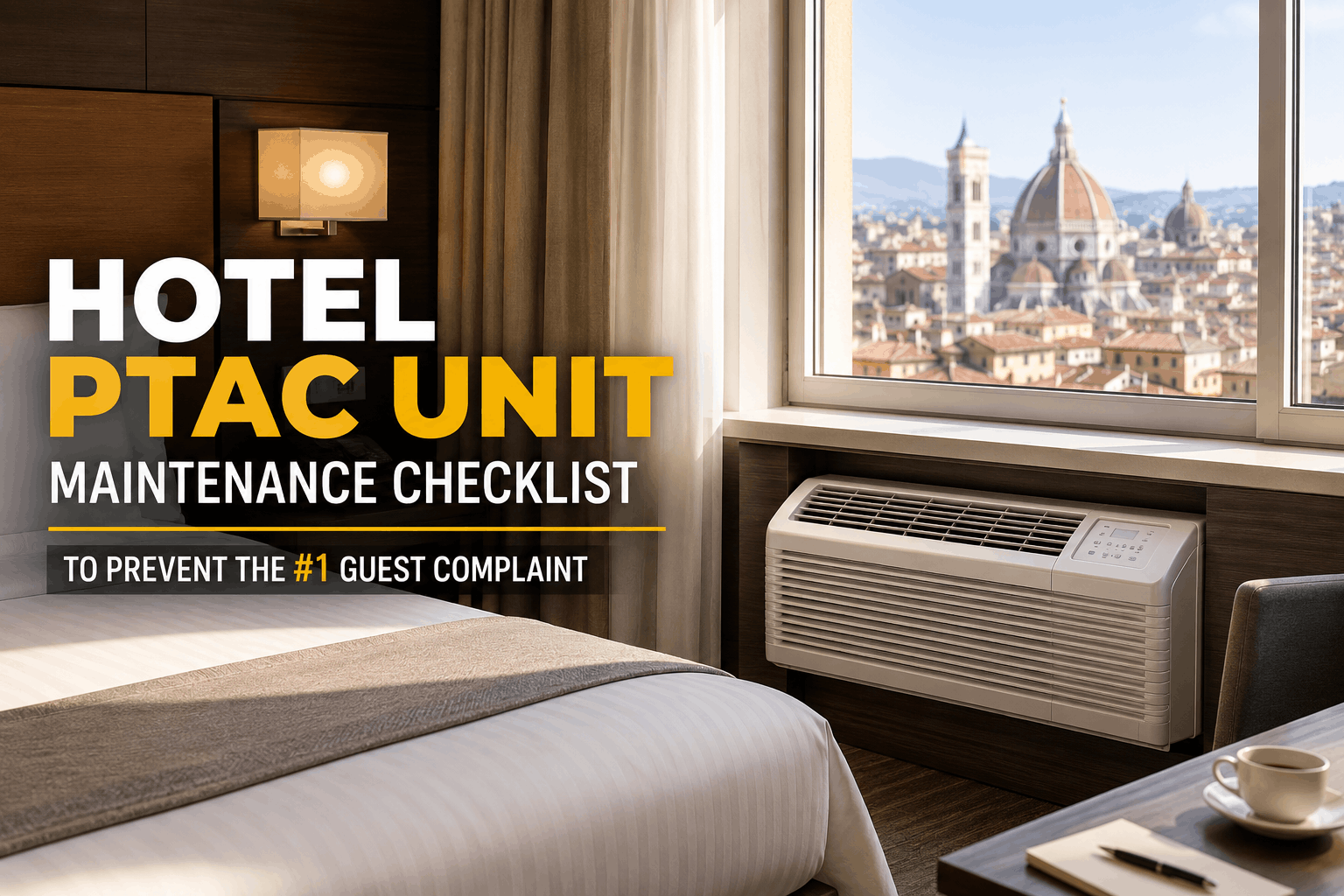
The front desk phone rings at 11:47 PM. Room 318 reports the air conditioning won't cool below 78 degrees. Your night engineer checks the PTAC unit and finds a filter so clogged it's restricting airflow by half. This wasn't a sudden failureit was a preventable one. Temperature-related issues account for nearly one in four guest complaints at hotels, yet most properties still rely on reactive maintenance that catches problems only after guests experience them. A structured guest room HVAC inspection checklist transforms this pattern, catching filter buildup, drainage issues, and thermostat drift weeks before they trigger that midnight call.
24%
Of all hotel guest complaints involve room temperature issues
40-50%
Of hotel energy consumption comes from HVAC systems
$1,000-$3,000
Annual HVAC maintenance cost per unit without preventive care
Hotels with structured HVAC preventive maintenance programs report 25-35% lower maintenance costs and 15-25% higher guest satisfaction scores.
The Real Cost of Skipping Guest Room HVAC Inspections
Every hotel maintenance manager understands the math: emergency HVAC repairs cost 2-3 times more than scheduled service. But the hidden costs run deeper. A guest who spends a sleepless night in a room that won't cool properly doesn't just complain—they write reviews. They request refunds. They don't return. Industry data shows that facility-related problems, though affecting only 12% of stays, create outsized impacts on satisfaction scores and rebooking rates. Properties that implement systematic inspection tracking catch the small issues—dirty filters, slow drains, calibration drift—before they compound into guest-facing failures.
Stage 1
Filter becomes 40% clogged
Unit works harder, energy use increases 15-20%
Stage 2
Restricted airflow strains compressor
Component wear accelerates, noise increases
Stage 3
Room fails to reach set temperature
Guest complaints begin, negative reviews posted
Stage 4
Compressor failure during peak occupancy
Emergency repair: $800-$1,500 + lost revenue
Prevention Cost
$5 filter replacement + 10 minutes inspection time
Complete Guest Room HVAC Inspection Checklist
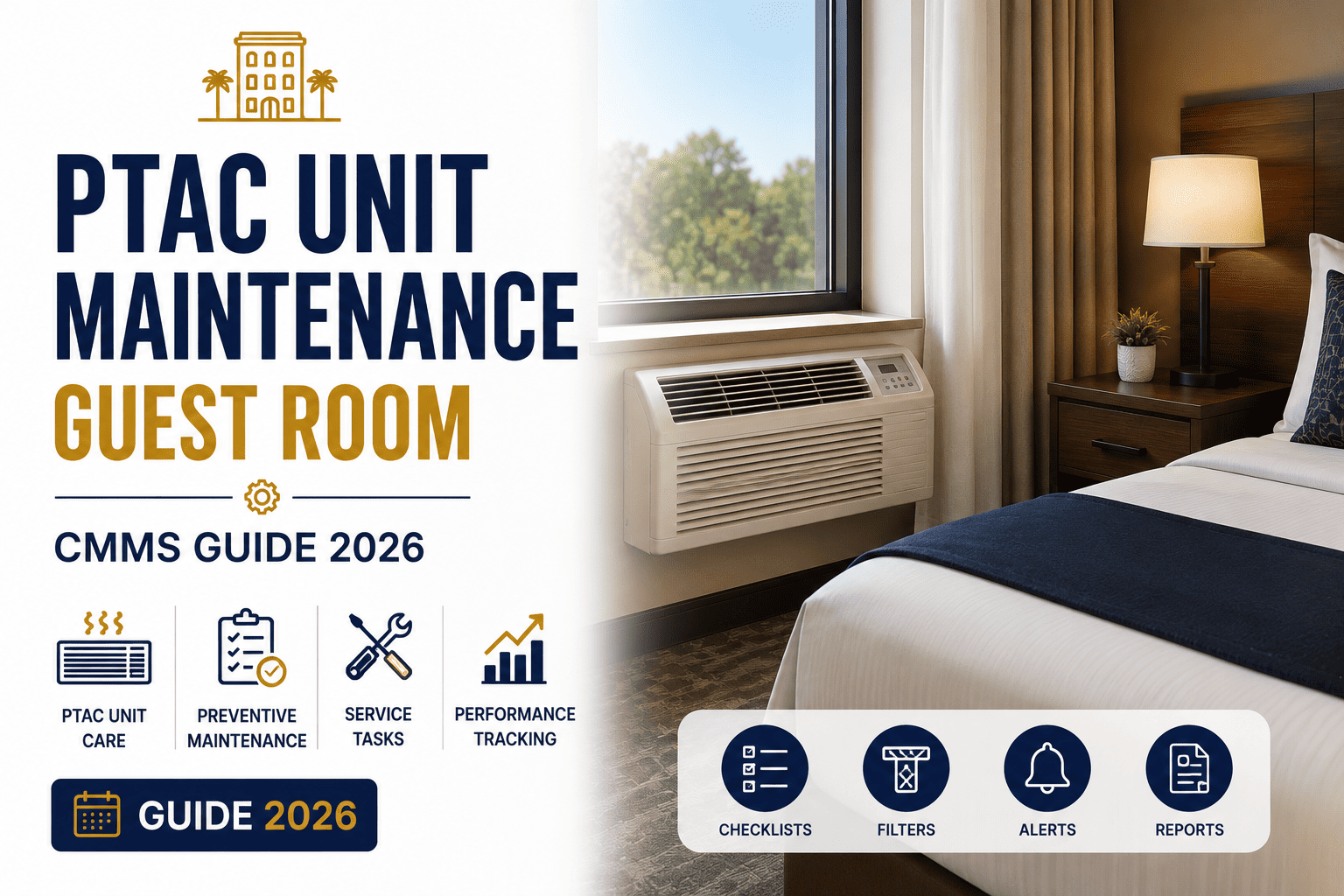
Effective hotel HVAC maintenance requires systematic inspection across multiple components. This 15-point checklist covers the critical areas where PTAC units, fan coil systems, and in-room climate control most commonly fail. Each item includes the recommended inspection frequency based on industry best practices and the failure modes it prevents.
Air filter condition
Inspect for dust accumulation, damage, or discoloration. Clean or replace as needed.
Monthly
Intake/discharge clearance
Verify minimum 8" clearance from furniture, curtains, and obstructions.
Weekly
Vent screen condition
Check for debris, lint buildup, or damage. Clean if operating with vent open.
Quarterly
Odor assessment
Check for musty smells indicating mold growth in coils or drain pan.
Weekly
Evaporator coil cleaning
Remove dust and debris with approved coil cleaner. Check for ice formation.
Quarterly
Condenser coil inspection
Inspect outdoor coil under fan shroud for lint and outdoor debris buildup.
Seasonal
Drain pan flush
Clear condensate path. Add antibacterial tablet to inhibit mold growth.
Monthly
Carpet moisture check
Inspect flooring around unit for water damage or mold indicators.
Weekly
Thermostat calibration
Verify displayed temperature matches actual room temperature (±2°F).
Monthly
Mode cycling test
Confirm both heating and cooling modes activate and reach setpoint.
Seasonal
Noise level assessment
Listen for rattling, squealing, or excessive cycling. Target: below 40dB.
Weekly
Fan operation check
Verify smooth fan startup, consistent speed, and quiet operation.
Monthly
Wall sleeve caulking
Inspect seal integrity. Re-caulk any cracks to prevent air/water infiltration.
Seasonal
Sleeve level verification
Confirm 1/4" outward tilt for proper condensate drainage.
Annually
Front grille condition
Clean with damp cloth. Check for cracks, discoloration, or damage.
Monthly
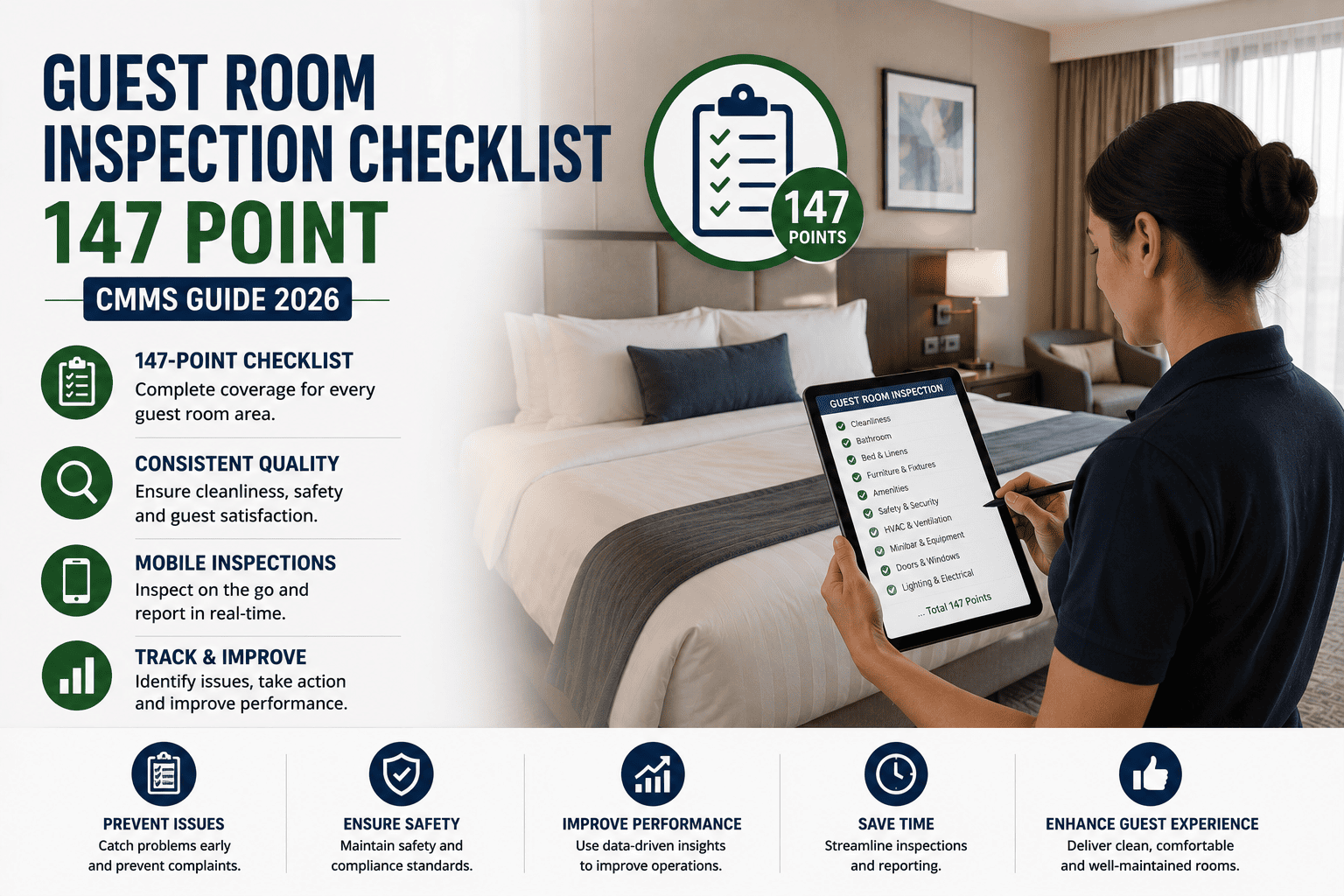
The challenge most hotel maintenance teams face isn't knowing what to inspect—it's ensuring every room gets inspected on schedule. A 150-room property running monthly filter checks generates 1,800 individual tasks annually. Without systematic tracking, rooms inevitably get missed. Properties looking to automate their inspection scheduling find that hospitality CMMS platforms eliminate the spreadsheet chaos that leads to missed maintenance windows and preventable guest complaints.
Digitize Your HVAC Inspection Process
See how leading hotels use OXmaint to schedule inspections, track completion across every room, and generate maintenance work orders automatically when issues are found.
Building a Layered Inspection Schedule
Effective hotel HVAC preventive maintenance operates on multiple frequencies. Daily quick checks catch obvious issues, weekly inspections verify operational status, monthly service addresses consumables like filters, and quarterly deep maintenance tackles coil cleaning and drainage systems. This layered approach ensures comprehensive coverage without overwhelming maintenance staff or disrupting guest operations.
Daily
2 min/room
Guest complaint log review
Thermostat display check
Unusual noise identification
Housekeeping + Engineering
Weekly
5 min/room
Clearance verification
Moisture signs inspection
Airflow and odor check
Maintenance Technician
Monthly
15 min/room
Filter clean/replace
Drain pan service
Thermostat calibration
Maintenance Technician
Quarterly
30 min/room
Deep coil cleaning
Fan/blower service
Full operational test
Senior Technician
Annually
45-60 min/room
Electrical inspection
Refrigerant check
Capacitor/contactor test
Licensed HVAC Professional
The properties achieving the best results integrate their inspection checklists with hotel maintenance management software that tracks not just completion, but trends over time. When you can identify that Room 412's PTAC requires service twice as often as average, you budget for replacement before catastrophic failure. When data shows certain room blocks consistently running warmer than setpoint, you investigate building envelope issues before they escalate. Hotel teams wanting to centralize their maintenance tracking and reporting discover that modern CMMS platforms transform inspection records into actionable operational intelligence.
Expert Perspective: What Sets High-Performing Hotels Apart
Room temperature and indoor air quality appear in guest reviews more frequently than almost any other facility topic. Modern travelers expect immediate temperature control—systems should reach desired settings within 10-15 minutes of guest arrival. The hotels winning on guest satisfaction aren't necessarily spending more on maintenance; they're spending smarter through systematic preventive care that catches problems before guests ever experience them.
Response Time Matters
Target under 30 minutes for urgent HVAC complaints. Properties with CMMS-automated work orders consistently hit this benchmark; those relying on manual processes average 2+ hours.
Noise Impacts Sleep Quality
Guest rooms should maintain noise levels below 40 decibels. Worn fan bearings and loose components produce sounds that significantly impact rest and drive negative reviews.
Documentation Protects Investment
Systematic inspection records maintain warranty coverage, prove due diligence for insurance claims, and create data for capital expenditure planning.
The maintenance teams seeing strongest results combine their inspection protocols with software that automatically generates work orders when issues are identified, tracks parts inventory for common replacements like filters and drain tablets, and produces reports showing maintenance costs per room over time. This data-driven approach enables proactive decisions about equipment replacement timing rather than reactive scrambles after failures. If you're ready to explore how automated maintenance workflows actually operate, our team can walk you through implementations at properties similar to yours.
Implementation: Your First 30 Days
Transitioning from reactive to preventive HVAC maintenance doesn't require shutting down operations or hiring additional staff. Start by establishing your baseline: How many HVAC-related guest complaints occurred last month? Which rooms have units approaching end-of-life? Where are your current maintenance records actually stored? These metrics reveal your biggest opportunities and help prioritize initial focus areas.
From there, standardize your inspection checklist, train your team on consistent execution, implement tracking to ensure accountability, and review results monthly to refine your approach. Hotels that treat HVAC maintenance as an ongoing program rather than disconnected repairs consistently outperform competitors on both guest satisfaction and operating costs. Ready to move from maintenance chaos to systematic control? Start your digital transformation today with tools built specifically for hospitality operations.
Eliminate HVAC Guest Complaints for Good
Join hotels using OXmaint to automate inspection schedules, track completion across every room, and catch issues before guests notice them. See the difference systematic maintenance makes.
Frequently Asked Questions
How often should hotel guest room HVAC units be inspected?
Best practice is a layered approach: daily quick checks by housekeeping for obvious issues, weekly visual inspections by maintenance for airflow and moisture signs, monthly filter service and drain pan maintenance, quarterly deep cleaning of coils and full operational testing, and annual professional servicing including electrical and refrigerant checks. This multi-frequency system catches different failure modes at appropriate intervals while keeping technician workload manageable.
What are the most common hotel HVAC problems that cause guest complaints?
The top issues include: inadequate cooling or heating (typically from dirty filters reducing airflow or low refrigerant), excessive noise from worn fan bearings or loose components, musty odors from mold growth in drain pans and evaporator coils, units that cycle on and off too frequently due to thermostat calibration issues, and rooms that never reach the set temperature due to undersized units or building envelope problems. Regular inspection catches all these before guests experience them.
How much can hotels save with preventive HVAC maintenance?
Hotels implementing structured preventive maintenance programs typically report 25-35% reductions in total HVAC maintenance costs. Clean filters and coils alone can reduce energy consumption by 15-20% annually. Equipment lifespan extends from 5-7 years under reactive maintenance to 10-15 years with proper care. Emergency repairs—which cost 2-3x standard service rates and often occur during peak occupancy periods—are nearly eliminated.
What should be included in a basic PTAC unit inspection checklist?
Essential items include: air filter inspection and cleaning/replacement, evaporator and condenser coil condition assessment, drain pan and condensate line flush with antibacterial treatment, thermostat accuracy verification, operational testing of both heating and cooling modes, noise level assessment (target below 40dB), wall sleeve seal integrity check, furniture clearance verification (minimum 8 inches), and front grille cleaning. Electrical connections and refrigerant levels require licensed technicians.
How does a hospitality CMMS improve hotel HVAC maintenance?
A Computerized Maintenance Management System automates inspection scheduling so no room gets missed, provides mobile checklists ensuring consistent technician execution, tracks completion rates and flags overdue tasks, stores inspection history for warranty documentation and trend analysis, generates work orders automatically when issues are found, manages parts inventory for common replacements, and produces reports showing maintenance costs per room and equipment performance over time. This replaces error-prone spreadsheets with reliable, accountable workflows.

.png)