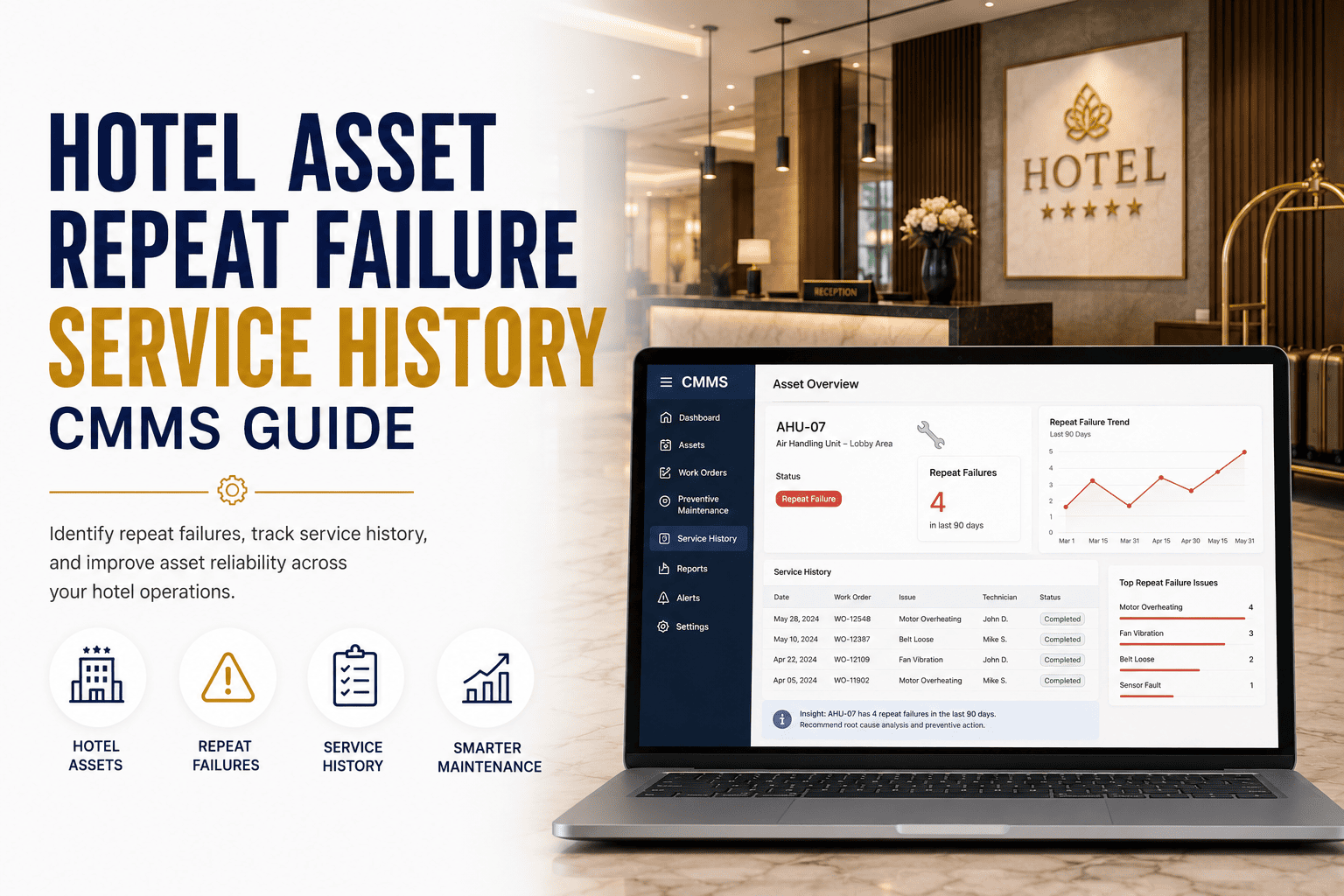
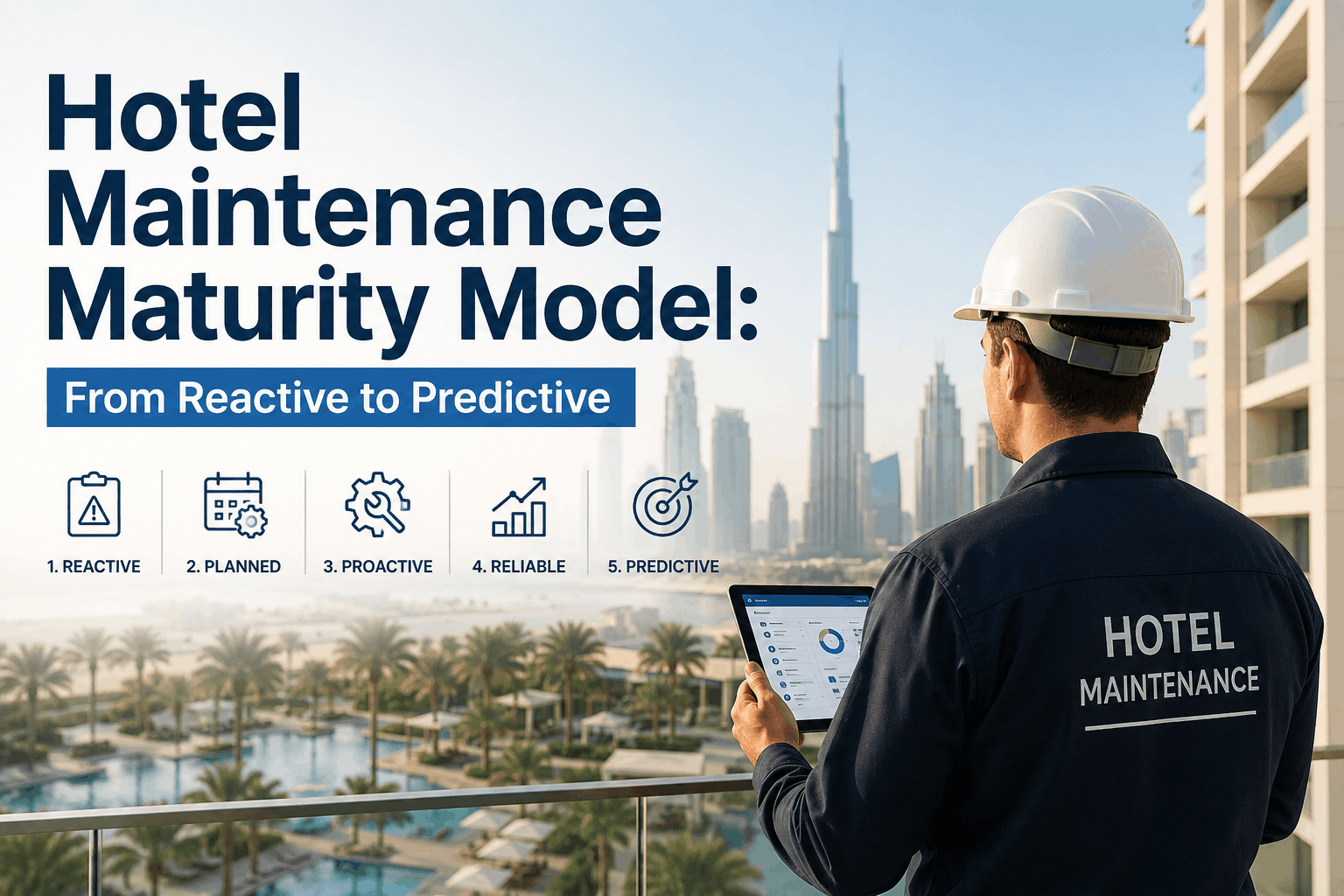
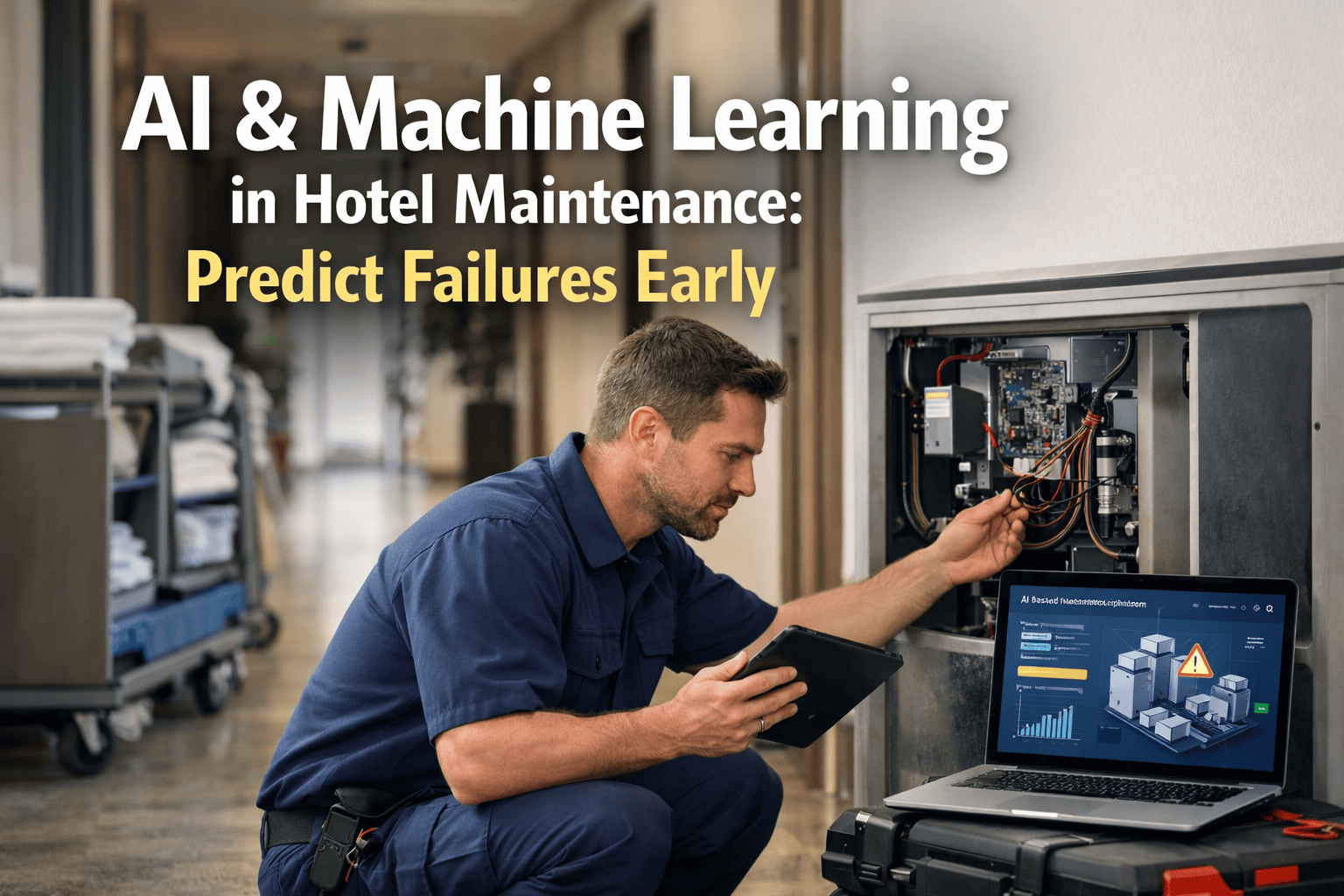
A hotel chiller does not fail without warning. Neither does an elevator motor, a boiler feed pump, or a cooling tower fan bearing. Every piece of mechanical equipment on a hotel property sends signals before it breaks — shifts in amperage, vibration harmonics, temperature gradients, pressure differentials. The problem is not that these signals are invisible. The problem is that humans inspect equipment once a quarter, and these signals arrive daily. AI fault detection models trained on 200+ failure mode patterns change that equation entirely — turning every piece of connected equipment into something that watches itself.
Hotel Predictive Maintenance Intelligence
200+ Failure Modes. One AI Model. Zero Surprises.
Pre-trained machine learning models that recognize equipment degradation patterns weeks before breakdown — and generate work orders automatically.
73%
of hotel equipment failures produce detectable signals 3–10 weeks before breakdown
90%
failure prediction accuracy with AI-driven predictive analytics
25%
reduction in maintenance costs with predictive AI adoption
$70B
predictive maintenance market projected by 2032 at 26.5% CAGR
Why Hotels Are a Different Maintenance Problem
A manufacturing plant can shut down a line for maintenance. A hotel cannot. Guests occupy rooms 24 hours a day. A chiller failure at 2 PM on a Friday in August is not a production problem — it is a guest experience crisis, a revenue event, and potentially a reputational one. Emergency HVAC service calls often cost 2–3 times standard rates during peak periods. The engineering teams who manage these properties are small, the asset list is enormous, and the consequence of missing a failure signal is immediate and public.
500+
Monitored assets in a typical full-service hotel
From chiller compressors to pool pumps to elevator door mechanisms — far too many for manual inspection to cover continuously.
4 hrs
Average duration of an unplanned equipment outage
Outages that last four hours or more during peak occupancy create guest compensation events, negative reviews, and revenue loss that dwarf repair costs.
2–3x
Emergency vs. scheduled repair cost multiplier
The same repair costs two to three times more when performed as an emergency call versus a planned maintenance visit — plus expedited parts and after-hours labor premiums.
What a Failure Mode Library Actually Means
Every equipment category degrades in predictable ways. Bearings wear through stages. Compressors signal refrigerant loss before they trip. Pumps cavitate before they seize. Each failure pathway produces a distinct data signature — a specific combination of sensor readings that, together, identify the failure mode uniquely. An AI model trained on 200+ of these patterns does not just flag anomalies. It classifies them: this is compressor bearing degradation at Stage 2, estimated 14–21 days to failure.
Compressor Bearing Wear
Signal: Amperage rise + vibration harmonic shift + discharge temp increase
14–21 days detection lead
Planned: $400–$900 | Emergency: $8,500–$18,000
Condenser Tube Fouling
Signal: Condenser approach temperature widening + COP decline week-on-week
3–6 weeks detection lead
Planned clean: $800–$1,500 | Compressor failure: $15,000–$50,000
Refrigerant Charge Loss
Signal: Suction pressure drop + superheat increase + capacity reduction
7–14 days detection lead
Early recharge: $600–$1,200 | Compressor burnout: $20,000+
Fan Motor Bearing Failure
Signal: Vibration + current draw deviation 14–21 days before seizure
14–21 days detection lead
Planned bearing: $350–$700 | Emergency motor: $4,800–$12,000
Belt Wear and Tension Loss
Signal: Vibration signature change 7–14 days before snap
7–14 days detection lead
Belt replacement: $80–$240 | After-hours AHU failure: $1,400–$3,800
Coil Ice-Over
Signal: Supply air temp trends lower, return delta-T decreases 7–10 days prior
7–10 days detection lead
Early intervention: $200–$400 | 24–48 hr recovery cycle: $2,000+
Pump Bearing Seizure
Signal: Vibration + temperature + current deviation 7–14 days before failure
7–14 days detection lead
Planned bearing: $350–$800 | Emergency pump: $1,800–$12,000
Impeller Cavitation
Signal: Pressure fluctuation pattern + flow rate variance over baseline
Days to weeks detection lead
Early correction: $300–$600 | Full impeller replacement: $3,000–$8,000
Seal and Packing Wear
Signal: Discharge pressure drop + flow rate reduction trending downward
Weeks of lead time
Seal replacement: $200–$500 | Water damage from burst: $5,000–$25,000+
Hoist Motor Bearing Wear
Signal: Vibration pattern + amperage draw anomalies across cycle data
2–4 weeks detection lead
Scheduled service: $800–$1,500 | Emergency: $4,000–$10,000 + entrapment risk
Door Mechanism Misalignment
Signal: Cycle time variation + door sensor fault frequency trending upward
Days to 2 weeks
Adjustment: $200–$400 | Full mechanism failure during peak: $2,000–$5,000
Control System Thermal Stress
Signal: Internal temperature sensor trend 14–21 days before protection shutdown
14–21 days detection lead
Early intervention: $400–$800 | Controller replacement: $3,000–$8,000
How the AI Reads These Signals
The intelligence is not in detecting that a reading is "high." Any threshold alarm can do that. The intelligence is in recognizing the pattern — the specific combination of rising amperage with a particular vibration harmonic shift and a narrowing condenser approach temperature that together identify compressor bearing degradation, Stage 2, rather than simply "something is wrong with the chiller."
01
Baseline Fingerprinting
The AI establishes a unique operating baseline per asset — not generic thresholds. Your chiller running at 87% load in August has a different healthy signature than the same chiller at 40% in October. Deviations are measured against the asset's own history.
02
Multi-Signal Correlation
Single-sensor anomalies generate noise. The model cross-correlates across amperage, vibration, temperature, pressure, and flow simultaneously — a pattern match across multiple signals, not a single-point alarm that fires for every transient reading.
03
Failure Mode Classification
Matched patterns are classified against the failure mode library. The output is not "anomaly detected." It is "bearing wear, Stage 2, estimated intervention window: 14–21 days, recommended action: vibration analysis + scheduled bearing replacement."
04
Automatic Work Order Creation
Classification above the confidence threshold triggers an Oxmaint work order — pre-populated with asset ID, failure mode, priority, recommended parts, and suggested repair window — without any manual step between sensor reading and maintenance action.
See AI Fault Detection Configured for Your Hotel
Oxmaint's pre-trained failure mode models connect to your existing BMS and sensors — live in 14–21 days with no infrastructure replacement. Book a 30-minute demo to see fault classification and automatic work order generation on your asset categories.
The Cost Difference Is Not Marginal
The financial case for AI fault detection does not rely on optimistic projections. It rests on the straightforward arithmetic of what the same repair costs when it is planned versus when it is an emergency.
| Asset / Failure |
Planned Repair Cost |
Emergency Repair Cost |
Cost Multiplier |
| Chiller Compressor Bearing |
$400 – $900 |
$8,500 – $18,000 |
15–20x |
| AHU Fan Motor |
$350 – $700 |
$4,800 – $12,000 |
10–17x |
| Chilled Water Pump Bearing |
$350 – $800 |
$1,800 – $12,000 |
5–15x |
| Elevator Hoist Motor |
$800 – $1,500 |
$4,000 – $10,000 |
5–7x |
| Condenser Coil Fouling |
$800 – $1,500 |
$15,000 – $50,000 |
15–33x |
Emergency costs include after-hours contractor premiums, expedited parts, guest compensation, and revenue impact from affected rooms or zones. Sources: Oxmaint chiller maintenance data, HVAC industry benchmarks.
What Changes When AI Monitors Every Asset Continuously
Maintenance Becomes Predictable
Engineering teams stop firefighting and start scheduling. When failures are predicted 2–4 weeks out, they become planned events slotted into low-occupancy windows — not Saturday emergencies at premium labor rates.
Guest Experience Is Protected
HVAC failures, elevator outages, and hot water disruptions are the top drivers of negative hotel reviews. Catching these before they surface means guests never experience them — and never write about them.
Parts Are On-Site Before the Repair
AI predicts which parts will be needed 30–60 days ahead — triggering purchase orders automatically so critical spares are on-site before the work order is raised. No more expedited shipping or cannibalizing other equipment.
Equipment Lives Longer
Predictive maintenance extends asset lifespan by 20–40% compared to reactive approaches. For a $200,000 chiller, that difference represents tens of thousands in deferred capital expenditure — and retained asset performance throughout.
Implementation: How Fast Can This Actually Go Live
The most common objection to AI fault detection is "we'd need to replace all our sensors" or "it would take months to set up." Neither is accurate for modern hotel deployments. For chillers already connected to a building management system, Oxmaint integrates via BACnet or Modbus connection to the existing BMS — pulling data from sensors already installed. Zero physical modification to the chiller. Full monitoring is typically operational within 3–5 business days without any chiller downtime.
Days 1–5
BMS Integration and Asset Mapping
Connect Oxmaint to existing BMS via BACnet or Modbus — no hardware changes
Map asset inventory: chillers, AHUs, pumps, elevators, cooling towers
Assign failure mode models to each asset category automatically
Days 6–14
Baseline Establishment
AI establishes operating baseline per asset across all sensor streams
Supplemental wireless sensors installed on priority assets if needed — no conduit work
Work order templates configured for each failure mode category
Days 15–21
Live Fault Detection Active
AI begins classifying sensor patterns against failure mode library in real time
First predictive work orders generated from active degradation signals
Engineering team receives training on work order review and escalation workflow
Day 60+
Full ROI Visibility
Failure event prevention tracked against historical breakdown frequency
Parts procurement lead time reduction measured vs. previous emergency orders
Model accuracy improving as asset-specific operating history accumulates
Frequently Asked Questions
Do we need to replace our existing sensors to use AI fault detection?
In most cases, no. Modern hotels with a building management system already have the sensor infrastructure needed for chiller and HVAC monitoring. Oxmaint connects via BACnet or Modbus to pull existing sensor data — no hardware replacement required. For assets without existing sensors, wireless IoT sensors mount externally and transmit via cellular gateway, typically installed without shutting down the equipment.
How is a failure mode model different from a standard alarm threshold?
A threshold alarm fires when a single value exceeds a set limit — useful for immediate safety events, but it generates false positives from transient readings and misses multi-signal degradation patterns. A failure mode model recognizes a specific combination of sensor behaviors that together identify a particular failure pathway. The result is earlier detection, fewer false alarms, and a diagnosis rather than just an alert.
How quickly does the AI model adapt to our specific equipment?
Pre-trained models are accurate from day one using failure patterns from the broader equipment category. Over the first 30–60 days, the model incorporates your asset's specific operating baseline — load profiles, seasonal behavior, and performance characteristics — increasing classification accuracy for your particular installation. Properties with older or heavily modified equipment benefit most from this adaptation period.
What happens when the AI detects a failure pattern — who gets notified?
A work order is automatically created in Oxmaint with the failure classification, priority level, asset location, recommended action, and suggested parts. The assigned engineer receives a push notification via the Oxmaint mobile app. For high-priority detections (estimated failure within 7 days), escalation notifications can be configured to reach the Director of Engineering or property management directly — no manual monitoring required.
Can smaller hotels with limited engineering staff benefit from this?
Smaller properties often benefit most. A limited engineering team cannot manually monitor 300+ assets continuously — AI does it automatically. The system effectively extends the team's reach to every connected asset simultaneously, and the work orders it generates arrive with enough diagnostic context that a generalist technician can act without specialist interpretation. Properties achieving the fastest ROI are often those where one engineer manages a large asset portfolio.
Stop Managing Equipment. Start Predicting It.
Oxmaint's AI fault detection connects to your BMS in days — not months — and begins classifying failure patterns across your full hotel asset inventory immediately. Start free, or speak with our team to see the failure mode library configured for your specific equipment categories.