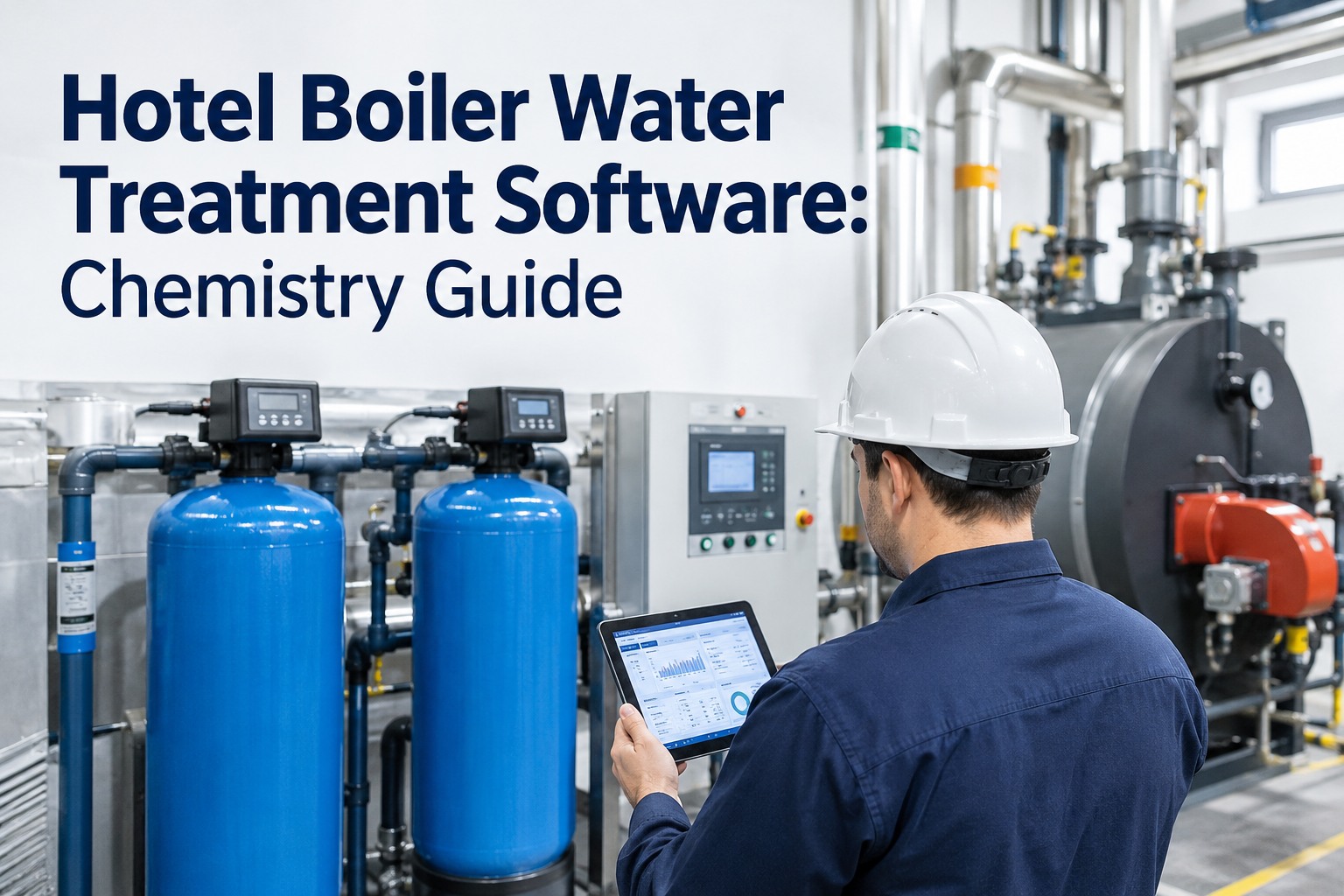
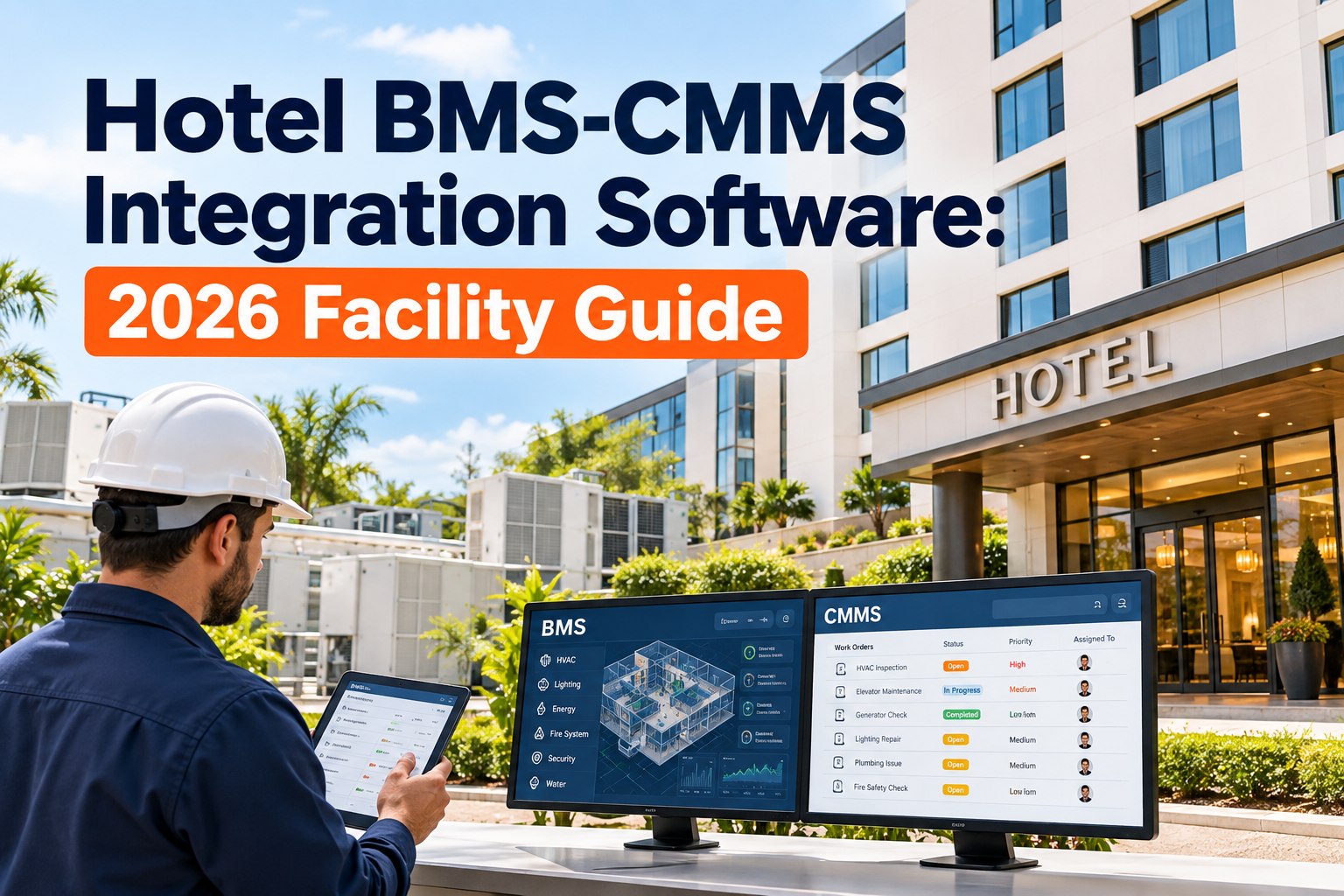
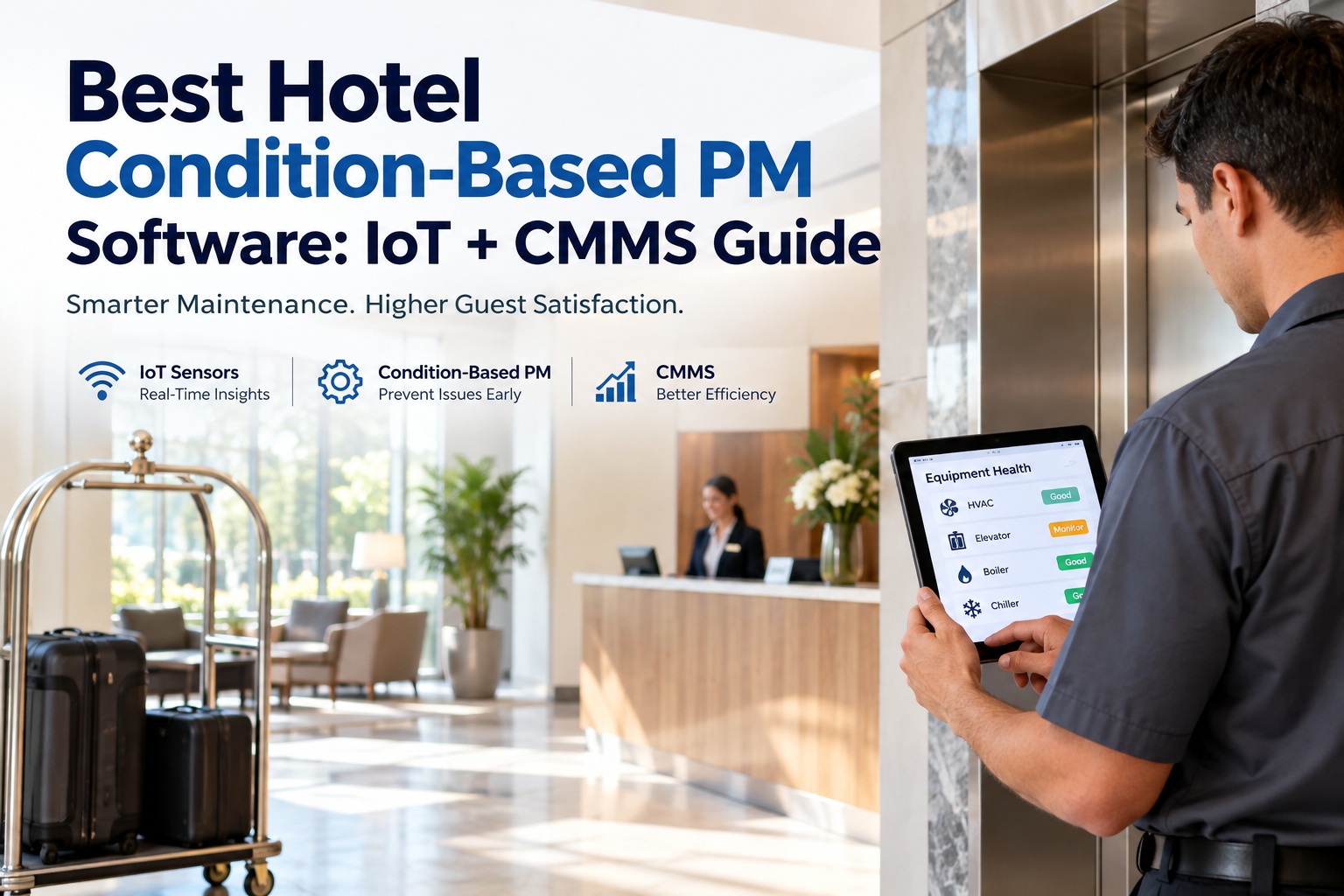
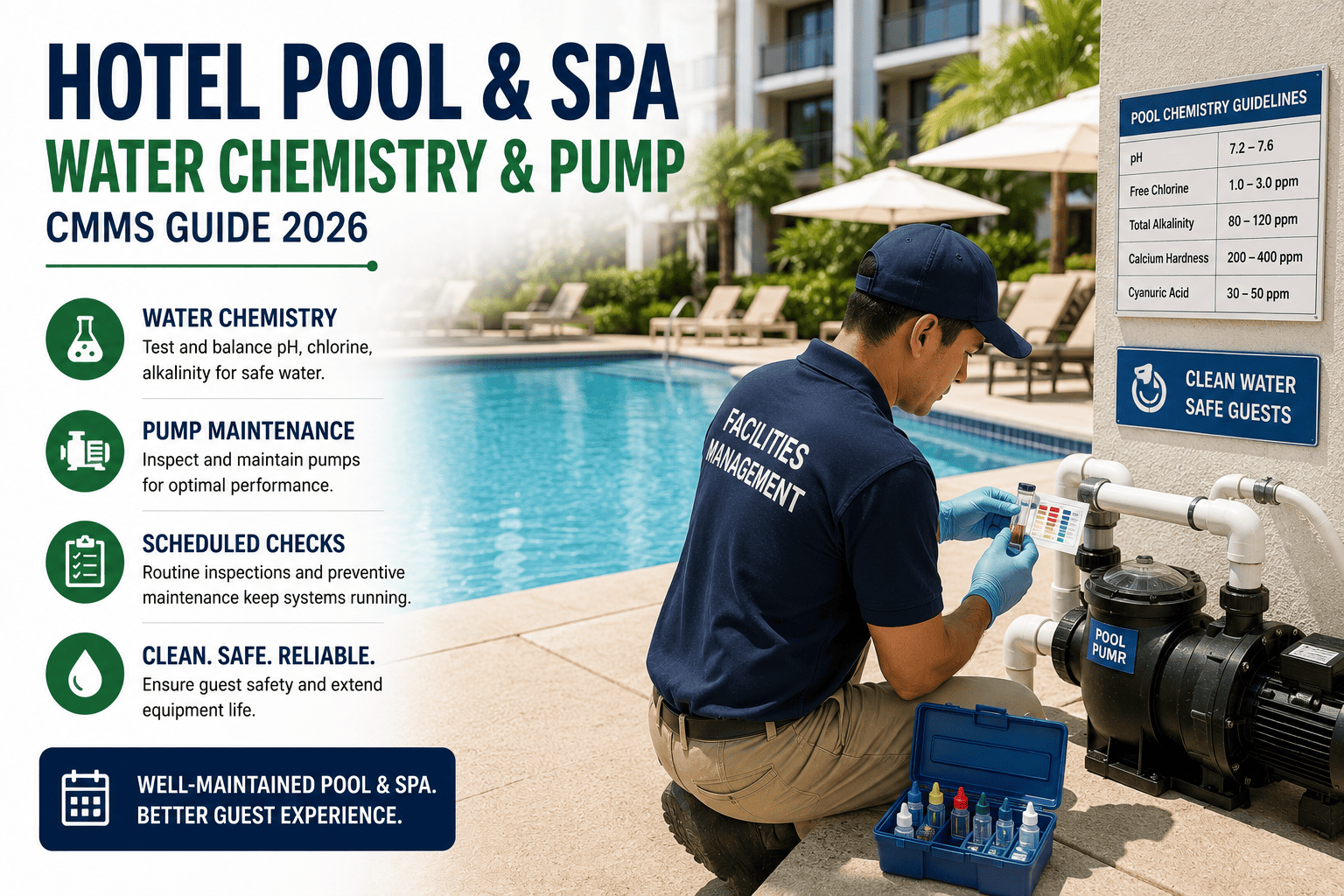
Boiler failure has two root causes, and both are invisible until they aren't: scale building up on the heat transfer surface, and oxygen slowly pitting the pressure vessel from the inside. A deposit as thin as 3 millimeters can push fuel consumption up 15-25%, and by the time either problem shows up as a visible symptom — a tube failure, a pressure drop, a safety valve lifting early — the damage has usually been accumulating for months. Both are almost entirely preventable with one discipline: a water chemistry test run on schedule, logged consistently, and actually acted on when a reading drifts out of range. That's the part a clipboard and a wall-mounted logbook struggle with — not the chemistry itself, but the discipline of doing it every single week without fail and having a record to prove it later. This guide covers the core boiler water chemistry parameters your hotel engineering team needs to track, where paper logs quietly let readings slip, and how OxMaint turns water chemistry logging into an automated, audit-ready system. Book a free boiler chemistry logging demo for your property.
Scale You Can't See Is Already Costing You Fuel
The two failure modes that destroy boilers are both preventable — and both invisible without consistent testing.
15-25%
More fuel consumed from just a 3mm scale deposit on the heat transfer surface
8.5-10.5
Target pH range for most boiler systems to prevent both corrosion and scaling
300-700
Target alkalinity range in ppm to buffer pH without triggering deposits
Weekly
Minimum recommended water chemistry test frequency per ABMA and ASME guidance
The Core Chemistry Parameters Software Must Track
A boiler water test isn't one reading — it's a panel of related parameters that each catch a different failure mode. The best boiler chemistry software tracks all of them against your target range, per boiler, automatically.
01
pH & Alkalinity
The first line of defense against corrosion. Too low invites acid attack on metal; too high creates its own treatment problems and caustic embrittlement risk.
02
Hardness & Silica
Calcium, magnesium, and silica are the minerals that form scale on tubes. Left unchecked, they build the deposit that quietly eats into fuel efficiency.
03
Dissolved Oxygen
The leading driver of internal corrosion in steam systems. Oxygen scavenger dosing has to be verified, not assumed, to keep pitting from starting.
04
TDS & Blowdown Rate
Total dissolved solids climb as the boiler concentrates impurities. Blowdown has to be tuned against TDS readings — too little wastes efficiency, too much wastes heat.
05
Phosphate Residual
Phosphate treatment controls calcium and magnesium hardness directly in the boiler water — dosing needs regular verification against the target residual.
06
Trend & Deviation Alerts
A single in-range reading means little without the trend behind it. Software should flag drift toward the edge of a range before it actually crosses it.
See Your Boiler's Chemistry Log Set Up in a Live Call
Bring your current water treatment program to a working session. We'll show how OxMaint tracks every parameter against your target ranges, per boiler, automatically.
Where Paper Boiler Logs Quietly Break Down
Almost every engineering team already tests boiler water. These are the four ways a paper-based program lets a bad reading slip through anyway.
Test Intervals Slip Under Pressure
A busy week means the weekly full-panel test becomes a two-week gap, then three. On paper, nobody notices until a reading comes back badly out of range.
No Trend Visibility
A logbook shows today's number, not the slow drift over six weeks that actually predicts trouble. Gradual scale buildup is invisible one reading at a time.
Blowdown Skipped, Not Documented
Blowdown gets skipped on a busy day, and there's no record showing it happened or didn't — until TDS climbs high enough to cause carryover or scale.
No Audit Trail for Inspections
A boiler inspector or insurance auditor asking for six months of chemistry records finds a binder with gaps, illegible handwriting, and inconsistent formats.
Paper Boiler Log vs. Digital Chemistry Tracking
The test itself doesn't change. What changes is whether a drifting reading gets caught in week two or discovered in month six.
Paper Boiler Log
Test intervals depend on someone remembering the schedule
Each reading reviewed in isolation, no trend line
Blowdown completion tracked by memory, if at all
Out-of-range readings caught whenever someone reviews the binder
Inspection prep means hours pulling handwritten sheets
OxMaint Chemistry Tracking
Recurring test tasks auto-generate on schedule, per boiler
Every parameter charted over time, drift flagged before it's out of range
Blowdown logged with timestamp and technician attribution every time
Out-of-range readings alert the team the moment they're logged
Compliance report exported in minutes, full history included
How Chemistry Logging Runs Inside OxMaint
Once the target ranges are set per boiler, this cycle runs on schedule, automatically, without anyone tracking it on a wall calendar.
1
Test & Log. A recurring work order prompts the technician to run the water panel and log pH, hardness, TDS, and oxygen levels from mobile, right at the boiler.
2
Flag Deviation. Any reading outside the set target range — or trending toward the edge of it — triggers an alert before it becomes a failure.
3
Escalate & Correct. A flagged deviation generates a work order for dosing adjustment or blowdown, routed to the right technician automatically.
4
Trend & Audit. Every parameter charts over time per boiler, ready to export as an audit-ready compliance report in minutes, not days.
Why Hotel Engineering Teams Choose OxMaint
OxMaint is a cloud-based maintenance management platform trusted by hotels, resorts, and hospitality brands to run boiler water chemistry as a scheduled, documented, audit-ready program.
Schedule
Recurring Chemistry Test Work Orders
Test frequency set once per boiler — daily blowdown checks, weekly full panels — and OxMaint generates the task automatically every cycle.
Track
Per-Parameter Trend Charts
pH, hardness, TDS, alkalinity, and oxygen readings chart over time per boiler, surfacing drift long before a reading actually fails.
Alert
Automatic Deviation Escalation
Out-of-range results generate a work order and notify the right engineer instantly — no waiting for someone to review the log.
Prove
Audit-Ready Compliance Reports
Timestamped, technician-attributed chemistry history exports in minutes for boiler inspectors, insurance auditors, or brand-standard reviews.
Connect
IoT Sensor Integration
Where sensors are installed, continuous readings feed straight into the same dashboard as manual tests, verified against periodic sampling.
Deploy
Mobile-First for Engineering Teams
Log readings from a phone at the boiler itself, with offline mode for basement and mechanical-room dead zones.
Stop Finding Out About Scale After the Fuel Bill
See how OxMaint schedules boiler chemistry tests, flags deviations before they become failures, and keeps an audit-ready record per boiler. Free forever plan available.
Frequently Asked Questions
How often should hotel boiler water be tested?
A full water chemistry panel weekly is a common baseline recommendation, with daily checks on TDS and blowdown for higher-demand systems — though the right frequency depends on boiler pressure, load, and water source, and should be set with your boiler manufacturer or water treatment provider. Testing should increase temporarily after startup, a chemical adjustment, or any out-of-range result.
Book a walkthrough to set the right schedule for your boilers.
What's the target pH range for a hotel boiler?
Most boiler systems target a pH between 8.5 and 10.5, which is alkaline enough to discourage acid corrosion without pushing into a range that creates its own treatment problems. The exact target depends on your specific boiler type and treatment program, so confirm the range with your water treatment provider rather than applying a generic number.
How much does scale buildup really cost in fuel?
More than most engineering teams expect. A scale deposit as thin as 3 millimeters on the heat transfer surface has been shown to increase fuel consumption by 15 to 25%, and even thinner layers measurably reduce efficiency. Because the deposit builds gradually and stays out of sight inside the boiler, the fuel cost climbs quietly until someone actually inspects the tubes or reviews the trend in test results.
Why is blowdown documentation important, not just the blowdown itself?
Blowdown removes concentrated dissolved solids before they cause scale or carryover, but if it isn't documented, there's no way to prove it happened consistently — during an insurance audit, a boiler inspection, or a root-cause review after a failure. A timestamped, technician-attributed blowdown record turns the task from "we probably did it" into verifiable proof.
Does OxMaint support multiple boilers with different chemistry targets?
Yes. OxMaint lets engineering teams set independent target ranges per boiler for pH, alkalinity, hardness, TDS, and dissolved oxygen, with automated test scheduling, deviation alerts, and audit-ready reporting for each one. A free forever plan is available to try the full chemistry-logging workflow.
Sign up free to get started.