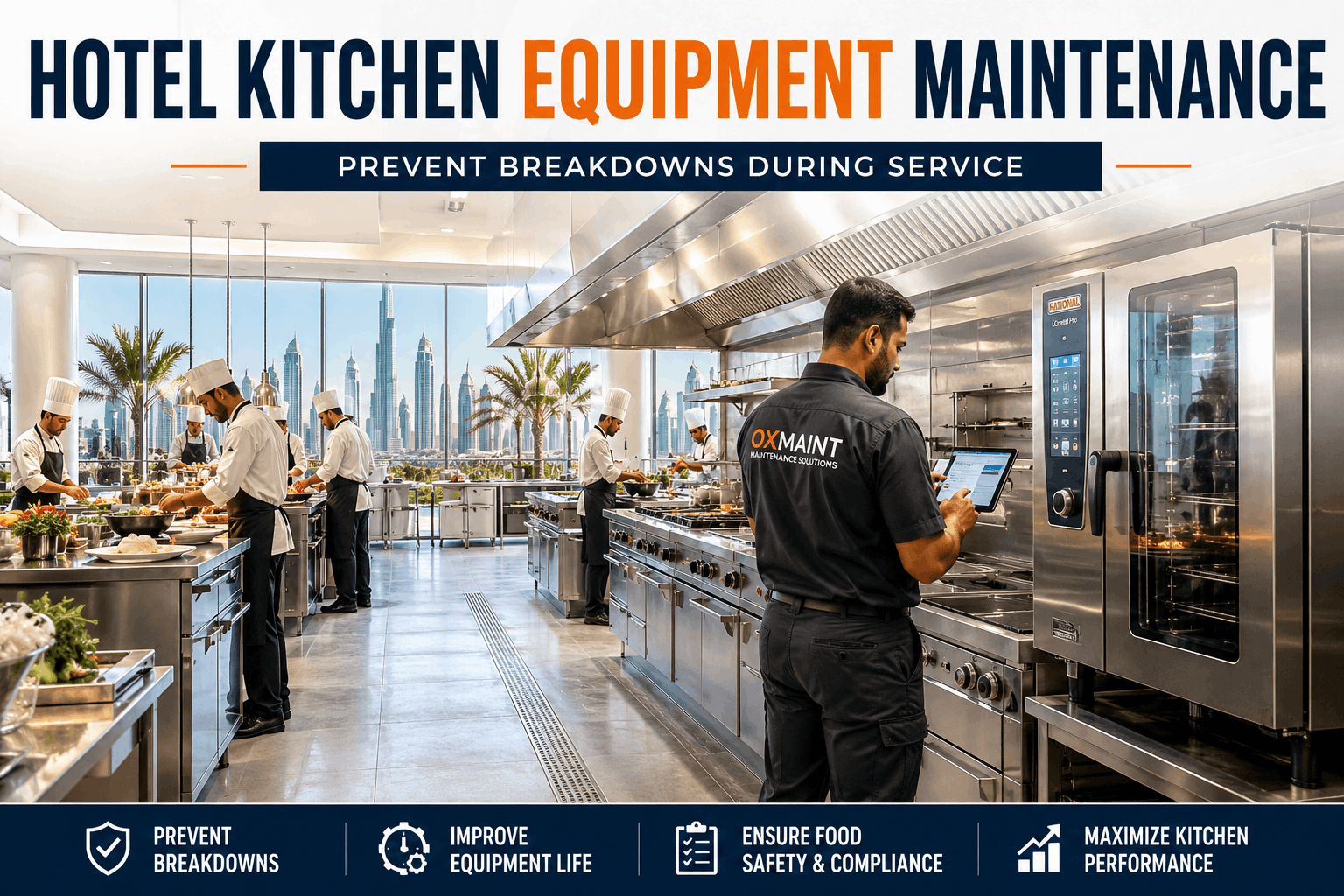
Commercial kitchen equipment fails without warning or fails visibly during service—both disasters. An oven breaks down with 200 plates waiting to go out. A walk-in cooler fails at 2 AM with $8,000 in inventory inside. A dishwasher dies during peak service with no way to sanitize plates. Kitchen equipment downtime isn't just a maintenance problem; it is a food service shutdown. Health codes require documented equipment maintenance. Insurance requires proof that all equipment receives scheduled PM. Revenue stops when equipment fails during service. Traditional paper-based kitchen PM tracking creates gaps—technicians don't show up, maintenance notes sit in a drawer, inspectors arrive and find no documentation. Sign Up Free to centralize commercial kitchen equipment maintenance with real-time PM scheduling, health code compliance documentation, and emergency response prioritization built for food service operations.
Kitchen Equipment Maintenance Software: Prevent Failures, Ensure Compliance
OxMaint tracks all commercial kitchen equipment—ovens, coolers, prep tables, dishwashers, grills—with PM schedules tied to health code requirements, temperature sensors for real-time monitoring, and emergency alerts when equipment approaches critical failure.
Why Commercial Kitchen Equipment Maintenance Cannot Be Reactive
Restaurants operate on razor-thin margins. Every hour of kitchen downtime costs $2,000–$5,000 in lost covers and labor. Health departments conduct unannounced inspections and require proof of equipment maintenance. Insurance companies audit maintenance records and can deny claims if equipment failure results from deferred PM. Commercial kitchen equipment fails in ways that create cascading problems: ice machine failure means no cold beverages or ice service. Fryer failure means no fried items on menu. Cooler failure means discarded perishable inventory. Walk-in cooler failure means service suspension. OxMaint eliminates these failures through predictive PM. Every piece of equipment in the kitchen is configured with manufacturer maintenance intervals. Sensors on critical equipment (coolers, ovens) report temperature and operating status in real-time. When equipment enters a degradation zone (cooler temperature creeping up, oven cycling more frequently), OxMaint sends alerts enabling PM before failure. Technicians arrive scheduled, not emergent. Cost per maintenance visit is 50–70% lower than emergency service calls. Book a demo to see how OxMaint connects kitchen equipment sensors directly to preventive maintenance scheduling.
Track all commercial kitchen equipment—ovens, coolers, fryers, dishwashers, steamers, grills, prep tables, ice machines—with manufacturer specs, installation date, warranty status, and service history.
Connect IoT temperature probes to walk-in coolers and reach-in refrigerators. Real-time monitoring alerts when temperature drifts above safe range—enabling proactive repair before food spoilage.
PM schedules are mapped to health department requirements—grease trap cleaning, hood system inspection, cooler temperature verification—ensuring compliance documentation is always current.
Equipment showing failure indicators (temperature out of range, cycling frequency increase, unusual vibration) triggers emergency alerts to maintenance supervisors—enabling same-day response before service shutdown.
All PM records, sensor data, temperature logs, and maintenance completion records are timestamped and ready for health inspectors—no scrambling to assemble documentation.
Track critical spare parts—thermostats, heating elements, seals, gaskets—with reorder points so replacement parts are available when technicians arrive for emergency service.
Commercial Kitchen Equipment Maintenance: Critical Performance Metrics
Kitchen equipment availability measures what percentage of the kitchen's critical equipment is operational at any given time. Industry target: 99%+. Below 95% indicates chronic maintenance failures. Every 1% availability loss = 7–15 service interruptions monthly. An oven offline for 8 hours costs $2,000–$3,000 in lost covers. Walk-in cooler offline for 4 hours costs $4,000–$8,000 in discarded inventory. OxMaint tracks availability by equipment type (cooler, oven, fryer, dishwasher), identifying which equipment types require more aggressive PM. Data shows whether current maintenance intervals are appropriate or need adjustment. Restaurants deploying OxMaint achieve 99.2%+ availability through predictive alerts and scheduled maintenance. Sign up free to measure baseline kitchen equipment availability immediately.
Health departments require documented proof that all kitchen equipment receives scheduled maintenance. PM compliance rate measures what percentage of scheduled maintenance tasks are completed on or before the scheduled date. Target: 95%+. Below 90% indicates staffing gaps or scheduling conflicts. OxMaint sends alerts 30 days before PM deadline, enabling proactive rescheduling. When PMs are consistently missed, escalation alerts notify management. Multi-location restaurants use OxMaint's centralized reporting to compare compliance across all locations and identify which kitchens are falling behind on maintenance requirements. Health inspectors accept OxMaint's timestamped maintenance records as compliant documentation. Teams deploying OxMaint achieve 98%+ compliance through automated alerts and task prioritization. Book a demo to see compliance tracking and health inspection documentation.
Walk-in and reach-in coolers must maintain safe temperatures (41°F or below for coolers, 0°F or below for freezers). Health codes require twice-daily temperature verification. OxMaint connects IoT temperature sensors to coolers, automatically logging temperatures every 15 minutes. If temperature drifts above safe range, OxMaint sends alerts within minutes—not hours. Technician arrives quickly. Food is preserved. Health inspection finds complete temperature logs proving compliance. Manual twice-daily temperature checks miss degradation that sensors catch continuously. A cooler temperature creeping from 40°F to 44°F over 6 hours is invisible on twice-daily manual logs but immediately visible on continuous sensor monitoring. OxMaint's sensor data prevents food spoilage and demonstrates perfect compliance to health inspectors. Restaurants deploying OxMaint eliminate temperature excursions that would require food discard. Sign up free and connect kitchen temperature sensors immediately.
When kitchen equipment fails, how quickly is it restored? MTTR measures time from failure detection to equipment restoration. Industry target: under 4 hours for planned maintenance, under 2 hours for emergency service. Long MTTR indicates parts unavailability or technician availability gaps. OxMaint connects equipment to parts inventory so technicians arrive with replacement parts already identified and often on-hand. IoT sensors detect equipment degradation early, enabling scheduling before failure—converting emergency repairs into planned maintenance. Emergency repairs take hours; planned maintenance takes 30–60 minutes. Restaurants using OxMaint average 45-minute MTTR for cooler and oven service through early detection and parts pre-positioning. Teams deploying OxMaint reduce emergency service calls by 60–75% through predictive maintenance. Book a demo to see parts inventory integration and MTTR analytics.
Premium brand equipment (commercial-grade ovens, coolers) typically costs $1,500–$5,000 per unit annually in maintenance labor and parts. Poorly maintained equipment costs 2–3× this amount. OxMaint tracks all labor, parts, and contractor costs per equipment unit. Data shows which equipment types consume disproportionate maintenance (candidates for replacement), which technicians are most efficient at specific repairs, and which parts are always needed. Cost trending above expected range indicates aging equipment approaching end of useful life. Multi-location restaurants compare maintenance costs across locations and identify which locations are maintaining equipment more efficiently. Preventive maintenance reduces cost per unit by 25–40% compared to reactive maintenance through fewer emergency calls and longer equipment lifespan. Sign up free and track maintenance cost per equipment unit.
Health inspectors look for three things: equipment is functioning, equipment has current maintenance records, equipment has current certifications (where applicable). OxMaint's health inspection readiness score measures what percentage of kitchen equipment meets all three criteria. 95%+ score means inspection arrives and finds everything documented and compliant. Below 80% means at least one equipment type is at risk (missing maintenance records, expired certification, or overdue PM). OxMaint sends alerts when certifications approach expiry and when PM deadlines approach—enabling proactive renewal. Multi-location chains use OxMaint's health inspection readiness dashboard to ensure all locations pass inspections without finding violations. Restaurants deploying OxMaint eliminate compliance violations related to maintenance documentation. Book a demo to see health inspection readiness scoring and compliance documentation.
Commercial Kitchen Equipment Maintenance Reference Table
| Performance Metric | Industry Standard | Measurement Method | OxMaint Tracking | Review Cadence |
|---|---|---|---|---|
| Equipment Availability Rate | 99%+ continuous | Operational vs total units | Real-time equipment status | Daily dashboard |
| PM Compliance Rate | 95%+ by due date | Completed vs scheduled PMs | Timestamped completion records | Weekly by location |
| Temperature Monitoring Compliance | 41°F max coolers, 0°F freezers | Continuous sensor logs | Real-time temperature alerts | Continuous monitoring |
| Mean Time to Repair | Under 2-4 hours all types | Failure detection to restoration | Timestamped repair cycle | Weekly by equipment type |
| Maintenance Cost per Unit | $1,500-5,000 annually | All labor and parts per unit | Cost tracking per equipment | Monthly by type |
OxMaint for Commercial Kitchen Operations
Kitchen equipment maintenance is not optional—it is survival. A single oven failure during dinner service costs thousands in lost covers and labor. A cooler failure costs thousands in discarded inventory. A dishwasher failure stops all plate service. Health inspection violations cost the license. OxMaint makes kitchen maintenance proactive through connected sensors and automated alerts. When a walk-in cooler temperature drifts above safe range, OxMaint alerts immediately—not after the daily temperature check finds spoilage. When an oven temperature becomes unstable, sensor data shows the degradation pattern—enabling preventive repair before failure. When health inspection arrives, OxMaint generates complete documentation showing every PM completed, every temperature log recorded, every certification current. The inspectors pass without findings. Restaurants deploying OxMaint eliminate the category of problems called "kitchen equipment downtime." Equipment still wears out and eventually needs replacement, but surprise failures that interrupt service disappear. Sign up free and connect your commercial kitchen equipment on your first day.
Implementing Kitchen Equipment Maintenance: Best Practice Steps
Complete Equipment Audit and Registry
Physically inventory all kitchen equipment—ovens, coolers, fryers, dishwashers, grills—record serial numbers, manufacturer, installation date, warranty, and current PM schedule from equipment documentation.
Configure Health Code PM Schedules
Load manufacturer PM requirements and health department compliance schedules into OxMaint—map cooler temperature verification, hood system inspection, grease trap cleaning to automatic alert triggers.
Install IoT Temperature Sensors on Critical Equipment
Install temperature probes on walk-in and reach-in coolers. Configure alert thresholds for safe temperature ranges. Enable real-time monitoring and continuous compliance logging.
Build Critical Parts Inventory for Kitchen Service
Stock replacement parts that enable fastest repairs—thermostats, heating elements, gaskets, seals—organize inventory by equipment type so technicians can grab parts quickly on service calls.
Train Kitchen and Maintenance Staff on OxMaint Mobile App
Kitchen staff uses OxMaint to report equipment issues with photos and urgency level. Maintenance staff uses app to access PM schedules, equipment specs, and parts inventory from the kitchen floor.
Generate First Health Inspection Compliance Package
Run complete compliance report showing all PM history, temperature logs, certification status, and corrective actions—validate readiness before next health inspection. Book a demo to see compliance documentation workflow.
Frequently Asked Questions
How does OxMaint prevent kitchen equipment failures during service?
OxMaint connects IoT sensors to equipment to detect degradation patterns early, sends alerts before failure occurs, and enables preventive maintenance scheduling—converting emergency shutdowns into planned maintenance.
Can OxMaint track cooler and freezer temperature compliance automatically?
Yes. OxMaint connects temperature sensors to coolers and freezers, logs temperatures every 15 minutes, and immediately alerts if temperatures drift above safe ranges—eliminating manual twice-daily checks and catching problems within minutes.
Does OxMaint generate documentation ready for health inspections?
Yes. OxMaint compiles all PM records, temperature logs, maintenance completion records, and certification status into inspection-ready reports in minutes—no manual documentation assembly needed.
What kitchen equipment can OxMaint track?
OxMaint tracks all commercial kitchen equipment—ovens, coolers, fryers, dishwashers, steamers, grills, prep tables, ice machines, hood systems, and any equipment with manufacturer maintenance specifications.
How does OxMaint reduce emergency service calls for kitchen equipment?
OxMaint's predictive sensor data detects equipment degradation early, enabling scheduled maintenance before failures occur—reducing emergency calls by 60-75% through prevention-focused approach.
Can multi-location restaurant chains use OxMaint to standardize kitchen maintenance across all locations?
Yes. OxMaint provides centralized portfolio dashboards showing kitchen equipment status and compliance across all locations—enabling standardization of PM schedules and best-practice procedures across the chain.
What is typical ROI from kitchen equipment CMMS implementation?
Restaurants deploying OxMaint typically achieve 8-14 month payback through reduced emergency service calls, eliminated food spoilage, prevented health violations, and improved labor productivity.
How quickly can kitchen equipment maintenance be deployed in OxMaint?
Most restaurants complete equipment registry, PM schedule configuration, and sensor installation within 14-21 days. OxMaint provides pre-built kitchen equipment templates to accelerate setup.
"Before OxMaint, our kitchen ran on hope—hope the oven doesn't break mid-service, hope the coolers stay cold, hope we pass health inspection. We had a walk-in cooler fail at 2 AM with $12,000 in inventory we had to discard because nobody knew the temperature had been drifting for hours. Health inspector found no maintenance documentation. Now, every piece of equipment has scheduled PM. Cooler temperatures are monitored continuously. We get alerts before something fails. Health inspection finds complete documentation. Zero violations. Equipment failures have become almost non-existent. The system paid for itself in six months from prevented cooler failures alone. This is the difference between running a kitchen and operating one."
Restaurant Director of Operations | Multi-location chain | Illinois, USA
Stop Kitchen Equipment Surprises: Prevent Failures, Ensure Compliance
OxMaint connects commercial kitchen equipment to predictive maintenance, temperature monitoring, and health code compliance documentation—preventing service shutdowns, food spoilage, and regulatory violations.