Hotel Restaurant Maintenance Checklist for Kitchen Equipment Food Safety and Compliance

By Liam Neeson on March 26, 2026

hotel-restaurant-maintenance-checklist-food-safety-equipment

A Food and Beverage Director at a 280-room urban hotel described the moment her kitchen maintenance programme revealed its real cost: a health inspector walked into the hotel restaurant on a Tuesday lunch service and asked for the last 90 days of refrigeration temperature logs. The logs existed — on paper sheets stored in a binder on the executive chef's shelf. By the time someone found the right binder, flipped to the right month, and confirmed the entries were legible, the inspector had already noted the delay as a procedural gap. The restaurant received a conditional rating. It ran for six weeks before the re-inspection cleared it. Revenue over those six weeks was down 31%. The logs were fine. The system for producing them in under 60 seconds was not. OxMaint's F&B equipment tracking and health compliance calendar gives hotel restaurant operations teams the structure to ensure every refrigeration log, equipment inspection, and compliance record is timestamped, digital, and accessible on demand — from any device, anywhere in the property.

Hotel Restaurant Maintenance Checklist: Kitchen Equipment, Food Safety and Compliance

How hotel F&B operations teams are replacing paper logs and reactive repair cycles with structured digital maintenance — and the compliance, cost, and guest satisfaction outcomes that follow.

78%
of hotel restaurant health violations involve documentation failures — not actual food safety events
3.1x
higher repair cost when kitchen equipment faults are identified by a breakdown versus a scheduled PM inspection
41%
of hotel F&B reactive maintenance spend traces to the top 8 highest-fault kitchen assets
60 sec
time to produce any compliance log or equipment inspection record with a digital maintenance system

Why Hotel Restaurant Maintenance Fails — and What It Costs When It Does

Hotel restaurant kitchens carry a maintenance burden that standard food service operations do not. The compliance obligations are layered — local health codes, brand standards, franchise requirements, and internal F&B audits all run simultaneously. The equipment asset list is long — walk-in coolers, combi ovens, fryers, dishwashers, ice machines, exhaust systems, and bar equipment each carry their own PM interval, their own temperature tolerance, and their own documentation requirement. When maintenance is managed through verbal handoffs, paper logs, and reactive service calls, the gaps between those systems are where violations, breakdowns, and revenue losses appear. Start a free trial on OxMaint and move every hotel kitchen maintenance record from paper to a structured digital system today.

Health Inspection Documentation Risk

A missing refrigeration log does not require a temperature excursion to trigger a violation — the absence of documentation is the violation. Most local health codes require temperature logs for all refrigeration units at minimum twice daily, with records retained for 30 to 90 days on site. A digital log auto-generated from mobile entries is the only mechanism that guarantees documentation happens at the reading, not hours later from memory.

78% of hotel restaurant health violations involve documentation failures rather than actual food safety events
Equipment Breakdown During Service

A combi oven failure during Saturday dinner service is not a maintenance event — it is a revenue event. Hotel restaurant equipment that fails mid-service cannot wait for a scheduled service call. The cost of emergency repairs, service menu reductions, and guest dissatisfaction from a single high-season breakdown routinely exceeds the annual PM spend on that equipment category. Preventive maintenance scheduled and tracked digitally eliminates the conditions that produce mid-service failures.

3.1x higher average repair cost when kitchen equipment is identified by breakdown rather than by PM inspection
Ice Machine and Refrigeration Compliance Gaps

Ice machines are the most frequently cited piece of equipment in hotel restaurant health inspections — for mould, scale, and inadequate cleaning frequency. Walk-in coolers are the most frequently cited for temperature log gaps. Both failures share a common cause: PM tasks without a digital assignment mechanism that confirms completion at the asset, not at the end of a shift from memory.

Bar and Beverage Equipment Neglect

Hotel bar equipment — draught systems, glasswashers, under-counter refrigeration, and beverage dispensers — is typically excluded from the kitchen PM programme and maintained reactively. Beer line contamination, glasswasher chemical dosing failures, and under-counter cooler temperature excursions all generate guest complaints and compliance exposure that a structured digital bar equipment inspection schedule prevents. Book a demo to see how OxMaint structures hotel F&B compliance inspections.

The Real Cost of Kitchen Maintenance Gaps — At a Glance

01
Conditional Health Rating
Average 6-week duration before re-inspection. Revenue impact: 25–35% decline in restaurant covers during conditional period.
02
Emergency Equipment Repair
Emergency callout rates run 2.4–3.8x standard service rates. Average unplanned combi oven repair: $1,800–$4,200.
03
Brand Standard Audit Failure
Hotel brand F&B audits require documented PM records. Failure to produce records triggers corrective action plans and franchise risk.
04
Foodborne Illness Event
Average legal and remediation cost per confirmed hotel restaurant foodborne illness event: $75,000–$250,000 before reputational impact.

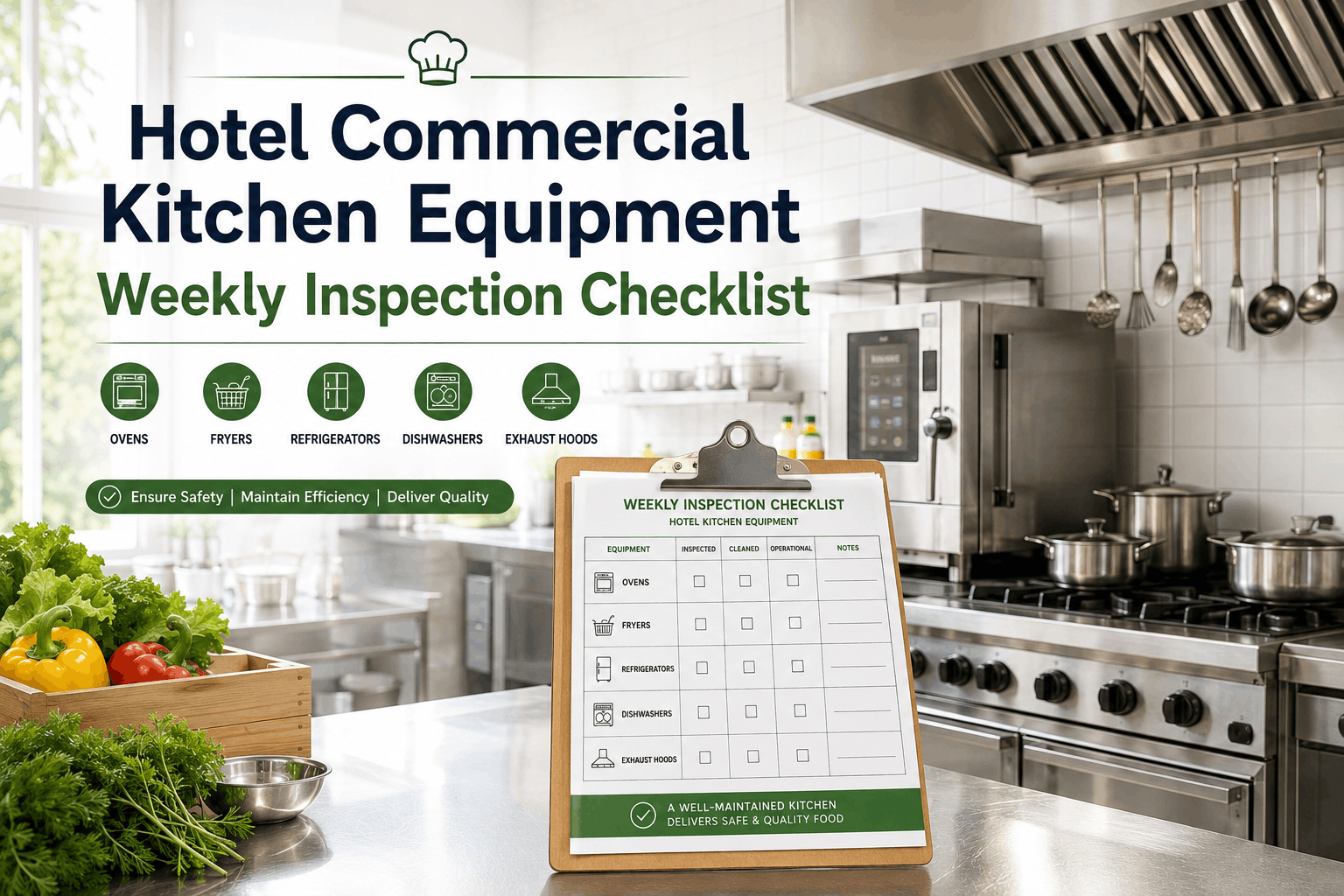
Complete Hotel Restaurant Maintenance Checklist — Six Equipment Zones

The six zones below cover the maintenance categories that generate the highest volume of compliance violations, equipment failures, and unplanned costs at hotel restaurant and F&B operations. Each zone carries daily, weekly, and monthly inspection requirements. Use this as your programme baseline. OxMaint's kitchen asset management and health compliance calendar templates deploy each zone as a scheduled digital inspection with automated task generation, photo documentation, and compliance logging.

01
Refrigeration and Cold Storage
Highest compliance risk — temperature documentation failures are the leading cause of hotel restaurant health violations
Daily
Walk-in cooler temperature logged at opening and at shift change — acceptable range 35–38°F with timestamp
Walk-in freezer temperature logged — acceptable range 0°F or below, logged twice daily minimum
All under-counter refrigeration units — temperature checked and recorded before service
Door gaskets on all refrigeration units — inspected for tears, gaps, or condensation accumulation
Reach-in coolers in bar and pastry — temperature verified and logged before service opens
Weekly / Monthly
Walk-in cooler coils and condenser — inspected for frost build-up and cleaned on monthly schedule
Refrigeration drain lines — flushed and inspected for blockage weekly to prevent overflow and contamination
All door hinges and closers — lubricated and adjusted monthly to ensure full seal on closure
Temperature monitoring system calibration — probes verified against certified thermometer monthly
Full refrigeration unit inventory — all gaskets, hinges, and seals photographed and documented monthly
02
Cooking Equipment and Ranges
Equipment failures during service are revenue events — daily inspection prevents mid-service breakdowns
Daily
Combi ovens — operational check, temperature calibration verified, steam function tested before service
Gas ranges and burners — all burners ignite cleanly, no yellow flame, no gas odour at any position
Fryers — oil temperature verified at set point, heating elements functional, basket condition checked
Salamander and broiler — elements functional, drip tray clean, temperature reaches set point
Induction cooktops — all zones functional, surface clean and uncracked, control panel operational
Weekly / Monthly
Fryer oil filtered daily — oil quality tested weekly and changed per manufacturer and food safety standard
Combi oven descaling — completed on manufacturer interval; water quality and filtration checked monthly
Gas connections and flexible hoses — inspected for wear, cracking, and secure fittings monthly
Oven door hinges and seals — inspected for heat loss, adjusted, and replaced on wear schedule
Manufacturer PM intervals — any unit at service interval generates automatic digital work order
03
Ventilation, Exhaust, and Fire Suppression
Fire code compliance — exhaust system failures are the leading cause of hotel kitchen fires and insurance claims
Daily
Exhaust hood — visually inspected for grease accumulation before service; filters seated correctly
Make-up air system — operational and supplying adequate airflow to support exhaust system balance
Fire suppression system indicator — green status confirmed; no tamper or fault indicators visible
Exhaust fan operation — confirmed running at correct speed; no unusual noise or vibration
All ansul nozzles over cooking equipment — visually confirmed present, uncapped, and correctly aimed
Weekly / Monthly
Hood filters — removed, degreased, and reinstalled weekly; condition assessed for replacement
Grease trap — inspected weekly, pumped on schedule per local code; records maintained digitally
Exhaust duct interior — professional cleaning completed on code-required interval (typically quarterly)
Fire suppression system — semi-annual inspection by certified contractor; certificate stored digitally
Make-up air filters — inspected monthly; replaced before pressure drop affects exhaust balance
04
Warewashing and Dishwash Systems
Sanitation compliance — chemical dosing failures and temperature shortfalls produce immediate health code violations
Daily
Wash and rinse temperatures verified — wash cycle at minimum 150°F, rinse at 180°F for high-temp machines
Chemical sanitiser concentration — tested with test strips at opening and midday; results logged
Wash arms and spray jets — checked for blockage and cleaned before service begins
Door gaskets and curtains — inspected for tears and cleaned to prevent contamination of clean ware
Chemical supply levels — detergent, rinse aid, and sanitiser containers checked and refilled as needed
Weekly / Monthly
Deliming of wash chamber and arms — completed weekly using manufacturer-approved deliming agent
Chemical dosing pumps — calibrated and flow rate verified weekly against manufacturer specification
Wash tank heating element — inspected monthly for scale build-up that reduces heating efficiency
Glasswasher in bar — chemical dosing verified, rinse temperature confirmed, interior descaled weekly
Full machine inspection and service — completed on manufacturer annual interval with records stored digitally
05
Ice Machines and Beverage Equipment
Most frequently cited in health inspections — mould, scale, and cleaning frequency violations are preventable with PM
Daily
Ice machine exterior and bin — visually inspected for mould, discolouration, or foreign material in ice
Ice scoop and holder — sanitised and stored correctly; no direct contact with ice bin interior
Draught beer system — line pressure checked, temperature at tap verified, all taps pulling cleanly
Coffee and espresso equipment — group heads clean, steam wands purged, grind settings verified
Beverage dispensers — nozzles and drip trays cleaned and sanitised before service opens
Weekly / Monthly
Ice machine full clean and sanitise — completed on 30-day cycle minimum using manufacturer-approved products
Ice machine water filter — replaced on manufacturer schedule; filter change date logged with photo
Beer line cleaning — completed every 14 days; chemical concentration and contact time logged
Coffee equipment descaling — completed monthly; group head back-flush completed weekly
All beverage equipment service intervals — any unit at manufacturer interval generates automatic PM work order
06
Food Safety and Compliance Records
Documentation is the compliance — a missing log carries the same enforcement outcome as a failed inspection
Daily
All hot holding equipment — temperature logged at opening, mid-service, and closing with timestamp
Food delivery receiving log — temperature of all incoming deliveries recorded with supplier and time
Handwashing station audit — soap, paper towels, and hot water confirmed at all stations before service
Surface sanitiser concentration — tested at prep surfaces at opening and after each deep clean
Pest control log — any evidence of activity recorded immediately as a digital work order and escalated
Weekly / Monthly
HACCP temperature log review — weekly audit of all refrigeration and cooking logs for gaps or excursions
Allergen management records — supplier certificates of conformance verified and on file monthly
Staff food handler certification — all active kitchen staff certifications confirmed current monthly
Chemical storage and labelling — all cleaning products verified labelled, dated, and stored correctly
Full internal food safety audit — completed monthly with digital sign-off; records exportable on demand
Deploy every zone of this checklist as a digital inspection — before your next health inspection arrives. OxMaint's F&B equipment tracking and health compliance calendar templates are free to start. Live in 3–5 days. No IT project required.

Paper Logs vs. Digital Hotel Restaurant Maintenance

The comparison below covers the operational dimensions that matter to hotel F&B directors, executive chefs, and operations managers evaluating a move from paper-based maintenance coordination to a structured digital maintenance platform.

Operational Dimension Paper Logs and Manual Coordination OxMaint Digital Platform
Refrigeration temperature logging Handwritten — retrievable only from physical binder at specific location Mobile entry — timestamped, searchable, exportable in under 60 seconds
Health inspection readiness Days to compile — risk of missing, illegible, or incomplete records On-demand compliance report generated instantly from any device
Equipment PM scheduling Separate paper calendar — easily deferred when reactive work spikes during service Auto-generated in the same work order queue as reactive tasks — never deferred
Recurring equipment fault detection Invisible without manual cross-referencing of paper service records Auto-flagged after 2 events on the same asset within 30 days
Ice machine cleaning compliance Verbal confirmation — no timestamp, no photo, no proof of completion Photo-documented sign-off with technician identity and timestamp per task
Fire suppression and hood records Paper certificates in filing cabinet — inaccessible during unannounced inspection Digital certificate stored against asset — accessible instantly on any device
Brand standard audit readiness Manual compilation — hours of preparation for each audit cycle Structured report exports covering all PM intervals, sign-offs, and compliance records
Benchmarks from hotel F&B and food service operations programmes. Results vary by property size and configuration.

Swipe to view all columns on mobile

How OxMaint Automates Hotel Restaurant Maintenance Operations

OxMaint's kitchen asset management and health compliance calendar is built around the operational reality of hotel F&B — where cooking equipment, refrigeration, exhaust systems, warewashing, and beverage equipment all run simultaneously across a high-volume service environment, managed by teams that cannot pause service to close a work order. Every feature below maps to a failure point in paper-based hotel restaurant maintenance coordination.


Feature 01

F&B Equipment Tracking

Every combi oven, walk-in cooler, fryer, dishwasher, ice machine, and bar asset registered with its own service history, compliance record, and PM schedule. Recurring faults flagged at two events before a third failure hits service.

Asset RegistryFault History

Feature 02

Health Compliance Calendar

Refrigeration logs, temperature records, chemical concentration tests, and food safety audits auto-generate as scheduled mobile tasks on the correct daily, weekly, or monthly frequency. Overdue tasks escalate to the chef or F&B manager before the compliance window closes.

Auto-SchedulingAuto-Escalation

Feature 03

Kitchen Asset Management

Pre-built digital inspection templates for every kitchen equipment zone — refrigeration, cooking, exhaust, warewashing, ice, and compliance records. Each item requires photo evidence before the inspection closes. The daily kitchen record is timestamped and permanently accessible.

Photo EvidenceDigital Sign-Off

Feature 04

Compliance Documentation

Temperature logs, chemical concentration records, fire suppression certificates, hood cleaning records, and HACCP audit history all stored against the relevant asset. When a health inspector arrives, the full compliance record exports in under 60 seconds from any device.

Instant ExportAudit-Ready

Feature 05

Mobile-First Execution

Every inspection completed from a phone or tablet — at the walk-in cooler, at the dishwasher station, at the bar, or at the hood. Offline mode works without signal in basement plant rooms. All data syncs automatically on reconnection.

iOS and AndroidOffline Mode

Feature 06

Live F&B Operations Dashboard

F&B directors see every open inspection, every overdue compliance task, every asset in degraded mode, and every documentation gap — across all restaurant, bar, and kitchen zones simultaneously. No manual log review required to know where compliance stands.

Real-TimeMulti-Zone

Hotel Restaurant Maintenance: Daily, Weekly, and Monthly at a Glance

Daily Tasks
Refrigeration temperature logs — all units, twice minimum
Hot holding temperature log — opening, mid-service, close
Dishwasher wash and rinse temperature and chemical check
Cooking equipment operational check before service
Ice machine visual inspection — bin, scoop, and storage
Fire suppression status indicator confirmed green
Handwashing station supplies confirmed at all locations
Surface sanitiser concentration tested at prep areas
Weekly Tasks
Hood filters removed, degreased, and reinstalled
Grease trap inspection and service as required
Dishwasher deliming and chemical dosing pump calibration
Beer line cleaning — chemical concentration and time logged
Walk-in refrigeration drain lines flushed and cleared
Fryer oil quality tested — changed if quality test fails
HACCP temperature log audit — gaps and excursions reviewed
Glasswasher descaling and dosing verification at bar
Monthly Tasks
Ice machine full clean and sanitise — logged with photo
Refrigeration coil and condenser inspection and clean
Temperature probe calibration against certified thermometer
Combi oven descaling on manufacturer interval
Staff food handler certifications confirmed current
Allergen management records and supplier docs reviewed
Full internal food safety audit with digital sign-off
All equipment at PM interval — auto work order generated

The first benefit I saw after going digital was not faster inspections — it was an unannounced health visit where the inspector asked for 60 days of refrigeration logs and I handed them an exported report from my phone in under three minutes. That had never been possible before. The data was always there. The system for presenting it instantly was not. We have not had a documentation-related citation since going live on OxMaint.
Director of Food and Beverage
Full-Service Hotel, 280 Keys and Two Restaurant Outlets — Urban Market

Frequently Asked Questions

How often does a hotel restaurant legally require refrigeration temperature logging?
Most local health codes require refrigeration temperature logs at minimum twice daily — at opening and at the shift change — with records retained on site for 30 to 90 days depending on jurisdiction. High-volume hotel restaurant operations under HACCP plans may require continuous monitoring or more frequent manual logs during high-risk service periods. OxMaint auto-generates each required temperature log as a scheduled mobile task and stores every entry in a timestamped digital record — eliminating the paper binder that creates documentation risk during unannounced inspections.
What are the most common health violations at hotel restaurant kitchens?
The most frequently cited violations at hotel restaurant kitchens are: inadequate refrigeration temperature documentation (missing or incomplete logs), ice machine mould or scale from insufficient cleaning frequency, dishwasher chemical concentration failures (sanitiser below required ppm), inadequate handwashing station provision, and improper food storage temperature. The majority are documentation failures — the food safety event did not occur, but the record that it was prevented was not produced. A structured digital inspection system that requires sign-off at the asset, not at the desk, closes each of these gaps simultaneously.
How often should an ice machine in a hotel restaurant be cleaned?
Most manufacturers and health codes require hotel restaurant ice machines to be fully cleaned and sanitised at minimum every 30 days, with water filter replacement per manufacturer schedule. High-output machines in warm or humid kitchen environments may require more frequent cleaning. The cleaning must be documented with the date, the technician name, the products used, and a confirmation that the machine returned to service following sanitation — a digital task with photo sign-off is the only mechanism that provides this documentation at the time of cleaning rather than from memory.
How does OxMaint handle hotel F&B compliance documentation for health inspections?
OxMaint stores every temperature log entry, every compliance sign-off, every chemical concentration test, and every corrective action against the relevant asset record — permanently, with timestamp and technician identity. When a health inspector arrives, the compliance record for any piece of equipment or any zone exports as a structured report in under 60 seconds from any mobile device or browser. There is no paper binder to locate, no handwriting to interpret, and no gap in the record where a missed log entry would otherwise appear. Start a free trial and set up your first refrigeration compliance log today.
Hotel F&B Maintenance Automation — Free to Start

Stop Managing Restaurant Compliance by Paper. Start Managing It by Data.

Every refrigeration log your kitchen records on paper, every ice machine cleaned without a photo sign-off, and every PM task deferred through a busy service week is a compliance gap and an operational risk. OxMaint gives your hotel restaurant operations team structured F&B equipment tracking, a health compliance calendar, kitchen asset management, and audit-ready documentation — live in days, not months.

Share This Story, Choose Your Platform!