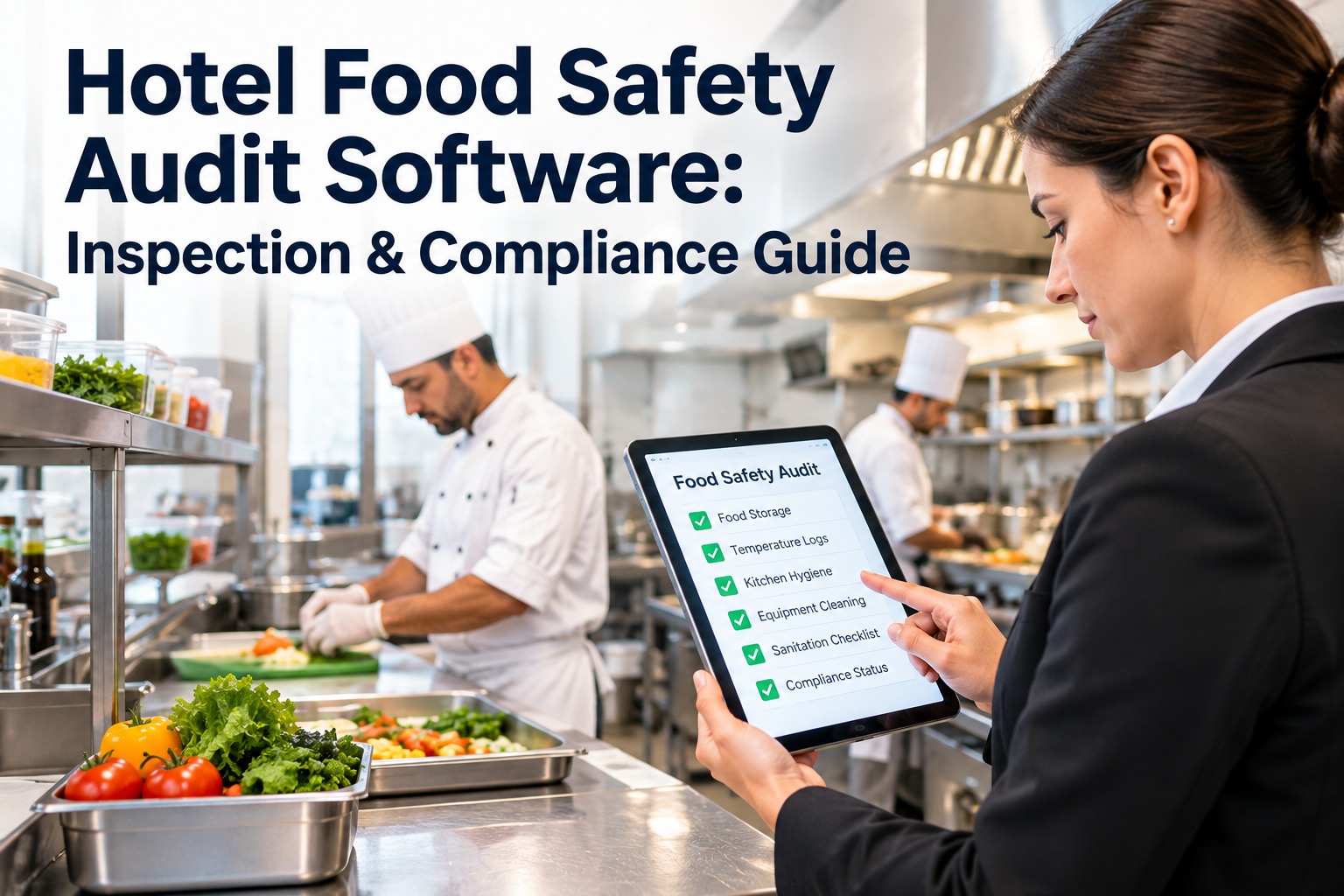
Hotel Food Safety & HACCP Checklist: Kitchen Compliance & Maintenance Guide

By Liam Neeson on March 30, 2026

hotel-food-safety-haccp-checklist-kitchen-compliance-maintenance

A single missed temperature log — not a failed inspection — is what triggers most hotel food safety violations. Studies show that the majority of HACCP compliance failures in hospitality stem from incomplete documentation, not unsafe kitchens. Your walk-in cooler may be running at 38°F right now, but if the log says otherwise — or says nothing — you are not compliant. This checklist covers every critical control point across your hotel's food service operation: temperature monitoring, equipment maintenance, cleaning schedules, staff hygiene, and audit documentation, structured for daily use by kitchen and engineering teams alike. Book a demo to see Oxmaint's HACCP Compliance Module and Kitchen Inspection Templates configured for hotel F&B operations.

6HACCP Critical Control Points
48Checklist Tasks Across All Phases
41°FMax Cold Storage Temperature
$1.4MAvg Settlement for Undocumented Temp Failures
!
The Real Risk: A Nashville hotel's walk-in cooler ran at 48°F for 6 hours. The compressor fault was noted in the engineer's notebook — but never raised as a work order. 63 guests fell ill. The civil suit settled for $1.4 million. A digital temperature log and one maintenance ticket would have prevented it.
Priority: Critical Food safety CCP — never skippable High Regulatory or hygiene compliance Standard Required before phase sign-off
CCP 1
Receiving
Temp check all deliveries. Reject if above 41°F cold / below 135°F hot.
CCP 2
Cold Storage
Walk-in and reach-in units at 41°F or below. Continuous monitoring required.
CCP 3
Cooking
Internal temps by protein: poultry 165°F, ground meat 155°F, fish 145°F.
CCP 4
Hot Holding
Cooked food held for service must stay at 135°F or above at all times.
CCP 5
Cooling
135°F to 70°F within 2 hours. 70°F to 41°F within the next 4 hours.
CCP 6
Reheating
Reheated food must reach 165°F within 2 hours. Log every reheat cycle.
PHASE 1
Temperature Monitoring and Cold Chain Verification
Daily — Opening and Closing ShiftsHead Chef + Kitchen SupervisorLog every reading — no blanks accepted
A temperature log with missing entries is treated as a temperature log with unknown temperatures — not as a compliant record. Every probe reading, every cooler check, every hot-hold verification must be entered with the time, staff name, and corrective action if the limit was breached. Calibrate all probe thermometers monthly and after any drop or impact.
1.1 Receiving and Delivery Temperature Checks
#TaskAcceptance Criteria and Recorded ValuePrioritySign-Off
1.1.1 Check temperature of all incoming refrigerated deliveries at point of receipt using a calibrated probe thermometer. Log supplier name, product, measured temperature, and accept or reject decision. Refrigerated items at 41°F or below. Frozen items at 0°F or below. Reject and document any deviation. Temp recorded: ___°F Critical ________
1.1.2 Inspect all received deliveries for packaging integrity — check for broken seals, swollen cans, torn vacuum packaging, or signs of temperature abuse such as ice crystals in thawed product. No compromised packaging accepted. Rejected items quarantined and logged with supplier notification. Items rejected: _____ Critical ________
1.1.3 Verify supplier delivery vehicle temperature before unloading — request vehicle temperature log or read interior thermometer. Document vehicle temperature alongside product temperatures in the receiving log. Vehicle interior at or below 41°F for refrigerated loads. Delivery vehicle temp recorded: ___°F High ________
1.2 Cold Storage Temperature Monitoring
#TaskAcceptance Criteria and Recorded ValuePrioritySign-Off
1.2.1 Record walk-in cooler internal temperature at opening, mid-shift, and closing — minimum three readings per day per unit. Use a fixed calibrated thermometer and record ambient air temperature, not door display. 41°F or below at all reading points. Any reading above 41°F triggers immediate corrective action. AM: ___ Mid: ___ PM: ___°F Critical ________
1.2.2 Check all reach-in refrigerators and prep coolers at shift start. Log unit ID, location, and air temperature. Flag any unit outside range for engineering inspection and move product to compliant storage immediately. All reach-in units at 41°F or below. Out-of-range units flagged and emptied pending engineering inspection. Units checked: _____ Critical ________
1.2.3 Verify walk-in freezer temperature at each shift — log unit temperature and confirm all stored items are solidly frozen with no signs of partial thaw or frost accumulation indicating door seal failure. Freezer at 0°F or below. No partial thaw signs. Door gaskets intact. Freezer temp: ___°F Critical ________
1.2.4 Check minibar units in guest rooms on a rotating schedule — minimum 10% of rooms per week. Record room number, unit temperature, and any product stored beyond labeled use-by date. Minibar units at 41°F or below. Expired product removed. Rooms checked per week: _____ Temp range: ___°F High ________
1.3 Cooking, Hot Holding, and Cooling Temperature Verification
#TaskAcceptance Criteria and Recorded ValuePrioritySign-Off
1.3.1 Record internal cooking temperature for all potentially hazardous proteins at minimum one sample per protein per service — poultry at 165°F, ground meat at 155°F, whole cuts and fish at 145°F. Log item, cook time, and temperature. All proteins reach required internal temperature before service. No undercooked items served. Items logged per service: _____ Critical ________
1.3.2 Verify hot holding equipment temperature at service start and every 2 hours during service. Record steam table, bain marie, and heat lamp temperatures. Any hot-held food below 135°F must be reheated to 165°F or discarded. Hot holding at 135°F or above throughout service. Sub-limit food reheated or discarded and logged. Units checked: _____ Critical ________
1.3.3 Log cooling process for all batch-cooked items — record start temperature, time at which 70°F is reached (must be within 2 hours), and time at which 41°F is reached (must be within a further 4 hours). 135°F to 70°F within 2 hours. 70°F to 41°F within 4 additional hours. Batches exceeding limits discarded. Batches logged: _____ Critical ________
GATE 1 All delivery temperatures logged. Walk-in and reach-in cooler readings complete across all shifts. Cooking and hot-hold temperatures recorded per service. Cooling logs closed on all batch items. Phase 2 cannot be signed off until Gate 1 is cleared by the Head Chef.
Oxmaint Temperature Logging Module
Automated temperature logging with mandatory fields — staff cannot submit a blank entry. Every probe reading logged against the asset, time-stamped, and flagged instantly if outside the critical limit. No more paper binders during unannounced inspections.
PHASE 2
Kitchen Equipment Maintenance and Calibration
Weekly, Monthly, and QuarterlyEngineering + Head ChefCalibration records required for HACCP defensibility
A temperature log from an uncalibrated thermometer is not HACCP documentation — it is a record of what a broken instrument reported. Every measurement instrument in your kitchen must be calibrated on schedule and that calibration must be documented. A walk-in cooler compressor showing intermittent faults is not a monitoring note — it is a work order that must be raised and tracked to completion.
2.1 Refrigeration Equipment Maintenance
#Maintenance ItemPass Criteria and Recorded ResultPrioritySign-Off
2.1.1 Inspect walk-in cooler door gaskets, hinges, and seals — check for tears, compression loss, or gaps that allow warm air infiltration. Confirm door closes and seals fully without manual force. Gaskets intact with full compression. Door self-closes and seals. No visible gaps. Gasket condition: ________ Critical ________
2.1.2 Clean walk-in cooler condenser coils on a quarterly schedule — remove dust and debris buildup that forces the compressor to work harder and increases temperature variance. Log cleaning date and condition found. Coils clean and free of dust buildup. Compressor cycling normally. Condition before cleaning: ________ High ________
2.1.3 Inspect all reach-in refrigerator door gaskets and verify thermostat accuracy — place a calibrated thermometer inside the unit for 15 minutes and compare to unit display. Log any variance and raise a work order if deviation exceeds 3°F. Thermostat variance within 3°F of calibrated reading. Gaskets intact. Units with greater variance receive engineering work order. Units checked: _____ High ________
2.2 Cooking Equipment and Thermometer Calibration
#Calibration ItemPass Criteria and Recorded ResultPrioritySign-Off
2.2.1 Calibrate all probe thermometers using the ice-water method monthly — 32°F in ice slurry — and the boiling water method — 212°F at sea level. Record thermometer ID, reading, adjustment made, and next calibration date. Ice water reading at 32°F within 2°F. Boiling water reading within 2°F of altitude-adjusted target. Any thermometer outside tolerance removed from service. Thermometers calibrated: _____ Critical ________
2.2.2 Inspect commercial dishwasher final rinse temperature — confirm sanitizing rinse reaches minimum 180°F for high-temp machines or verify chemical sanitizer concentration for low-temp machines using test strips. Log reading per meal period. High-temp machines reach 180°F at the rack. Chemical machines at required concentration per manufacturer spec. Final rinse temp: ___°F Critical ________
2.2.3 Test oven and cooking equipment thermostat accuracy quarterly — place a calibrated probe thermometer in the cavity and compare to set point at 350°F. Record variance and raise a work order if deviation exceeds 15°F. Oven thermostat within 15°F of set point. Units exceeding variance receive calibration or service work order. Variance found: ___°F High ________
2.2.4 Inspect and test kitchen hood suppression system and confirm ventilation hood is drawing sufficient airflow — check grease filter condition, confirm no blockages, and log last service date from the maintenance record. Filters clean or within service schedule. Airflow adequate. Suppression system pressure indicator in green. Last service date: _______ Critical ________
GATE 2 All refrigeration units inspected and maintenance logged. Probe thermometers calibrated with records on file. Dishwasher sanitizing temperature verified per meal period. Oven thermostats within tolerance. Hood system inspected. Phase 3 cannot begin until Gate 2 is signed by the Chief Engineer.
Oxmaint Kitchen Inspection Templates
Pre-built inspection templates for walk-in coolers, dishwashers, probe thermometers, and cooking equipment — with calibration schedules auto-generated, work orders raised on breach, and engineering alerts sent before any deadline passes.
PHASE 3
Sanitation, Hygiene, and Cross-Contamination Controls
Daily — Per Meal Period and ShiftKitchen Supervisor + Safety OfficerCleaning logs required per station, not property-wide
A single cleaning log entry that covers "the whole kitchen" does not satisfy HACCP. Each food contact surface, each station, each piece of shared equipment requires its own cleaning and sanitizing record. Log the time, the surface, the chemical used, the concentration, and the staff member responsible. Cross-contamination between raw proteins and ready-to-eat food is the most common route to guest illness in hotel kitchens.
3.1 Food Contact Surface Cleaning and Sanitizing
#Sanitation ItemPass Criteria and Recorded ResultPrioritySign-Off
3.1.1 Clean and sanitize all cutting boards between protein types and after each meal period — verify sanitizer solution concentration using a test strip and confirm contact time per manufacturer specification before wiping or rinsing. Sanitizer at correct concentration confirmed by test strip. Contact time met. Color-coded boards used by protein type. Boards sanitized: _____ Critical ________
3.1.2 Clean and sanitize all food prep surfaces — stainless steel tables, slicer surfaces, mixer bowls, and food contact inserts — after every use and at end of each shift. Log surface, cleaning agent, and time. All food contact surfaces clean and sanitized after each use. No food residue on any surface at shift end. Surfaces logged: _____ Critical ________
3.1.3 Verify sanitizer bucket concentrations on the kitchen floor at each shift — test sanitizer solution in all active buckets using test strips and replace any solution that falls below the minimum effective concentration. All active sanitizer buckets within effective concentration range per test strip. Out-of-range solutions replaced immediately. Buckets tested: _____ High ________
3.2 Staff Hygiene and Personal Protective Equipment
#Hygiene ItemPass Criteria and Recorded ResultPrioritySign-Off
3.2.1 Conduct shift-start hygiene inspection for all kitchen staff — confirm clean uniforms, hair restraints, no hand jewelry, gloves on when required, and nails trimmed and clean. Log any non-conformances and corrective action taken. 100% of staff pass hygiene inspection before food contact tasks begin. Non-conformances corrected before shift. Non-conformances: _____ Critical ________
3.2.2 Verify handwashing station compliance — confirm soap, paper towels, and warm running water available at all designated handwashing sinks. Confirm no food preparation is taking place at handwashing sinks. Log any station found non-compliant. All handwashing stations stocked and accessible. No prep activity at handwashing sinks. Non-compliant stations found: _____ Critical ________
3.2.3 Confirm illness reporting policy is active — verify any staff member reporting illness symptoms including vomiting, diarrhea, jaundice, or infected skin lesions is removed from food handling duties and documented per health authority requirements. Illness reporting log current. Affected staff removed from food contact duties. Documentation on file. Incidents logged: _____ Critical ________
3.3 Pest Control and Storage Compliance
#Storage and Pest ItemPass Criteria and Recorded ResultPrioritySign-Off
3.3.1 Inspect dry storage for food stored on the floor, expired date-labeled items, open packaging, or evidence of pest activity — rodent droppings, gnaw marks, or insect activity. Log findings and raise a pest control work order for any evidence found. No food stored on floor. No open packaging. No expired items. No pest evidence found. Issues found: _____ Critical ________
3.3.2 Verify FIFO (First In, First Out) rotation in all cold and dry storage areas — confirm date labels on all prepared and opened items, and that oldest stock is positioned at the front. Log any items without date labels as a non-conformance. FIFO applied in all storage areas. All items date-labeled. No unlabeled items in storage. Non-conformances: _____ High ________
3.3.3 Confirm cleaning chemicals are stored separately from food, food contact equipment, and single-use items — in a locked cabinet with Safety Data Sheets accessible. Verify no chemical containers are unlabeled or decanted into food containers. All chemicals in designated locked storage. SDS accessible. No unlabeled containers. No food-use containers holding chemicals. Condition: ________ Critical ________
GATE 3 All food contact surfaces logged per station. Sanitizer concentrations verified. Staff hygiene inspections completed at shift start. Handwashing stations compliant. Storage areas FIFO-verified and pest-free. Chemicals properly segregated. Phase 4 cannot begin until Gate 3 is signed by the Safety Officer.
HACCP Compliance Module — Oxmaint
Every sanitation log, hygiene check, and storage inspection captured on mobile — with mandatory fields that prevent staff from submitting incomplete records. When an inspector walks in, your entire HACCP log history is retrievable in seconds, not searched for in a binder.
PHASE 4
Audit Documentation, Staff Training, and HACCP Plan Review
Monthly and Annual ReviewGeneral Manager + Food Safety LeadComplete after Gate 3 clearance
HACCP documentation is not a record of what you intended to do — it is proof of what you actually did. Records that cannot be produced at an inspection are treated as tasks that were never completed. Every training session, every corrective action, every verified CCP must be documented, signed, and retained. Schedule the next review before closing out this one.
4.1 Corrective Action and Deviation Log
#Documentation ItemRequired Evidence and Recorded StatusPrioritySign-Off
4.1.1 Review all corrective action logs from the current period — confirm every CCP deviation has a documented corrective action, the affected food was identified and its disposition recorded, and a root cause was assigned and addressed. All deviations have documented corrective actions. Affected food dispositions recorded. Root cause identified for every deviation. Open deviations: _____ Critical ________
4.1.2 Confirm allergen management records are current — menu allergen matrix reviewed against current menu, all staff trained on the current allergen list, and a documented protocol exists for guest allergen requests including how information is communicated to kitchen and service staff. Allergen matrix current with active menu. Staff training records on file. Guest allergen protocol documented. Last review: _______ Critical ________
4.1.3 Verify pest control contractor visit records are on file for all inspections completed in the current period — confirm contractor certification, bait station map is current, and any pest activity findings were followed up with documented corrective action. Pest control records on file. Contractor certification current. Bait station map current. All findings followed up. Last inspection: _______ High ________
4.2 Staff Food Safety Training Records
#Training ItemRequired Evidence and Recorded StatusPrioritySign-Off
4.2.1 Confirm all food-handling staff have a current food handler certification — verify certification is from an approved provider, within its validity period, and stored in the staff training record. New staff must not handle food without a valid certification on file. 100% of food-handling staff certifications current and on file. Staff without valid certification removed from food handling tasks. Staff compliant: _____ of _____ Critical ________
4.2.2 Verify the food safety supervisor or HACCP-trained team lead on each shift — confirm at least one certified food safety supervisor is present during all food service operations, with their certification and roster coverage documented. Certified food safety supervisor present on all shifts. Coverage documented in shift schedule. Gaps identified and resolved. Shifts covered: _____ High ________
4.2.3 Conduct annual HACCP plan review with the food safety team — review any menu changes, equipment changes, or layout changes that affect identified CCPs. Update the HACCP plan document and have it signed by the General Manager and Food Safety Lead. HACCP plan reviewed and updated for current menu and operations. Signed by GM and Food Safety Lead. Next review date scheduled. Last review: _______ Critical ________
COMPLETE All four phases signed off. Temperature logs complete with no blanks. Equipment calibration records current. Sanitation and hygiene logs closed per station. Corrective actions documented. Staff certifications on file. HACCP plan reviewed and signed. Kitchen declared HACCP-compliant for this inspection period.
Replace Paper HACCP Logs with Oxmaint

Your HACCP Compliance, Fully Digital and Audit-Ready in Minutes

Temperature logs with mandatory fields. Calibration schedules auto-generated per asset. Inspection records retrievable in seconds when an Environmental Health Officer walks through your door. Every kitchen compliance task tracked on mobile — no binders, no blanks, no gaps.

HACCP Compliance Module Temperature Logging Kitchen Inspection Templates Calibration Scheduling Mobile Sign-Off Auto CMMS Archiving

Share This Story, Choose Your Platform!