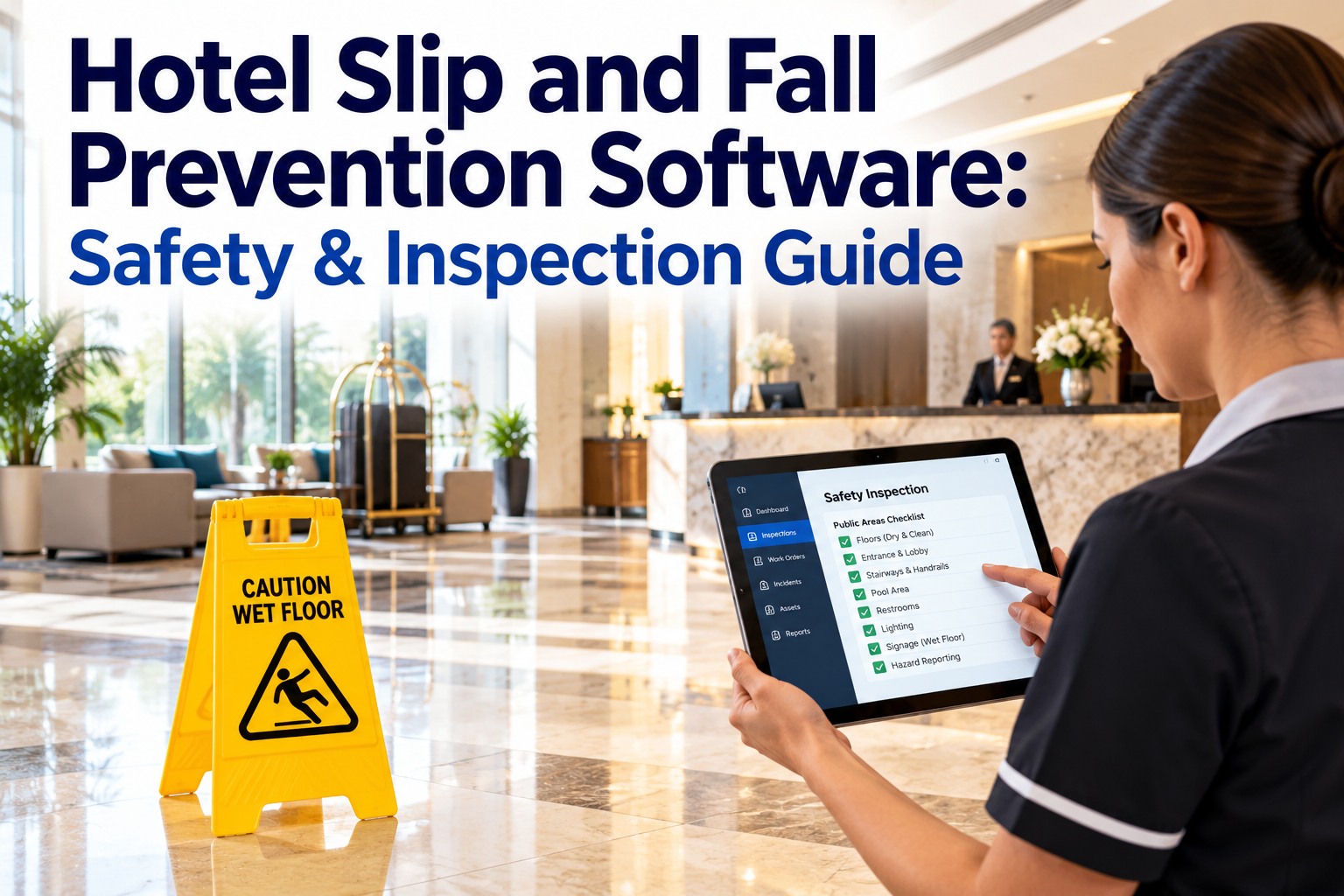
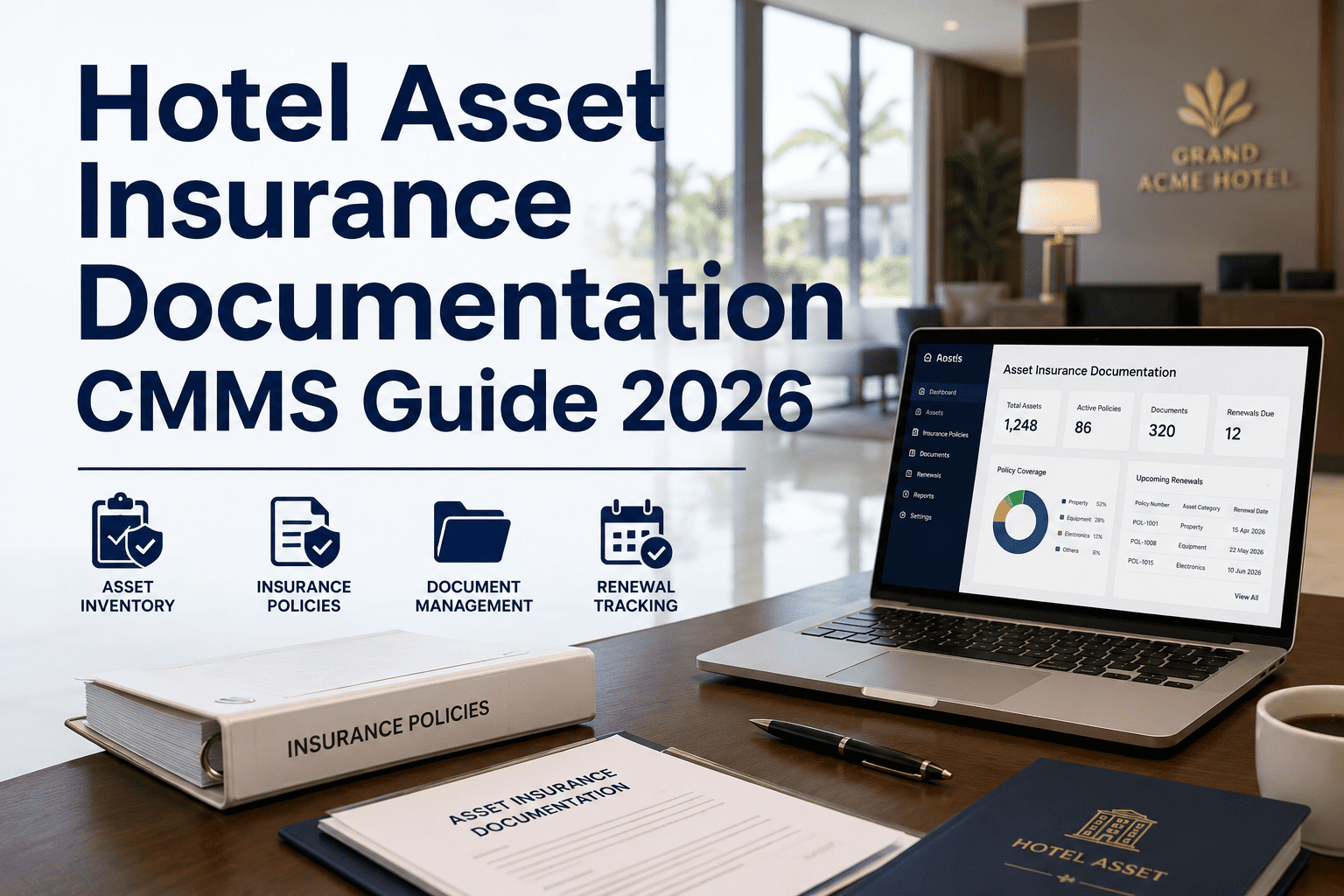
A 250-room extended-stay hotel in Texas faced a catastrophic insurance claim denial when a guest slipped on a wet bathroom floor in a guest room with a known plumbing issue that had been reported three times over two months but never formally documented as a maintenance request. The guest sued for $250,000 (fracture requiring surgery), and during litigation discovery, the insurance company's attorney asked to see the maintenance work orders, PM completion records, and corrective action documentation for the suite. The hotel's response was a collection of post-it notes, handwritten technician notes, and a vague spreadsheet entry that said "bathroom wet" without dates, severity assessment, or resolution steps. The insurance company denied coverage, citing "failure to maintain evidence of due diligence maintenance practices" — essentially arguing that the hotel had no system in place to identify, track, or remediate maintenance issues. The property ended up settling for $180,000 out-of-pocket, covered no insurance reimbursement, and saw a 15% rate increase on their liability renewal. The hotel's maintenance team had actually been responsive to guest complaints, but their lack of systematic documentation created the appearance of negligence, and the insurance company exploited that gap. This scenario is not unusual — it repeats at hotels nationwide, revealing a fundamental disconnect: hotels spend millions on liability insurance but often fail to document the maintenance due diligence that actually supports insurance coverage. Maintenance documentation is not optional paperwork; it is the primary evidence that your property operated with "reasonable care" in the event of injury or property damage claims. This guide explains how CMMS-based maintenance tracking eliminates this liability exposure, transforms your property's maintenance record from scattered notes into auditable evidence of proactive risk management, and demonstrates to insurers that your property deserves lower premiums based on documented system quality. Sign in to OxMaint to activate maintenance documentation and compliance tracking that protects your property against liability claims, or schedule a demo to see how OxMaint creates auditable maintenance records suitable for legal defense and insurance claim support.
Hotel Risk Management · Liability Protection · Compliance Documentation · Insurance · OxMaint
Poor Maintenance Documentation Doesn't Just Increase Your Injury Risk — It Voids Your Insurance Coverage. OxMaint Creates the Audit Trail That Protects Your Claim Defense.
Every maintenance action — PM completion, guest complaint response, corrective repair — is timestamped, photo-documented, and archived in OxMaint, creating an auditable evidence record that demonstrates your property operated with reasonable care. When injury claims arise, this documentation becomes the proof that you maintained due diligence and managed foreseeable risks proactively, rather than a scattered collection of notes that suggests negligence.
$250K+
average settlement amount for preventable slip-and-fall injuries at hotels with poor maintenance documentation — vs. $50K–$100K when CMMS evidence shows documented preventive maintenance program in place
15%
average annual insurance premium increase when claims are filed due to "preventable" maintenance failures — even if claim is partially covered, the rate impact compounds over 3-year policy renewal cycles
90%
of disputed insurance claims where coverage is denied or reduced cite insufficient maintenance documentation as a contributing factor — not lack of maintenance, but lack of proof that maintenance occurred
5–15%
insurance premium reduction that hotels can negotiate when they demonstrate a CMMS-documented preventive maintenance program — savings of $15,000–$50,000 annually on typical hotel liability policies
Insurance coverage for injury claims requires evidence of reasonable care — and reasonable care requires documented, systematic maintenance practices. If your property can't produce timestamped records showing that you identified a safety hazard, assigned a maintenance task, completed the work, and verified the fix, you don't have a defense. Your maintenance team may have actually done the work, but without CMMS documentation, you have no proof. That missing proof is how properties lose claims that should have been covered.
The Five Categories of Hotel Liability Risk That Documentation Addresses
01
Slip-and-Fall: Wet Floors, Rug Hazards, Ice Formation
Most common hotel injury claim. Defense requires documentation that: (1) property staff inspected the area on the date/time of incident, (2) hazard was not present during that inspection, (3) staff monitored the area regularly, and (4) corrective maintenance (drainage repair, rug replacement, ice melt) was completed if hazard was identified. Without timestamped inspection logs and maintenance records, insurer assumes hazard was foreseeable and undisclosed — triggering claim denial.
02
Guest Room Safety: Locks, Electrical, Structural Failures
Injuries from broken locks (security breach), electrical shocks (faulty outlets/wiring), or structural failures (ceiling collapse, window breakage). Defense requires proof that the property had PM schedules for safety inspections, performed those inspections per schedule, identified defects (if any), and completed corrective repairs within reasonable timeframe. CMMS documentation showing "lock PM completed weekly with no defects found" is protective; absence of any documented lock inspection creates liability exposure.
03
Pool & Water Feature Safety: Drowning, Chemical Burns, Infection
Highest-severity claims ($2M–$10M+ settlements). Defense requires proof of rigorous water quality testing (pH, chlorine, alkalinity levels logged daily), equipment inspection records, safety signage placement, and immediate corrective action when parameters were out of range. Documented daily testing logs and corrective actions create the evidence that you operated per industry standards; missing logs trigger assumption of negligence and insurer defensibility concerns.
04
Food Service Safety: Illness Outbreaks, Allergen Cross-Contamination
F&B equipment maintenance is critical to food safety. Defense requires documentation that: (1) food equipment (warmers, refrigeration, fryers) is serviced per manufacturer recommendations, (2) cleaning and sanitization procedures are followed with documented completion, and (3) corrective repairs are completed within hours (not days) of identification. Outbreak claims often succeed in litigation when CMMS evidence shows maintenance was deferred or gaps were present in documentation.
05
Fire & Life Safety: Suppression System Failure, Blocked Egress, Detection Delays
Fire safety is non-negotiable and highly regulated. Defense requires proof that fire suppression systems, emergency lighting, egress pathways, and detection systems are inspected per code, certified by qualified professionals, and any defects are remediated before occupancy. Missing or incomplete fire safety inspection documentation typically results in claim denial and regulatory citations. CMMS fire safety module that auto-schedules inspections and captures timestamped completion records with photo evidence is the only way to defensibly manage this exposure.
How CMMS Documentation Supports Insurance Claims & Liability Defense
Step 1: Incident Occurs
Guest injured (slip-and-fall, electrical shock, etc.). Guest files claim with hotel's insurer, citing property condition/hazard as cause. Insurer initiates investigation and defense process. Without CMMS records, insurer immediately becomes defensive — "we have no way to prove reasonable care was exercised."
Step 2: Insurer Requests Documentation
Insurance company attorney requests: maintenance logs, PM schedules, inspection records, corrective work orders, and photos showing the area/equipment in question. This request goes back 12 months before incident (standard discovery window). With CMMS, you provide timestamped, organized records showing systematic inspection and maintenance. Without CMMS, you produce scattered notes that look disorganized and suggest lack of system.
Step 3: Claim Analysis & Settlement Strategy
Insurer evaluates: (a) was the hazard foreseeable (PM schedule should have caught it)? (b) did property exercise due diligence (documented inspections prove yes/no)? (c) was corrective action timely (work orders show response timeline)? CMMS documentation allows insurer to argue "yes, property maintained reasonable care" — justifying coverage approval and reducing settlement amount. Missing documentation forces insurer to assume negligence and either deny coverage or settle high to reduce litigation risk.
Step 4: Litigation & Claim Resolution
If case goes to trial, CMMS records become primary evidence of property's maintenance diligence. Timestamped PM logs, inspection photos, corrective work order details, and maintenance history are presented to demonstrate "reasonable care." Defense attorney can argue specific facts ("property inspected this area on this date, identified nothing amiss, continued regular monitoring"). Without CMMS, defense is limited to generic claims of "we maintain the property" — unsubstantiated and unconvincing to juries.
Step 5: Policy Renewal & Risk Rating
Even if claim is successfully defended, underwriter sees claim history. With CMMS-documented preventive program, underwriter sees "property maintains systematic maintenance discipline" — a risk mitigator. Without CMMS, underwriter sees "preventable claim occurred, property has no system to prevent recurrence" — triggering rate increase. CMMS documentation directly affects renewal pricing and coverage availability.
Liability Protection · Insurance Documentation · Claim Defense
CMMS Maintenance Documentation is Your First Line of Defense Against Liability Claims and Insurance Coverage Disputes.
OxMaint timestamps every maintenance action, captures photos of completed work, maintains searchable records of PM schedules and completion, and exports compliance documentation suitable for insurance company review and legal defense. When injury claims arise, your CMMS records become the evidence that proves you operated with reasonable care — the difference between claim coverage approval and claim denial.
Specific Maintenance Documentation Requirements for Insurance Defense
What Documentation Your Insurance Company Needs to Defend Your Claims
| Claim Type |
Documentation Needed for Coverage |
CMMS Support |
| Slip-and-Fall (guest room) |
Daily/shift floor inspection logs; PM schedule for floor care; corrective work order if hazard identified |
Auto-schedules floor care PM; work orders capture time/location/completion; photo evidence |
| Pool drowning/chemical burn |
Daily water chemistry test logs (pH, chlorine, alkalinity); lifeguard schedule; safety signage inspection records |
Scheduled daily pool inspection PM; mobile app captures test results at time of inspection; photo documentation |
| Fire safety system failure |
Fire suppression inspection certs (annual professional inspections); monthly fire alarm testing logs; exit sign functionality documentation |
Automated PM scheduling for all fire system inspections; auto-alerts for overdue certs; professional inspector integration for compliance capture |
| Elevator failure / entrapment |
Monthly professional elevator inspection records; daily visual inspection logs; corrective repair completion documentation |
Tracks lift inspections with professional inspector schedule; mobile app for daily checks; work order integration for corrective repairs |
| Food poisoning / allergen cross-contact |
Equipment maintenance schedule (refrigeration, warmer, fryer service dates); cleaning/sanitization logs; corrective action timeline for failed equipment |
Auto-schedules equipment PM by type; captures completed checks with photo; work orders track corrective repairs with response times |
Insurance claims are won and lost on documentation. Your maintenance team may do excellent work, but without CMMS evidence of that work, you have no way to prove it when challenged in a lawsuit.
OxMaint documentation doesn't just protect you during claims — it demonstrates to your insurer that your property operates with disciplined, systematic maintenance, which translates directly to lower premiums. Properties with documented preventive maintenance programs negotiate 5–15% insurance reductions and better coverage terms.
Frequently Asked Questions — Hotel Maintenance Risk Management & Insurance
Will CMMS documentation actually reduce my insurance premiums?
Yes. Bring your CMMS PM schedule, compliance documentation, and incident response records to your insurance renewal meeting. Underwriters specifically look for systematic maintenance programs as risk mitigators. Most hotels see 5–15% rate reductions when they demonstrate CMMS-documented preventive maintenance — savings of $15,000–$50,000+ annually.
What happens if I don't have CMMS documentation when a claim is filed?
Your insurer will request documentation as part of claim investigation. If you can't produce timestamped maintenance records, work orders, PM completion logs, and photos, the insurer becomes skeptical of your "reasonable care" defense. They may deny coverage, force settlement, or add it to your claim history triggering premium increases. The missing documentation becomes evidence against you.
How long should we keep CMMS maintenance records?
Insurance industry standard is 7 years (statute of limitations varies by state; some extend to 10 years for injury claims). OxMaint retains indefinite records by default, with searchable access. In practice, keep at least 5 years of complete maintenance history for every asset and area of the property. This covers the full liability exposure window.
Does having a CMMS guarantee insurance coverage if a claim is filed?
No, but it dramatically improves your position. CMMS documentation proves you had a systematic maintenance program and exercised reasonable care. If the incident is still determined to be caused by a maintenance failure, the policy covers it. If there's no CMMS documentation, the insurer may argue lack of reasonable care and deny coverage entirely. Documentation removes the "we don't know what you were doing" argument.
Should our legal team review our CMMS maintenance program before claims happen?
Absolutely. Have your legal counsel review your CMMS PM schedule for adequacy (are inspection frequencies sufficient?). Ensure CMMS captures corrective action timelines and completion evidence. This proactive review ensures your documentation will be defensible if claimed later. Some properties find their PM schedules are too infrequent or corrective actions are too slow — issues that should be corrected before a claim exposes them.
Can CMMS documentation help in regulatory inspections or citations?
Yes. Fire marshals, health departments, and OSHA inspectors request maintenance documentation during facility inspections. CMMS records showing systematic compliance (fire safety inspections on schedule, water quality testing logs, equipment maintenance records) satisfy regulatory inquiries. Missing documentation triggers citations and corrective action orders. CMMS documentation is equally important for regulatory compliance as it is for insurance claims.
What if our maintenance staff resists CMMS documentation because it's extra work?
Frame it as protection, not punishment. Explain that documented work protects them too — if a guest sues over a maintenance issue and your CMMS shows the technician completed the required PM work, the staff member is protected from liability questions. The documentation proves they did their job. Resistance typically fades once staff understands CMMS is a tool that records their good work, not surveillance.
We had a slip-and-fall claim that initially looked bad — guest fell in the hallway, fracture, $200K+ exposure. But we had OxMaint floor maintenance records showing our staff completed scheduled daily inspections the morning of the incident, with photos showing the area was clear and dry. We had corrective actions logged within hours when the incident was reported. When we provided this documentation to our insurer, they saw we had a real system in place. Claim was approved and settled within 60 days for significantly less than initial exposure. Our risk manager said the CMMS documentation was worth the entire annual subscription cost just from that one case.
— Director of Risk Management, 280-Room Hotel Group · Texas · OxMaint User Since 2024
Insurance Claims Are Won and Lost on Documentation. CMMS Maintenance Records Are the Evidence That Proves Your Property Exercised Reasonable Care.
Timestamped PM logs. Photo evidence of completed work. Corrective action records. Compliance documentation. OxMaint creates the audit trail that protects your property against liability claims and supports your insurance coverage defense.