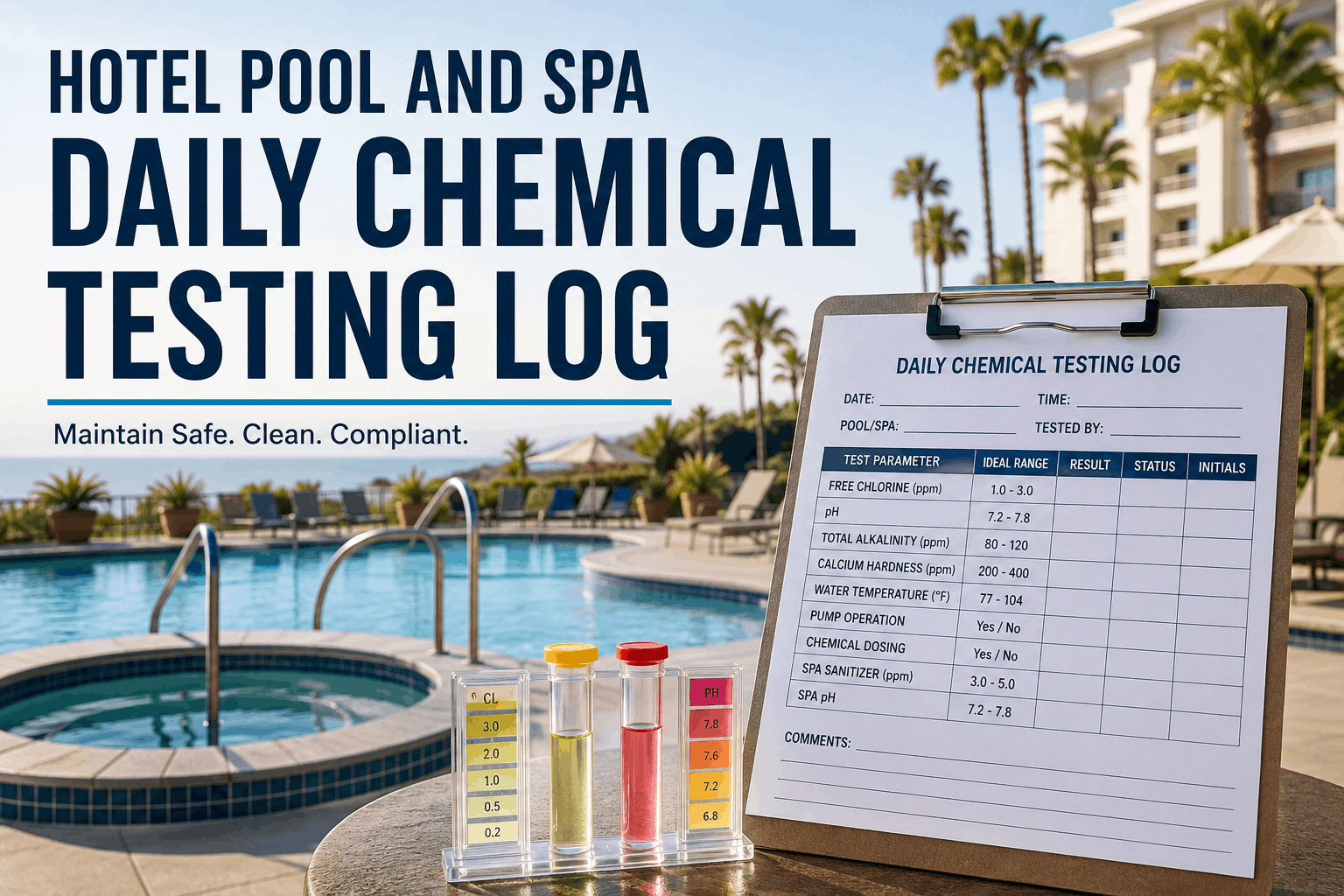
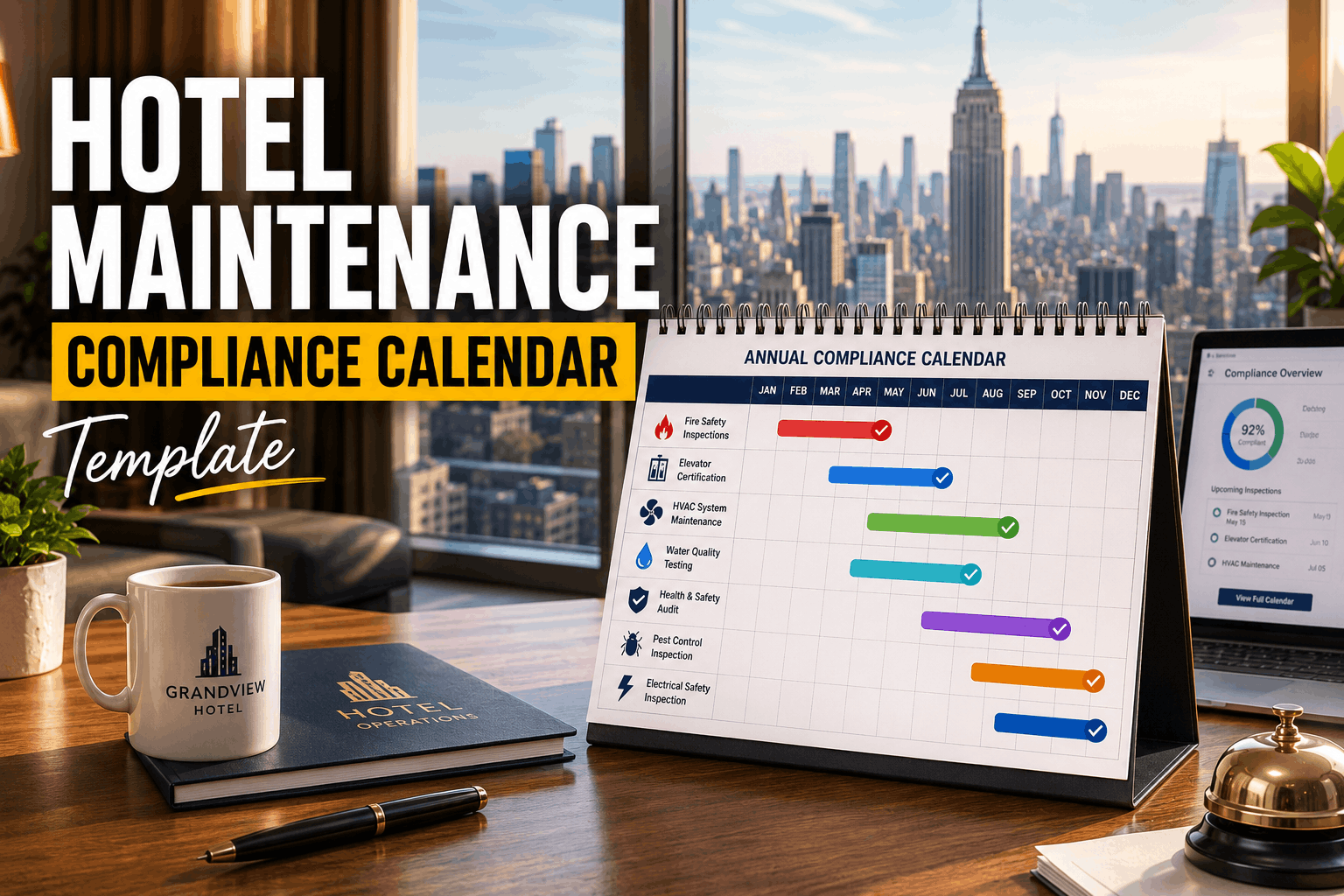
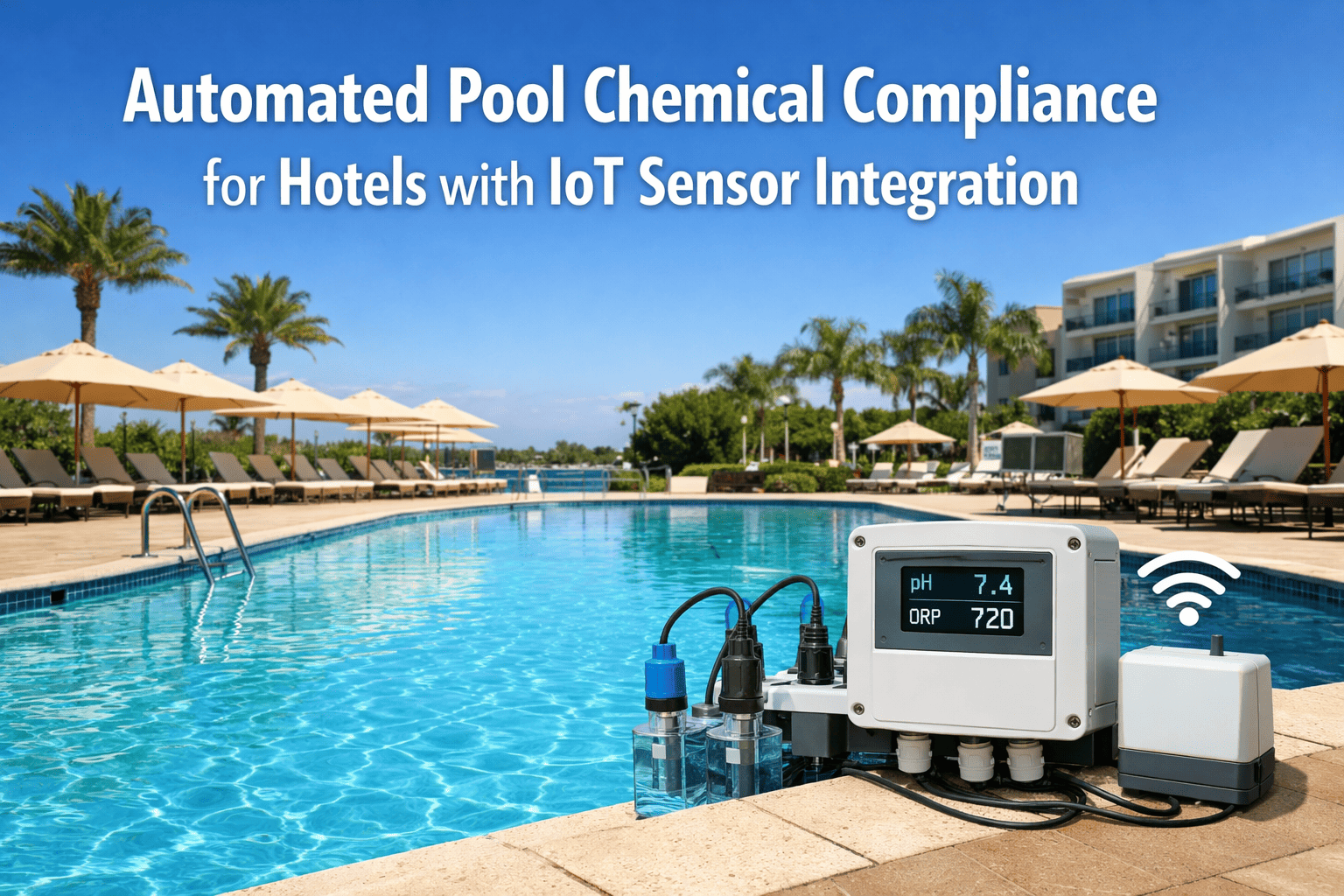
Hotel pools and spas operate under strict health code requirements: daily chemical testing (pH, chlorine, alkalinity), temperature monitoring, and signed operator documentation prove compliance to health departments and protect guest safety. Yet 63% of US hotels lack structured chemical logging systems, relying on paper logs or incomplete digital records vulnerable to loss or audit failure. A single guest illness traced to pool contamination triggers health department closure, liability lawsuits ($500K–$5M damages), and franchise system penalties. OxMaint's hotel pool and spa chemical log template captures daily water test readings, operator sign-offs, corrective action documentation, and compliance evidence — transforming pool operations from reactive response to systematic health code adherence. Download this comprehensive daily water testing template and eliminate guesswork from hotel pool safety compliance.
Hotel Pool Safety Compliance Made Documented and Auditable
OxMaint's pool chemical log template includes daily test fields (pH, chlorine, alkalinity, temperature), operator sign-off, corrective action tracking, and compliance documentation — ready to satisfy health department audits and guest safety requirements.
Hotel Pool and Spa Chemical Safety: Daily Testing and Health Code Compliance
Hotel pools and spas create concentration of chemical-sensitive bacteria (Legionella, E. coli, cryptosporidium) risk: water temperature 77–104°F (optimal growth), continuous guest exposure (hundreds daily), children and immunocompromised guests (high-risk populations), and chlorine residual failures enabling pathogen multiplication. Health codes mandate daily chemical testing: free chlorine residual 1–3 ppm (provides pathogen kill), pH 7.2–7.8 (optimal disinfectant effectiveness), total alkalinity 80–120 ppm (pH buffering), and temperature monitoring (preventing scalding, limiting Legionella growth). When testing is incomplete or results outside range, operator must document corrective action: chlorine boost, pH adjustment, or system shutdown until correction verified. Audit-ready documentation proves systematic compliance preventing liability exposure. Hotels without structured logging (using paper logs, unreliable digital records, or no documentation) face health department enforcement: closure orders, fines up to $1,000 per violation per day, and franchise system decertification when guest illness is traced to contaminated pool.
Record free chlorine (target 1–3 ppm), total chlorine, pH (target 7.2–7.8), total alkalinity (target 80–120 ppm), temperature. OxMaint template includes test result fields, compliance ranges, and auto-alert when readings fall outside acceptable parameters triggering corrective action documentation.
Each daily log entry requires operator name, signature, time of testing. OxMaint maintains digital signature capability and operator credential verification — creating accountability chain proving who conducted tests and when.
When chemical parameters fall outside range, document corrective action: chlorine addition (amount, time), pH adjustment (acid/base treatment), pool closure (if unsafe), verification testing confirming correction. OxMaint tracks corrective action completion preventing incomplete remediation.
OxMaint generates monthly/quarterly compliance reports: percentage of days within range, corrective action count, operator staffing continuity. Health department audits see organized documentation proving systematic testing discipline rather than spotty paper records.
Chemical log trends reveal equipment failures: chronically low chlorine (pump issue), pH drift (feed system malfunction), temperature variation (heater problem). Maintenance alerts triggered by chemical trends enable preventive repair before system failure forces pool closure.
If guest illness occurs, documented daily testing proves hotel maintained safe chemical conditions at time of exposure. Audit trail demonstrates due diligence preventing liability claims and supporting insurance defense.
Hotel Pool Chemical Testing: Standard Parameters and Health Code Requirements
Building Your Hotel Pool Chemical Logging Program
Define testing times (morning, afternoon, evening for busy pools) and operator responsibility. Train operators on test kit use or automated probe operation. OxMaint schedules testing work orders, alerts operators when due, prevents missed tests through visibility into completion rates.
Deploy OxMaint pool chemical log template: daily test field entry, operator sign-off, auto-alert for out-of-range results. Monthly compliance reports show percentage of days in compliance, corrective action count, operator staffing continuity. Reports satisfy health department audit requirements.
When test results fall outside range: chlorine low → add treatment; pH high → add acid; temperature high → reduce heater; any critical failure → close pool and test hourly until corrected. OxMaint tracks corrective action completion preventing partial remediation and documenting resolution timeline.
Monthly chemical compliance reports, annual summaries, and corrective action history are audit-ready. Health department inspectors see organized documentation proving systematic testing discipline. OxMaint generates reports on demand eliminating scramble during unannounced audits.
Hotel Pool Safety and Compliance Impact Metrics
What's Included in OxMaint's Hotel Pool & Spa Chemical Log Template
Customer Success: How Hotels Achieved Perfect Compliance Through Chemical Logging
"Structured Chemical Logging Passed Health Audit With Zero Violations"
"We transitioned from paper pool logs to OxMaint digital chemical logging. First month revealed we were missing 15% of daily tests due to operator turnover and unclear schedules. OxMaint scheduling eliminated gaps. Within three months, 100% testing compliance achieved. When health department inspected, we provided organized digital records showing consistent daily testing, operator accountability, and corrective actions documented. Inspector commented our documentation was best-in-class vs. typical hotel paper logs. Zero violations. We eliminated liability exposure and gained guest confidence from systematic pool safety discipline." — Hotel Operations Manager
Hotel Pool Chemical Log: FAQ
What chemical parameters must be tested daily in hotel pools and spas per health code?
Free chlorine (1–3 ppm), pH (7.2–7.8), total alkalinity (80–120 ppm), temperature (78–84°F pools, 102–104°F spas). Daily testing with documented operator sign-off is health code requirement. OxMaint template captures all parameters with compliance ranges and auto-alerts on out-of-range readings.
What should hotels do when pool chemical test results fall outside acceptable ranges?
Immediately document corrective action: chlorine low → add treatment; pH high/low → adjust; temperature high → reduce heater; any critical failure → close pool until corrected and re-tested. OxMaint tracks corrective action completion preventing partial remediation and documenting response timeline.
How does digital pool chemical logging improve compliance vs. paper-based systems?
Digital logging enables automated scheduling (preventing missed tests), operator sign-off accountability (preventing unsigned entries), auto-alert on parameter drift (enabling rapid response), and organized compliance reporting (eliminating audit scramble). Health department audits show 100% compliance documentation vs. 35–40% for paper logs.
What liability exposure exists for hotels that maintain inadequate pool chemical records?
Guest illness traced to pool contamination (Legionella, E. coli) without documented daily testing shows negligence; insurance denies claims; liability damages reach $500K–$5M. Documented chemical testing proves due diligence; health department closure and daily fines ($1K+) prevented through audit-ready documentation.
Can pool chemical test trends reveal equipment failures before system breakdown?
Yes — chronically low chlorine indicates pump failure; pH drift suggests feed system malfunction; temperature variation means heater issue. Chemical trend analysis enables preventive maintenance preventing pool closure mid-season.
How should hotels organize pool chemical records for multi-pool properties?
Centralized CMMS (like OxMaint) enables pool-level record management: which pools are in compliance, which operators are assigned, which corrective actions are pending. Portfolio visibility prevents individual pool blind spots.
What documentation should be maintained for health department audits?
Daily chemical test logs with operator sign-off, monthly compliance reports, corrective action documentation, operator training records, equipment maintenance history. OxMaint maintains organized audit-ready documentation eliminating scramble during unannounced inspections.
How does OxMaint pool chemical logging integrate with preventive maintenance programs?
Chemical test results trigger maintenance alerts: chlorine system malfunction → inspect pump/feed system; pH drift → check acid/base injection system; temperature anomaly → check heater. Integration prevents reactive crisis response enabling predictive maintenance.
Get Your Free Hotel Pool & Spa Chemical Log Template Today
Download our free daily water testing template and establish compliance discipline for your pools and spas. Capture daily test results, operator sign-offs, corrective actions, and compliance evidence. Within one week, eliminate testing gaps and create audit-ready documentation. Within 30 days, achieve 100% compliance rates proven to health department auditors.
Download Your Free Pool Chemical Log Template Now
Transform pool safety from reactive response into documented daily discipline. OxMaint's template is free and ready to deploy immediately.