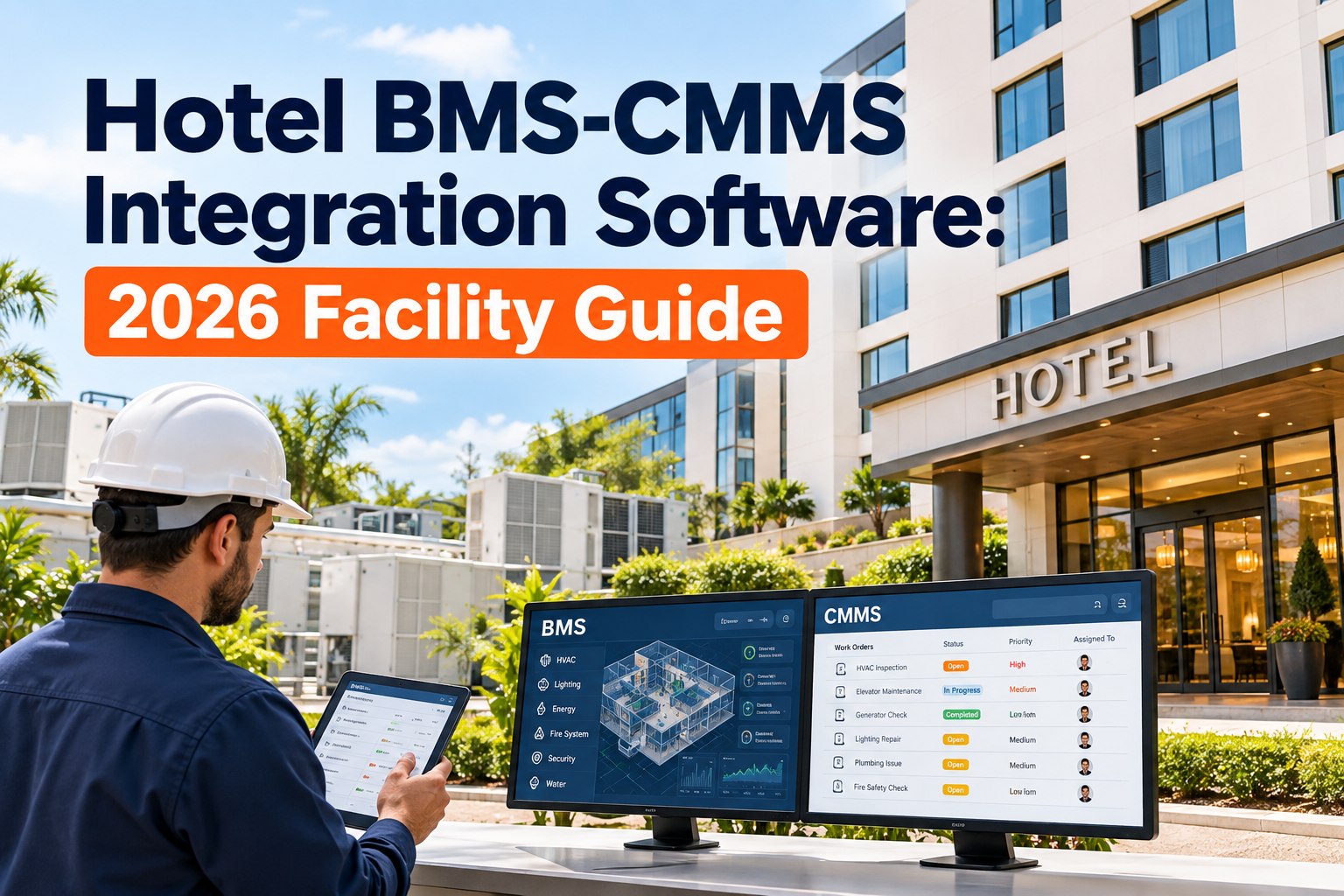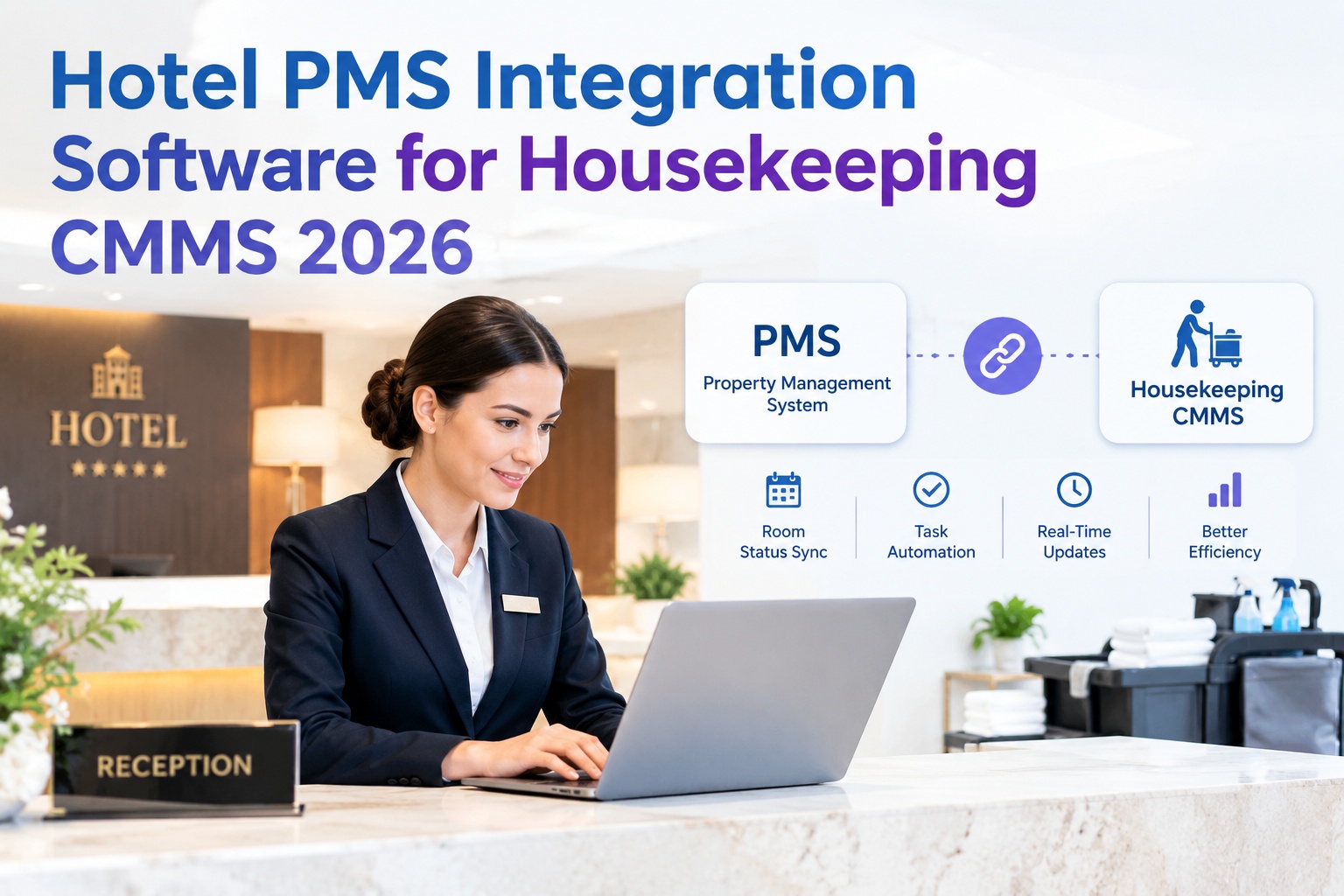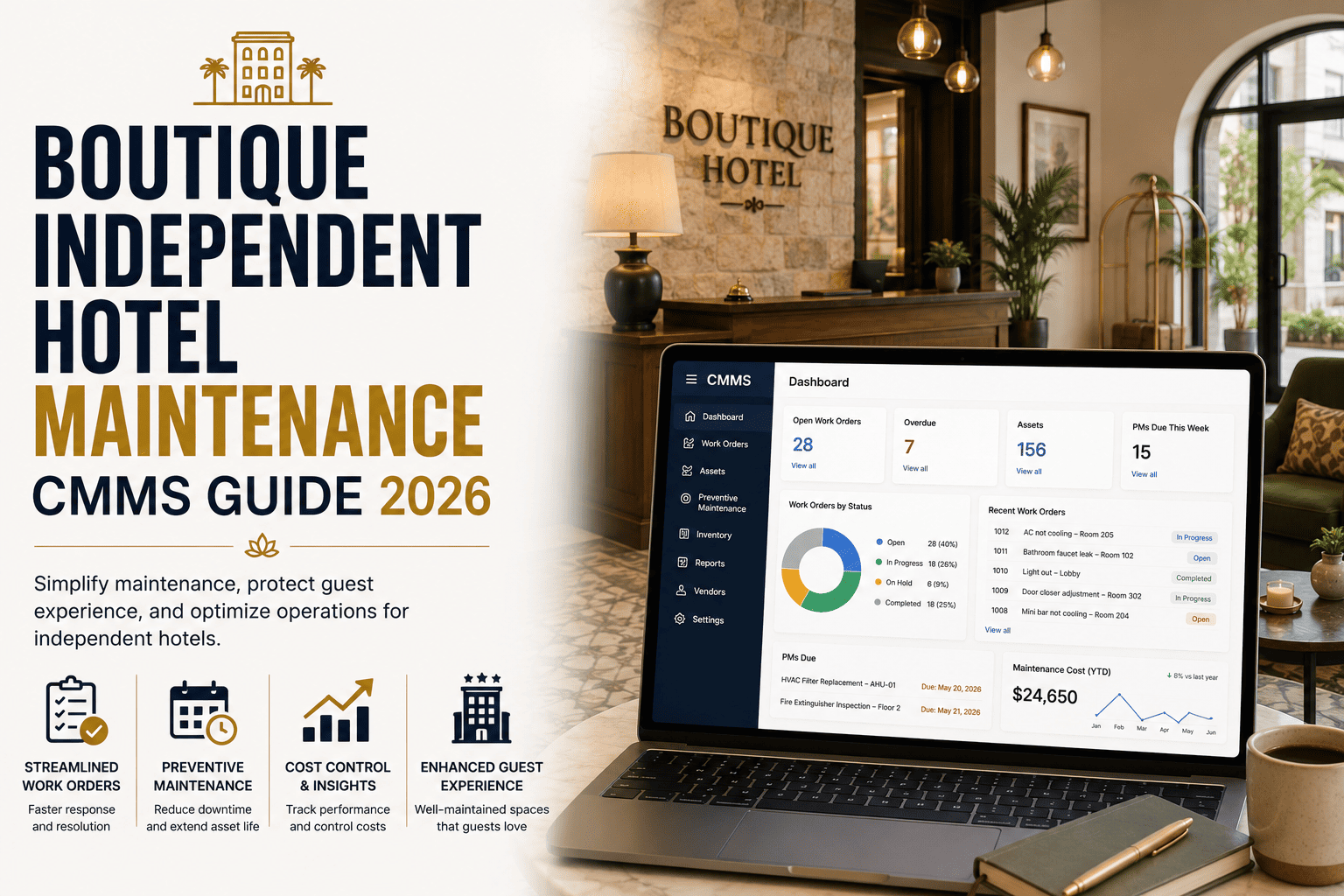
Hotel maintenance software decisions carry significant weight because your choice affects daily operations across 24/7 facility management, guest service coordination, and capital equipment reliability. The landscape has shifted dramatically over the past five years. Legacy hospitality-specific platforms like HotSOS and Quore were purpose-built for hotel operations, but modern CMMS software designed specifically for hospitality now offers superior flexibility, integration depth, mobile-first workflows, and predictive maintenance capabilities. Understanding the strengths and limitations of each category helps you choose the platform that actually matches your operational reality — not just your historical vendor loyalty. Let's compare how HotSOS, Quore, and modern CMMS platforms like OxMaint stack up across the features that matter most to hotel general managers and chief engineers. Book a demo to see how OxMaint compares in your specific property context.
Why Hotel Software Comparison Matters: The Shift from PMS-Centric to Maintenance-First Platforms
For two decades, hotel operations software was built around Property Management Systems (PMS) as the center of gravity. Guest requests fed into the PMS, maintenance responded reactively, and success was measured by how fast your team cleared the request queue. That architecture worked for lower-touch hospitality environments, but modern hotels — especially boutique, luxury, and experiential properties — demand better. Today's hotel maintenance requires structured preventive maintenance planning, labor optimization across shifts, predictive asset reliability, and mobile-first workflows that PMS-centric architecture can't deliver. HotSOS and Quore were revolutionary when they integrated maintenance into hospitality operations, but they were designed in an era before mobile-first field service, predictive data analytics, and API-driven integrations became standard. Modern CMMS platforms like OxMaint represent the architectural evolution — they prioritize maintenance discipline and operational efficiency while maintaining the hospitality context that legacy platforms pioneered. Your choice of comparison framework determines your vendor decision. Are you optimizing for PMS integration and reactive request management (HotSOS/Quore strength), or for preventive maintenance discipline, labor efficiency, and guest satisfaction through proactive reliability (modern CMMS opportunity)? Most hotels today need the latter. See how OxMaint delivers both.
Feature-by-Feature Platform Comparison: HotSOS, Quore, and Modern CMMS Architecture
The feature comparison reveals fundamental architectural differences. HotSOS and Quore prioritize guest-facing request integration and rapid reactive response. Modern CMMS platforms prioritize preventive maintenance discipline, labor optimization, and asset reliability. Both design philosophies are valid — but they create very different operational outcomes. Let's examine six critical feature categories where platforms diverge most significantly.
Preventive Maintenance Scheduling and Compliance Tracking
HotSOS and Quore treat preventive maintenance as a secondary workflow — guests and urgent requests dominate the interface and dispatch logic. Modern CMMS platforms like OxMaint treat preventive maintenance as the primary workflow, with PM schedules enforced through labor capacity allocation, compliance alerting, and KPI tracking. OxMaint's advantage: automated PM scheduling adjusts to labor availability, occupancy patterns, and seasonal asset demand without manual rescheduling. Most hotels using legacy platforms report that PM intervals slip when reactive work surges, defeating preventive maintenance discipline.
Mobile-First Field Service and Technician Dispatch
HotSOS and Quore offer mobile apps, but built on architectures designed for desktop-first workflows. Modern CMMS platforms like OxMaint are mobile-native from the foundation — technicians receive assignments, update status, log parts usage, and attach photos/notes without leaving the mobile app. Field teams reduce office time, dispatch delays drop, and work order data captures in real time. OxMaint's mobile dispatch includes geolocation-based task assignment, offline functionality (critical in multi-level buildings), and voice-driven work logging. Legacy platforms still require technicians to reference paper backups or return to the office for complex dispatch logic.
Integration Depth with Hotel Systems and APIs
HotSOS integrates tightly with specific PMS platforms (Amadeus, Opera) through pre-built connectors, but limited flexibility for custom integrations or non-core systems. Quore offers similar PMS integration but limited API exposure for custom workflows. Modern CMMS platforms like OxMaint offer RESTful APIs, webhook support, and native integration libraries for most hospitality systems (PMS, guest messaging, IoT sensors, procurement). OxMaint enables custom integrations with property-specific systems (energy management, security, housekeeping) without vendor dependency. This flexibility is critical for properties with legacy systems or custom workflows that don't fit packaged software logic.
Predictive Maintenance and Asset Reliability Analytics
HotSOS and Quore offer historical maintenance reporting, but no predictive analytics. Work order history doesn't translate into forward-looking asset risk or failure prediction. OxMaint's platform includes predictive maintenance models that track asset aging, failure patterns, and reliability trends — surfacing which equipment is likely to fail within 30/60/90 days so you can schedule replacement before failure occurs. This capability alone reduces unplanned downtime by 35–50% in properties with aging assets. Legacy platforms require manual review of work order history to spot patterns; modern CMMS automates that intelligence.
Labor Management and Capacity Planning
HotSOS and Quore dispatch work based on availability and urgent guest needs. Labor is treated as a reactive resource responding to requests, not a planned asset. OxMaint models labor as a constrained resource — comparing incoming work volume against available technician hours, identifying overload conditions, and enabling proactive decisions about temporary staffing, outsourcing, or deferral prioritization. This capability reduces overtime by 20–30% and improves staff retention by eliminating burnout-driving overload conditions. Legacy platforms don't quantify labor constraint; modern CMMS makes it visible and actionable.
Cloud Architecture, Scalability, and Vendor Support Evolution
HotSOS and Quore are mature platforms with established customer bases, but their architecture reflects legacy constraints. Modern CMMS platforms like OxMaint are cloud-native, support unlimited user scaling, and release features monthly rather than annually. HotSOS and Quore have slowed feature releases and limited investment in mobile-first or predictive capabilities — they're stable but static. OxMaint's advantage: continuous innovation, rapid feature response to customer feedback, and ecosystem integration depth that legacy platforms can't match without architectural rewrites. For property portfolios and multi-unit operators, modern CMMS scalability and feature velocity matter significantly.
Platform Pricing and Total Cost of Ownership: What You Actually Pay Across 36 Months
Price comparison is deceptive because implementation, training, integration, and operational cost vary dramatically across platforms. HotSOS and Quore quote per-property or per-user pricing that looks competitive upfront, but implementation overhead and limited scope mean your true deployment cost is 40–60% higher than initial pricing. OxMaint's transparent, predictable pricing model includes implementation support, training, integrations, and updates — reducing surprise costs and accelerating payback. Let's compare realistic 36-month total cost across property types.
| Cost Component | HotSOS (100-rm Hotel) | Quore (100-rm Hotel) | OxMaint (100-rm Hotel) |
|---|---|---|---|
| Year 1 Software License | $12,000–$16,000 | $10,000–$14,000 | $8,500–$11,200 |
| Implementation & Setup (60–120 days) | $6,500–$11,000 | $5,500–$9,500 | $2,200–$4,500 |
| Training & Onboarding | $2,500–$4,200 | $2,000–$3,500 | $800–$1,800 |
| PMS/System Integration Setup | $3,000–$7,200 | $2,500–$6,000 | $1,200–$3,000 |
| Year 2–3 Annual License (per year) | $11,500–$15,200 | $9,500–$13,200 | $8,200–$10,800 |
| Support & Maintenance (avg/year) | $1,800–$3,000 | $1,500–$2,800 | Included |
| Total 36-Month Cost | $48,800–$74,600 | $41,000–$62,500 | $30,700–$45,300 |
| Cost per Room (36 months) | $488–$746 | $410–$625 | $307–$453 |
Real Maintenance Challenges That Reveal Platform Differences: Where Each Excels and Struggles
Platform selection isn't academic — it affects how you handle real operational challenges that hit hotels weekly. Let's examine five common maintenance scenarios and how HotSOS, Quore, and OxMaint handle each differently.
The Migration Path: What Happens When You Switch from Legacy Platforms to Modern CMMS
Switching platforms creates legitimate concern about data migration, staff retraining, and operational disruption. Most hotels fear that moving from HotSOS or Quore means losing historical data or productivity during transition. Reality is different. Modern CMMS platforms handle data migration cleanly, accelerate adoption through mobile-first and cloud-native design, and achieve full productivity within 60–90 days versus 6+ months with legacy platforms. OxMaint's migration support team handles legacy data export, ensures no work order history is lost, and provides dedicated onboarding that matches your team's capabilities and adoption pace.
Data Audit and Assessment (Week 1–2)
OxMaint's migration team inventories your current CMMS data: work orders, asset master records, maintenance history, preventive schedules, and user roles. We identify what maps to OxMaint's data model and what requires transformation. Most hotels are surprised at data quality issues in legacy systems — we help clean and consolidate before migration.
Workflow Design and Platform Configuration (Week 2–4)
Your team defines maintenance processes — which work types require approvals, how PM schedules integrate with shift patterns, what dashboards matter most. OxMaint's configuration doesn't require coding; our templates for hotels accelerate setup. Most hotels complete this phase in 2–3 weeks versus 6–8 weeks with enterprise CMMS platforms.
Historical Data Migration and Validation (Week 3–5)
OxMaint imports your work order history, asset data, and maintenance records from HotSOS, Quore, or your current system. We validate data integrity and ensure nothing is lost. Your team reviews a sample of migrated records to confirm accuracy. The entire process typically completes in 2–3 weeks with minimal your-side coordination.
Team Training and Pilot Operations (Week 4–7)
OxMaint provides live training to facility managers, maintenance supervisors, and technicians — role-based, not generic. Your team operates OxMaint in parallel with legacy system for 2–3 weeks, comparing results and building confidence. Pilot phase reveals edge cases or workflow gaps before full cutover, reducing go-live risk significantly.
Full Platform Cutover and 30-Day Stabilization (Week 8–12)
On cutover date, OxMaint becomes your primary maintenance system. Legacy platform enters read-only mode for reference. OxMaint's support team provides intensive 30-day post-launch support — daily check-ins, rapid issue resolution, and real-time optimization. By week 12, your team operates OxMaint with confidence and has identified efficiency improvements already available through platform capabilities.
Frequently Asked Questions: Hotel Platform Comparison and CMMS Selection for Hospitality
Can OxMaint integrate with my current PMS (Amadeus, Opera, MarginEdge, etc.) like HotSOS and Quore do?
Yes. OxMaint integrates with every major hotel PMS platform through either pre-built connectors (Amadeus, Oracle Opera, Cloudbeds) or RESTful APIs for custom integrations. Unlike legacy platforms with limited pre-built connectors, OxMaint's API-first architecture means we can build custom PMS integrations quickly for properties using non-standard systems.
What happens to my historical work order data and maintenance records if I switch from HotSOS or Quore to OxMaint?
OxMaint's migration team exports your complete work order history from legacy platforms and imports it into OxMaint's data model. Historical records are preserved and searchable — you don't lose maintenance context or asset reliability trends. The migration process typically completes in 2–3 weeks with minimal operational disruption.
Is OxMaint easier for our hotel maintenance team to adopt compared to HotSOS or Quore?
Yes, significantly. OxMaint is mobile-first and cloud-native, designed for technicians to work from mobile devices without office support. Legacy platforms require more IT setup, desktop support, and manual workflows. OxMaint's adoption timeline is typically 60–90 days versus 6+ months with enterprise platforms.
Does OxMaint support preventive maintenance scheduling with the same flexibility as HotSOS for scheduling PM across shifts and occupancy patterns?
OxMaint's PM scheduling is actually more flexible. You define PM intervals and asset classes, and OxMaint's scheduling engine automatically assigns PM tasks to available technician capacity while respecting occupancy constraints and shift preferences. Legacy platforms require manual PM scheduling, which often fails when reactive work surges.
What's the real cost difference when accounting for implementation, training, and integration with my existing hotel systems?
OxMaint's total 36-month cost is typically 30–40% lower than HotSOS or Quore when you factor in implementation overhead, training costs, and integration setup. Modern CMMS architecture requires less professional services and training time, reducing your total cost of ownership significantly. Our pricing calculator breaks down costs transparently.
Can OxMaint handle guest-initiated maintenance requests like HotSOS does, or is it maintenance-focused only?
OxMaint handles guest-initiated requests, but prioritizes them differently than legacy platforms. Guest requests enter OxMaint's work queue alongside preventive maintenance, and our dispatch logic prioritizes based on asset criticality and guest impact — not just urgency. This ensures critical preventive maintenance isn't abandoned every time a guest request arrives.
Does switching to OxMaint require replacing our IT infrastructure or involve complex setup?
No. OxMaint is fully cloud-based and requires no on-premises infrastructure. You access it through any web browser or mobile app — no VPN, no servers, no IT complexity. Technicians need only mobile devices and internet connectivity. Setup is typically completed in 2–4 weeks, versus months for on-premises enterprise software.
How does OxMaint's support and feature releases compare to the stability of established platforms like HotSOS or Quore?
OxMaint is fully supported with dedicated customer success teams and continuous platform updates (monthly feature releases). Legacy platforms are stable but static — limited new features and slower response to operational changes. For hotels evolving their maintenance practice, modern CMMS innovation velocity matters more than legacy stability.