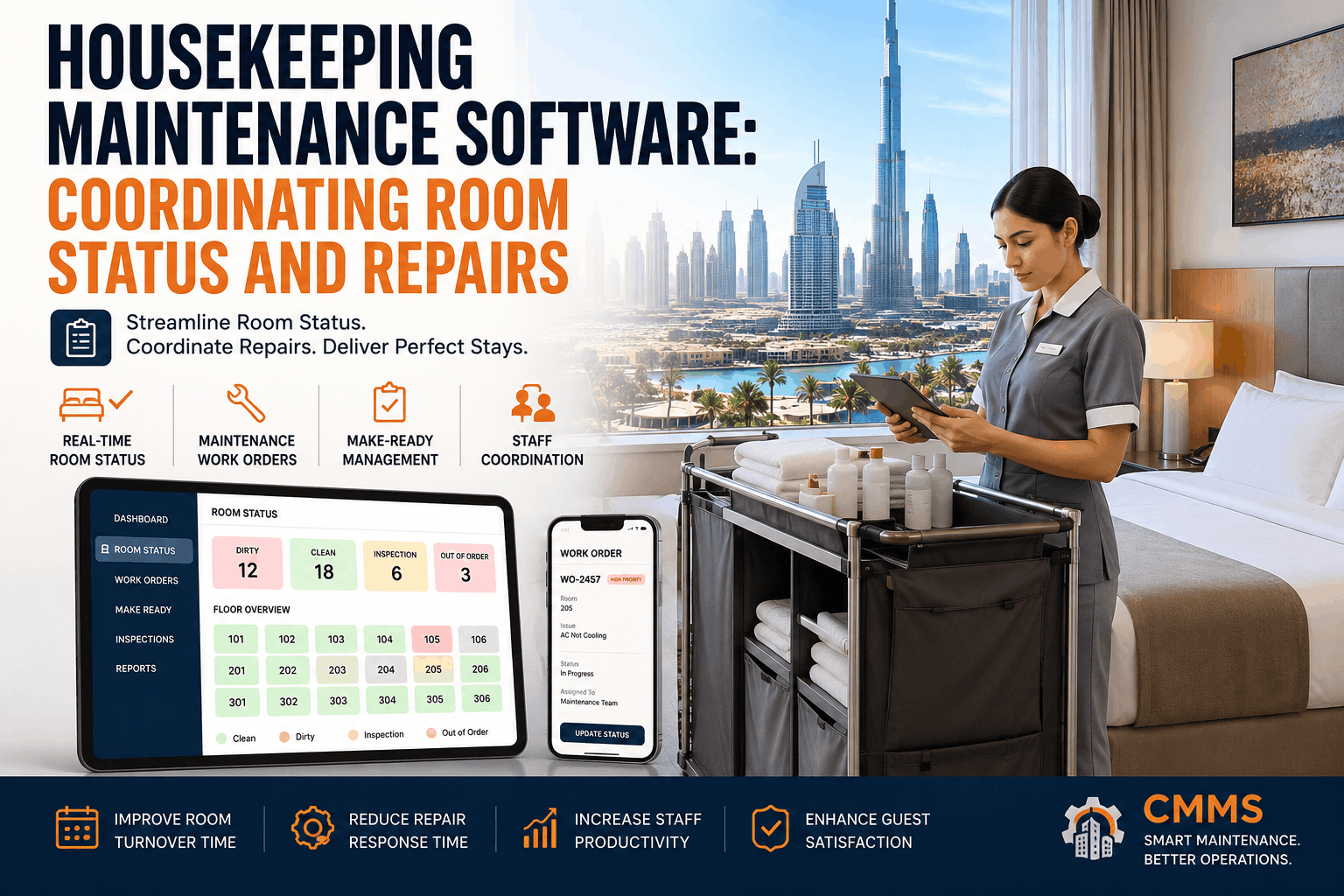
Housekeeping runs the make-ready process: clean the room, check all equipment, confirm everything works, hand off to front desk. Maintenance runs parallel: receive repair requests, fix the equipment, mark the room available. When these two teams operate disconnected—housekeeping doesn't know the plumbing work is done, maintenance doesn't know housekeeping needs a room for cleaning—rooms sit offline longer, revenue declines, guest turnover slows. Hotels coordinating housekeeping and maintenance through unified work order systems reduce room turnover time by 20–35 minutes per room, translating to 3–5 additional room sales per night on large properties. Sign Up Free to connect housekeeping room status tracking directly to maintenance work order completion—ensuring rooms move through the pipeline without invisible handoff delays.
Synchronize Housekeeping and Maintenance: One Room Status System
OxMaint connects housekeeping room inspection findings directly to maintenance work orders, tracks maintenance completion in real-time, and automatically marks rooms ready for cleaning—eliminating the coordination chaos that delays turnover.
Why Housekeeping and Maintenance Must Share One Work Order System
The traditional hotel workflow creates handoff delays at every step. Room guest checks out. Housekeeping enters room to clean. Housekeeping discovers broken AC unit. Housekeeping calls maintenance—or leaves a note—or hopes maintenance finds the note. Maintenance receives report hours later, sometimes days. Maintenance fixes the AC. But housekeeping doesn't know it is fixed. Housekeeping moves to the next room. The room sits offline for an additional 2–4 hours waiting for someone to confirm the repair and send it back for final cleaning. On a 300-room hotel with 60% occupancy and 70% turnover daily, those 2–4 hour delays cost approximately 12–18 rooms per night × $150 average nightly rate = $1,800–$2,700 per night in lost revenue, or $54,000–$81,000 per month. Hotels deploying OxMaint reduce these delays through real-time coordination. Housekeeping discovers an issue, submits it to OxMaint as a room repair request. OxMaint routes the request to maintenance with room priority, expected housekeeping return time, and impact on occupancy. Maintenance fixes the issue and updates the work order to "complete." Housekeeping receives automatic notification that the room is ready for final turnover. Room moves back to available status 30–60 minutes faster. Book a demo to see how OxMaint's room status synchronization eliminates these coordination delays.
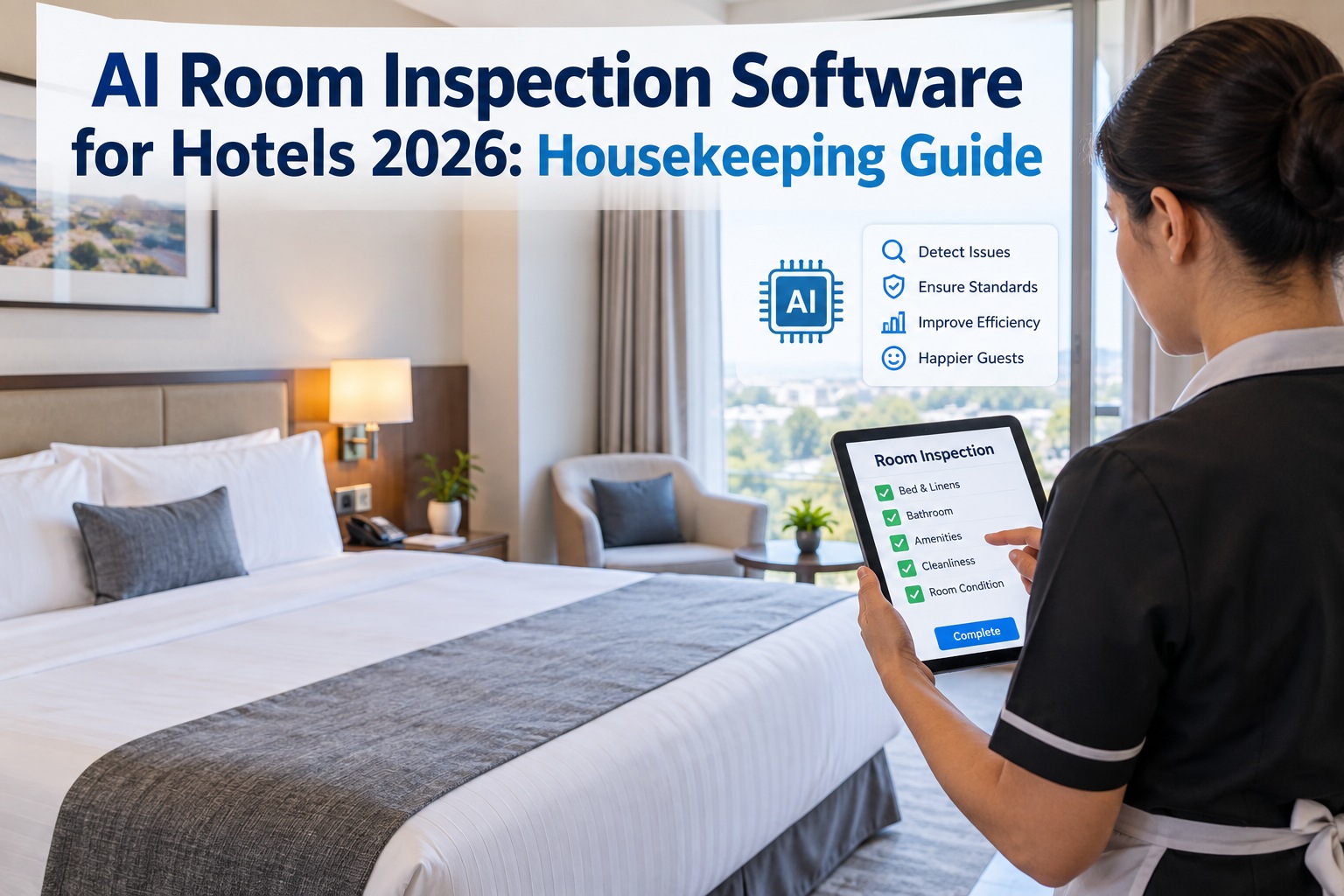
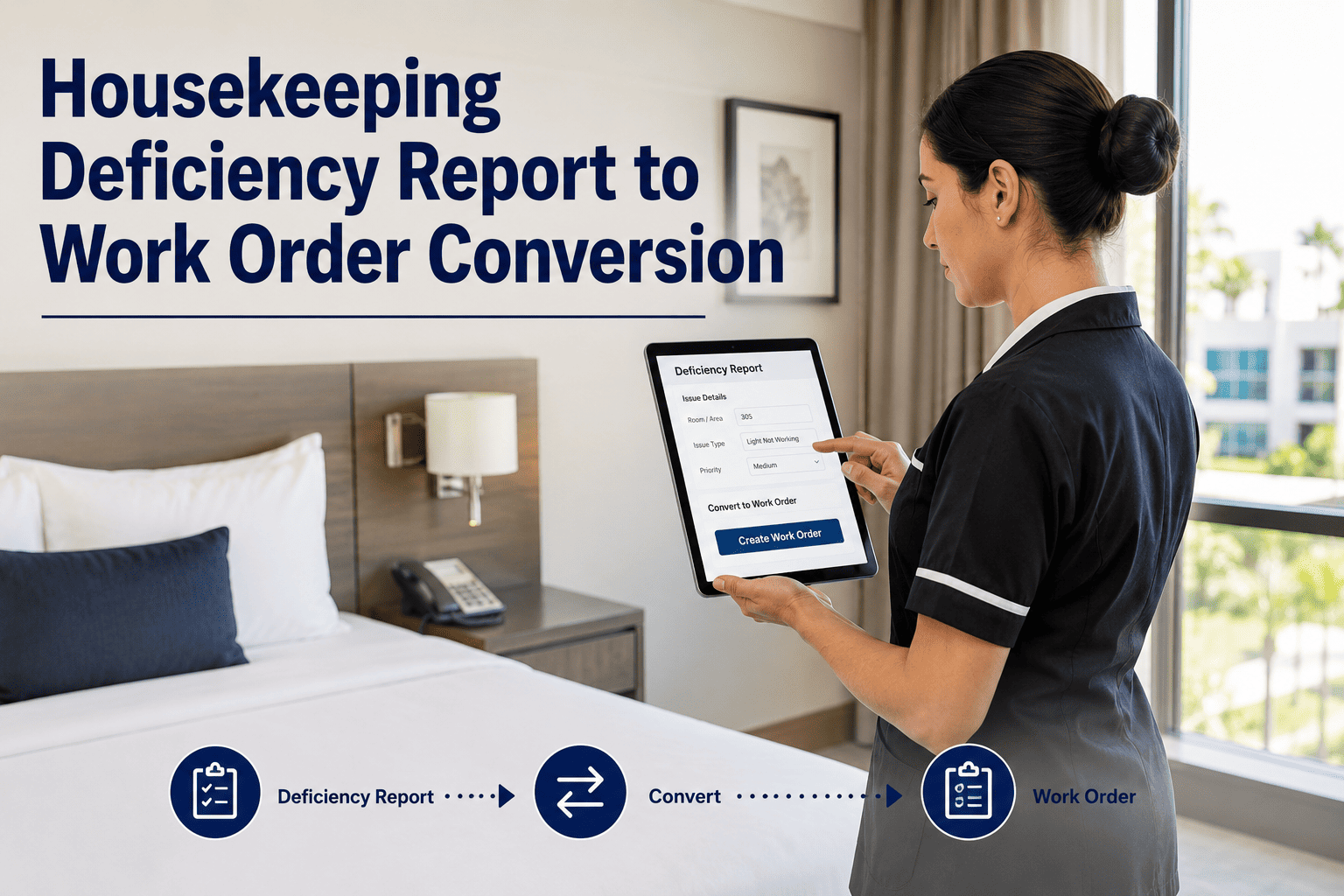
Housekeeping uses OxMaint app to document room condition, photograph damage, list required repairs—findings automatically convert to prioritized maintenance work orders with room number and expected availability time.
Room status flows through four states (occupied, vacated for cleaning, awaiting repairs, ready for occupancy) with automatic state transitions tied to maintenance completion—housekeeping always knows where rooms are in the repair pipeline.
When maintenance completes a repair, OxMaint automatically notifies housekeeping with photos of completed work, list of what was fixed, and expected room availability time—no phone calls, no coordination messages.
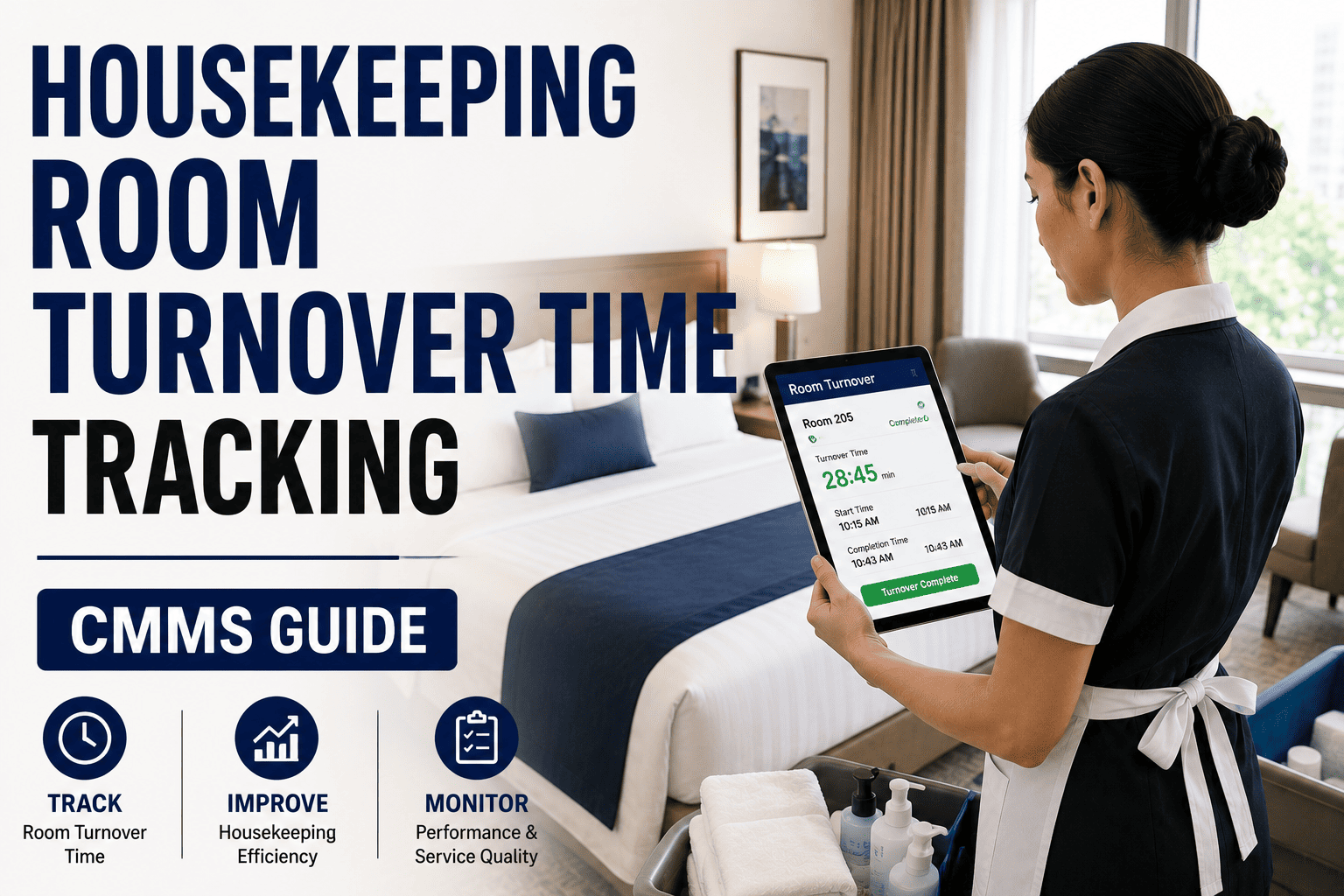
OxMaint tracks time-to-ready for every room checkout: time for housekeeping to identify issues, time for maintenance to complete repairs, time for final housekeeping pass—identifying where bottlenecks live.
Housekeeping can flag rooms as "guest arriving within 2 hours" to push urgent repairs to front of maintenance queue. Maintenance sees guest arrival time and prioritizes accordingly.
Different room types (standard, suite, accessible, premium) have different repair requirements and turnover expectations. OxMaint configures different workflows per room category to optimize for each type.
Housekeeping-Maintenance Coordination: Key Performance Indicators
Room turnover time is the interval from guest checkout to room marked "ready for sale" in the PMS. Industry benchmark depends on room type: standard rooms 30–40 minutes, suites 50–70 minutes. Every 10-minute reduction in average turnover = 2–3 additional room nights sold monthly on a 200-room property. Hotels without coordination tools average 45–65 minutes. Hotels with OxMaint housekeeping-maintenance integration average 32–45 minutes. The difference comes from eliminating the invisible wait time where maintenance work is done but housekeeping doesn't know it, rooms sit marked unavailable longer than needed. OxMaint tracks checkout-to-ready time per room, per shift, per housekeeping attendant—identifying where coordination breaks down. Rooms marked "awaiting repair" that sit more than 2 hours beyond maintenance completion indicate workflow disconnects. Sign up free to measure baseline turnover time immediately.
Some rooms must be taken offline temporarily for maintenance (deep cleaning after long stay, major repairs, equipment replacement). How long must these rooms stay offline? Hotels managing room maintenance through phone calls and email may keep rooms offline 3–5 days unnecessarily. OxMaint tracks repair-to-ready progression, identifies when maintenance is done but final cleaning is pending, and sends automatic "room ready for housekeeping" notifications. Rooms move through the repair process faster. Deep cleaning rooms average 24–36 hours offline in coordinated systems vs 48–72 hours in uncoordinated systems. Major repair rooms average 2–3 days offline in coordinated systems vs 5–7 days in uncoordinated systems. Lost occupancy at 65% average occupancy rate and $180 average nightly rate = approximately $117 per room per day offline. A 2-day difference per room = $234 per room per incident. On large properties performing 5–10 major maintenance incidents monthly, the coordination benefit is $1,170–$2,340 monthly. Hotels can book a demo to see room offline duration analytics by maintenance type.
If a room is repaired for plumbing leak, then reported again 10 days later for the same leak, the repair was incomplete. Repeat issue frequency measures rooms requiring maintenance for the same asset within 30 days of previous repair. Target is below 5% of all repairs. Above 10% indicates either temporary fixes instead of permanent corrections, or incomplete diagnostic work. OxMaint links all repairs to the same room and same asset, showing repair history. Technicians can see "water pressure regulator was adjusted twice in past 30 days" which indicates the part needs replacement, not adjustment. First-time fix improves. Repeat issue frequency declines. Housekeeping stops reporting the same problem repeatedly. Room downtime decreases. Hotels can sign up free and track repeat issues by room and asset.
When housekeeping documents a room repair need in OxMaint, how quickly does maintenance acknowledge and dispatch? Response time should be under 15 minutes for urgent issues (AC not working, plumbing leak), under 2 hours for standard issues (broken door lock, torn upholstery). Slow response times indicate maintenance is not monitoring work queues or workload is exceeding capacity. OxMaint sends push notifications to maintenance technicians, enabling near-instant acknowledgment. Technicians see room number, guest status, and expected housekeeping timeline immediately. Response times drop below 10 minutes with mobile-first adoption. Hotels using traditional call/email systems average 30–60 minute response times. Teams deploying OxMaint average under 10 minutes. Book a demo to see mobile push notification workflows for housekeeping-sourced repairs.
Housekeeping productivity is measured in rooms cleaned per 8-hour shift. Industry standard: 12–15 rooms per housekeeping attendant per shift depending on room complexity. When housekeeping must wait for maintenance (rooms marked for repair but maintenance is slow), productivity drops. Attendants move to another room, come back, discover the repair is done, move the room to the queue—context switching kills efficiency. OxMaint eliminates this by providing real-time room status: attendants always know which rooms are ready to clean, which are awaiting repairs, and which will be ready soon. Workflow becomes linear instead of fragmented. Productivity increases 8–15% in coordinated systems. On a 50-room housekeeping team, 10% productivity improvement = 5 additional rooms cleaned daily, eliminating the need to hire additional staff to handle the same room load. Sign up free to track housekeeping productivity per attendant.
Rooms that turn too slowly or have incomplete repairs create guest experience problems. A guest checks into a room where the AC was "repaired" 6 hours ago but is still not working properly, or where there is visible tape over a door lock repair. Satisfaction declines. Reviews mention "room not ready" or "maintenance issues." OxMaint prevents this by ensuring only complete, verified repairs allow rooms back into occupancy. Housekeeping performs final quality verification before marking a room ready. Maintenance cannot mark a repair complete until housekeeping confirms both function and presentation. Rooms that pass quality gates generate 0.3–0.7 point higher guest satisfaction scores. Over 200 rooms at 65% occupancy = 85 rooms per night. 0.5 point improvement on OTA = 4–6% occupancy uplift, or 3–5 additional rooms sold nightly. Book a demo to see quality control workflows.
Housekeeping-Maintenance Coordination Reference Table
| Performance Metric | Industry Benchmark | Measurement Approach | OxMaint Tracking | Review Interval |
|---|---|---|---|---|
| Avg Room Turnover Time | 32-45 minutes standard | Checkout to room available in PMS | Timestamped state transitions | Daily by shift |
| Room Offline Duration | Deep clean 24-36 hrs max | Repair start to ready for occupancy | Repair start/completion timestamps | Weekly maintenance types |
| Repeat Issue Frequency | Below 5% within 30 days | Same asset/room repeat repairs | Repair history linked per room | Weekly quality review |
| Maintenance Response Time | Under 15 min urgent | Finding submission to tech dispatch | Mobile notification acknowledgment | Real-time monitoring |
| Housekeeping Productivity | 12-15 rooms per attendant | Rooms cleaned per 8-hr shift | Completion timestamps per attendant | Daily by attendant |
OxMaint for Housekeeping-Maintenance Alignment
Housekeeping and maintenance are the two fastest-growing cost centers in hotel operations. When they operate independently, they're expensive and inefficient. When they're aligned through unified work order management, they become a single, optimized operation. OxMaint connects these two workflows: housekeeping room inspection findings trigger maintenance work orders, which update room status in real-time, and completion notifications push rooms back to housekeeping queues automatically. Housekeeping staff using OxMaint's mobile app can document a room repair need in 30 seconds—capture a photo, select the issue type, and submit. OxMaint automatically prioritizes based on guest status and expected availability time. Maintenance receives the work order with full context—which room, what's broken, what photo evidence—on their mobile device. Upon completion, maintenance updates the work order and OxMaint automatically notifies housekeeping that the room is ready. No phone calls. No coordination emails. No "wait, is that room fixed yet?" conversations. Both teams work from the same system of record. Productivity and accuracy improve. Turnover time drops. Occupancy increases. Hotels can sign up free and connect housekeeping and maintenance on their first day.
Deploying Housekeeping-Maintenance Coordination: Implementation Steps
Load Room and Asset Data into OxMaint
Add all guest rooms with room type, location, and linked assets (HVAC, plumbing, electrical, furniture) so work orders automatically route to the right equipment context.
Define Room Status States and Transitions
Configure room states: occupied, vacated, cleaning, awaiting repair, ready for occupancy—with automatic transitions when maintenance completes work or housekeeping finishes cleaning.
Deploy Housekeeping Mobile App and Inspection Forms
Train housekeeping staff on OxMaint mobile app for documenting room issues, attaching photos, and submitting repair requests—with priority level selection based on guest timeline.
Configure Maintenance Notification Routing
Set up push notifications to maintenance staff when housekeeping-sourced work orders arrive—ensure fast acknowledgment and dispatch to maintain response time targets.
Set Quality Control Rules and Verification Requirements
Define which repairs require housekeeping final verification before room returns to available status—preventing incomplete fixes from reaching guest rooms.
Monitor KPI Dashboard Weekly
Review turnover times, room offline duration, repeat issue frequency, and housekeeping productivity—identify coordination bottlenecks and optimize workflows. Book a demo to see KPI dashboards.
Frequently Asked Questions
How much faster does room turnover happen with OxMaint coordination?
Hotels deploying OxMaint reduce average room turnover time from 45-65 minutes to 32-45 minutes—a 20-35 minute improvement. On a 200-room property, this equals 3-5 additional rooms sold per night, or $500,000-$900,000 in incremental annual revenue.
Can housekeeping see real-time repair status from their mobile devices?
Yes. OxMaint shows housekeeping staff current room status, which rooms are awaiting maintenance, estimated time until ready, and completion notifications when maintenance finishes repairs—no phone calls needed.
Does OxMaint integrate with hotel PMS to update room availability automatically?
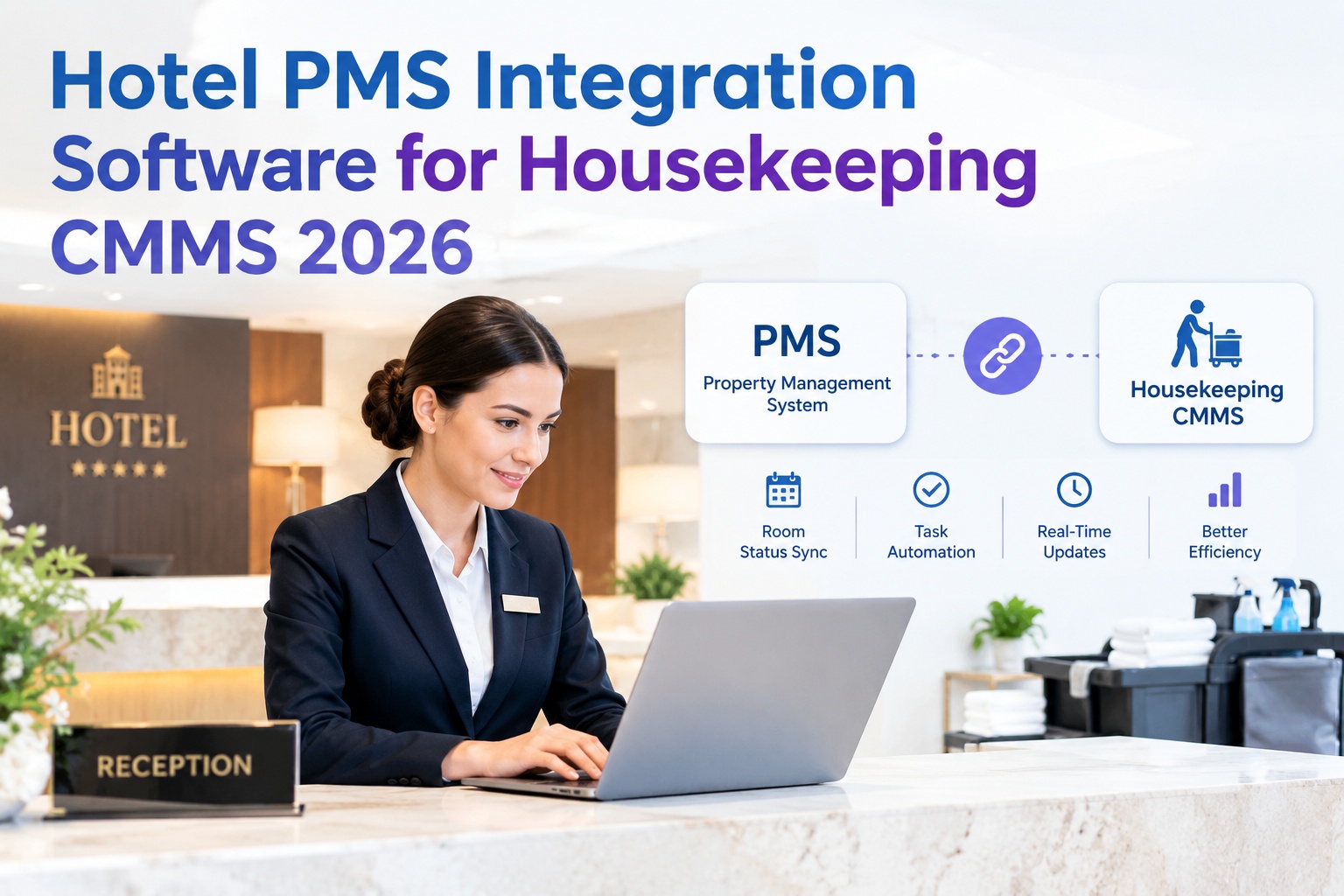
Yes. OxMaint syncs with hotel PMS systems so room status changes (marked for repair, cleared for occupancy) automatically flow to front desk availability—no manual status updates.
How does OxMaint prevent quality issues from incomplete repairs?
OxMaint creates a quality gate where rooms cannot be marked available until housekeeping verifies both function and presentation—preventing incomplete repairs from reaching guest occupancy.
Can OxMaint track which rooms have repeat repair issues?
Yes. OxMaint links repair history to each room and asset, showing if the same problem has been reported multiple times—signaling that temporary fixes need to become permanent repairs.
How does housekeeping submit urgent repairs that need fast maintenance response?
Housekeeping flags repairs as "urgent" in OxMaint, which pushes them to the front of the maintenance queue and sends push notifications to technicians—ensuring response within 15 minutes for critical issues.
What productivity gains do housekeeping teams experience with OxMaint coordination?
Housekeeping productivity improves 8-15% because staff eliminate context-switching between rooms awaiting repairs and rooms ready to clean—moving from fragmented to linear workflows.
How long does it take to deploy housekeeping-maintenance coordination in OxMaint?
Most properties complete room and asset configuration, staff training, and full workflow deployment within 10-14 days. OxMaint provides pre-built hotel templates to accelerate setup.
"Our housekeeping and maintenance teams operated like separate companies before OxMaint. When housekeeping found a broken sink, they would call maintenance and hope someone picked up the phone. By the time maintenance fixed it, housekeeping had moved to three other rooms and had to come back. Rooms were sitting offline 2-4 hours longer than necessary. Now, housekeeping submits repairs through their phones, gets instant notifications when work is done, and rooms turn in half the time. We're selling 4-5 more rooms per night. The guest experience is better because rooms are ready faster. And the coordination between teams is seamless because they're using the same system. This single change paid for the software in the first month."
General Manager | 280-room hotel | California, USA
Align Housekeeping and Maintenance: Reduce Turnover Time, Increase Revenue
OxMaint connects housekeeping room inspections directly to maintenance work orders, tracks real-time completion status, and automatically notifies teams when rooms are ready—eliminating coordination delays and accelerating room turnover by 20-35 minutes.