A junior technician dispatched to a P2 AHU fault on Floor 18 spends 40 minutes diagnosing a supply air temperature deviation that a senior engineer would have identified in under 5 minutes — because the senior engineer carries 15 years of mental fault history for that specific unit type, and the junior technician carries a work order with a fault code. The knowledge gap between your best technician and your newest hire is not a training problem — it is a system design problem. Sign in to OxMaint to deploy the AI Maintenance Copilot across your HVAC technician team, or book a demo to see how AI-guided troubleshooting closes the experience gap on every single work order.
AI Maintenance Copilot · HVAC Technician Intelligence · OxMaint
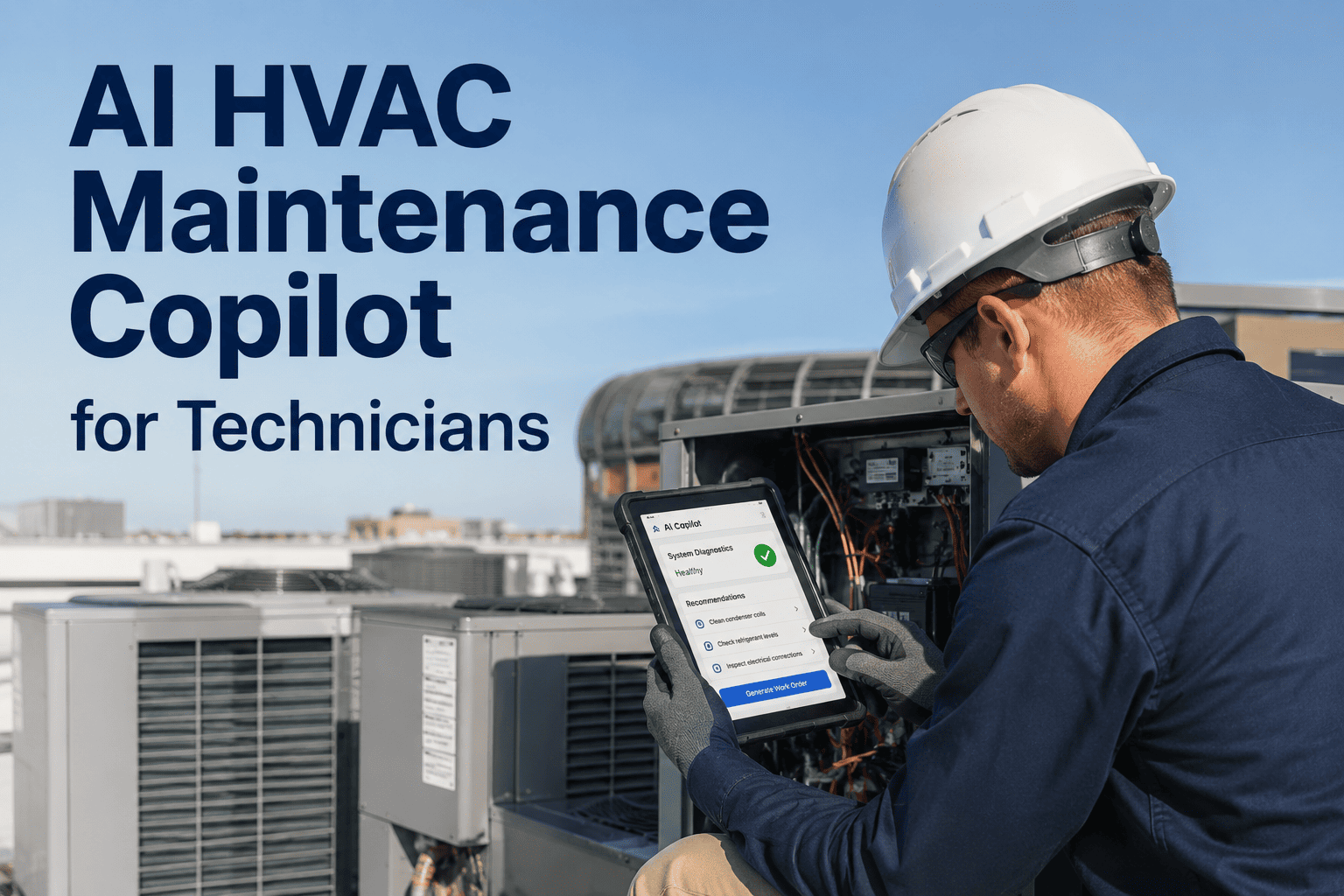
AI HVAC Maintenance Copilot for Technicians
Step-by-step AI troubleshooting, fault history, parts lookup, inspection prompts, and diagnostic guidance — delivered to every technician's mobile the moment a work order is assigned. Your best engineer's knowledge, available to every technician, on every job.
47%
Reduction in mean time to repair when technicians receive AI diagnostic guidance vs unassisted
3.1x
First-call resolution improvement — fewer return visits when AI copilot guides diagnosis on first visit
62%
Faster onboarding for new HVAC technicians when AI copilot is available from day one of deployment
The Knowledge Gap Problem
The Same Fault. Two Technicians. A 6-Hour Difference in Resolution Time.
HVAC fault diagnosis is not a procedure — it is applied experience. The difference in performance between technicians is not effort or commitment; it is accumulated pattern recognition that takes years to build and cannot be transferred through a training manual. OxMaint AI Copilot makes that pattern recognition available at the point of need.
Technician receives work order: "AHU-07 — supply air temp deviation." No additional context.
Arrives on floor. Checks thermostat. Temperature reading confirms complaint. Cause unknown.
Calls senior technician. Senior is on another job. Leaves message. Waits 40 minutes for callback.
Senior suggests checking cooling coil valve. Technician goes to plantroom. Valve appears normal.
Second callback. Senior suggests static pressure — filter may be blocked. Technician checks: fouled filter array confirmed.
No replacement filters in immediate stores. Raises procurement request. Area remains unconditioned for 4 hours.
Work order assigned. AI Copilot brief loads: "AHU-07 — supply air +3.2°C deviation. Static pressure differential elevated 18 Pa above baseline. Filter fouling pattern. Last filter change: 94 days ago (38 days overdue)."
AI step 1: "Confirm static pressure reading at AHU filter section — target reading below 65 Pa clean." Technician confirms 83 Pa. AI classifies: filter replacement required.
AI checks inventory: "2× G4 filter packs confirmed in Store B, shelf 4. Part #FLT-G4-500." Technician collects without raising procurement request.
AI post-replacement check: "Confirm static pressure reading after filter change. Acceptable range: 42–55 Pa." Technician confirms 47 Pa. AI closes fault: resolved.
AI generates follow-up: filter change interval for this AHU adjusted from 56 days to 42 days based on fouling rate history. PM schedule updated automatically.
Work order closed with full diagnostic record, readings, parts used, and AI recommendation log — available for every future technician assigned to AHU-07.
AI Copilot Interface
What the AI Copilot Looks Like in a Technician's Hands
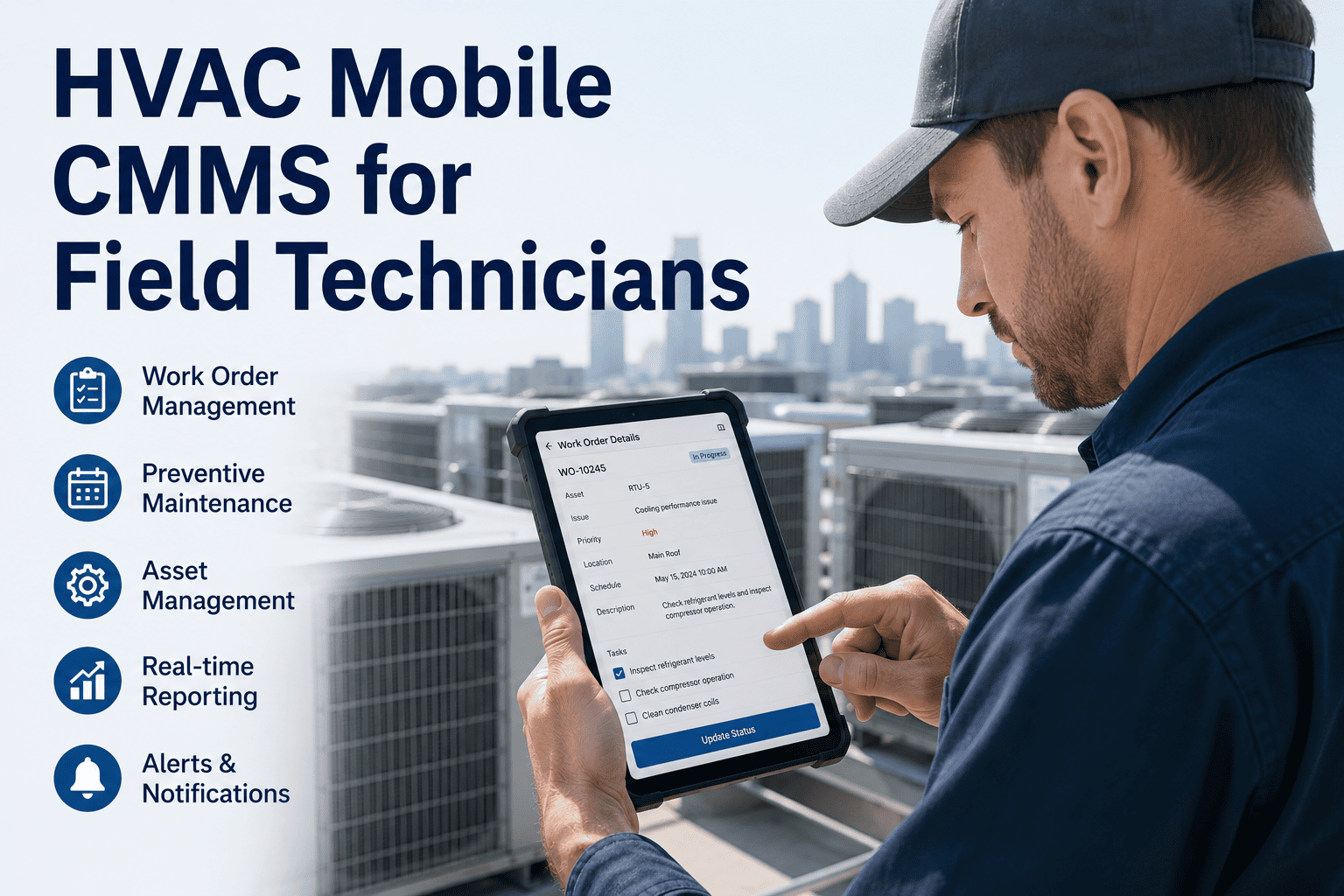
The AI Copilot is embedded directly in the OxMaint mobile work order — not a separate app, not a chatbot the technician has to open separately. Guidance appears contextually as the technician progresses through the job.
Fault Classification
Refrigerant Undercharge — Suspected
Suction pressure4.2 bar (norm 5.8–6.4)
Superheat+8.4°C above target
Compressor amps+9% above baseline
Last service142 days ago
AI Diagnostic Steps
1
Confirm suction pressure gauge reading at compressor service port
2
Inspect all pipe joints, valve packing, and evaporator connections for oil staining — refrigerant leak indicator
3
Use electronic leak detector on joints identified in step 2. Document all positive readings.
4
If leak confirmed: tag out, raise refrigerant top-up work order (OHS permit required). If no leak: proceed to step 5.
Parts in Stock
R-410A refrigerant cylinderIn stock · Store A
Electronic leak detectorTool room, bay 3
Refrigerant permit formOHS portal
H
Fault History for This Asset
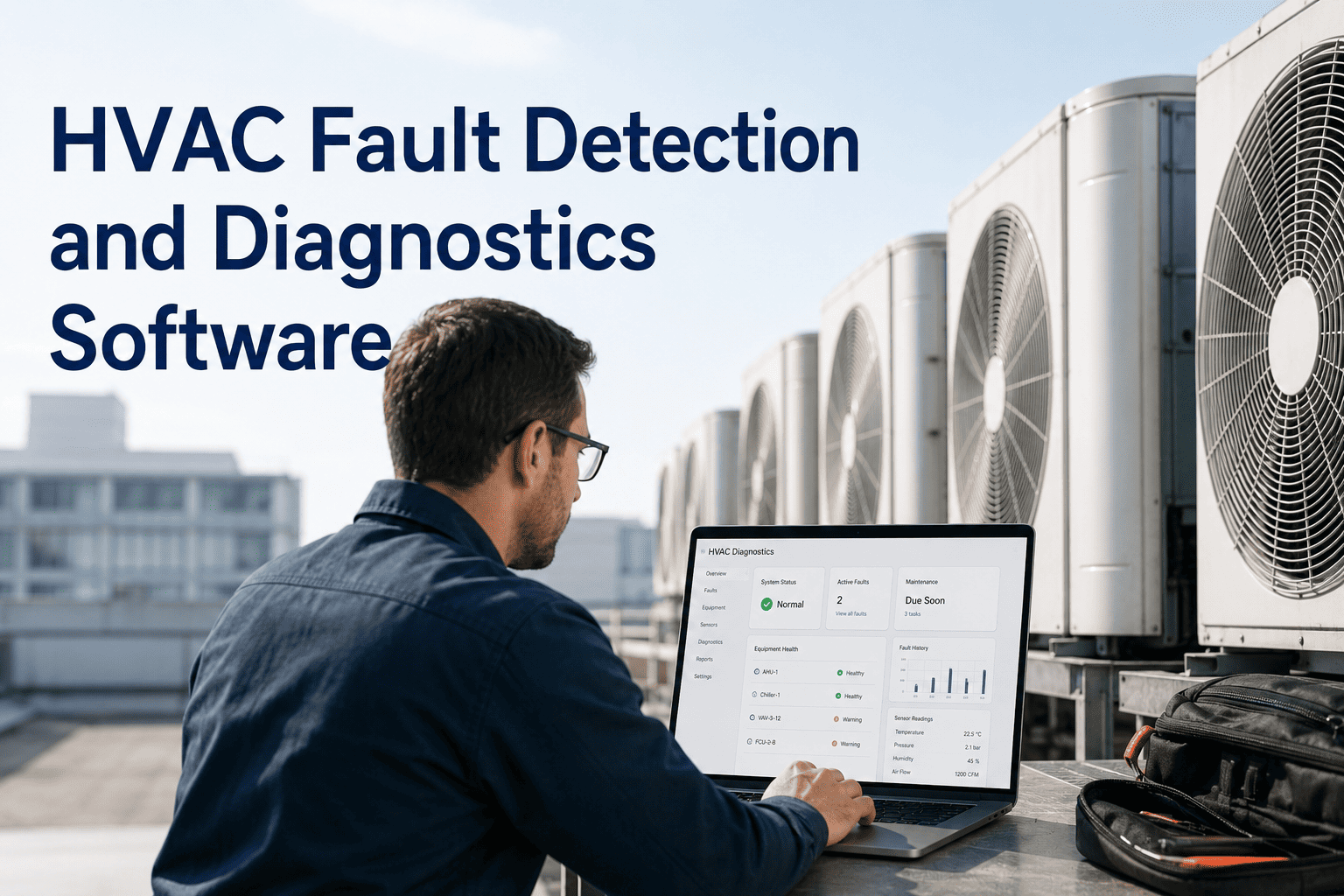
The AI Copilot loads the complete fault history for the specific asset on the work order — every previous fault type, resolution, parts used, and technician note. A chiller that has had two refrigerant events in 18 months gets a different diagnostic pathway than one with a clean history. Historical patterns inform the AI's confidence weighting on each possible diagnosis.
S
Step-by-Step Inspection Sequence
For every fault classification, the AI Copilot generates a sequenced diagnostic procedure — ordered from highest-probability cause to lowest, with each step including the measurement to take, the acceptable range, and the interpretation of an out-of-range result. Technicians do not need to decide where to start. They follow the sequence and report findings. The AI interprets the results and updates the diagnosis after each step.
P
Real-Time Parts Availability Check
When a repair path is identified, the AI Copilot checks your inventory in real time and reports whether required parts are in stock, their location in stores, and their part number. If a critical part is not in stock, the AI raises a procurement work order automatically and identifies the closest available substitute from inventory. First-time fix rate improves because technicians arrive with the right information to get the right parts before they start the job.
L
Learning from Every Completed Job
Every work order closed through the AI Copilot contributes to the diagnostic model for that asset class and that specific unit. When a technician confirms or overrides an AI diagnosis, the outcome is recorded. When a repair resolves the fault, the diagnostic pathway is reinforced. The AI Copilot improves its accuracy for your specific HVAC estate continuously — not from generic training data, but from your own fleet's resolved fault history.
AI Copilot · Every Technician · Every Work Order
Give Every Technician on Your Team the Diagnostic Depth of Your Best Engineer
OxMaint AI Copilot is built into the mobile work order — no separate app, no training required. Fault history, step-by-step diagnostics, parts availability, and inspection prompts load automatically when a work order is assigned. Available for every HVAC technician on day one.
Capability Matrix
What OxMaint AI Copilot Covers Across Your HVAC Asset Classes
| AI Copilot Capability |
Chillers |
AHUs |
Cooling Towers |
FCUs / VRF |
Pumps |
| Fault classification from sensor data |
Full |
Full |
Full |
Full |
Full |
| Step-by-step diagnostic sequence |
Full |
Full |
Full |
Partial |
Partial |
| Asset fault history integration |
Full |
Full |
Full |
Full |
Full |
| Real-time parts availability check |
Full |
Full |
Full |
Full |
Full |
| OEM service manual reference |
Full |
Full |
Partial |
Partial |
Partial |
| Post-repair verification checklist |
Full |
Full |
Full |
Full |
Full |
| PM interval adjustment from fault data |
Full |
Full |
Full |
Partial |
Partial |
| Permit-to-work and safety prompts |
Full |
Full |
Full |
Full |
Full |
Financial Impact
What AI Copilot Delivers to a 50-Technician HVAC Maintenance Team in Year 1
| Impact Category |
Without AI Copilot |
With OxMaint AI Copilot |
Annual Value |
| Mean time to repair (HVAC fault jobs) |
6.4 hrs average per fault job |
3.4 hrs average — 47% reduction with AI guidance |
1,500 technician hours recovered |
| First-call resolution rate |
58% — 42% requiring return visit |
89% — 11% requiring return visit |
$124,000 in travel and repeat labour |
| Parts wastage from incorrect diagnosis |
$38K/year in wrongly ordered or replaced parts |
AI-guided repair path reduces incorrect parts by 73% |
$27,700 parts cost saving |
| Senior technician escalation interruptions |
Avg 4.2 escalation calls per day per senior tech |
AI Copilot resolves 81% of escalations without human escalation |
Senior tech capacity recovered — 640 hrs/year |
| New technician onboarding productivity |
14-week ramp to independent fault resolution |
8-week ramp with AI Copilot guidance from day one |
6 weeks productive capacity per new hire |
| Diagnostic record completeness for asset history |
62% of work orders have diagnostic detail captured |
97% — AI prompts and auto-captures every diagnostic step |
Asset history quality: full fault pattern data |
| Total Year 1 documented financial impact |
|
|
$151,700 + 2,140 hrs recovered |
"
The hardest problem in HVAC maintenance workforce management is not finding skilled technicians — it is knowledge transfer. A senior engineer who has maintained the same chiller plant for 12 years carries a diagnostic model in their head that cannot be written into a procedure manual. They know that CH-02's condenser approach temperature starts climbing 11 days after a full-load weekend, and that the symptom usually resolves with a flush cycle before a brushing job is needed. That specific knowledge lives and dies with that person. AI Copilot changes the equation: every closed work order with a diagnostic record becomes training data for the next technician who faces the same fault on the same asset. The institutional knowledge that previously walked out the door when a senior tech retired is now encoded in the platform. I have seen HVAC teams where a new technician's second-month diagnostic accuracy matches a three-year veteran's — because the AI loaded the right fault history and walked them through the right sequence. That is the ROI that does not appear in a spreadsheet but transforms team capability permanently.
Amara Diallo, CMRP, CHFM
Certified Maintenance and Reliability Professional · Certified Healthcare Facility Manager · 18 years HVAC workforce development and maintenance operations · Former Head of FM Operations, 22-site healthcare portfolio · Specialist in technician capability development, AI-assisted maintenance programmes, and HVAC knowledge management systems
Your Newest Technician. Your Best Engineer's Knowledge. Every Work Order.
OxMaint AI Copilot delivers fault history, step-by-step diagnostic sequences, real-time parts availability, and post-repair verification prompts inside every mobile work order — for every HVAC asset class, every technician, from day one of deployment. No separate app. No training programme. Just better diagnostics on every job.
Frequently Asked Questions
AI HVAC Maintenance Copilot — Common Questions
Does the AI Copilot require technicians to learn a new app or interface?
No. The AI Copilot is embedded directly inside the OxMaint mobile work order interface — technicians access it through the same screen where they view their assigned jobs, update status, and close work orders. When a work order is assigned, the AI Copilot brief appears automatically as a section within the work order. No separate login, no second app, no training programme required before first use. Most technicians engage with AI Copilot guidance on their first assigned job without any instruction — because the interface presents diagnostic steps exactly where the technician is already looking. Experienced technicians can choose to follow or override AI suggestions; the system records both outcomes and improves from disagreements as much as from confirmations.
Sign in to OxMaint to see the technician mobile interface with AI Copilot active.
How does OxMaint AI Copilot handle HVAC fault types it has not seen before?
The AI Copilot operates on two layers: a pre-trained fault signature library covering 200+ HVAC fault patterns calibrated for commercial chiller plants, AHUs, cooling towers, FCUs, and pumps — and an asset-specific learning layer built from your fleet's own resolved work order history. For fault types that do not match a known signature, the AI presents a guided general inspection sequence for the relevant asset class — beginning with the highest-probability fault categories for that equipment type — and records the technician's findings and resolution to enrich the diagnostic model. Genuinely novel faults become new training data after they are resolved. The AI also flags when its confidence in a diagnosis is low, prompting the technician to consult a senior engineer while still providing the best available diagnostic context.
Book a demo to see how the AI handles low-confidence fault scenarios.
Can facility managers see whether technicians are following AI Copilot guidance, and how it is affecting outcomes?
Yes. The OxMaint management dashboard includes an AI Copilot utilisation and outcome analytics view — showing copilot engagement rate per technician, percentage of AI diagnostic steps followed vs overridden, first-call resolution rate with and without copilot guidance, and mean time to repair comparison between copilot-guided and non-copilot jobs. These analytics identify which technicians are benefiting most from AI guidance, which fault types show the largest MTTR improvement, and whether the AI's diagnosis accuracy is improving over time as the fleet-specific training data accumulates. Managers can also review every AI diagnostic interaction record attached to a closed work order to audit the quality of the diagnostic process on any specific job.
Sign in to OxMaint to access the AI Copilot analytics dashboard.
How does the AI Copilot handle jobs that require permits to work or safety procedures for refrigerant handling?
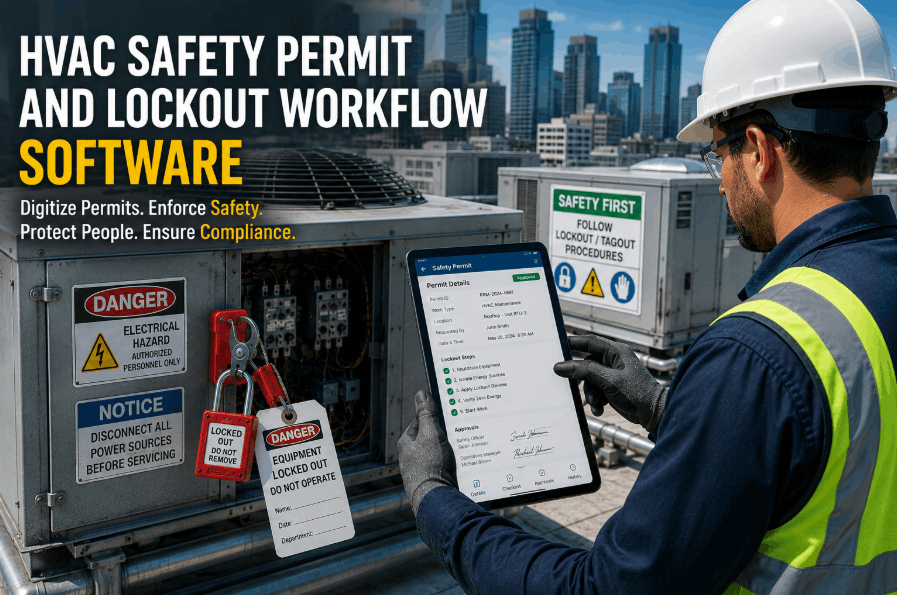
Safety and compliance prompts are built into the AI Copilot diagnostic sequence for every fault type that involves permit-to-work requirements. When a diagnostic pathway leads to a task requiring a refrigerant handling permit, electrical isolation, confined space entry, or hot work, the AI Copilot displays the relevant safety prompt and links to the applicable permit form in OxMaint's document management module before the technician proceeds to the next step. The system does not allow the technician to mark a safety-gated step as complete until the permit acknowledgement is recorded. Permit and safety compliance records attach to the work order automatically — generating a complete audit trail for every job involving regulated activities, without requiring supervisors to manually check permit status mid-job.
Book a demo to see the permit-to-work integration within the AI Copilot workflow.