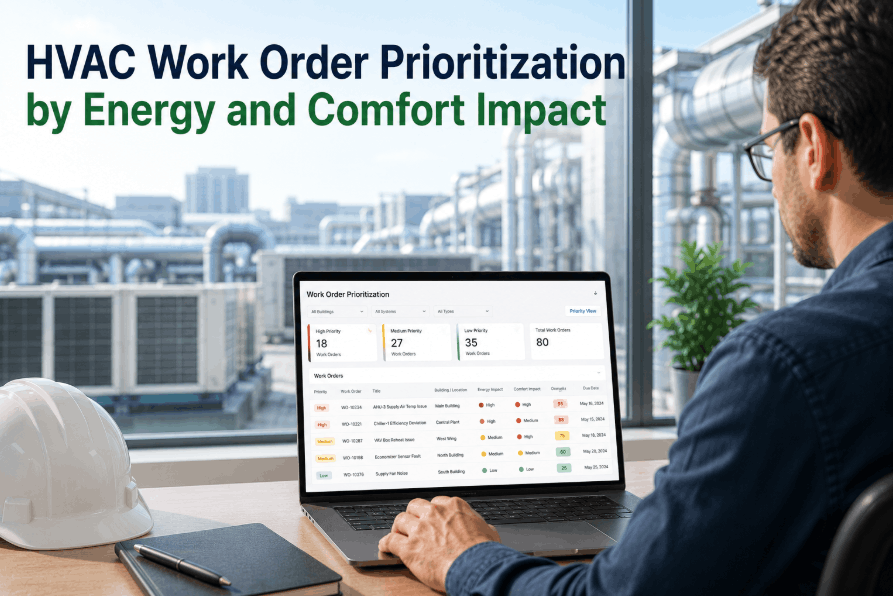
HVAC work order prioritization by energy and comfort impact is one of the most effective levers facility managers can pull to reduce operating costs and occupant complaints simultaneously. Most HVAC maintenance teams treat all work orders equally — responding to requests in order of submission rather than ranking them by the energy waste or comfort disruption they represent. Sign Up Free to see how OxMaint's CMMS platform gives facility teams a structured prioritization framework that routes high-impact HVAC work orders to the front of the queue — before energy bills spike and before occupant complaints escalate. Book a Demo to explore how OxMaint's work order management and HVAC maintenance scheduling capabilities reduce both energy waste and service disruption across commercial and industrial facilities.
Prioritize HVAC Work Orders by What It Actually Costs — Not Who Asked First
OxMaint gives facility maintenance teams energy-impact and comfort-risk scoring to route the right HVAC work orders to the right technicians at the right time.
Why HVAC Work Order Prioritization Fails in Most Facilities
When facility teams lack a formal HVAC prioritization system, work order sequencing defaults to arrival order, loudest complaint, or supervisor preference. The result is a backlog where low-energy-impact tasks get resolved while degraded chillers, inefficient AHUs, and failing economizers continue wasting kilowatts every hour they remain unaddressed. Sign Up Free to replace ad hoc HVAC scheduling with OxMaint's impact-scored work order system that surfaces energy and comfort-critical tasks before reactive failures force emergency responses.
The Right Criteria for HVAC Work Order Prioritization
Effective HVAC work order prioritization requires evaluating each task against a consistent set of impact criteria — not just asset age or technician availability. Book a Demo to see how OxMaint's maintenance analytics surface HVAC priority scores by energy cost, comfort zone, and asset criticality.
Energy Consumption Impact Score
Work orders tied to assets with measurable energy waste — degraded economizer control, failed variable frequency drives, coil fouling — should receive elevated priority scores based on estimated kWh loss per hour of continued deferral.
Occupied Zone Comfort Risk
HVAC faults affecting high-occupancy zones — server rooms, patient care areas, production floors — carry higher comfort risk scores than issues in storage or low-occupancy spaces. Prioritization should weight zone criticality automatically.
Asset Failure Probability and Replacement Cost
Work orders on aging or high-replacement-cost assets — chillers, cooling towers, large AHUs — should be weighted by the financial exposure of continued deferral, not just the current symptom severity.
Compliance and Code Obligation
HVAC maintenance tasks tied to regulatory compliance — filter replacements under indoor air quality standards, refrigerant handling, ventilation code requirements — must be elevated to mandatory status regardless of energy or comfort impact ranking.
Operational Dependency and Downtime Risk
HVAC systems that support production continuity, data center cooling, or food storage carry higher operational dependency scores — and work orders on these assets should be treated as near-emergency regardless of current fault severity.
PM Overdue Status and Failure Cascade Risk
Preventive maintenance tasks that are significantly overdue should escalate automatically in priority — because overdue PMs compound into failure cascades that generate multiple high-priority emergency work orders simultaneously.
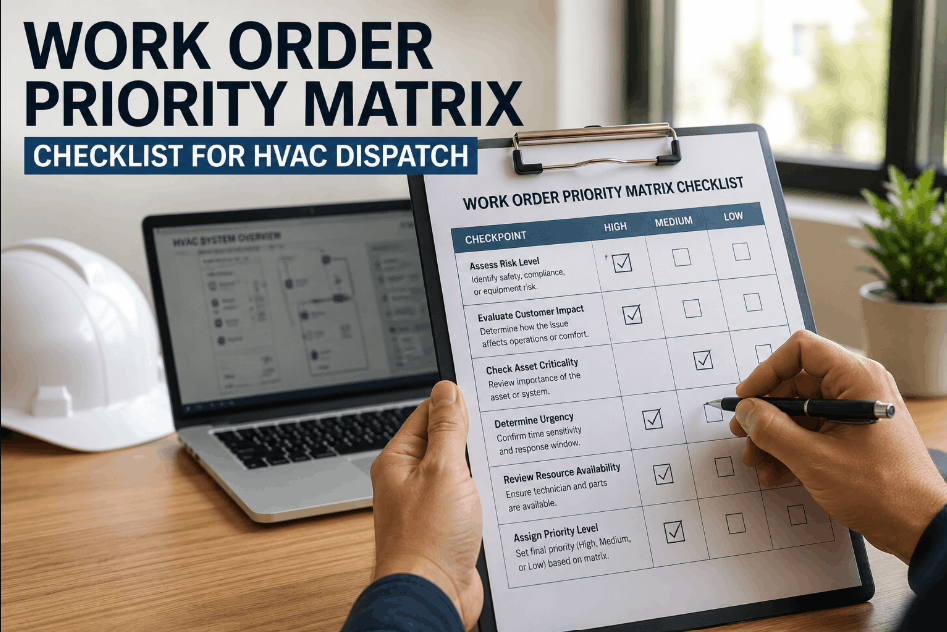
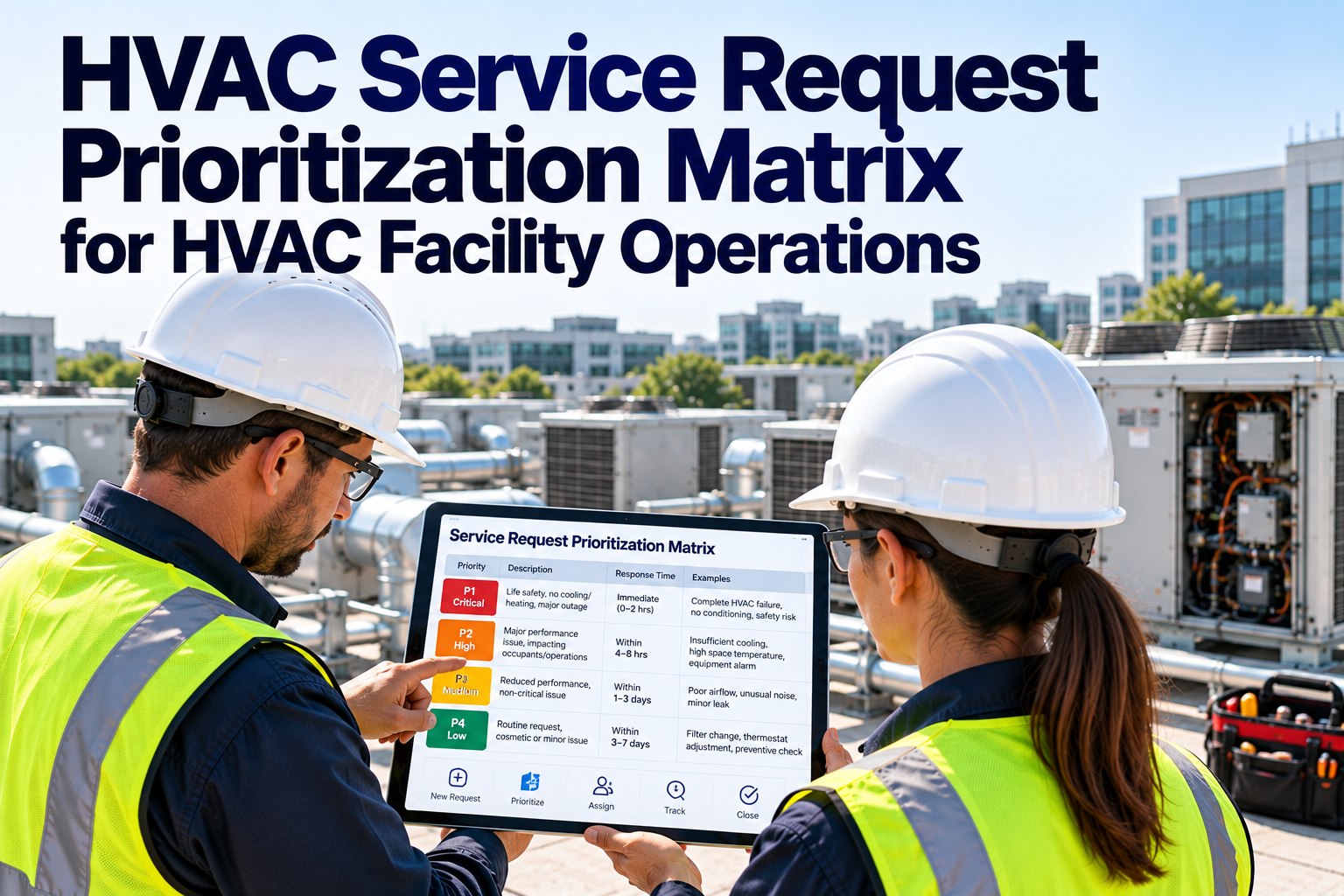
HVAC Work Order Priority Levels: Impact-Based Classification
| Priority Level | Trigger Criteria | Energy/Comfort Impact | Target Resolution Window |
|---|---|---|---|
| P1 — Emergency | Complete HVAC failure, life safety risk, data center thermal event | Critical — operations halted or safety compromised | Immediate — same shift response |
| P2 — Urgent | Chiller degradation, economizer failure, high-occupancy comfort fault | High — significant energy waste or comfort disruption active | Within 24 hours |
| P3 — Routine | Filter replacement overdue, minor coil fouling, VAV calibration drift | Moderate — measurable efficiency loss, low comfort risk | Within 5 business days |
| P4 — Scheduled | Annual inspections, seasonal readiness checks, non-critical PM tasks | Low — preventive value, no active fault condition | Next planned maintenance window |
How OxMaint Automates HVAC Work Order Prioritization
Define Asset Criticality and Impact Profiles
In OxMaint, each HVAC asset is configured with a criticality profile — energy category, occupancy zone, compliance obligation, and operational dependency. Every work order generated for that asset inherits its impact classification at creation, eliminating manual priority decisions on the floor.
Apply Four-Level Priority Classification to All Work Orders
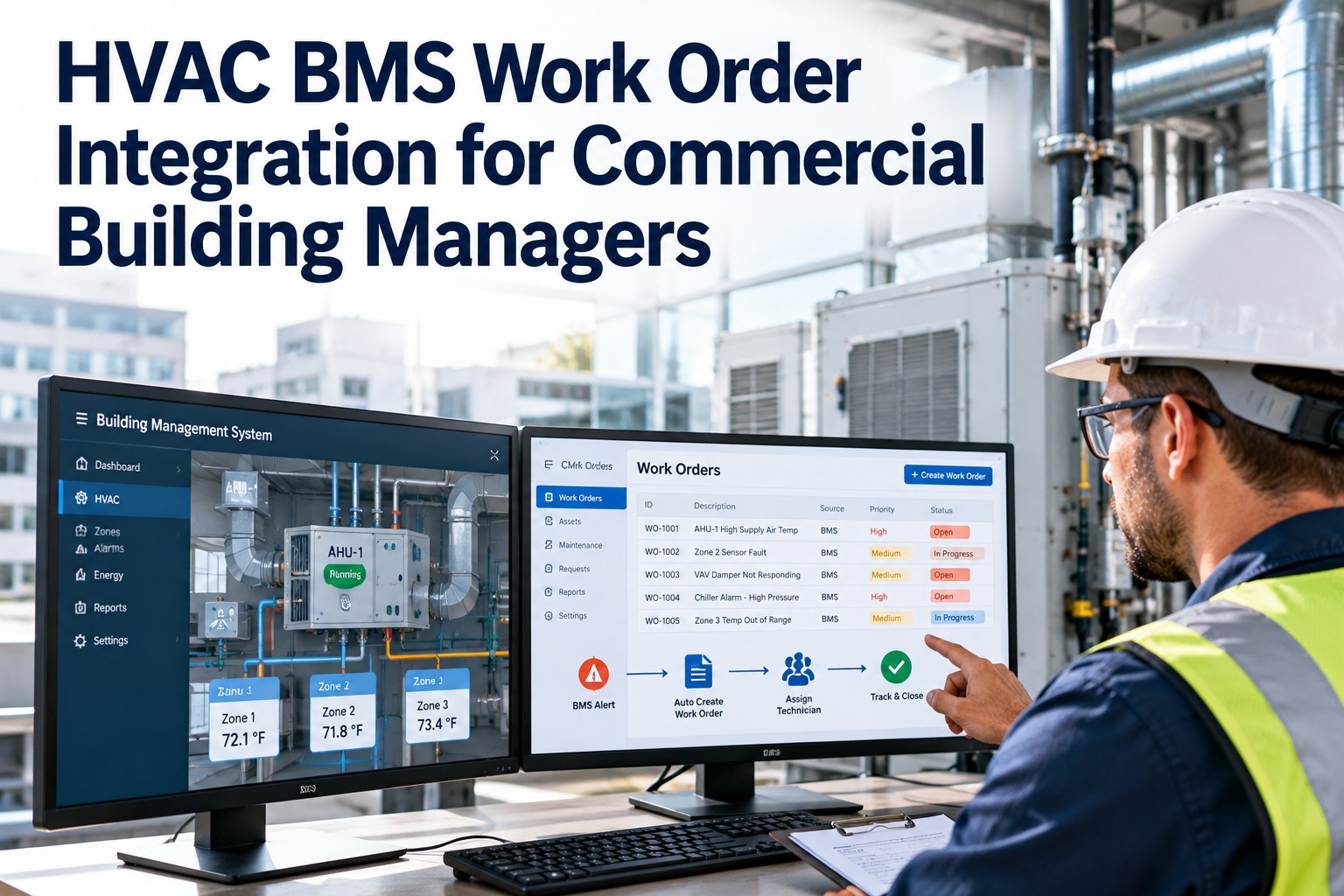
OxMaint enforces priority classification — Emergency, Urgent, Routine, and Scheduled — across all HVAC work orders at the point of creation. Supervisors see the full backlog ranked by impact, not by submission time, enabling informed assignment decisions every morning before the shift begins.
Match High-Priority HVAC Work Orders to Qualified Technicians
OxMaint's scheduling dashboard surfaces both priority level and technician skill qualification — ensuring that high-energy-impact HVAC repairs are assigned to technicians with the right certifications and availability, not simply whoever is next in rotation.
Track Energy and Comfort Impact Through Work Order Closure
OxMaint captures before-and-after asset condition data at work order closure — giving facility managers a measurable record of energy impact remediated and comfort faults resolved per maintenance cycle. This data feeds into future prioritization calibration and energy reporting. Book a Demo to see OxMaint's HVAC work order analytics configured for energy and comfort impact tracking.
What Impact-Based HVAC Prioritization Delivers
Stop Scheduling HVAC Work Orders by Arrival Time — Start Scheduling by Impact
OxMaint gives facility maintenance teams the digital prioritization framework, technician scheduling visibility, and HVAC analytics to reduce energy waste and comfort disruption through structured work order management.
HVAC Work Order Prioritization by Energy and Comfort Impact — Common Questions
Ready to Prioritize HVAC Maintenance by What It Actually Costs Your Facility?
OxMaint gives your facility and maintenance teams the digital work order prioritization, HVAC asset criticality scoring, and real-time backlog visibility to manage energy and comfort impact — not just task volume.
.png)