ASHRAE 188 compliance in 2026 is no longer a best practice — it is a legal liability framework that building owners, facility managers, and property operators cannot afford to ignore. As Legionella-related litigation intensifies and insurance carriers demand documented water management programs (WMPs), the gap between compliant and non-compliant facilities is widening fast. Whether you manage a hospital, hotel, office tower, or multi-family residential complex, your cooling towers, domestic hot water systems, and decorative fountains are now under regulatory scrutiny. Sign Up Free on OxMaint to digitize your ASHRAE 188 water management program and build an audit-ready compliance trail across every water system asset in your portfolio. This guide breaks down what ASHRAE 188 requires in 2026, how Legionella risk assessments map to facility operations, and how structured maintenance platforms eliminate the documentation failures that expose building owners to liability. Book a Demo to see how OxMaint transforms compliance checklists into living, trackable records tied to specific building systems.
Digitize Your ASHRAE 188 Water Management Program
OxMaint helps facility teams build, schedule, and document compliant Legionella water management programs — from cooling tower inspections to domestic hot water monitoring — with a free tier to start immediately.
What ASHRAE 188 Requires: Core Compliance Framework
ASHRAE Standard 188 establishes the minimum requirements for Legionella risk management in building water systems. Compliance centers on a documented, site-specific Water Management Program (WMP) that covers system inventory, hazard analysis, control measures, monitoring procedures, and corrective actions. In 2026, compliance pressure has escalated through insurance requirements, CMS enforcement in healthcare settings, and state-level regulations aligned to ASHRAE 188 protocols. Sign Up Free to connect your building water systems to structured inspection workflows and compliance logs in OxMaint.
A site-specific, documented plan identifying all water systems, hazard control points, monitoring frequencies, corrective thresholds, and responsible personnel. Required for any building covered under ASHRAE 188.
All water-bearing equipment must be catalogued: cooling towers, domestic hot water heaters, decorative water features, ice machines, and eyewash stations. Each asset needs assigned risk classification.
An ASHRAE 188-compliant hazard analysis maps where Legionella can amplify and spread across your building's water systems — identifying control points before a risk becomes an outbreak.
Temperature, disinfectant residuals, and physical inspection schedules must be defined, executed on schedule, and documented — with clear corrective action triggers for out-of-range readings.
When monitoring identifies a deviation — low biocide levels, stagnant zones, or temperature excursions — the WMP must define the corrective response, responsible party, and documentation trail.
ASHRAE 188 requires periodic review of the WMP — typically annual or after any significant system change, Legionella case, or facility expansion — to ensure the program remains accurate and effective.
ASHRAE 188 Covered Water Systems: Compliance Scope by Building Type
Not every building faces identical Legionella risk — but ASHRAE 188 applies broadly to any building that houses susceptible populations or water systems capable of generating inhalable aerosols. Understanding which systems fall within scope is the first step in building a defensible WMP. Book a Demo to see how OxMaint helps map building water systems into structured asset hierarchies linked to scheduled compliance tasks.
| Building Type | High-Risk Water Systems | Primary ASHRAE 188 Requirement | Monitoring Frequency | Key Compliance Risk |
|---|---|---|---|---|
| Hospitals / Healthcare | Cooling towers, domestic HW, ice machines, eyewash | CMS-enforced WMP + documented corrective actions | Weekly–Monthly | CMS survey deficiency, litigation exposure |
| Hotels / Lodging | Cooling towers, decorative fountains, spa systems | Full WMP with hot water temp controls | Weekly–Quarterly | Outbreak liability, brand reputation damage |
| Office Buildings | Cooling towers, domestic water, HVAC condensate | System inventory + hazard analysis | Monthly–Quarterly | Insurance policy gaps, tenant liability |
| Multi-Family Residential | Domestic hot water recirculation, rooftop cooling | Temperature monitoring + disinfection records | Monthly | Local health code violations, tenant claims |
| Long-Term Care Facilities | All domestic water, whirlpool baths, therapy pools | Enhanced WMP for immunocompromised population | Weekly | CMS enforcement, state health department audits |
| Industrial / Manufacturing | Cooling towers, process water, misters | Cooling tower registration + biocide documentation | Monthly–Quarterly | OSHA citations, community exposure liability |
ASHRAE 188 Compliance Steps: Building Your Water Management Program
ASHRAE 188 requires a defined team with decision-making authority over the water management program — typically including facilities management, engineering, infection control (healthcare), and a qualified water treatment specialist. Document team roles and contact information in your WMP.
Walk every water system in your building. Document cooling towers, domestic hot water heaters and recirculation loops, decorative fountains, ice machines, eyewash stations, and HVAC condensate drain pans. Assign each asset a risk classification based on population exposure and aerosol generation potential.
For each water system, analyze where Legionella can amplify (warm, stagnant water, 68–122°F), persist (scale, biofilm, sediment), and spread (aerosolization near air intakes or occupants). Identify control points — critical locations where monitoring can prevent hazard escalation.
Assign specific control measures to each hazard control point: temperature targets (domestic HW ≥140°F at heater, ≥122°F at distal outlets), biocide residuals (free chlorine, bromine), physical cleaning schedules, and flush protocols for low-use outlets. Set minimum and maximum acceptable limits for each parameter.
Define who monitors each control point, how often, what tools are used, and where results are recorded. Write corrective action procedures for every out-of-limit condition — including escalation contacts, remediation steps, and re-test requirements. Sign Up Free on OxMaint to build these procedures directly into automated work orders with field-captured readings and photo documentation.
ASHRAE 188 requires ongoing verification that control measures are working — through culture testing, ATP measurements, or Legionella-specific sampling. Validate the program annually or after any significant system modification, occupancy change, or Legionella-related event to maintain defensible compliance.
2026 Liability Landscape: Why Building Owners Face Greater Risk Than Ever
The ASHRAE 188 compliance gap has become a direct financial liability for building owners. Courts have consistently found that absence of a documented WMP constitutes negligence when Legionellosis cases are traced to a building's water systems. In 2026, several converging forces have amplified this risk across all building categories. Book a Demo to see how OxMaint's compliance documentation module protects facility teams with automatically generated, timestamped audit records.
Commercial property insurers and casualty underwriters increasingly require documented ASHRAE 188 WMPs as a condition of coverage. Absence of a WMP can void coverage during Legionella-related claims — shifting full liability to the building owner.
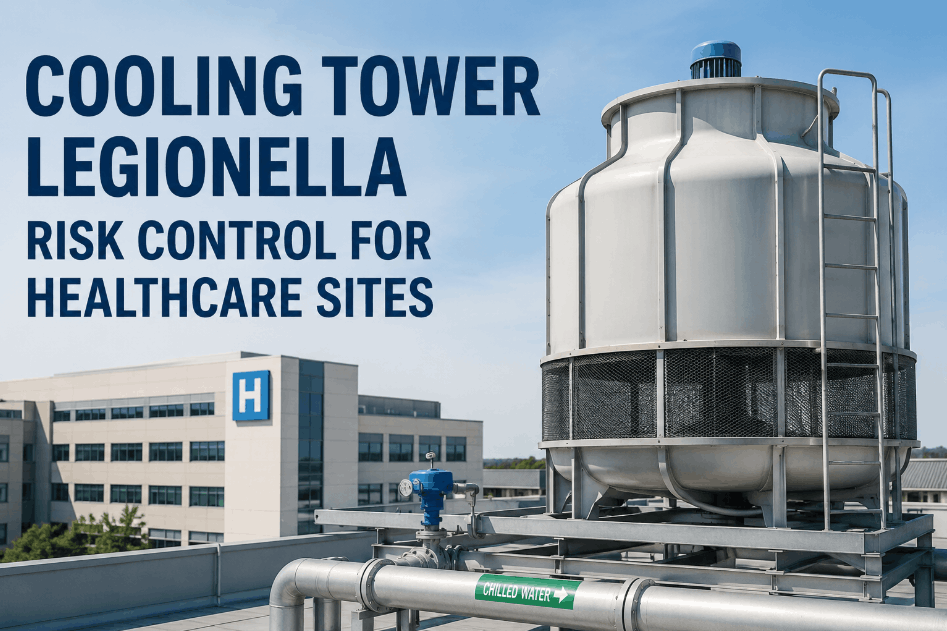
The Centers for Medicare and Medicaid Services has tied ASHRAE 188-aligned WMP compliance to Conditions of Participation for hospitals and long-term care facilities. Non-compliance risks Medicare/Medicaid certification — an existential threat for most healthcare operators.
New York, New Jersey, Maryland, and several other states now require cooling tower registration, mandatory WMPs, and quarterly Legionella culture testing. Non-registered cooling towers face operating penalties and shutdown orders in regulated jurisdictions.
Plaintiff attorneys now routinely request WMP documentation, inspection records, and monitoring logs in discovery. Gaps — missing logs, skipped inspections, undocumented corrective actions — become direct evidence of negligence. No records means no defense.
Buildings that sat idle during COVID-era closures created ideal Legionella amplification conditions in stagnant water systems. Regulators now expect documented remediation and ongoing monitoring for any building that experienced extended low-occupancy periods.
Older buildings with complex, difficult-to-flush dead legs, mixed-metal piping, and aging water heaters present higher Legionella risk. Without documented inspection and monitoring programs, owners of older stock face compounded liability exposure in litigation scenarios.
Cooling Tower ASHRAE 188 Compliance: Critical Control Requirements
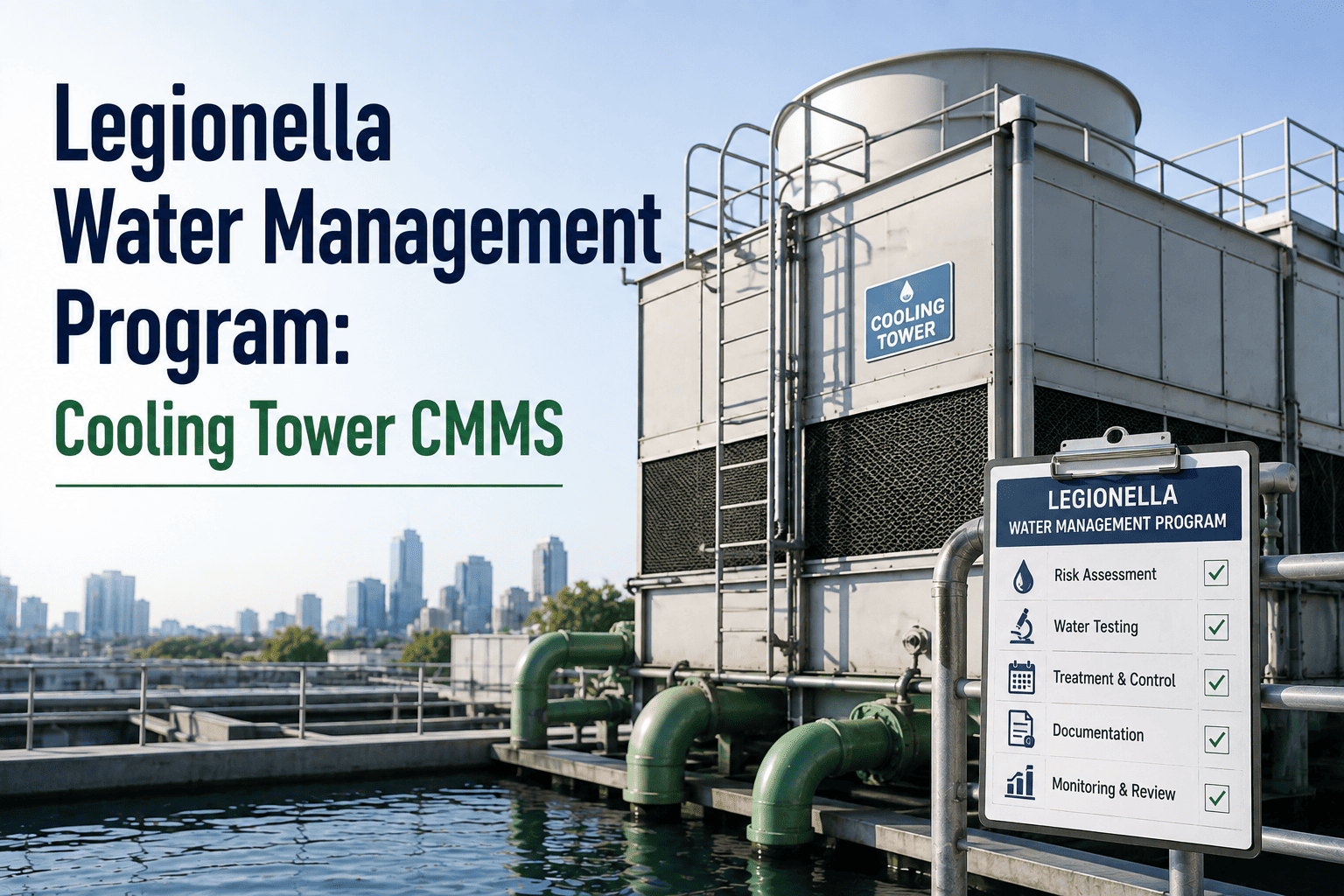
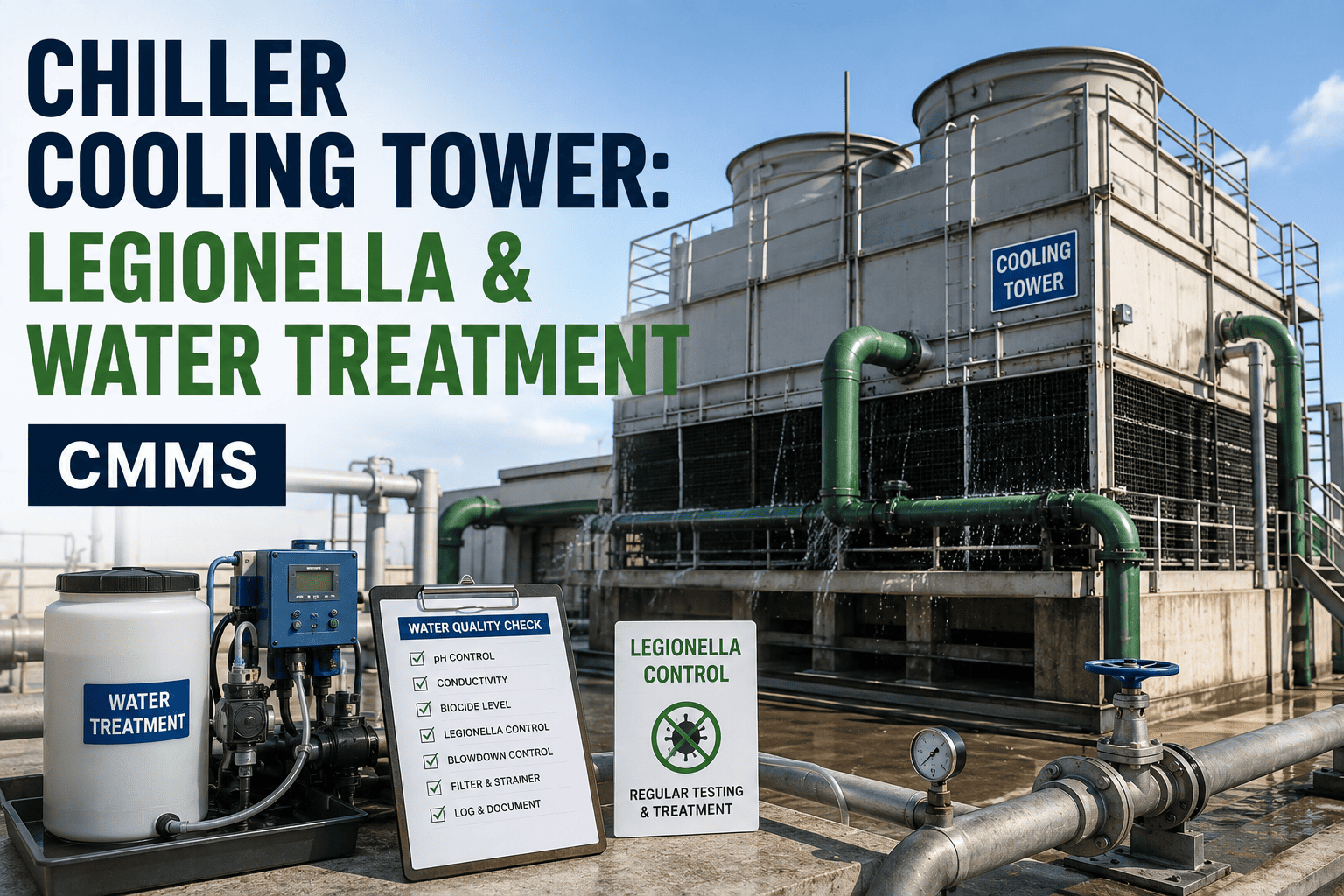
Cooling towers are the highest-priority Legionella risk asset in most commercial buildings — generating warm, aerosolized water mist capable of traveling significant distances. ASHRAE 188 and supplementary guidelines from the Cooling Technology Institute (CTI) define specific control parameters that facility teams must monitor, document, and act on consistently. Book a Demo to see OxMaint's pre-built cooling tower compliance inspection templates mapped to ASHRAE 188 control points.
- Biocide residuals (free chlorine, bromine, or non-oxidizing biocide) — minimum weekly, ideally continuous
- Conductivity / TDS — controls blowdown and scale/corrosion inhibitor dosing
- pH — target range 6.5–8.5 depending on treatment chemistry
- Visual inspection for biofilm, scale, and debris in basin and fill media
- Drift eliminator integrity — annual physical inspection and certification
- Legionella culture sampling — quarterly minimum in regulated jurisdictions
- Biocide residual below minimum limit → immediate chemical dosing, re-test within 24 hours
- Legionella culture positive at action level → shutdown, hyperchlorination, re-sample before restart
- Visible biofilm or scale accumulation → mechanical cleaning required before chemical treatment resumes
- pH out of range → system treatment chemistry review, corrosion inhibitor evaluation
- Drift eliminator damage → immediate repair or replacement before system operation
- All corrective actions documented with date, technician, action taken, and re-test result
How OxMaint Supports ASHRAE 188 Compliance Programs
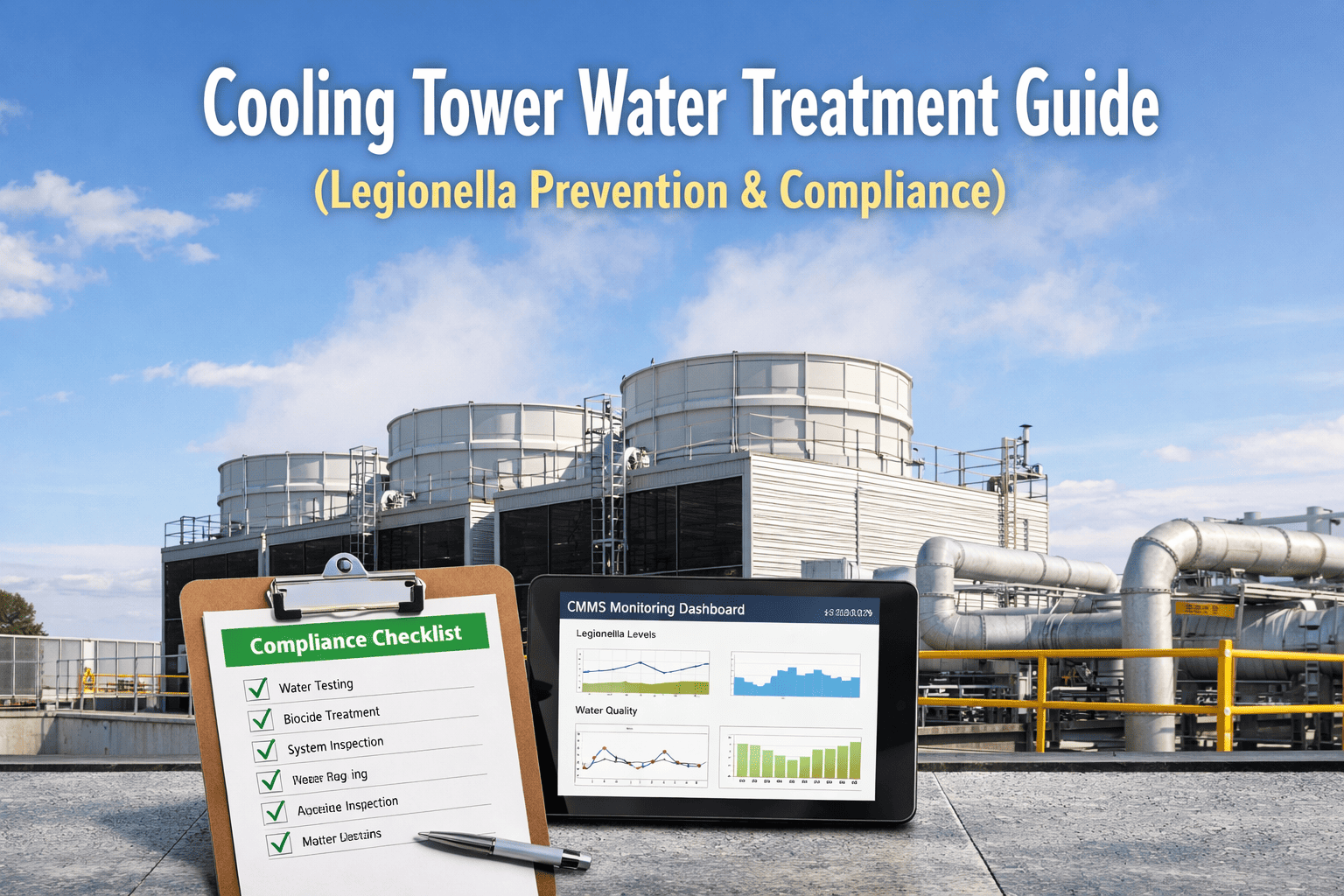
Documentation failure is the most common reason building owners lose Legionella litigation — not lack of intent, but lack of proof. OxMaint's facility maintenance and compliance platform gives building operations teams the structure to execute ASHRAE 188 programs consistently and generate timestamped, auditor-ready records automatically from every inspection and corrective action task. Sign Up Free to build your water management program infrastructure in OxMaint at no cost.
Build an Audit-Ready ASHRAE 188 Program — Starting Today
OxMaint gives building operations teams pre-built water management inspection templates, automated PM scheduling, corrective action workflows, and compliance documentation — all linked to specific water system assets across your portfolio.
Frequently Asked Questions: ASHRAE 188 Compliance in 2026
Is ASHRAE 188 legally mandatory for building owners in 2026?
ASHRAE 188 is an ANSI consensus standard — not a federal law — but it is legally significant. Courts use it as the standard of care in Legionella litigation, several states have codified its requirements into law, and CMS mandates equivalent programs for healthcare facilities. Non-compliance equals liability exposure regardless of direct regulatory mandate.
What is the minimum documentation required under ASHRAE 188?
At minimum: a written WMP document, a water system asset inventory, hazard analysis results, defined control measures with limit values, monitoring records with dated readings, and corrective action logs with resolution documentation. All records should be retained for a minimum of 5 years.
Does ASHRAE 188 apply to residential buildings?
ASHRAE 188 primarily targets potable and non-potable building water systems in non-single-family structures. Multi-family residential buildings — particularly those with cooling towers or large domestic hot water systems — fall within its scope and are increasingly subject to state-level enforcement.
How often does a Water Management Program need to be reviewed?
ASHRAE 188 requires at least annual WMP review, plus review after any significant system change, Legionella case associated with the building, facility renovation affecting water systems, or change in occupancy that affects risk profile.
What cooling tower testing frequency does ASHRAE 188 recommend?
Biocide residuals should be checked at minimum weekly; Legionella culture sampling is recommended quarterly under most state regulations and ASHRAE 188 guidance. More frequent sampling is required following a corrective action event or positive culture result.
Can OxMaint store and organize our Water Management Program documents?
Yes. OxMaint allows teams to attach WMP documents, inspection procedures, corrective action thresholds, and compliance reference materials directly to individual asset records — accessible to field technicians and auditors from any device, at any time.
What happens if a building fails a Legionella audit without a documented WMP?
Without documented records, building owners have no defense against claims of negligence. Consequences include insurance claim denial, regulatory fines, facility shutdown orders in healthcare settings, and significantly increased civil litigation exposure. Documentation is the difference between a manageable incident and a catastrophic liability event.
Protect Your Building and Your Portfolio With Structured WMP Compliance
Join facility operations teams using OxMaint to execute ASHRAE 188 water management programs, automate compliance documentation, and eliminate the audit gaps that create Legionella liability exposure.