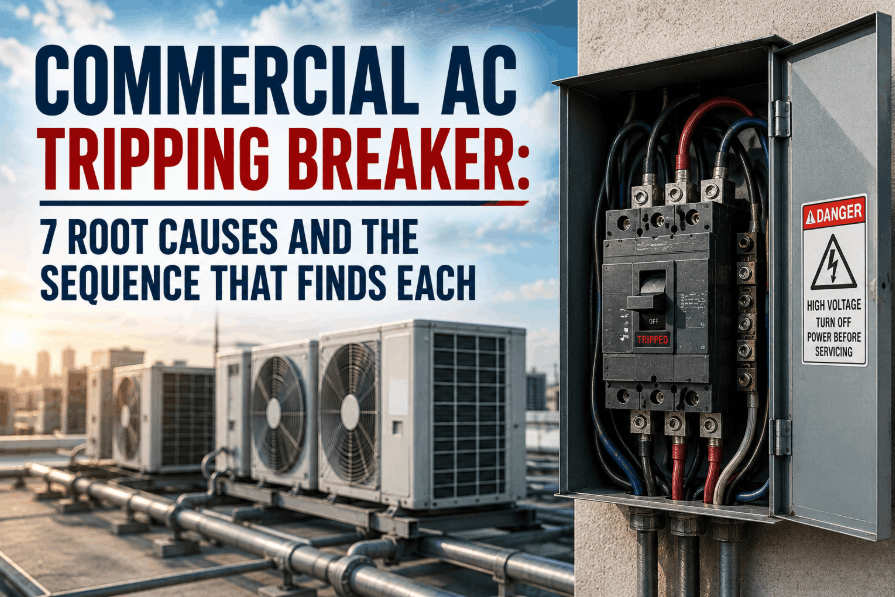
A commercial AC unit tripping its breaker is one of the most disruptive electrical faults a facilities team encounters — and resetting the breaker without diagnosing the root cause is the single action most likely to turn a manageable repair into a compressor replacement. Breaker trips are protection events: the breaker has correctly detected an overcurrent condition and interrupted the circuit to prevent catastrophic equipment damage. Facilities using Sign Up Free with Oxmaint track motor amperage trends, compressor run history, and fault events in structured work order records — enabling technicians to arrive on-site with fault context rather than starting from zero. This guide covers the 7 root causes of commercial AC breaker trips, the diagnostic sequence that isolates each fault efficiently, and how maintenance data infrastructure eliminates repeat trip events. Teams managing multi-site commercial HVAC can Book a Demo to see how fault pattern tracking works across an entire equipment portfolio.
OXMAINT CMMS FOR COMMERCIAL HVAC ELECTRICAL FAULTS
Find the Real Breaker Trip Cause Before the Compressor Pays for It
Oxmaint gives HVAC maintenance teams motor amperage trending, fault event logging, and PM scheduling — so breaker trips are diagnosed from data, not from repeated resets that escalate minor electrical faults into major equipment failures.
Why Commercial AC Breaker Trips Require a Diagnostic Sequence, Not a Reset
Commercial HVAC breakers are sized to the locked-rotor amperage of the compressor and the full-load amperage of the total circuit — including condenser fans, control circuits, and crankcase heaters. When a breaker trips, it means current has exceeded the breaker's trip threshold at some point during the circuit's operation. That threshold can be exceeded by a mechanical fault (seized compressor), an electrical fault (ground fault, short circuit), a refrigerant condition (high head pressure, overcharge), or a supply-side issue (low voltage, voltage imbalance). Each cause leaves a different diagnostic signature. Facilities that Book a Demo with Oxmaint capture amperage baselines and fault event history by asset — giving technicians the context to identify which category of fault is driving the trip before any components are replaced.
Resetting a tripped breaker without diagnosis is the leading cause of catastrophic compressor failure on commercial HVAC — a compressor replacement that starts at $3,000–$15,000 on a mid-size RTU.
7 Root Causes of Commercial AC Breaker Trips: Fault Patterns & Diagnostic Sequence
All 7 root causes of commercial AC breaker trips — each with the trip timing signature, primary diagnostic test, and corrective action required before circuit restoration.
Hard Start / Locked Rotor
Trip TimingWithin 1–5 sec of start
Root CauseFailed capacitor, refrigerant migration, worn compressor
First TestTest start/run capacitors; measure winding resistance
Install hard-start kit if voltage sag on start is confirmed.
Winding Ground Fault or Short
Trip TimingImmediate — within one cycle
Root CauseInsulation failure; ground fault below 1 MΩ
First TestMegohmmeter at compressor terminals (20 MΩ+ = normal)
Do not reset again — compressor replacement required.
High Head Pressure / Overcharge
Trip TimingAfter several minutes of run time
Root CauseDirty condenser, refrigerant overcharge, failed condenser fan
First TestMap discharge pressure vs. outdoor dry-bulb temp
Clean condenser coil before evaluating refrigerant charge.
Undersized or Degraded Breaker
Trip TimingUnder normal load — no equipment change
Root CauseThermal fatigue, wrong MOCP rating, loose terminals
First TestVerify breaker rating vs. nameplate MOCP; IR scan terminals
Replace breakers with 3+ trip events or thermal damage.
Low Voltage or Phase Imbalance
Trip TimingPeak demand periods or hot weather events
Root CauseUtility supply drop; phase imbalance on 3-phase circuits
First TestMeasure line voltage under load; check all phases (±10%)
Imbalance above 2% — notify utility. Above 5% = compressor damage.
Condenser Fan Motor Failure
Trip TimingMid-run — not on startup
Root CauseSeized bearing, winding failure, or failed capacitor
First TestClamp-meter fan motor FLA; spin blade by hand (power off)
Isolate fan circuit from compressor to confirm overcurrent source.
Contactor Failure or Wiring Short
Trip TimingImmediate or random — no pattern
Root CauseWelded contactor, chafed wiring, moisture ingress
First TestInspect contactor faces; measure resistance to ground on wiring
Replace contactors every 3–5 years on high-cycle commercial units.
Commercial AC Breaker Trip: Diagnostic Sequence Summary
Step 01
Do Not Reset the Breaker Immediately
Record the exact time and conditions of the trip. Note whether the unit was in startup, mid-cycle, or extended run. Trip timing relative to the compressor start sequence narrows the root cause category before any measurements are taken.
Step 02
Test for Ground Faults Before Energizing
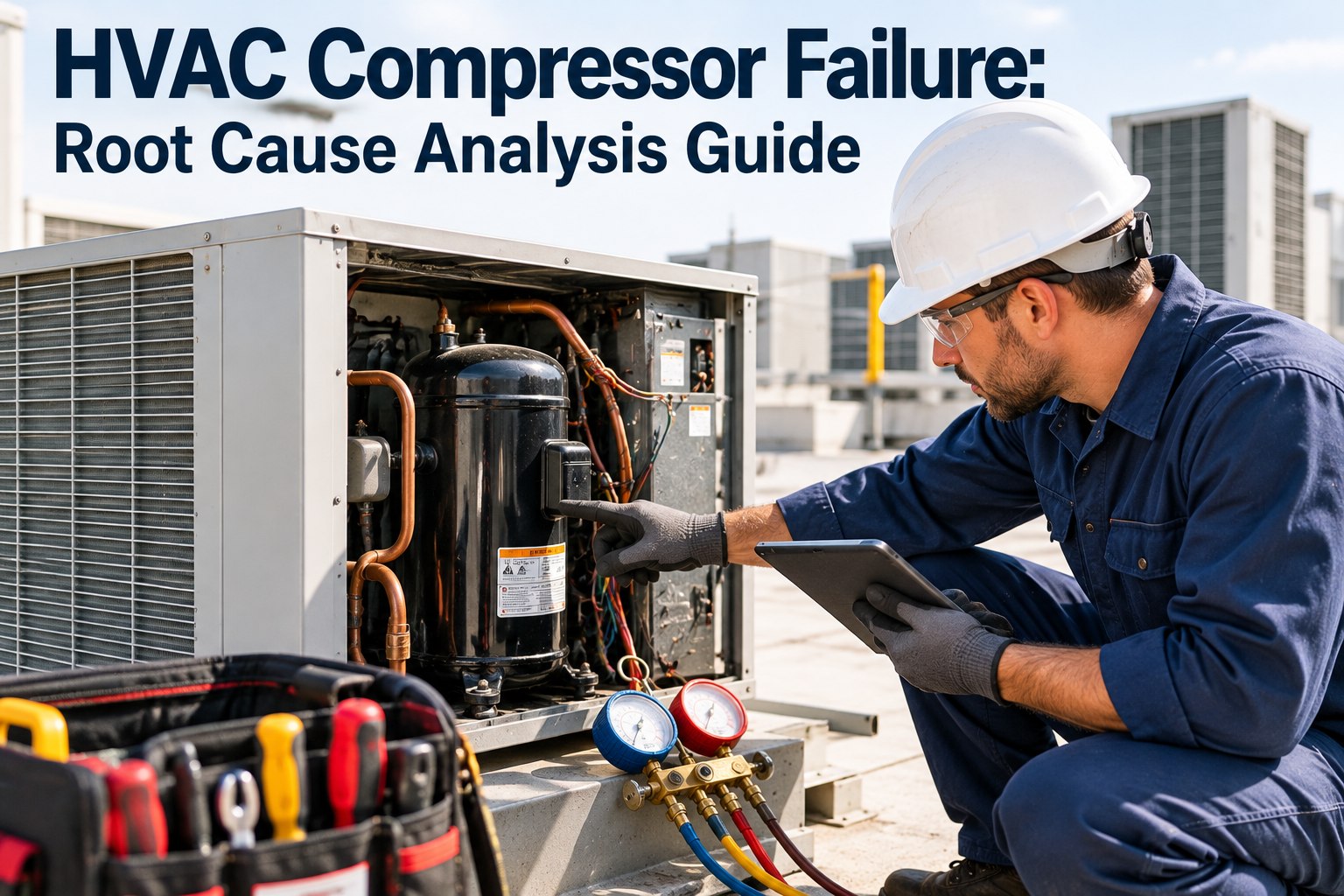
With the disconnect open, perform a megohmmeter test at the compressor terminals. If ground fault resistance is below 1 MΩ, do not re-energize the circuit. The compressor requires replacement — further reset attempts will damage the breaker and may create a fire risk.
Step 03
Measure Supply Voltage at the Disconnect Under Load
Restore power to the disconnect only — not the unit — and measure line voltage across all phases. Voltage below ±10% of nameplate or phase imbalance above 2% must be corrected before operating the compressor. Low voltage is a common cause of breaker trips that appears to be an equipment fault.
Step 04
Test Capacitors and Contactor Before Restart
Test start and run capacitors with a capacitance meter. Inspect contactor face contacts for welding, pitting, or arc erosion. Replace any component outside specification before restart. A degraded capacitor cannot provide the starting torque needed to overcome inrush current — producing a locked-rotor condition on every start attempt.
Step 05
Measure Run Amperage and Map Against Design Conditions
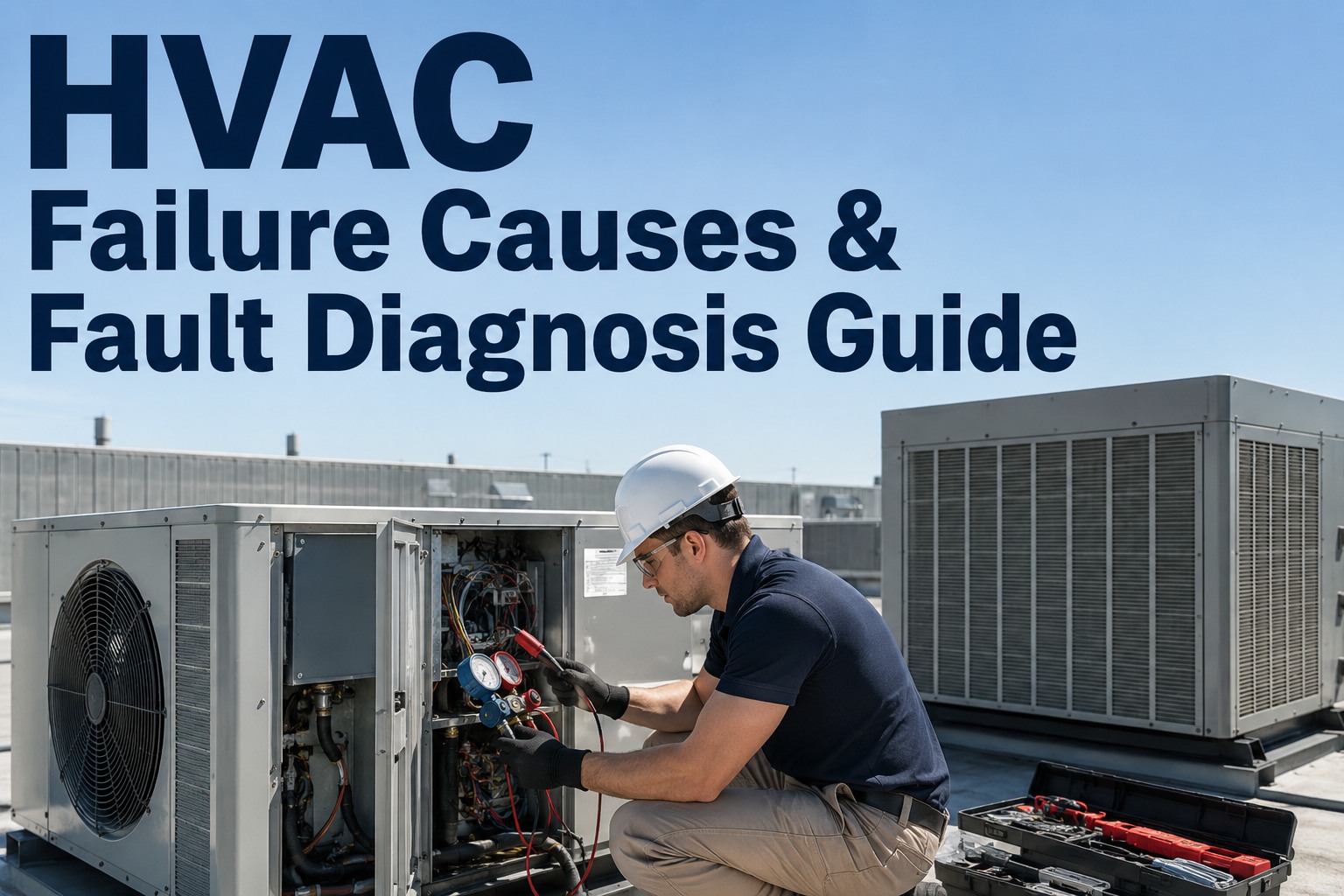
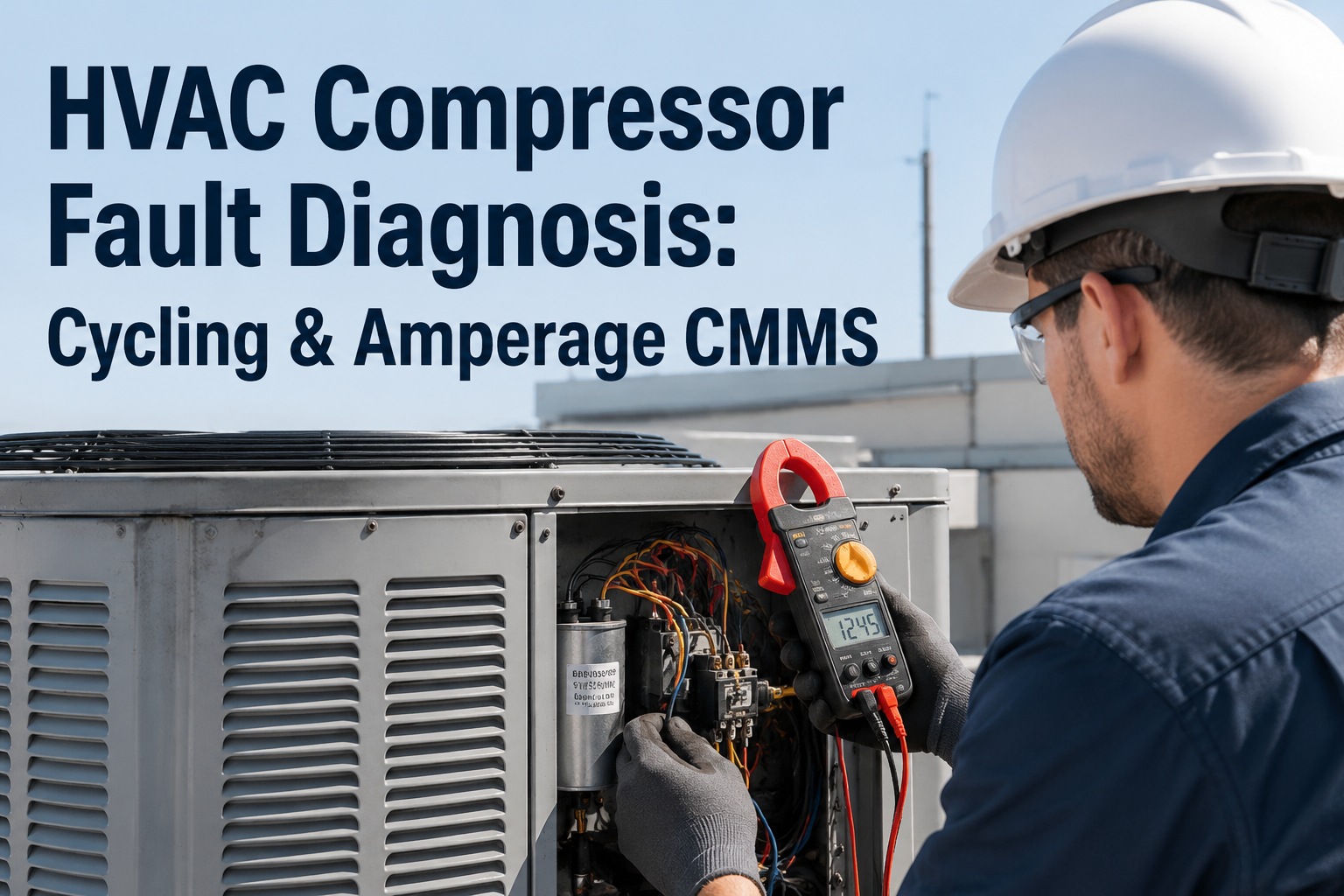
After a clean restart, clamp-meter the compressor run amperage and condenser fan motor amperage simultaneously. Compare to nameplate RLA at known ambient conditions. Overcurrent during normal operation indicates refrigerant overcharge, high head pressure, or condenser fouling — not an electrical fault. Document amperage readings in the work order for trending against future service visits. Teams using
Sign Up Free on Oxmaint log these readings automatically against each asset's baseline profile.
Reactive vs. Predictive: Commercial AC Breaker Trip Response Comparison
| Fault Scenario |
Reactive Response |
Predictive Response |
Downtime Impact |
| Compressor hard start / weak capacitor |
Multiple resets; capacitor identified after compressor damage; 6–12hr repair |
Rising start current trend triggers capacitor replacement at scheduled PM; zero trip event |
−100% unplanned |
| Compressor winding ground fault |
Repeated resets damage breaker; compressor replacement + circuit repair: 24–48hrs |
Annual megohmmeter test in PM catches insulation degradation before failure threshold |
−70% downtime |
| High head pressure from dirty condenser |
Trip investigation; condenser cleaning; refrigerant check: 4–8hr outage |
Condenser approach temperature trend triggers cleaning PM before overcurrent threshold |
−100% unplanned |
| Voltage imbalance from utility supply |
Misdiagnosed as equipment fault; compressor replaced; utility issue found later |
Voltage logged at PM visits; imbalance identified and reported to utility before damage |
−85% downtime |
| Condenser fan motor failure |
High-pressure trip; condenser investigation; motor replacement + thaw cycle: 5–10hrs |
Fan motor amp decline flags bearing wear; replaced at next PM window before failure |
−100% unplanned |
HVAC KPIs That Predict Breaker Trip Events Before They Occur
Compressor Run Amperage vs. Nameplate RLA
Trending compressor run current against rated load amperage at known conditions detects mechanical loading changes — high head pressure, refrigerant overcharge, and bearing wear — before they exceed breaker trip thresholds.
Compressor Start Inrush Current
Rising start inrush current over sequential service visits indicates capacitor degradation or compressor winding changes. A start current approaching locked-rotor amperage signals an imminent hard-start breaker trip event.
Condenser Approach Temperature
Rising approach temperature between outdoor ambient and condensing saturation temperature indicates coil fouling, which drives head pressure up — the most common cause of mid-cycle breaker trips on commercial RTUs in summer operation.
Supply Voltage and Phase Balance
Logging line voltage and phase balance at PM visits identifies utility supply degradation before voltage conditions drive compressor overcurrent. Phase imbalance above 2% causes immediate derating and increased trip risk on 3-phase compressors.
Condenser Fan Motor Amperage
Fan motor current trending below nameplate FLA at design conditions signals motor degradation — bearing seizure or winding failure — that adds overcurrent to the shared breaker circuit before fan failure is otherwise apparent.
Contactor Inspection Interval Compliance
Tracking contactor replacement history per asset ensures high-cycle commercial units receive timely contact replacement before welded contacts create uncontrolled compressor operation and sustained overcurrent conditions.
OXMAINT FOR COMMERCIAL HVAC FAULT MANAGEMENT
Track Compressor Amperage, Fault History, and PM Compliance Across Every Unit
Oxmaint connects HVAC electrical parameter trending, PM scheduling, and mobile work order execution — giving your team the historical data to diagnose breaker trips in minutes rather than hours, and the PM infrastructure to prevent most trips before they occur.
Compressor amperage and voltage logging per asset with trend visualization
PM scheduling for capacitor replacement, contactor inspection, and condenser cleaning on data-driven intervals
Fault pattern recognition and repeat-trip flagging across multi-site HVAC fleets
Frequently Asked Questions: Commercial AC Tripping Breaker
Why does my commercial AC keep tripping the breaker?
Repeated breaker trips indicate an unresolved overcurrent condition — most commonly compressor hard start, high head pressure from a dirty condenser, a failed capacitor, or low supply voltage. Each cause requires a specific diagnostic test rather than repeated resets, which escalate mechanical damage with each trip event.
Is it safe to reset a breaker on a commercial AC unit that keeps tripping?
A single reset to observe trip timing and confirm fault category is acceptable. Resetting more than once without diagnosing the root cause risks compressor winding damage from liquid slugging or sustained locked-rotor current, and can degrade the breaker's trip mechanism over time. Always diagnose before resetting a second time.
How do I know if my commercial AC compressor is the cause of the breaker trip?
Perform a megohmmeter test at the compressor terminals with the disconnect open. Ground fault resistance below 1 MΩ confirms compressor winding failure. A normal megohm reading (20 MΩ+) rules out the compressor as the fault source and directs investigation toward refrigerant conditions or external electrical issues.
Can a dirty condenser coil cause a commercial AC to trip its breaker?
Yes. Condenser fouling restricts heat rejection, raising discharge pressure and compressor head load. As head pressure rises, the compressor draws increasing current — eventually exceeding the breaker's trip threshold. This is one of the most preventable breaker trip causes and is directly addressed by scheduled condenser cleaning in a CMMS like Oxmaint.
How does voltage imbalance cause commercial AC breaker trips?
On 3-phase systems, voltage imbalance causes the compressor to draw disproportionate current on the high-current phase. A 3.5% voltage imbalance can produce a 25% increase in current on the affected phase — enough to trip a properly sized breaker under normal load. Facilities that
Book a Demo with Oxmaint log voltage readings at PM visits to detect developing supply-side issues before damage occurs.
What role does a CMMS play in preventing commercial AC breaker trips?
A CMMS like Oxmaint tracks compressor amperage trends, capacitor and contactor replacement intervals, condenser cleaning history, and fault event timelines per asset — enabling your team to identify pre-trip degradation patterns and schedule corrective maintenance before a breaker trip occurs. Teams using
Sign Up Free on Oxmaint convert reactive electrical fault response into structured preventive maintenance across their full HVAC portfolio.
SMART HVAC MAINTENANCE WITH OXMAINT
Make Commercial AC Breaker Trips a Diagnosed Event, Not a Repeated Emergency
Every breaker trip cause in this guide is preceded by measurable electrical and mechanical trends that a well-configured CMMS catches before circuit protection activates. Oxmaint puts HVAC fault trending, PM scheduling, and mobile work execution in one platform — with measurable downtime reduction from day one.